Drones at heart of ‘low-altitude economy’
Applications in transport, healthcare and emergency services offer great promise, says CAAT
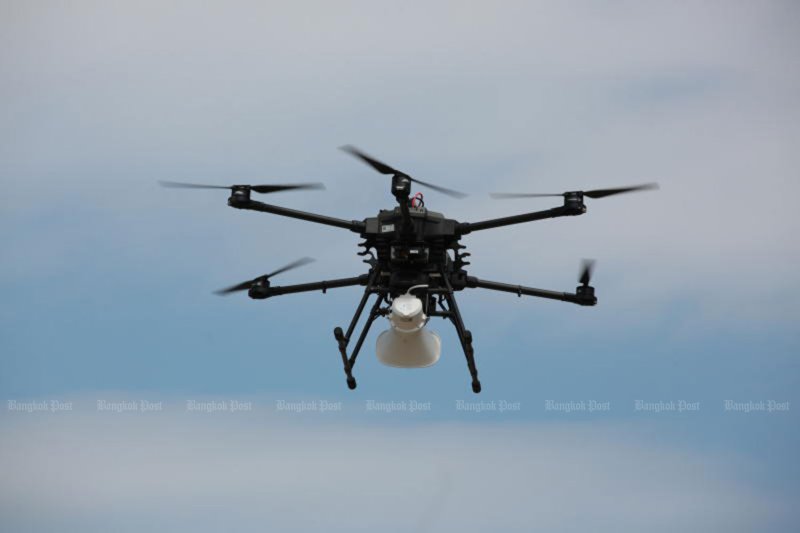
Growing drone use is creating opportunities in transport, healthcare and emergency services, as Thailand prepares to develop its low-altitude economy, according to the Civil Aviation Authority of Thailand (CAAT).
Expanding the use of unmanned aircraft could make the low-altitude economy a driver of the aviation industry, CAAT director-general ACM Manat Chavanaprayoon said on Friday.
Advanced air mobility could extend beyond air taxis to freight, medical deliveries, links to remote communities and emergency operations he said.
According to the CAAT, 73,435 unmanned aircraft had been registered in Thailand as of Nov 10, alongside 111,800 basic drone pilots and 16,270 advanced pilots.
New applications for drones could improve access to essential services and create further business opportunities, but wider adoption requires safety standards, regulations, infrastructure and airspace management, Mr Manat said.
The global drone market is expected to be worth about $52 billion by 2034. Thailand’s market is growing by an average of 10.3% annually, with uses in agriculture, healthcare and infrastructure, said Kasitbhat Intuyos, acting manager of the unmanned aircraft standards department at the CAAT.
Drones can also support public services and emergency response. In a recent demonstration in Si Racha district of Chon Buri, Pattaya Drone and Robotics Co used a DJI FlyCart 30 to deliver supplies and rescue equipment to hard-to-reach areas, he said.
The CAAT is drafting a Thailand Unmanned Aircraft Systems and Advanced Air Mobility Master Plan covering regulations, technology, infrastructure and workforce development.
It is promoting trials through a regulatory sandbox, subject to safety assessments, while developing domestic capabilities in aircraft production and assembly, research, testing, maintenance, repair and overhaul, software and data services.
The regulator is also developing an unmanned aircraft system traffic management system linked to air traffic management. Digital airspace tools will support flight planning, aircraft tracking and data sharing, while the agency prepares vertiports and regional airport test sites.
A vertiport is a specialised landing, takeoff and service facility for electric vertical take-off and landing aircraft, such as electric air taxis and autonomous drones.
The CAAT and the International Civil Aviation Organisation will host the Advanced Air Mobility Symposium 2026 at Impact Forum Hall 4, Muang Thong Thani, from Dec 1-3.
The event will feature seminars, exhibitions and flight demonstrations covering drones, electric vertical take-off and landing aircraft, vertiports, airspace management and safety.
KioskNews shows a cleaned-up reading view extracted from the publisher’s page — the original always lives on their site, not ours.