8 Horror Books That Are Perfect From Start to Finish

Remus is a writer, editor, journalist, and author with an eye for detail and an extremely active imagination. He is an enthusiast of everything to do with the graphic medium, whether it's Western comics and their adaptations or manga and anime. Remus is also the author of the sci-fantasy novel Once Upon a Time in Hyperspace and several works of short fiction in the mystery, comedy, and horror genres.
Sign in to your Collider account
Horror literature has had a powerful grip on the popular consciousness for literally centuries. From their origins as cheap popular fiction to the greatest heights of literary renown that they enjoy today, horror books have come a long way, giving us some truly terrifying nightmares in the process. But though horror is a massively successful genre that gives rise to countless new works every year, only a handful of horror books are truly perfect.
With flawless execution from the first page to the last, these perfect horror novels are unmatched masterpieces that have had a huge impact on popular culture, shaping the evolution of the genre as a whole. They may not all be equally famous, but they are all masterworks of fear and tension that you simply must read. Without further ado, here’s a look at our selection of horror books that are perfect from start to finish.
1 ‘The Haunting of Hill House’ (1959)

Written by Shirley Jackson, The Haunting of Hill House is a Gothic horror novel that’s easily one of the most influential haunted house stories of modern literature. The story follows a paranormal investigator who rents the titular mansion for the summer and invites guests who have a history with the supernatural. As eerie events begin to take place at the mansion, the visitors find themselves pushed to the limits of their sanity.
The Haunting of Hill House was highly acclaimed in its day, becoming a finalist for the National Book Award. Widely regarded as one of the finest horror books of all time, it’s a masterfully executed haunted house story that’s a landmark of 20th-century psychological Gothic horror. The story derives its terrors not just from external elements but from within its characters, walking the line between supernatural horror and psychological mystery. The novel cemented Jackson’s reputation as a horror master, and it has since been an inspiration for films, plays, radio shows, and Mike Flanagan’s acclaimed streaming series.
2 ‘The Shining’ (1977)
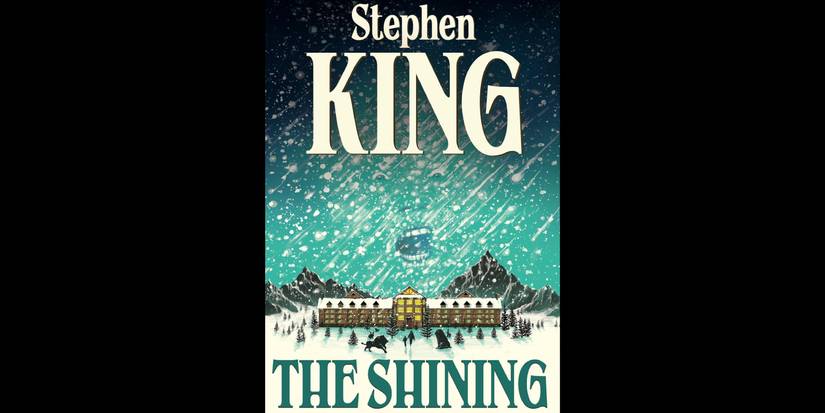
Written by Stephen King, The Shining is an iconic horror novel that follows Jack Torrance, a struggling writer and recovering alcoholic, who gets a job as the off-season caretaker at an isolated hotel in the Colorado Rockies. He moves in with his wife, Wendy, and their son, Danny, hoping to reconnect with his family and get over his creative block. But what Jack and Wendy don’t know is that Danny has a rare psychic ability that allows him to see the horrifying evil infecting the hotel, which soon takes possession of Jack’s mind.
Easily one of the most famous horror novels of all time, The Shining is a critically acclaimed bestseller that went on to become a massive literary and cultural landmark. Partially inspired by King’s personal experiences, the novel explores abuse, addiction, and psychological collapse through the vehicle of an enigmatic horror that’s part haunted house, part Lovecraftian force. Widely acknowledged as one of King’s greatest horror masterpieces, The Shining established the prolific author’s reputation as a master of the genre and has inspired multiple adaptations, most famously the 1980 film by Stanley Kubrick.
3 ‘Dracula’ (1897)

Bram Stoker’s Dracula is easily the most famous vampire story of all time, across all media. The novel, presented in an epistolary format, follows a number of characters whose paths cross with that of the titular Transylvanian Count, leading to horrific outcomes. It primarily follows English solicitor Jonathan Harker, who visits Count Dracula’s castle for business and first discovers his true nature. Later, when the Count arrives in England, he terrorizes Harker’s fiancée, Mina, drawing the attention of Dutch occultist Abraham Van Helsing.
A literary landmark that has haunted readers’ minds for centuries, Dracula has played a greater part than any other novel in creating the modern conception of a vampire, defining the trope for generations to come. The book has been studied both as a literary triumph and a key artifact of Victorian history that reveals much about the racial, religious, and social perceptions of the era. Scholarly interests aside, the novel is also highly entertaining, with a terrifying narrative that uses an effective balance of gore and psychological corruption, inspiring numerous adaptations.
Collider Exclusive · 8 Questions · 2 Minutes What Is Your Biggest Horror Nightmare? Elm Street · Chucky · Scream · The Conjuring
Four horror franchises. Four completely different ways of scaring you. One waits until you fall asleep. One makes sure nobody believes you. One is already in your group of friends. And one is in the house with your family. Answer eight quick questions about how you actually watch horror, and find out which nightmare was built for you.
😴Elm Street(Freddy Krueger)
🧸Chucky(Child's Play)
📞Scream(Ghostface)
🕯️The Conjuring(The Warren Files)
01
Which horror scene makes you cover your eyes? Four classic images. One of them is worse than the others for you.
02
You are home alone and you hear a noise. First thought? Everybody has one. It arrives before you have decided anything.
03
Which horror movie rule would you break first? Everybody thinks they would survive. Almost nobody actually does.
04
Something genuinely frightening happens. What do you do? Not in a film. In your actual living room, tonight.
05
How do you actually watch a horror film? Be honest about this one. Nobody is checking.
06
Somebody offers you serious money. Which do you still refuse? The amount does not matter. There is one on this list you are not doing.
07
Which feeling stays with you a week after the film? Good horror does not stop when the credits do.
08
Something wakes you at 3am. What is the worst possibility? Eight questions in, this is the one that decides your nightmare.
The Lights Just Went Out Your Nightmare Is…
Four franchises, four completely different ways of getting underneath your skin. This is the one built out of your particular fear, why it works so well on you, and what it would leave behind.
Elm Street
Your nightmare does not wait outside the door. It waits for you to close your eyes, which you are going to have to do eventually, because nobody has ever won that particular argument.
- Freddy is horror's cruellest idea: a threat that lives in the one place you cannot guard, cannot lock, and cannot avoid forever.
- You are the one who is fine during the film and wide awake at two in the morning. Your own head is where this does its damage.
- These films understood exhaustion as a horror engine. The kids on Elm Street do not lose because they are weak. They lose because they are tired.
- You can lock every door in the house. You still have to sleep.
Chucky
Your nightmare is not really the doll. It is the face of the person you tell, and the way they decide, very kindly, that you have imagined all of it.
- Chucky works precisely because he is absurd. That is the trap: the more accurately you describe him, the less anybody is going to believe you.
- You are the one shouting at the screen because the characters are not listening. You know that feeling from real life too.
- The franchise is at its best when the adults in the room are the real obstacle, and you have met those adults.
- By the time somebody finally believes you, you will have handled most of it on your own.
Scream
Your nightmare has your number, knows your name, and has almost certainly been inside your house before. The worst part is that you already know them.
- Scream is the only one of these where the killer takes the mask off and turns out to be somebody who was at the party.
- You are the person who calls the twist out loud before it lands. You watch people the same way you watch films.
- The franchise made the rules of horror part of the plot, which means the survivors are the ones paying attention. You would be paying attention.
- Everybody is a suspect, including the person who just offered to walk you home.
The Conjuring
Your nightmare is not really about you. It is about the people asleep down the hall, and the feeling that whatever is here is not interested in leaving.
- The Conjuring films are domestic horror. The house, the family, the perfectly ordinary room that quietly stops feeling ordinary.
- Your instinct is to get everybody into one room. Your fear is protective rather than personal, which is rarer than it sounds.
- This is the one franchise where belief is the weapon. The people who come through it are the ones who are not alone and refuse to be.
- Whatever is here did not come for you. It came for the household, and you are the one standing in the hallway.
4 ‘The Silence of the Lambs’ (1988)
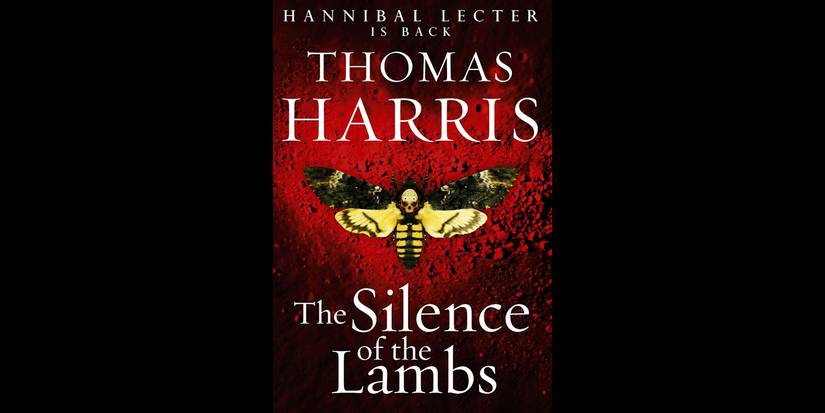
Thomas Harris’s 1988 sequel to his first Hannibal Lecter novel, Red Dragon, The Silence of the Lambs is a horror-crime thriller that continues the story of Harris’s iconic cannibal/psychiatrist. The sequel sees Lecter match his wits against FBI trainee Clarice Starling, who’s hoping to use his insights to catch a new serial killer known as “Buffalo Bill." The investigation is further complicated by the actions of Lecter’s self-styled nemesis Dr. Frederick Chilton, who runs the asylum where Lecter is imprisoned.
Easily the most famous installment of Harris's Hannibal Lecter series, The Silence of the Lambs was an acclaimed bestseller in its day, even though it also attracted controversy for its alleged transphobic themes. Whether the controversy is valid or not is highly debatable, but it doesn’t change the fact that the novel is a thoroughly gripping masterpiece with impeccable psychological thrills. The book achieved even greater heights of popularity after the film adaptation by Jonathan Demme was released in 1991, which holds the distinction of being the only horror film to win the Oscar for Best Picture and the third and last movie to sweep all the “Big Five” Oscars.
5 ‘House of Leaves’ (2000)
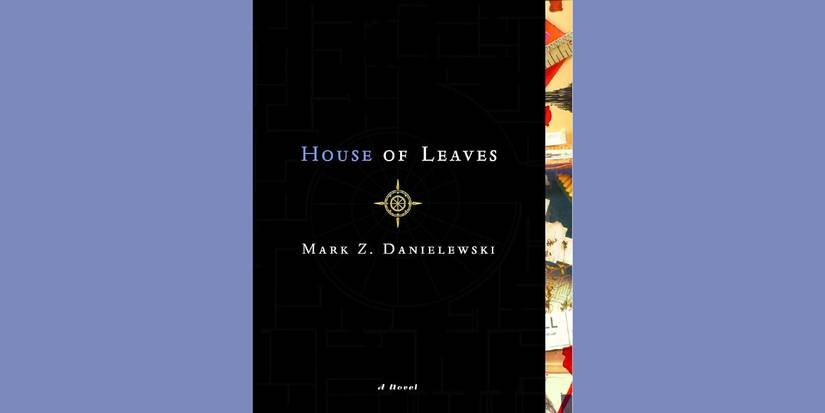
The debut novel of author Mark Z. Danielewski, House of Leaves is an experimental book that uses a mix of epistolary fiction and metafiction to create a truly unique reading experience that defies usual conventions of book design. The plot, such as it is, follows the narrator, Johnny Truant, as he attempts to transcribe a monograph, which in turn describes a fictional documentary film about a family who discovers a labyrinthine house that’s bigger on the inside. The novel also includes academic-style exhibits, appendices, an index, and numerous footnotes, all of which are fictional and part of the overall narrative experience.
The strange and experimental nature of the book makes House of Leaves rather hard to pin down in terms of genre, though it’s most commonly described as a horror and/or romance story. Published in 2000, the book has received critical acclaim and has had massive sales, with a recent resurgence of interest in horror circles online. It’s arguably the most influential horror novel of the 21st century and a book that’s sure to be remembered as a classic in the decades to come.
6 ‘Mexican Gothic’ (2020)

Written by Mexican Canadian author Silvia Moreno-Garcia, Mexican Gothic is a gothic horror novel that follows a young woman in 1950s Mexico. When her cousin Catalina claims that her English husband, Virgil Doyle, is trying to kill her, wealthy socialite Noemí Taboada visits her to investigate. But when she arrives at the Doyles’ mountain home, Noemí discovers a far darker conspiracy than she could ever have imagined, as well as an unexpected romance that could prove her doom.
Published in 2020, Mexican Gothic earned widespread acclaim and landed on multiple bestseller lists. A haunting Gothic mystery with elements of sci-fi horror, post-colonial criticism, and dark romance, it’s an engaging and layered story that’s perfect for fans of writers like Daphne du Maurier and Shirley Jackson. The novel also received numerous accolades, including the Locus Award for Best Horror Novel and the British Fantasy Award for Best Horror Novel, and was shortlisted for a Bram Stoker Award, a Nebula Award, and a Shirley Jackson Award.
7 ‘Frankenstein’ (1818)

The legendary debut novel of Mary Shelley, Frankenstein; or, The Modern Prometheus, better known as just Frankenstein, is a landmark book that’s considered the first true science fiction horror novel. The book follows the story of Dr. Victor Frankenstein, an obsessive young scientist whose unconventional experiments lead to the creation of new life from the body parts of the dead. This creation, however, horrifies its creator, leading to tragic and shocking consequences.
Part Gothic, part Romantic, and utterly original, Frankenstein is widely regarded as a cornerstone of horror literature and a book that has had a profound impact on the popular consciousness. Its story may be intimately familiar to most readers today, but it’s still a thoroughly fascinating read, exploring the cost of unbridled ambition in a timeless narrative that feels eternally relevant. Since its publication, Frankenstein; or, The Modern Prometheus has had a transformative impact on the horror genre, inspiring many adaptations, parodies, and homages across media.
8 ‘The Exorcist’ (1971)
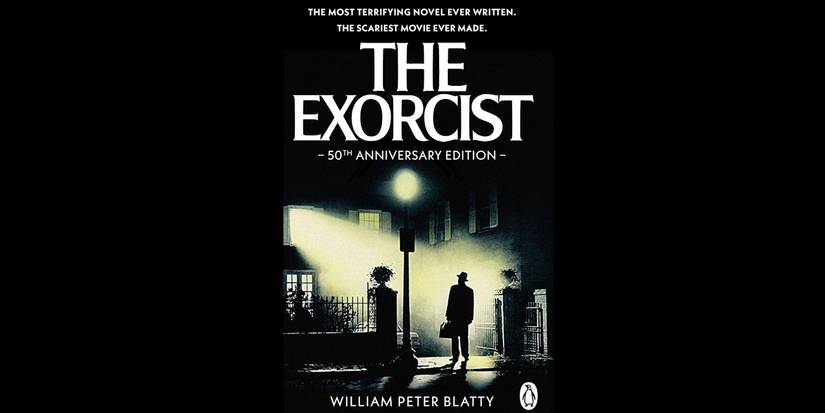
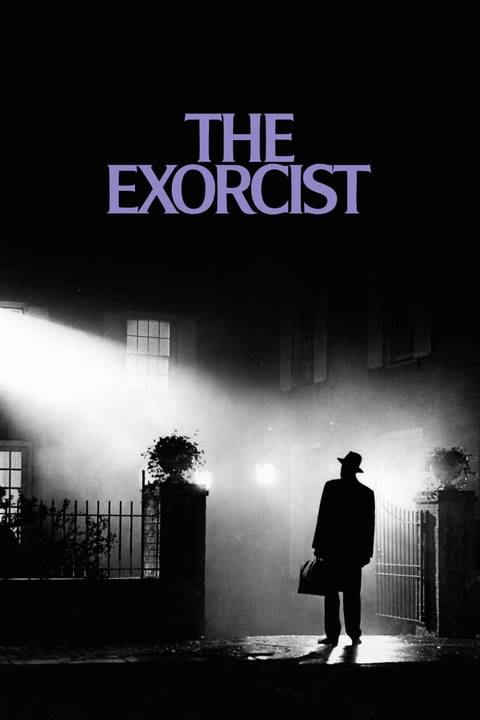
You certainly know the movie, even if you didn’t realize it was based on a book! William Peter Blatty’s The Exorcist is a 1971 horror novel allegedly inspired by a real-life incident. The book follows the story of 12-year-old Regan, the daughter of a famous actress, who gets possessed by a demon. Two Roman Catholic priests attempt to exorcise the evil power, but it takes a terrible toll on their minds, bodies, and souls. Blatty later earned an Academy Award for his screenplay, adapting the novel as the supernatural horror thriller film directed by William Friedkin.
The Exorcist’s publication was quite a moment in the pop culture of the time, earning critical acclaim and utterly terrifying the reading public. It received greater attention with the release of the film, another horror landmark, which then inspired multiple sequels, but the original novel is arguably where the story is at its most potent. Combining deep psychological realism and grounded subjects like theological controversies and human grief with paranormal terror, the novel is an absolute masterpiece of demonic horror.
- Release Date
- December 26, 1973
- Runtime
- 122 minutes
- Director
- William Friedkin
- Writers
- William Peter Blatty
- Producers
- Noel Marshall
KioskNews shows a cleaned-up reading view extracted from the publisher’s page — the original always lives on their site, not ours.