Commentary: Jensen Huang Is bigger than Nvidia – and it’s a problem
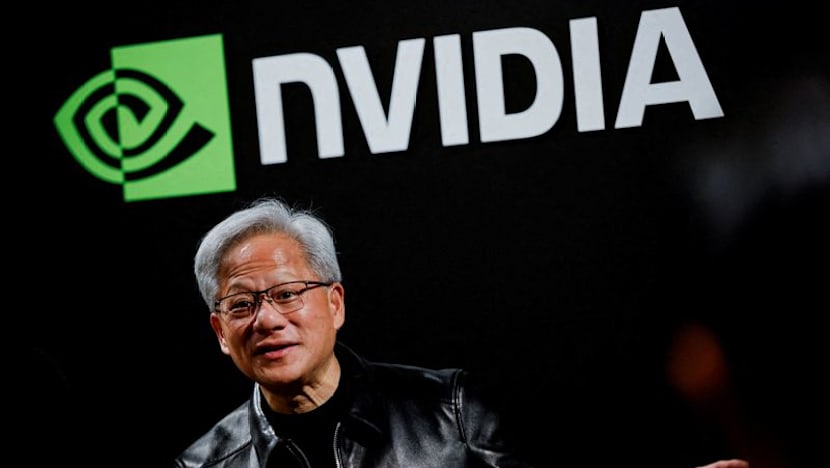
The revelation of the CEO’s affair with an alleged Chinese spy is not just shaking up the chipmaker but the entire AI world, says Shuli Ren for Bloomberg Opinion.
New: You can now listen to articles.

This audio is generated by an AI tool.
10 Nov 2026 05:59AM
HONG KONG: When a high-profile chief executive is in trouble, investors worry about key-person risk and whether the company will continue to prosper. But what if that businessman is crucial to an entire narrative that has underpinned the global markets boom?
Nvidia said on Sunday (Nov 8) that it was opening an investigation into Jensen Huang, after the CEO acknowledged that he had a romantic relationship with a business executive whom US intelligence determined was a Chinese spy.
The path forward – and Huang’s future – will depend on what emerges from the board’s fact-finding process. But the revelation itself is shaking up the entire artificial intelligence world.
WILL NVIDIA’S MONEY KEEP FLOWING IN THE SECTOR?
Nvidia is not only the sector’s most valuable publicly listed company, with a market cap of US$4.5 trillion, but has lent its own creditworthiness to speed up infrastructure growth.
Over the last three years, it has offered US$300 billion in financial support to customers, in addition to investing billions into startups including neoclouds, or data centre operators that lease out computing power to AI labs.
Despite having only a 3.4 per cent stake, Huang is very much the boss and the architect of Nvidia’s corporate strategies. He has no heir apparent and has created an informal organisation structure whereby his direct reports – as many as 60, according to Bernstein Research – are tasked with rapidly implementing his decisions.
Will Nvidia’s money keep on flowing now that the central banker of AI is in a bit of trouble himself?
BAD TIMING FOR DATA CENTRES
This is bad timing for neoclouds. As the likes of CoreWeave are hit with skyrocketing borrowing costs and financing channels close, they naturally look to Nvidia for a lifeline.
Australia’s Firmus Grid, for instance, is reportedly in talks with the company for follow-on venture investments after pulling a much-anticipated initial public offering in Sydney. Deal negotiations may well be put on hold or scrapped altogether.
With Huang’s authority challenged, it’s only natural that Nvidia’s dealmakers take a more defensive stance and step back from vendor financing to customers, which has already worsened the chipmaker’s credit profile.
The cost of protecting Nvidia’s debt against default has tripled this year, as investors look to hedge against potential losses from mounting debt tied to data centres. Its corporate bond spread has widened as well.
STAR POWER TARNISHED
And how about AI infrastructure developments across Asia? The worry is that Nvidia will have to slow down shipments to the region while the company is under public scrutiny.
The Chinese woman who Huang had an affair with was an executive at Singapore-based Megaspeed International, which has been building data centres in Southeast Asia. The operator reportedly rented compute to Alibaba Group and gave China a backdoor way of getting access to advanced Nvidia chips.

As such, national security risks will surface just as Asian banks are getting more comfortable with chip financing and capital deployments into data centres are gaining momentum.
Going forward, the pace of billion-dollar deals could slow as lenders not only question how fast graphics processing units, or GPUs, will become technologically obsolete, but also whom their ultimate customers are.
A charismatic salesman, Huang has done a lot of talking, predicting the next trillion-dollar company and promoting Asia’s ecosystem. With his star power tarnished however, the AI trade is looking increasingly shaky. A bear market is looming.
KioskNews shows a cleaned-up reading view extracted from the publisher’s page — the original always lives on their site, not ours.