Experts name when and how Northern Lights could be visible from UK this weekend
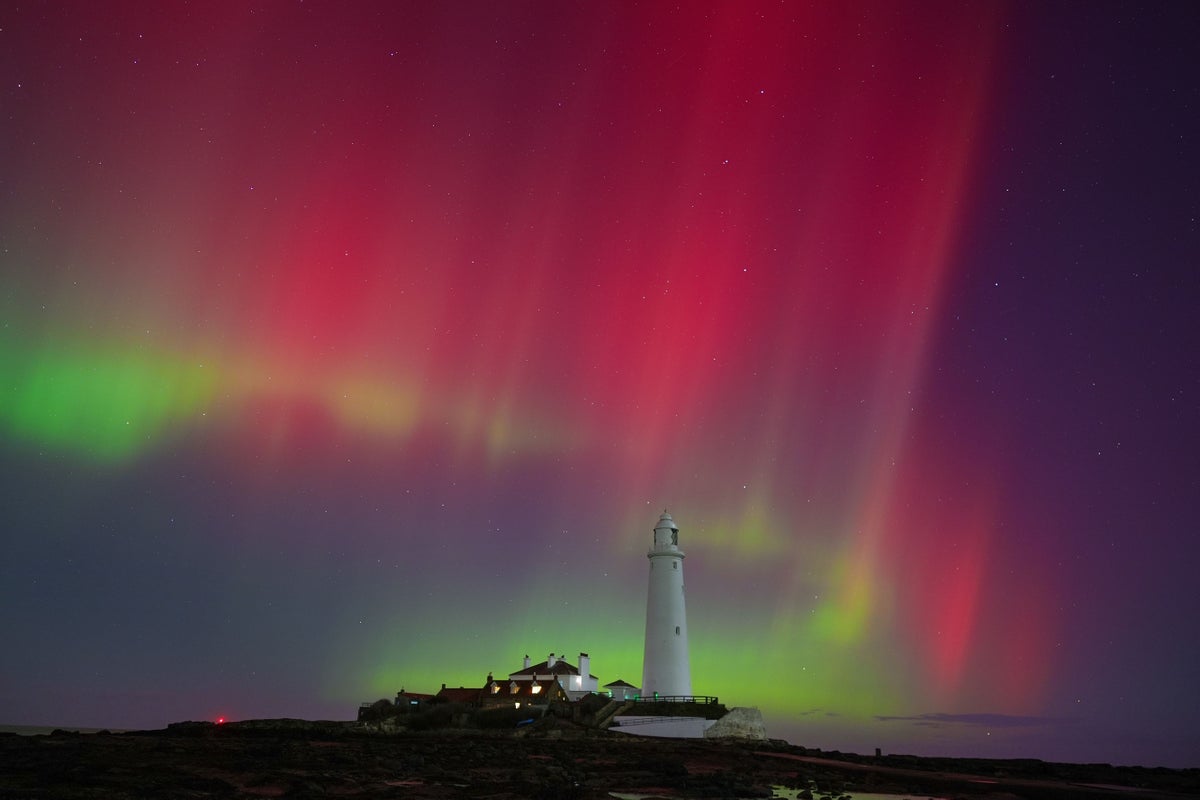
One of the world’s most famous natural sights, the Northern Lights, could be seen in the UK this weekend as an increase in solar activity is expected.
Usually skywatchers flock to Norway, Sweden, Finland and Greenland to catch a glimpse of the natural wonder - they are rarely seen in the UK.
But space weather prediction centres in North America and the United Kingdom are tracking an expected increase in solar activity which could trigger a spectacular display in Scotland and northern England.
The increase is driven by the eruption of a coronal mass ejection — large expulsions of plasma and magnetic field — from the sun on Tuesday.
The UK Met Office and the NOAA's Space Weather Prediction Center are reporting an elevated window for geomagnetic storms, which could be strong enough to increase auroral activity.
What causes the Northern Lights?
The Northern Lights, also called auroras, are caused by solar storms on the surface of the sun.
These storms give out eclectically charged particles which can travel millions of miles and in some cases, they collide with Earth.
Although most of these solar particles are deflected, some are captured by the Earth’s magnetic field creating spectacular displays.
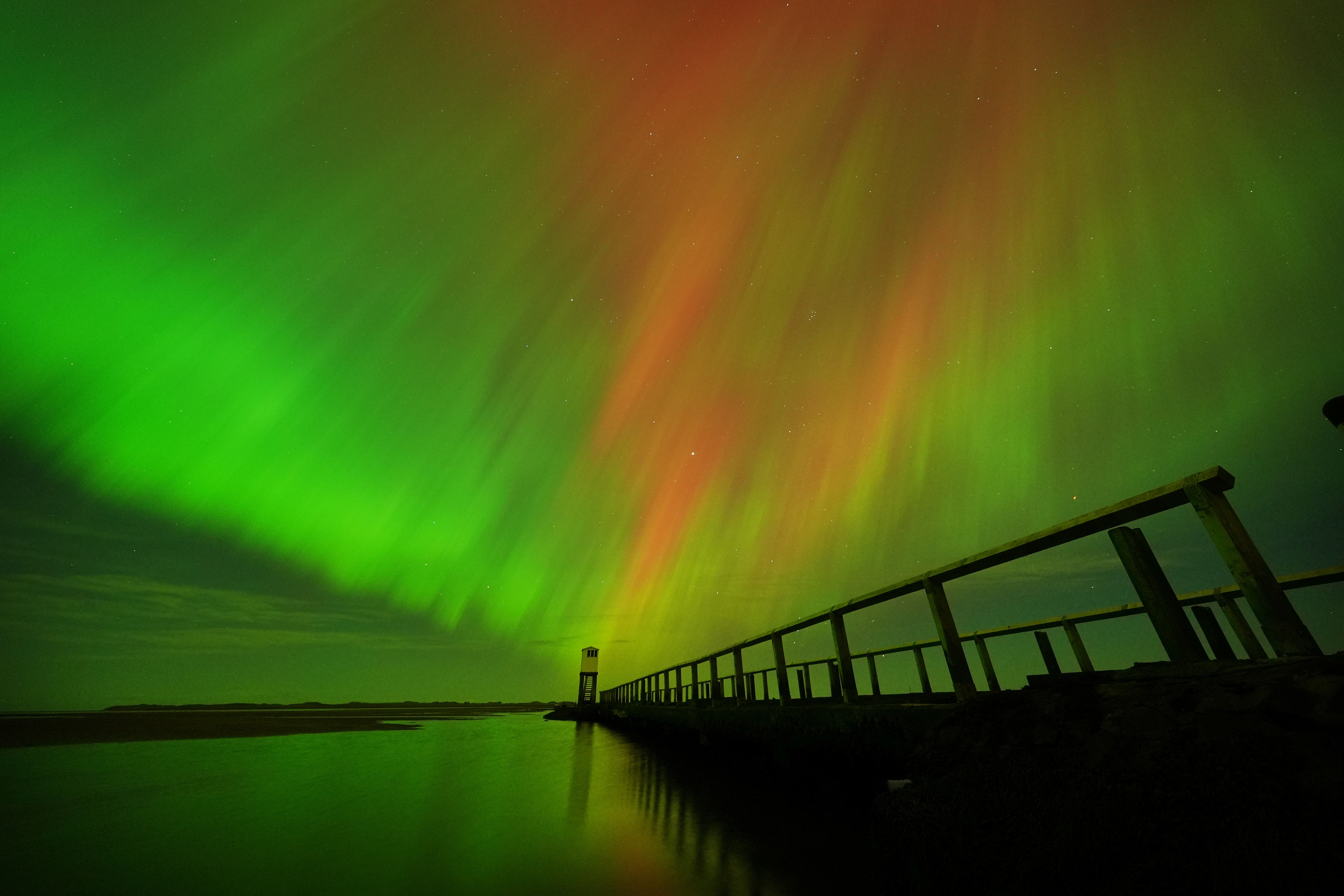
Auroras give off several colours, such as purple, blue and pink, in the sky and are most visible at night. These colours are created by two primary gasses in the Earth’s atmosphere — oxygen and nitrogen.
Oxygen causes a green light, and nitrogen gives off hints of purple or blue, while a red hue can also be seen when oxygen very high up in the Earth’s atmosphere interacts with solar particles.
Where could they be seen this weekend?
According to the Met Office’s space weather forecast there are three coronal mass ejections which have the potential to arrive at Earth on October 09, 10, and 11. But there is uncertainty on the arrival times.
“Aurora may be visible at times over the next few nights over Scotland and similar magnetic latitudes, with a chance of some visibility from Northern Ireland and Northern England,” the Met Office said.
Northern Lights are most active during the Equinox and Solstice, around March and April or September and October.
The best viewing conditions are when the sky is dark and clear or any clouds and light pollution, such as in remote areas that face the northern horizon.
The Moon is also expected to be below the horizon during peak aurora-watching hours, meaning the skies will be darker, increasing the chances of seeing the lights.
KioskNews shows a cleaned-up reading view extracted from the publisher’s page — the original always lives on their site, not ours.