Netanyahu's secret UAE trip: What is Israel's military censorship really for? - opinion
Israel has had military censorship for virtually the country’s entire history. That may seem bizarre for a democracy, but it does have a justification. Israel has spent much of its existence at war or under threat of war, and there are things that plainly should not be broadcast in real time. If Hezbollah fires a missile at Israel, for example, publishing its precise impact location can help the enemy figure out how well it aimed and do better next time.
That is national security. Prime Minister Benjamin Netanyahu’s secret trip to Abu Dhabi is something else.
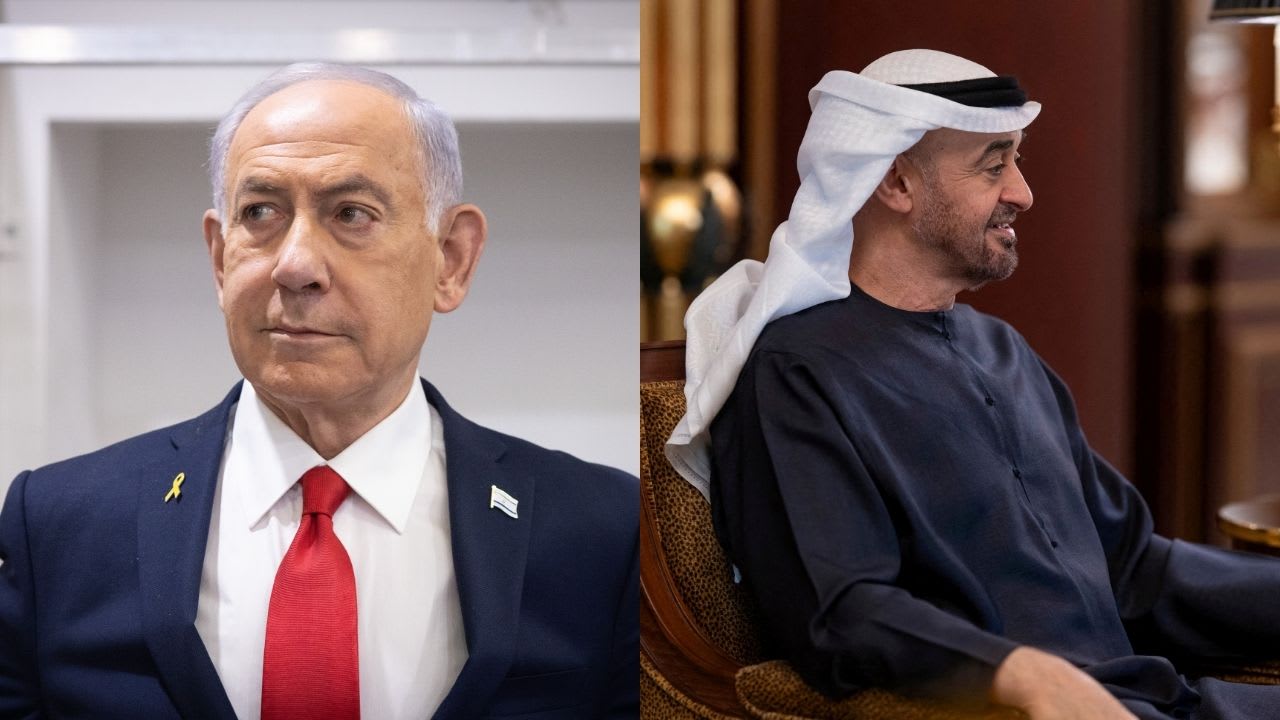
Netanyahu flew to the United Arab Emirates on Sunday for an hour-long meeting with UAE President Sheikh Mohamed bin Zayed Al Nahyan. The trip was secret until Israel’s Channel 12 reported it while Netanyahu was still abroad. Netanyahu’s office subsequently said the Shin Bet (Israel Security Agency) had filed a complaint accusing Channel 12 of violating censorship rules.
Israel and the UAE have diplomatic relations. Netanyahu was not slipping into an enemy country for clandestine negotiations, under danger should a mob get wind of his presence. There are legitimate reasons to keep a prime minister’s movements secret, but censorship is another matter – a tool of last resort.
But there are other circumstances at play – embarrassing circumstances.

The Associated Press reported that a person with firsthand knowledge of the meeting said Netanyahu asked Sheikh Mohamed to deny a report that the Emirati leader had warned him about a looming Hamas attack shortly before October 7, 2023. Netanyahu’s office denies that any such request was made and says the meeting focused solely on strengthening relations between Israel and the UAE.
The original report strikes at one of Netanyahu’s greatest political vulnerabilities. Since October 7, he has fought relentlessly over responsibility for the catastrophic failures that preceded the Hamas attack. The possibility that the leader of a friendly Arab country personally warned him of a major Hamas operation beforehand would be politically devastating.
If the account of Sunday’s meeting is accurate, Israel’s prime minister flew at public expense to a friendly foreign capital and used a meeting with its president in an effort to rebut a report damaging to himself. Then, when an Israeli television network reported that the trip had happened, military censorship was invoked.
On September 8, the UAE Foreign Ministry did not deny either the call or the warning. Its official statement said it does not comment on reports about conversations between leaders, then added that the UAE and Israel maintain direct communications and that, when necessary, relevant intelligence is shared between the appropriate entities.
Then, on September 20, an unnamed UAE official gave a more specific response to The National. The official rejected the claim that MBZ personally spoke with Netanyahu and conveyed the warning, saying security matters are handled through the relevant professional bodies and that details of this kind are not discussed at the leaders’ level.
A direct MBZ denial, if Netanyahu could get it, would have obvious political value. The reported phone call goes directly to the question that has haunted Netanyahu since October 7: What did he know before the attack, and when did he know it?
That is not what military censorship is for.
It also fits an increasingly familiar pattern. Under Netanyahu, the line separating the prime minister’s interests from the state’s has become infuriatingly blurry (although perhaps familiar to the citizens of a certain far larger democracy).
There have been years of controversies surrounding the Netanyahu family’s use of public resources, official travel, and expenses. The details can sometimes sound petty, even comical: another hotel, another bill, another extended stay abroad for himself and his wife, Sara. Focusing on the receipts, however, misses what they collectively reveal.
Military censorship is not for public relations
A government aircraft is not the prime minister’s airplane. Israel’s diplomatic relationships are not his personal relationships. The country’s security institutions are not his political staff. Military censorship is not his public relations department. These belong to the State of Israel, and the enormous powers attached to them are temporarily entrusted to whoever holds office.
That distinction is especially important now.
Israel is approaching an election after three extraordinary years of war. Netanyahu’s political future is uncertain. His government’s responsibility for October 7 remains one of the central questions hanging over the country. Decisions involving Gaza, Iran, and Israel’s broader security are being made in the final weeks of an increasingly intense political campaign.
There is already speculation in Israel that another confrontation with Iran could become entangled with Netanyahu’s political predicament. There is no evidence that Netanyahu has decided to launch a war for electoral purposes, and military action would have to be judged against the security circumstances at the time.
But Netanyahu himself has helped create the conditions in which Israelis ask the question.
A prime minister needs the public to believe that when he deploys the powers of the state, he does so because the interests of the state require it. Once those powers repeatedly appear alongside his personal political needs, that confidence erodes. In Netanyahu’s case, with the exception of his hardcore base, it’s gone.
That is an especially dangerous condition for a democracy at war. If war erupts, and Israelis again have to spend nights in shelters, they need to know it wasn’t because Netanyahu is behind in the polls.
The writer is a former Cairo-based Middle East editor and London-based Europe/Africa editor of the Associated Press. He served as chairman of the Foreign Press Association in Jerusalem and authored two books about Israel.
KioskNews shows a cleaned-up reading view extracted from the publisher’s page — the original always lives on their site, not ours.