33 Years Later, the Coldest Quote in Action Thriller History Still Hits Hard

Thomas Butt is a senior writer. An avid film connoisseur, Thomas actively logs his film consumption on Letterboxd and vows to connect with many more cinephiles through the platform. He is immensely passionate about the work of Martin Scorsese, John Ford, and Albert Brooks. His work can be read on Collider and Taste of Cinema. He also writes for his own blog, The Empty Theater, on Substack. He is also a big fan of courtroom dramas and DVD commentary tracks. For Thomas, movie theaters are a second home. A native of Wakefield, MA, he is often found scrolling through the scheduled programming on Turner Classic Movies and making more room for his physical media collection. Thomas habitually increases his watchlist and jumps down a YouTube rabbit hole of archived interviews with directors and actors. He is inspired to write about film to uphold the medium's artistic value and to express his undying love for the art form. Thomas looks to cinema as an outlet to better understand the world, human emotions, and himself.
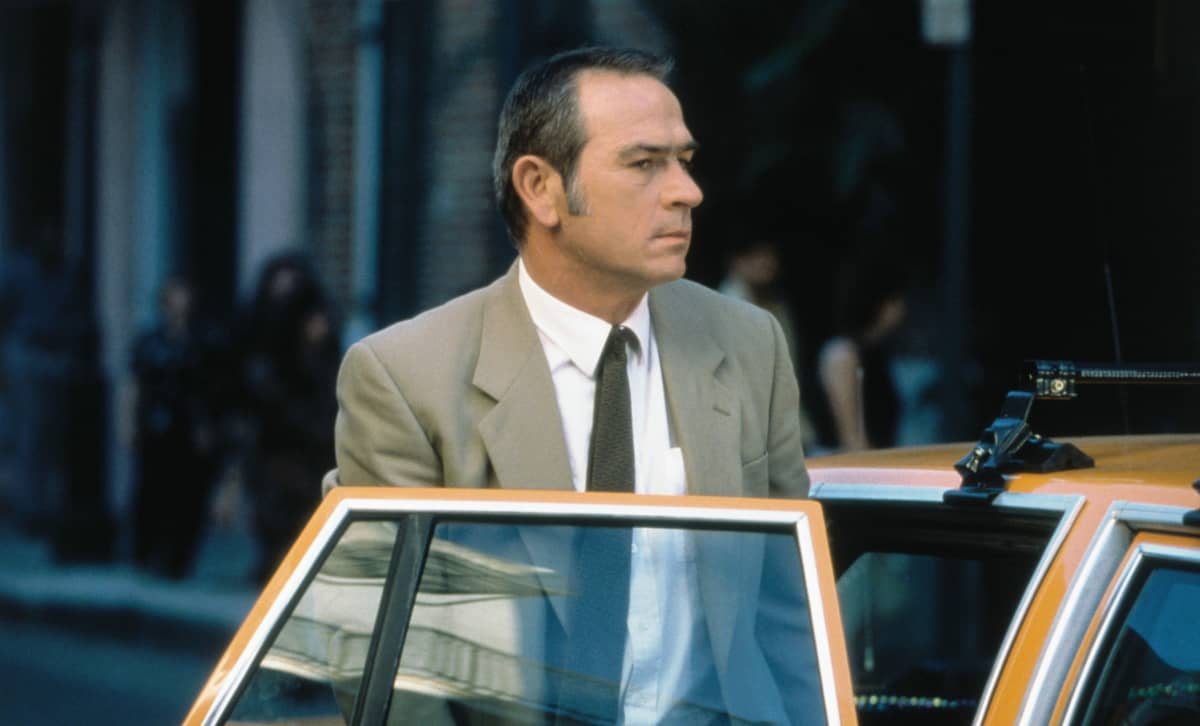
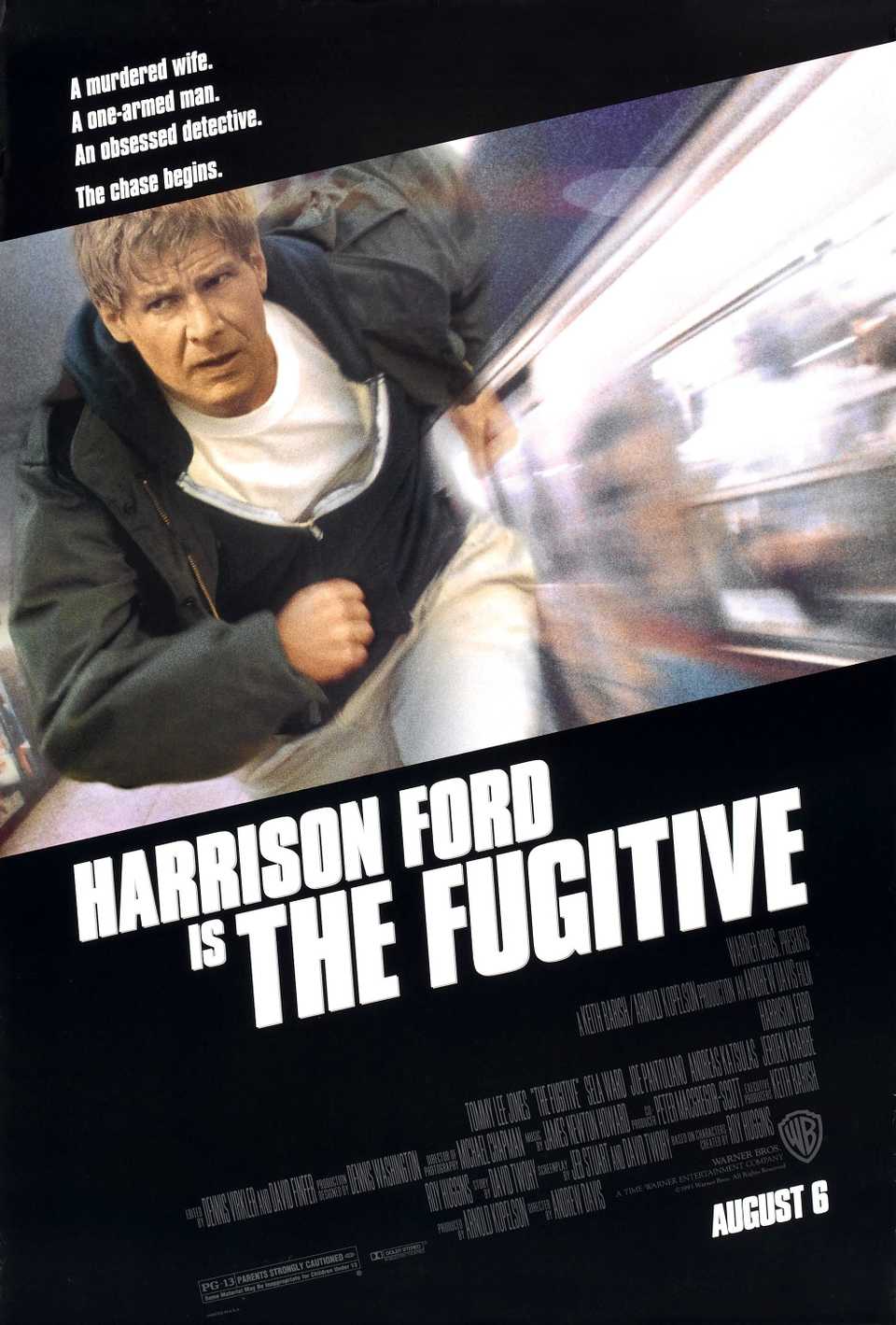
The Fugitive took the world by storm when it was released in 1993. Not only was this action-thriller film, based on the television series from the 1960s, a massive box-office success, but it was also a critical darling and, miraculously, a major Oscar contender, receiving nominations for Best Picture and a win for Tommy Lee Jones for Best Supporting Actor. Starring Harrison Ford as Dr. Richard Kimble, a man wrongfully convicted of the murder of his wife who goes on the run from U.S. Marshals, The Fugitive, directed by Andrew Davis, shares little resemblance to other movies recognized by the Academy Awards, even the other blockbusters. And that especially applies to Jones' surprising Oscar win for playing U.S. Marshal Samuel Gerard, who leads the charge in pursuit of Kimble. When voters heard Gerard's legendary line, "I don't care," one of the coldest lines in thriller movie history, they had no choice but to hand Jones the Oscar.
Samuel Gerard is Uninterested in Richard Kimble's Plea for Innocence in 'The Fugitive'

Harrison Ford was at the peak of his powers in the early '90s, with two iconic characters in Han Solo and Indiana Jones already under his belt. To upend his heroic status on the big screen, The Fugitive had Ford on the defensive, running away from federal prosecution for a crime he didn't commit, but who can really be sure that he didn't slay his wife? Operating on the opposite side of the law and serving out justice is Tommy Lee Jones as the unflappable Samuel Gerard, who unconventionally has his big showdown with Kimble during the film's first act inside a storm drain. Obtaining a lost gun, Richard Kimble has Gerard in his crosshairs, but rather than shooting, he, once again, insists that he didn't kill his wife, to which Gerard, holding his hands in the air in compliance, responds, "I don't care!" These three words immediately entered the Hollywood canon.
Jones, the consummate professional who has consistently carried a no-nonsense, unfussy attitude to the screen, perfectly distills his persona with The Fugitive's most biting line of dialogue. It may not be a quippy retort or badass affirmation, but Gerard laid down the law and outlined the harsh reality of Kimble's predicament while being confronted at gunpoint by a potentially violent fugitive. Most movies provide their law enforcement officers with an altruistic motive, complemented by a flowery speech about the moral importance of the law, but The Fugitive underlines that being a sworn officer is just a job. It is not in Gerard's job description to be the judge and jury of Kimble's murder case, and his opinion is irrelevant, even if he believed his innocence. The line is a sobering punch in the face for Kimble, whose profession as a doctor relies on giving opinions and persuading clients.
'The Fugitive's Best Line Blurs the Line Between Morality and Justice
The Fugitive is a truly timeless film. Its rich simplicity, tight narrative and genre construction felt like a throwback to Golden Age Hollywood, which likely appealed to members of the Academy Awards. With two towering stars, a compelling premise, and a balanced confection of spectacle and character, The Fugitive, which later received an unnecessary sequel, U.S. Marshals, makes the art of filmmaking look easy, as it nails the fundamentals of narrative storytelling with ease. The moment that even the stuffiest Oscar voters had to put their hands up and give Tommy Lee Jones the statuette had to have been the "I don't care" scene in the storm drain, as the Men in Black actor delivered the fury of a Shakespeare monologue in just three one-syllable words. There's something so undeniable about Jones' conviction as his character faces a crossroads. A desperate Kimble could feasibly pull the trigger, and Gerard shows fear, but he never lets it interfere with his devout commitment to his job.
Speaking to the movie's timeless nature, "I don't care" is a moment that could have emerged in a Warner Bros. thriller from the 1940s. The brevity of the line is not its only admirable feat, as Tommy Lee Jones' signature moment in The Fugitive crystallizes the dramatic weight of the film. Andrew Davis' enduring thriller is devoid of themes and subtext in the traditional sense because it's a film about characters defined by their actions. Samuel Gerard has nothing of deep substance to say to Kimble during this pivotal moment. He just wants to bring this man into custody. When you're stuck in a grave misunderstanding, arguing with someone defined by their profession is an impossible mountain to climb.
The Fugitive
- Release Date
- August 6, 1993
- Runtime
- 131 minutes
- Director
- Andrew Davis
- Writers
- David Twohy, Jeb Stuart, Roy Huggins
KioskNews shows a cleaned-up reading view extracted from the publisher’s page — the original always lives on their site, not ours.