InquirerHernandez debunks claim House is hatching ‘no-el’ planThe Jerusalem PostEuropean Commission targeted in cyberattack lasting 10 days, sensitive personal data at riskPunchVIDEO: South Africans protest Nigerians calling Pretoria community ‘Little Lagos’Daily MaverickECD CRIMINALISED: Orange Farm crèche principal convicted over missing permit only City of Joburg could unlockSky TG24Berlino, Witkoff e Kushner alla Cancelleria di MerzBollywood HungamaBIG BREAKING: Ramayana ticket prices SLASHED from November 20; here's how much you'll have to pay for 2D, 3D and IMAX versionsZDF heuteAktuelle Pressemitteilungen des ZDFCBS NewsTrump says Iran may be working on biological weaponsNOS'Nederlandse ambassade in Kyiv beschadigd door drone-inslag'BBC عربيتصاعد المخاوف بين عرب إسرائيل بعد إحراق مسجد وحادثة دهسTagesschauLiveticker zu Gipfeln: ++ Kushner und Witkoff in Berlin angekommen ++Global NewsFormer top Mountie to be sentenced for assault on teen in B.C. court
The Daily Newsstand · Free, Always
Thursday, November 19, 2026

Top U.N. court rules Myanmar committed genocide against the Rohingya
Translate
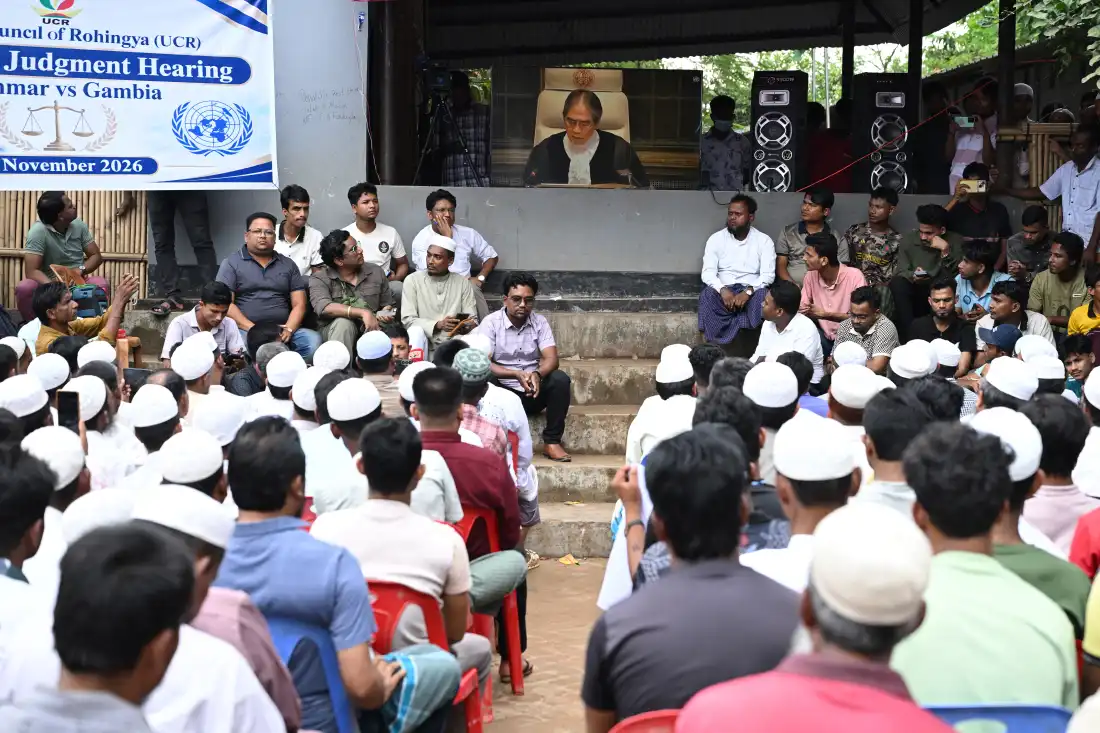
Rohingya refugees watch the International Court of Justice (ICJ) ruling over whether Myanmar committed genocide against Rohingya Muslims, on a screen at a camp in Bangladesh's Cox's Bazar on November 19, 2026. Myanmar security forces killed thousands of Rohingya civilians during its brutal 2017 crackdown on the Muslim minority, the International Court of Justice said on November 19, as it weighs whether such actions constituted genocide. Myanmar's soldiers killed and raped Rohingya, committed violence against children, and destroyed Rohingya villages and settlements, the top UN court said.

Rohingya refugees watch the International Court of Justice (ICJ) ruling over whether Myanmar committed genocide against Rohingya Muslims, on a screen at a camp in Bangladesh's Cox's Bazar on November 19, 2026. SALAHUDDIN AHMED/AFP via Getty Images hide caption

SALAHUDDIN AHMED/AFP via Getty Images

The International Court of Justice (ICJ) has found Myanmar responsible for genocide against the Rohingya during its 2017 military operations in northern Rakhine State.

Delivering the judgment, Judge Yuji Iwasawa said the scale and nature of the military's actions went "well beyond what would be required to punish the population" and were instead "characteristic of an intent to destroy a substantial part of the group."
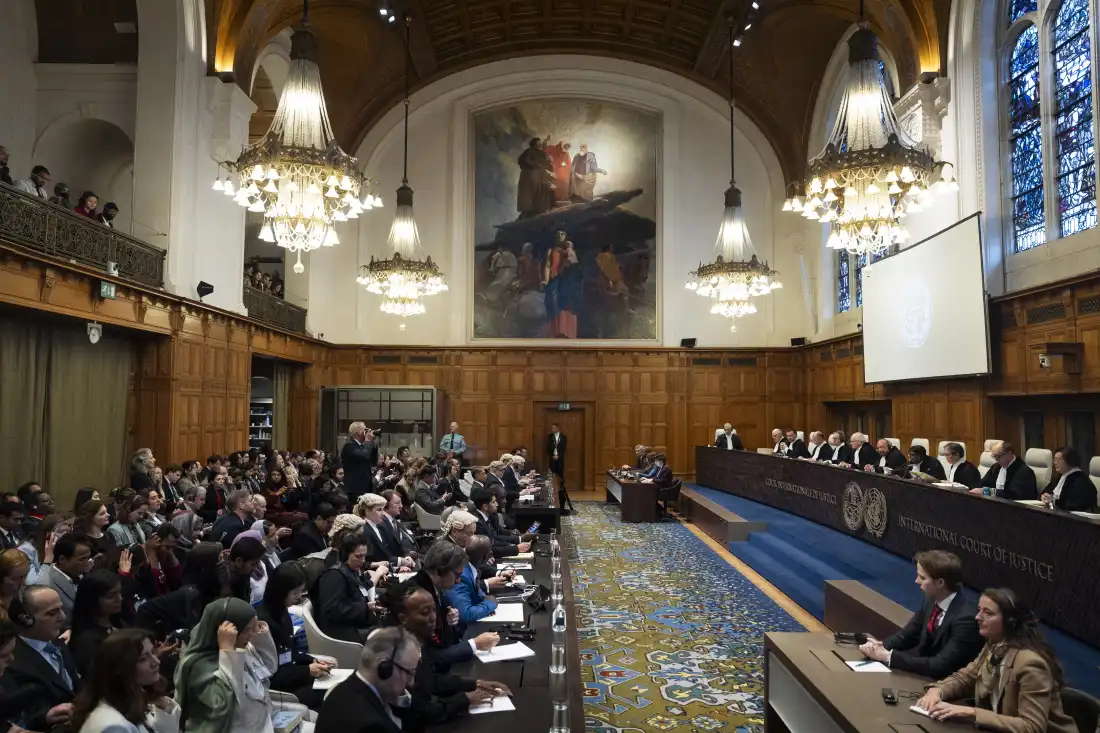
This photograph shows a general view of judges of the International Court of Justice (ICJ) attending a public hearing ahead of the reading of the Court's judgment in the genocide case brought by Gambia against Myanmar, with 11 States intervening, in The Hague on November 19, 2026. The top United Nations court on November 19, 2026 began its landmark ruling on whether Myanmar committed genocide against the mostly Muslim Rohingya minority with its brutal 2017 crackdown that forced hundreds of thousands to flee the country.

This photograph shows a general view of judges of the International Court of Justice (ICJ) attending a public hearing ahead of the reading of the Court's judgment in the genocide case brought by Gambia against Myanmar, with 11 States intervening, in The Hague on November 19, 2026. JEROEN JUMELET/ANP/AFP via Getty Images hide caption

JEROEN JUMELET/ANP/AFP via Getty Images

The judges estimated that around 815,000 Rohingya lived in northern Rakhine State before the operations, and concluded that around 10,000 were violently killed during the 2017 clearance campaign.
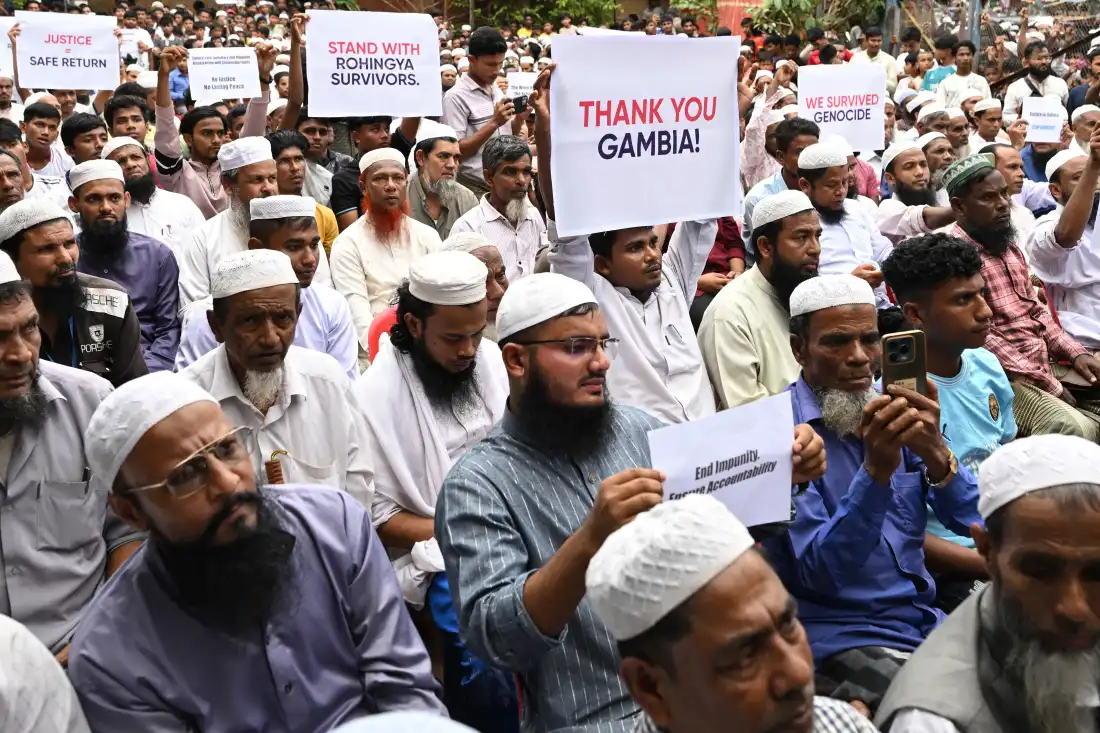
Rohingya refugees watch the International Court of Justice (ICJ) ruling over whether Myanmar committed genocide against Rohingya Muslims, on a screen at a camp in Bangladesh's Cox's Bazar on November 19, 2026. Myanmar security forces killed thousands of Rohingya civilians during its brutal 2017 crackdown on the Muslim minority, the International Court of Justice said on November 19, as it weighs whether such actions constituted genocide. Myanmar's soldiers killed and raped Rohingya, committed violence against children, and destroyed Rohingya villages and settlements, the top UN court said.

Rohingya refugees watch the International Court of Justice (ICJ) ruling over whether Myanmar committed genocide against Rohingya Muslims, on a screen at a camp in Bangladesh's Cox's Bazar on November 19, 2026. SALAHUDDIN AHMED/AFP via Getty Images hide caption

SALAHUDDIN AHMED/AFP via Getty Images

The court found that Myanmar's security forces "acted with genocidal intent." Judge Iwasawa said the operations were preceded by an atmosphere of anti-Rohingya hate speech, with the community portrayed as "sub-human" and "a violent threat."

View the original on NPR →

KioskNews shows a cleaned-up reading view extracted from the publisher’s page — the original always lives on their site, not ours.