Some Democrats trying to reclaim the issue of faith from the Republican Party
For years, Republicans have had a lock on those who base their vote on their religious preferences and values, but this year's midterm elections have seen some Democratic candidates sharing their faith to try to connect with voters.
Starting in the 1980s, in what one expert called an "exodus," there was a shift of voters to the Republican Party based on moral issues.
But in some of the most critical races that will help decide control of the next Congress, several Democrats are openly sharing how their faith shapes them and their politics.
One of the most consequential Senate races for Democrats this cycle is in Texas, where James Talarico, a state representative and seminarian, hopes his background will help him defeat Republican nominee Ken Paxton, the state's attorney general, who has been marred by a series of scandals, including being the first Texas official to be impeached since 1917. He was later acquitted by the Texas Senate.
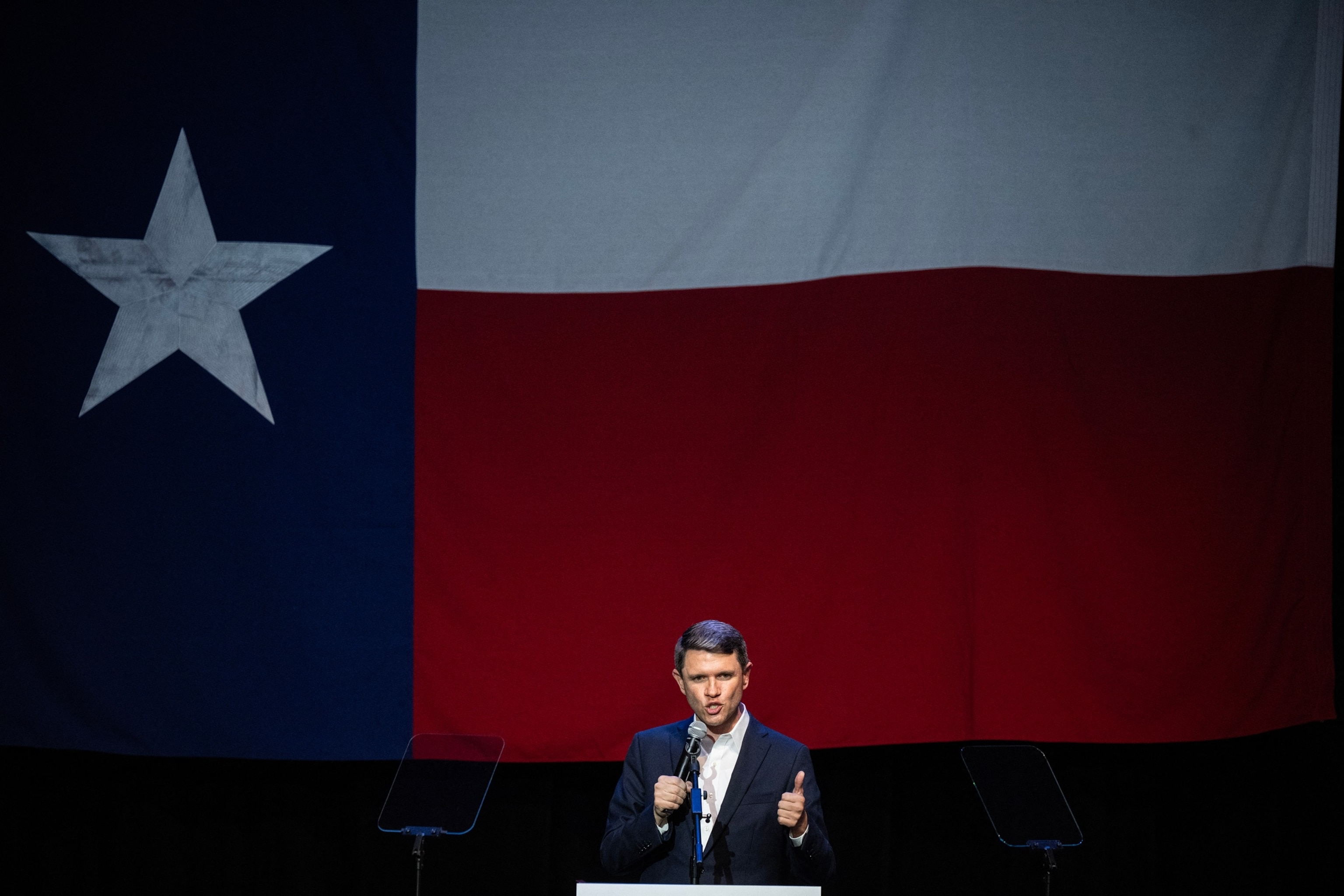
Democratic candidate for US Senate James Talarico speaks during a campaign rally as part of his "New American Dream Tour" in Pasadena, Texas, Aug. 9, 2026.
Ronaldo Schemidt/AFP via Getty Images
When asked earlier this year how he hopes to flip a Texas seat, Talarico said that his faith teaches him to love his neighbor despite whatever differences there might be.
"I think in Texas, across the political spectrum, there is a deep hunger for a different kind of politics, not one that's rooted in fear or hate or division, but one that's rooted in love, and that old politics that we've been suffering under for the last 10 years -- politics as bloodsport, as trolling and owning, as as total war -- that, that politics is dying, and a new politics is being born," he said.
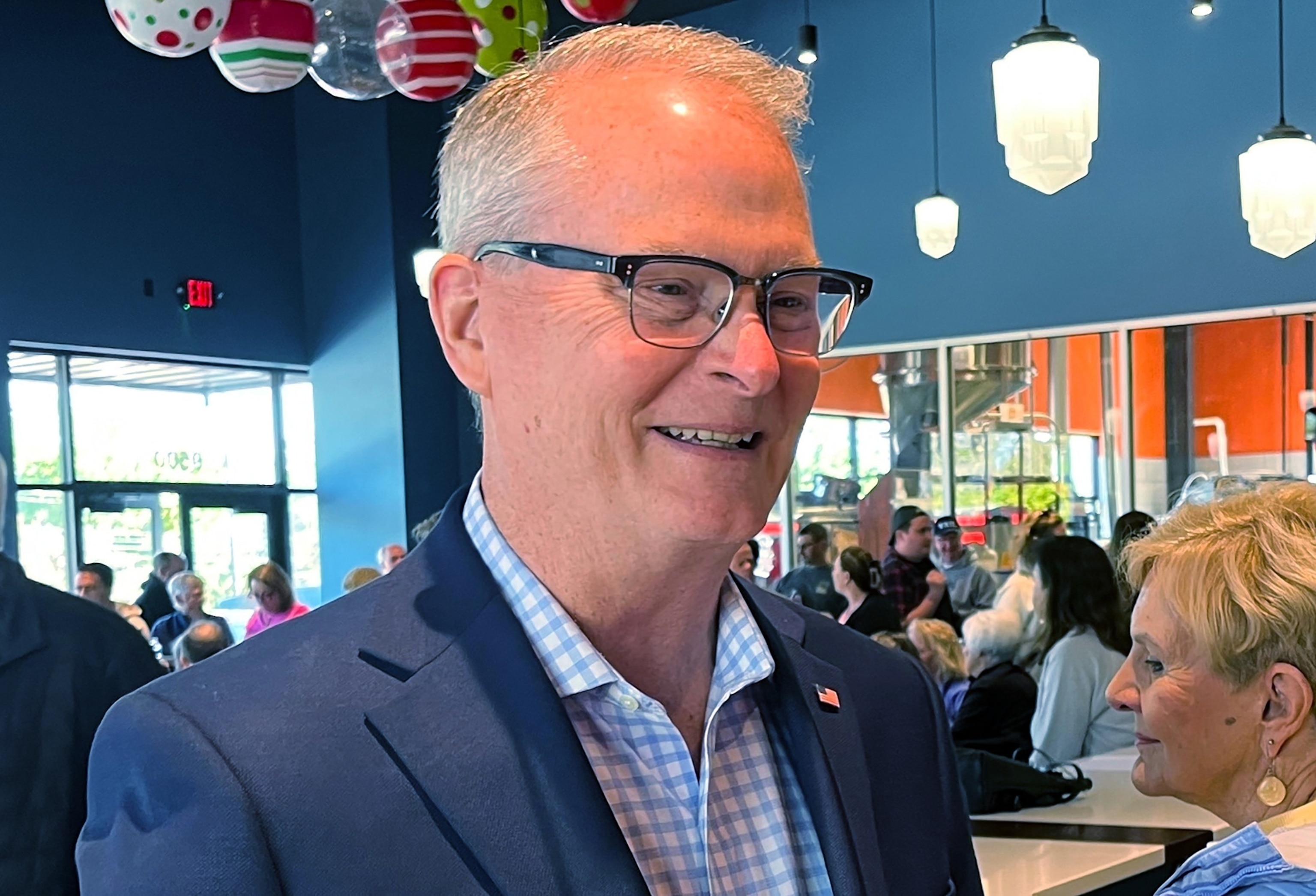
Adam Hamilton, a Methodist mega-church pastor from Kansas, talks to voters as he wraps up a U.S. Senate listening tour, April 18, 2026, at Limitless Brewing in Lenexa, Kansas.
Heather Hollingsworth/AP, FILES
In Kansas, Rev. Adam Hamilton -- who runs the country's largest United Methodist Church -- is running for U.S. Senate.
In Iowa's competitive gubernatorial election, the Democratic nominee, state auditor Rob Sands, has connected his Lutheran faith to why he identifies as a Democrat, saying on the campaign trail that "Jesus is for the little guy."
In an Iowa House district considered to be one of the most competitive this cycle, Democratic state Sen. Sarah Trone Garriott, an ordained Lutheran minister, is running to unseat Republican incumbent Rep. Zach Nunn.
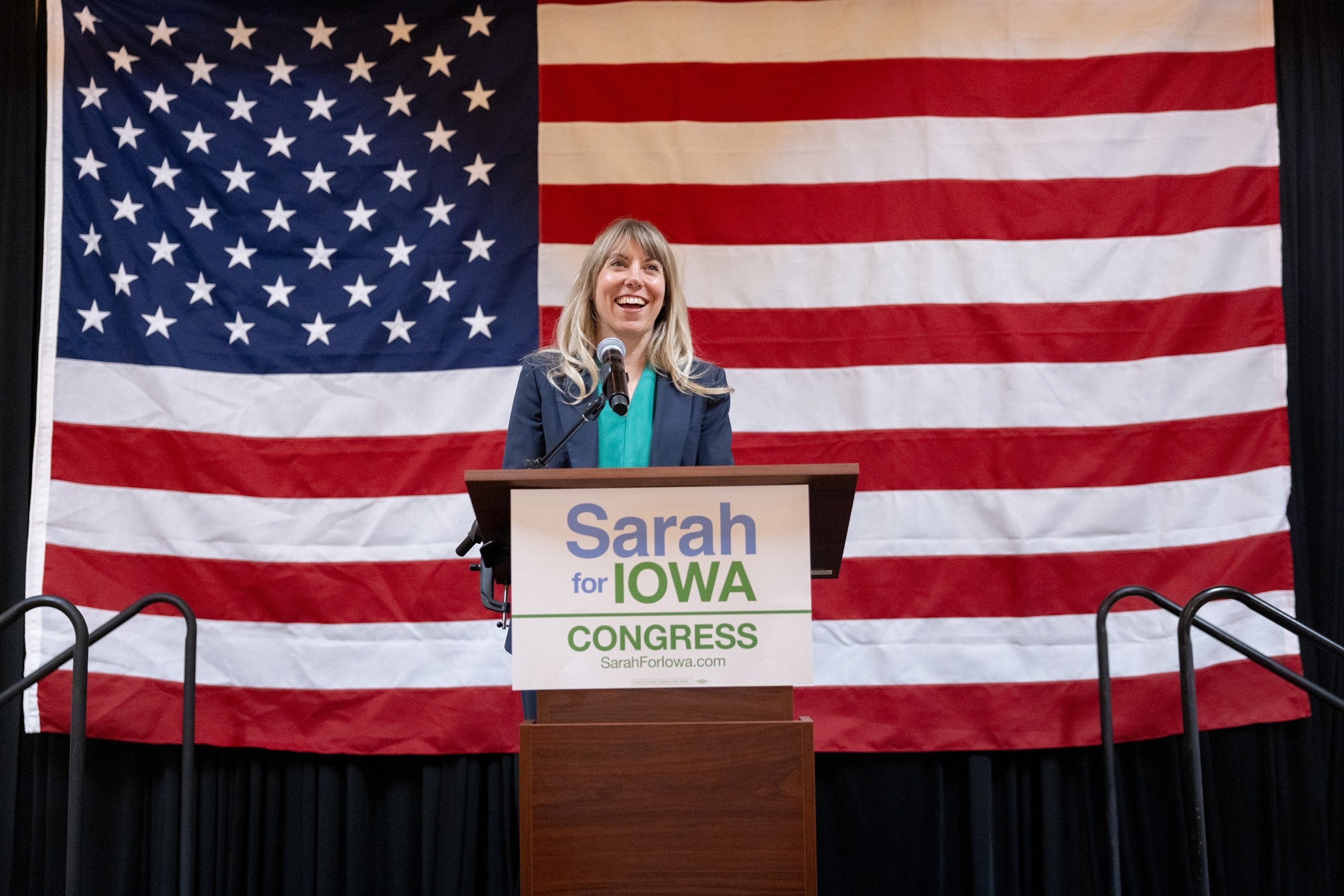
State Senator Sarah Trone Garriott, a Democrat from Iowa and US congressional candidate, during a primary election night event at The Loft DSM in Des Moines, Iowa, June 2, 2026.
Scott Morgan/Bloomberg via Getty Images
'My faith is not a campaign strategy'
Trone Garriott preached on weekends for the last nine years for the Des Moines Area Religious Council (DMARC) Food Pantry Network, an interfaith nonprofit that feeds tens of thousands of people each month. While she no longer works with DMARC, she continues to preach on weekends, which she said helps her "stay grounded in what really, really matters."
"My faith is not a campaign strategy. It's just a really important part of who I am," she said, adding she's built some "pretty powerful" connections over the years.
Leaning into faith also means finding "common ground," said Trone Garriott, who has been a state senator since 2021. She credits her background as a religious leader for helping in her elections and said she won tough statehouse races by "being really accessible to people."
Religiously unaffiliated voters have historically aligned with Democrats -- 70% to 27% for Republicans, according to research in 2024 from Pew Research. In the same survey, 62% of registered voters who attended religious services once a month or more aligned with Republicans, compared to 41% of those who attend services less often. Yet the call to "love my neighbor," a central view to Trone Garriott, can apply to other people "even if they're coming from a different place," she told ABC News.
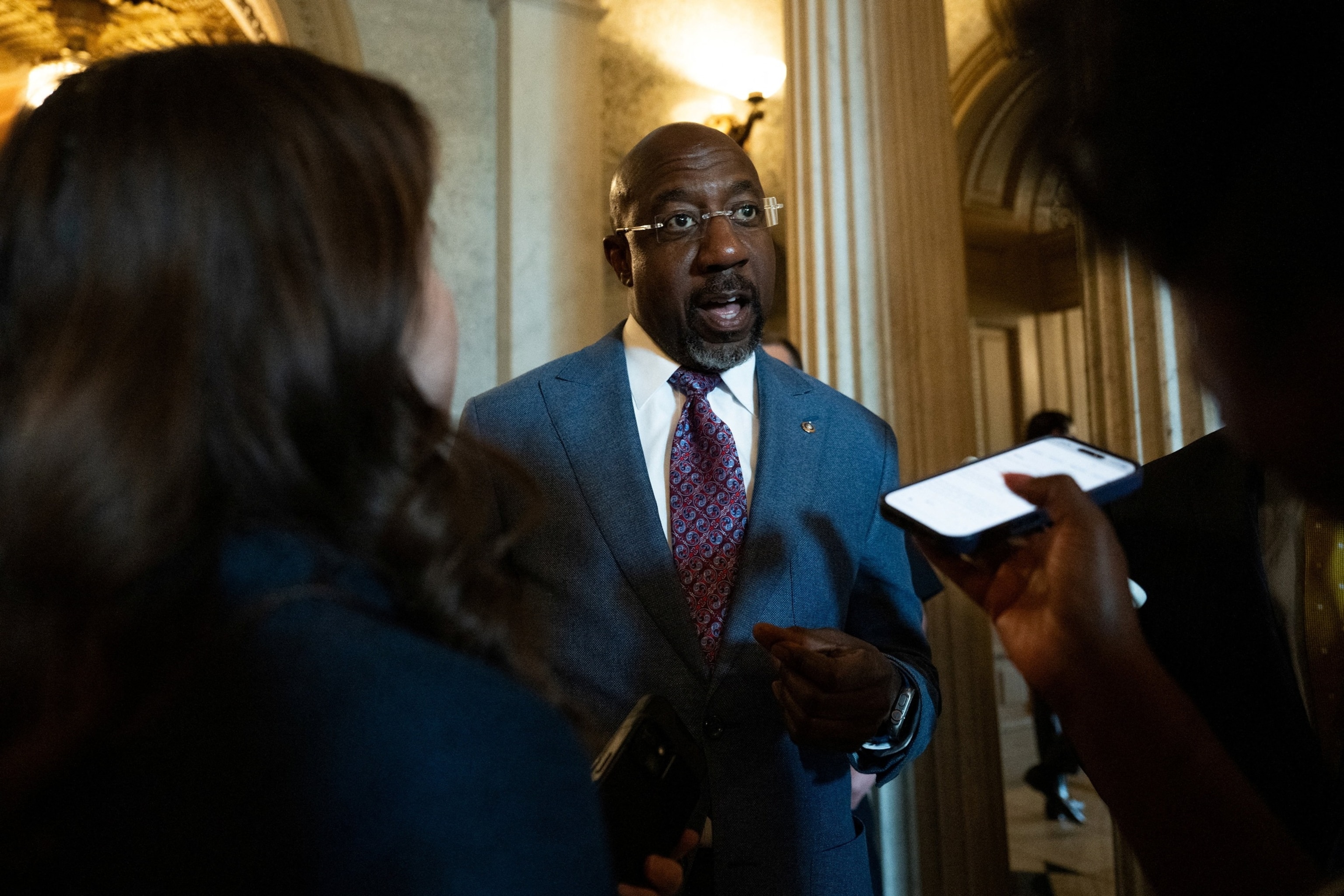
Senator Raphael Warnock speaks to reporters on Capitol Hill., July 22, 2026.
Annabelle Gordon/Reuters
Other elected officials view their faith as a way to build a bridge and connect with voters.
Sen. Raphael Warnock said his faith defines him. Serving as the senior pastor of the historic Ebenezer Baptist Church where Rev. Martin Luther King Jr. was once co-pastor with his father, Warnock flipped a Republican-held seat in Georgia in a special election runoff in 2021 that allowed Democrats to regain control of the Senate.
Warnock told ABC News that he centered his campaign and politics on his faith, which he said is part of who he is and what he stands for, to build the coalition that helped him win.
"I was simply being myself. It was not so much a strategy as much as it was my insistence that I speak in my own voice and let voters decide if this is something that they wanted to support," Warnock said.
Ceding the 'moral vocabulary' to Republicans
Warnock has said that Democrats have ceded faith and "the moral vocabulary around faith and values" to Republicans.
Doug Pagitt, a pastor and executive director of Vote Common Good, an organization dedicated to Democratic outreach to Catholic and evangelical voters, echoed Warnock's comment.
That hasn't always been the case. During the 1976 presidential election, Jimmy Carter, a born-again Baptist, won about half of white evangelical voters. Since then, Democrats have steadily declined, which has materialized more over the last two decades.
Since then, "The Democratic Party basically gave up on religious identity and voting and turned it over to Republicans who really weren't targeting religious voters," Pagitt said.
David Campbell, a professor of politics at the University of Notre Dame, told ABC News that Carter ran on describing himself "as a born-again or evangelical Christian, and no presidential candidate had ever done that before."
Campbell said that, at that point, evangelicals did not even think of themselves as a political constituency.
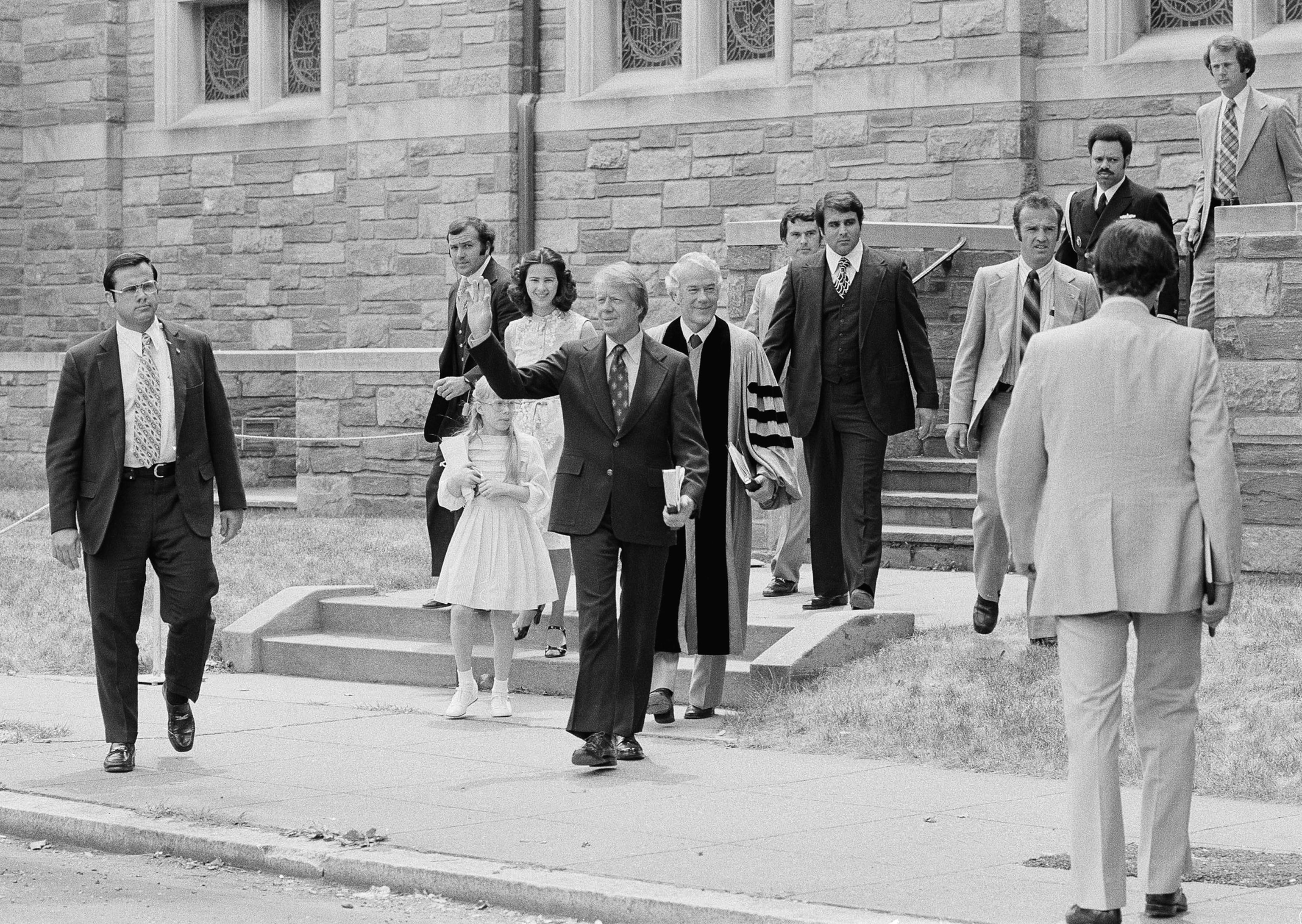
In this June 1977 file photo, President Jimmy Carter waves as he departs the First Baptist Church in Washington, D.C., with daughter Amy and daughter-in-law Caron Carter.
AP file photo
"[At the time] most of those Southern evangelicals were Democrats. So, it made sense that a Democratic candidate would be the one to lean into this identity," Campbell said.
But Campbell said that starting in the 1980s, support from evangelicals began to shift to the GOP as conservative religious leaders like Rev. Jerry Falwell began emphasizing issues such as abortion, women's rights and gay rights.
"But that was a sort of bundle of issues that won those white evangelicals over to the Republican Party. Of course, they were joined by some conservative Catholics and a few other. ... so there was an exodus from the Democrats to the Republicans on the basis of these moral issues, and that was tied up with the evangelical identity," Campbell said.
Asked about whether some Democrats aren't as open about how their religion influences their politics, Campbell said, "that's true of white Democrats, but it's not been true of Black Democrats," listing Warnock and Sen. Cory Booker as prominent examples of Black Democrats sharing how faith influences their politics.
According to the Pew Research Center, a large majority of Black Protestants identify with the Democrats.
Campbell explained that Democrats have a larger number of secular voters -- people who are not religious, which is a growing segment of the population and within the Democratic Party. Democrats, Campbell said, have to figure out how to appeal to those religious groups without alienating those secular voters.
"So, it's actually a tricky road for [Democrats] to walk along, and some do it better than others," Campbell said.
KioskNews shows a cleaned-up reading view extracted from the publisher’s page — the original always lives on their site, not ours.