Midterm losses could give Trump a quest to emerge from Apec summit as a winner
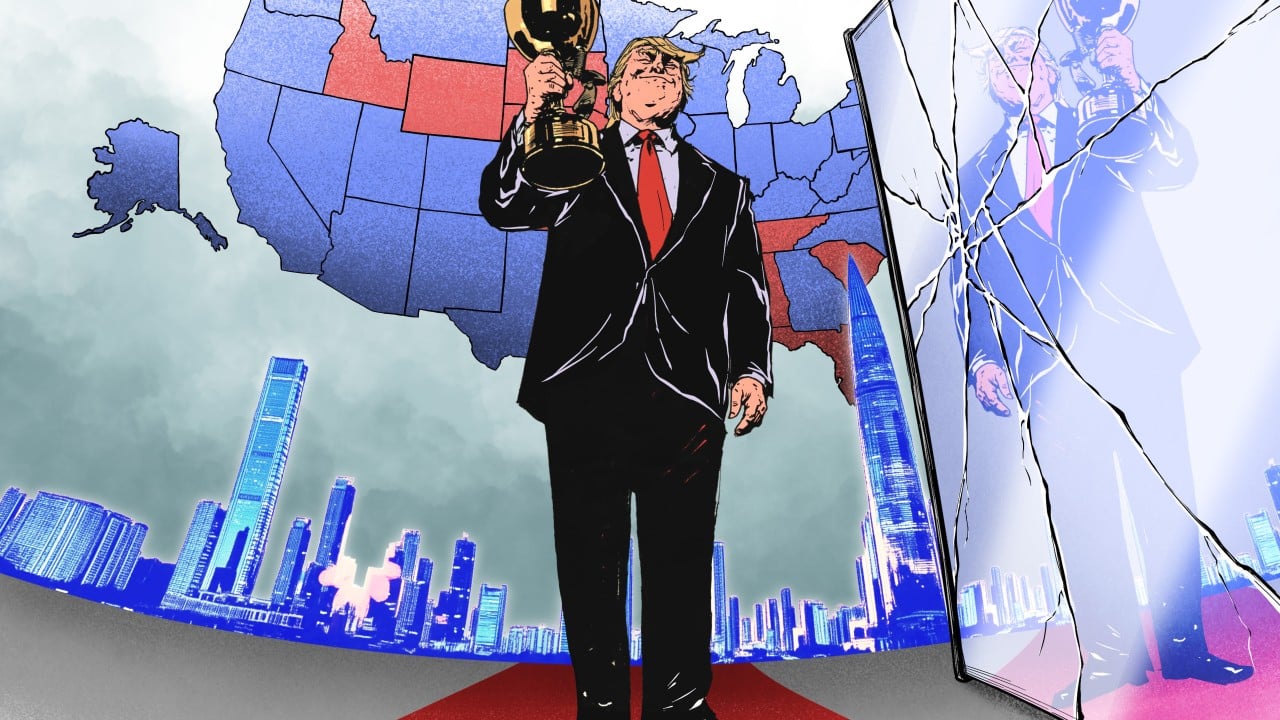
Experts watching the summit are divided. Some see clear signs of exhaustion in Trump and a more subdued presence in recent days and expect him to work harder, or cut appearances short, to reassert power.
02:53
US midterm elections: What the results mean for mainland China, Taiwan and foreign policy
Others believe his confident, expansive body language and warm rapport with Xi will remain largely unchanged. Some caution that the need to feel like a winner could shape both his public performance and what deals he is willing to claim.
Meanwhile, Beijing is expected to maintain its measured diplomatic posture and keep the leader-to-leader channel open, regardless of whether Trump arrives in his usual combative mode or adopts a more subdued demeanour.
That, however, will not stop Beijing from internally assessing the implications of the US president’s weakened domestic position.
Trump at Apec: fatigue or firepower?
Predicting Trump’s stage presence is difficult, according to body language expert Patti Wood. “Some days he looks ‘peppier’ and more fired up and expansive than others.”
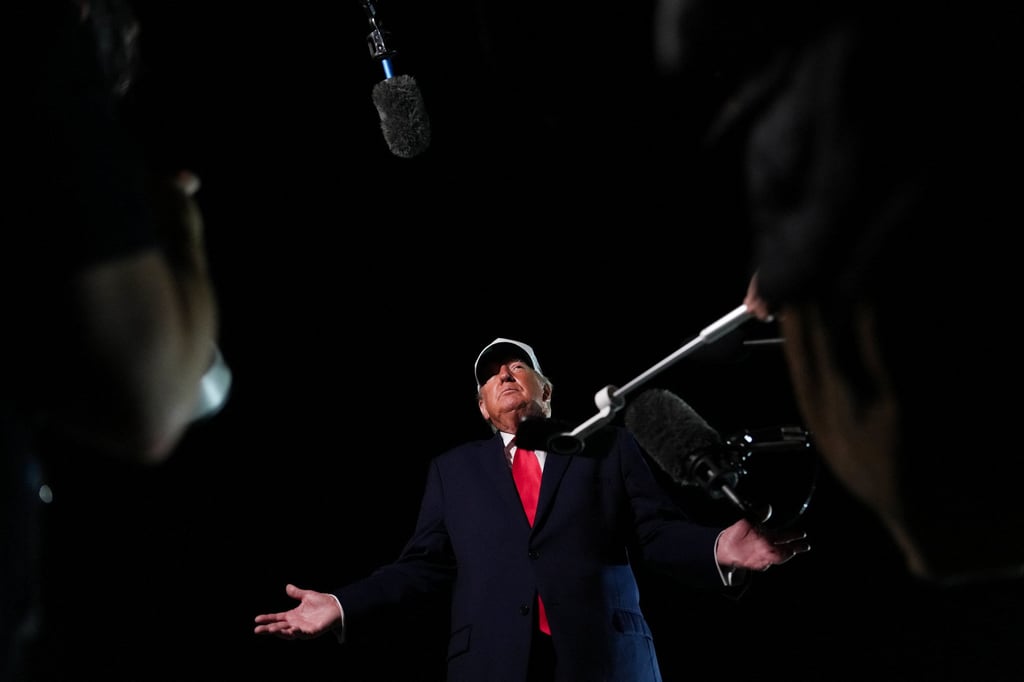
Two days after the midterms, she observed a clear drop in energy in the president. “His shoulders were slumped and he spoke more slowly than normal,” Wood said.
As he held the microphone, he “didn’t make expansive gestures, instead, he barely moved, occasionally rotating his head and upper body from side to side like a half-arch lighthouse. He looked exhausted.”
Wood added that the next day, while signing agreements, Trump remained seated and “pushed through the event with little energy”. Even when he held up a document, “his voice was more monotone, and he didn’t hold the folder up with energy”.
There was one brief exception. Wood noted that Trump “brightened and became much more animated for a moment” when he talked about Xi being shown the capital on his visit, she said.
At the Apec leaders’ gathering, which takes place on November 18 and 19, Wood will be interested to observe Trump’s interactions with his international counterparts after the midterm results.
“Trump typically makes an effort to get in front of other world leaders, push his way in, and do different variations of power-move handshakes,” Wood said.
She added that because of the “strong Democratic wins, I expect other Apec leaders to keep more distance from him, so he may have to work harder to show his power or cut appearances short”.
Wood will be watching for classic dominance handshakes: a top-down grip or a double-handed hold that signals “I am in control and you are surrounded”. Trump deployed both during Xi’s recent visit to Washington, she noted.
How the other Apec leaders reacted would be closely watched, she said, particularly whether they “smile as he does these things” or signal disapproval – by avoiding eye contact, looking away, rolling their eyes or immediately turning to others to chuckle about it.
Lillian Glass, an interpersonal communication and body language expert, does not expect the political reversal at home to alter how Trump carries himself or projects authority, hailing him for his “commanding presence and formidable personality”.
“Even though the midterm elections may seem like a setback, he is such a winner that he will figure out a way to win,” she said.
Glass pointed to Trump’s “upright posture, expansive gestures, direct eye contact, animated facial expressions and emphatic vocal delivery” as markers of his confidence, adding that it remained to be seen how he would position himself in relation to Xi and Putin.
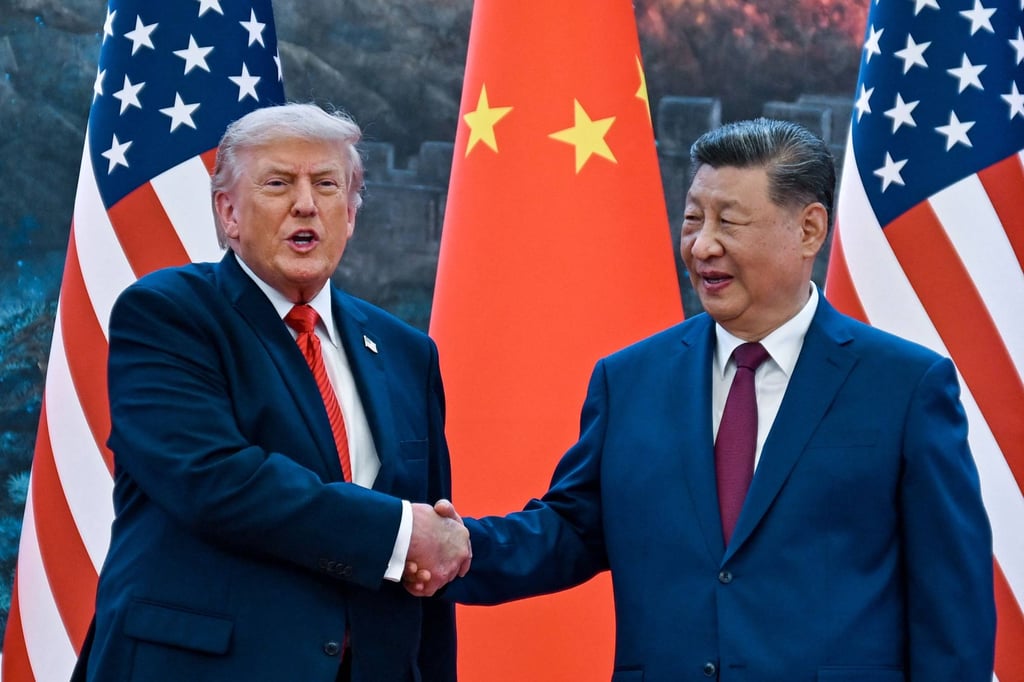
Glass noted Trump’s “tremendous affection and respect” for Xi, adding: “I believe they have a very strong bond.”
In her previous analyses of interactions between Xi and Trump, Glass observed “warmth in their facial expressions, heads tilted towards one another, mutual body orientation and attentive engagement”.
“These are important non-verbal signals of rapport,” Glass said, adding that she was expecting to see “that same warmth reflected in their smiles, eye contact, physical proximity and the way they orient their bodies towards one another” when they next met.
The contrast with Trump’s treatment of other leaders is sharp – none more so than his public berating of Ukrainian President Volodymyr Zelensky at the White House in February 2025.
Other leaders have also been on the receiving end. Canadian Prime Minister Mark Carney has faced repeated public needling over trade and border issues, while South African President Cyril Ramaphosa was subjected to a tense Oval Office exchange in which Trump amplified disputed claims about white farmers.
These episodes stand in marked contrast to the warmer, more deferential tone Trump has often reserved for Xi and Putin, leaders he has repeatedly described as peers who “respect” him.
Chinese foreign ministry spokeswoman Mao Ning has described the midterms as a US “domestic affair” and said China would continue advancing the “understandings reached by the two heads of state”.
The man who always wins
According to Craig Malkin, a clinical psychologist and lecturer at Harvard Medical School, Trump’s public fixation on “superiority, admiration and winning makes narcissism a useful lens for understanding his patterns”.
“When someone depends on looking better than everyone else, losing threatens more than their agenda; it threatens their identity.”
Malkin suggested that if Trump could not learn from the setback and adjust course, he might seek to make someone else look like a loser to restore his own sense of victory.
That need not mean a direct confrontation with Xi or Putin. Trump could just as easily embrace a deal that delivered little and declare it a breakthrough, he noted.
“Bullying someone into submission and exaggerating a breakthrough can accomplish the same thing psychologically: he gets to feel like he’s back on top.”
Allies could prove easier targets if Trump feels forced to show that he remains in control, according to Malkin.
In such circumstances, the need to get ahead could take precedence over maintaining friendly ties. The larger risk was that Trump’s need to preserve his image as a winner could come at the expense of US interests, he warned.
“Negotiation requires accepting limits and tolerating disappointment. If he can’t stomach either, his counterparts have an opening: offer him a victory he can boast about while extracting concessions the rest of us have to live with.”
More unpredictable?
Trump’s drive to reclaim his image as a winner could also have a less predictable side, with some experts suggesting that wounded pride might lead to more impulsive decisions rather than a calculated display of strength.
Bandy Lee, a forensic and social psychiatrist and lead author of The Dangerous Case of Donald Trump, described the US president’s likely response as impulsive. “His instability will make him unpredictable. It will not produce caution,” she said.
Lee said that from Trump’s perspective, the US allies were not his allies. “He is suspicious of them as mostly healthy leaders who do not endorse his ways of ‘might makes right’. He may avoid them in person but undermine and imperil them in policy, as he has done with Ukraine.”
Lee, who previously taught at Yale School of Medicine, added that the closest unfiltered reflection of Trump’s thinking remained his social media posts and that “the rage within him … will only have increased”.
Aubrey Immelman, from the department of psychology at the College of Saint Benedict and Saint John’s University in Minnesota, has published multiple assessments of Trump’s political personality.
“I do not expect cautiousness at Apec to any greater degree than we have observed in the past – both in and out of office,” Immelman said, pointing out that “personality” referred to “ingrained” traits.
He added that it was plausible Trump would “stick to his default predisposition to project power and control, possibly even ‘up the ante’ as compensation for his humiliation with respect to the Republican Party’s midterm election losses”.
When Trump meets Xi – and possibly Putin as well – on the Apec sidelines, Immelman is not expecting the US leader to “exacerbate impulsive behaviour in an attempt to demonstrate power”.
Arguing that Trump thrives on the attention and prestige of sharing the stage with world leaders and being in the media spotlight, Immelman predicts he is likely to “turn on his ‘looking presidential’ public persona and, if anything, act in a more restrained fashion”.
In fact, the international spotlight itself could help soothe Trump’s “narcissistic wounds”, Immelman added.
00:59
Trump thanks China’s Xi, Russia’s Putin for being ‘neutral’ in Iran war
Stanley Renshon, a political scientist and psychoanalyst at The City University of New York, observed that “caution does not play a large role in Trump’s psychology”.
Renshon, author of the 2020 book The Real Psychology of the Trump Presidency, expects assertiveness from the American president rather than greater impulsivity with Xi and Putin: “He will want them to know he is still a force to be reckoned with.”
That assertiveness “will be felt by both” allies and rivals, he said.
On the risk of prioritising the optics of strength over the substance of negotiation, Renshon said they were “two sides of the same coin”.
“Making deals requires power and standing. That is Trump’s basic view of negotiations.”
Reinventing Trumpism?
Any meaningful shift in Trump’s style would require more than a change in rhetoric, some experts argue.
Alessandro Nai, associate professor of political communication at the University of Amsterdam, observed that Trump had shown “some minor signs of a ‘softer’ rhetoric towards Democrats” since the midterms.
However, his behaviour remained rooted in “a combination of strong narcissism and low empathy which is a potent mix, hard to keep in check”, Nai said.
KioskNews shows a cleaned-up reading view extracted from the publisher’s page — the original always lives on their site, not ours.