Apec sartorial diplomacy: first ladies Peng Liyuan, Ngo Phuong Ly and Kim Hea Kyung shine
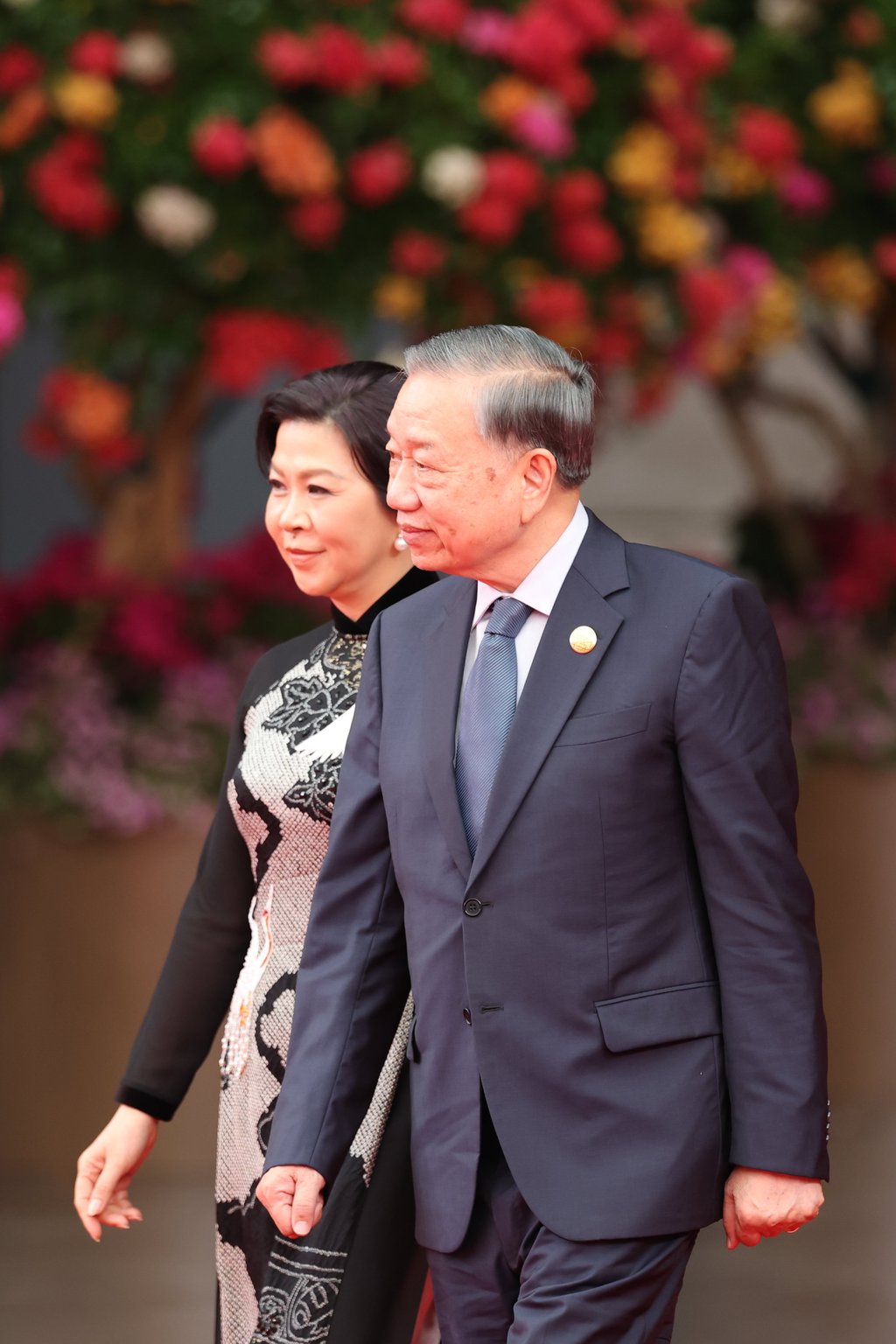
When Vietnam’s first lady Ngo Phuong Ly shook hands with China’s Peng Liyuan in the receiving line at Wednesday night’s Apec welcome banquet in Shenzhen, Peng seemed impressed by her guest’s outfit.
After posing for photographs, the two appeared to exchange a few words about the outfit, a traditional black-and-silver ao dai – a long, side-slit tunic worn over trousers – adorned with white cranes.
Ly was not the only guest to use the Asia-Pacific Economic Cooperation summit in Shenzhen to showcase their national traditions through their choice of outfit.
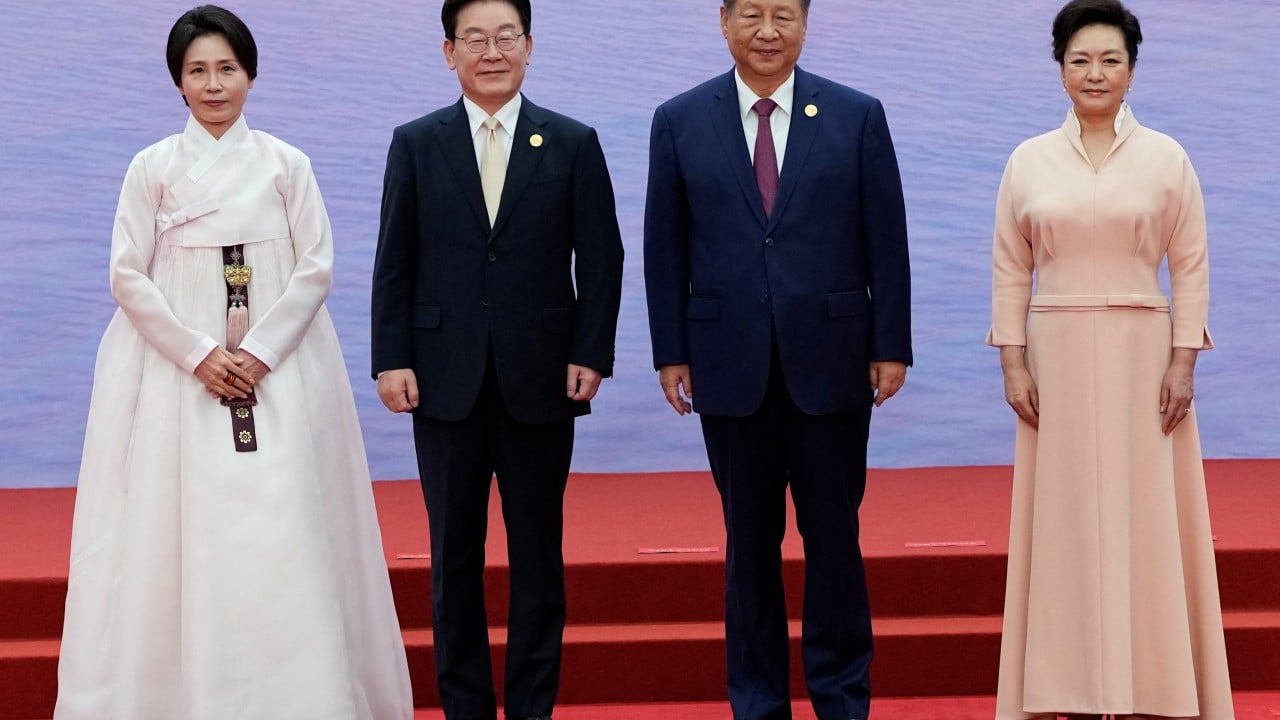
South Korean first lady Kim Hea-kyung was “recognisably in a hanbok” – a traditional Korean outfit with a floor-length skirt – according to Antonia Finnane, an honorary professorial fellow at the University of Melbourne.
Others, including Peng herself, adopted a more modern look that incorporated some classical styles.
“At high-profile diplomatic events, first ladies generally use their fashion choices to represent their country’s heritage or respectfully nod to the host country’s heritage,” Jing Zhang, a China style and fashion commentator, said. “But the trick is not to overshadow the occasion with an outfit.”
Peng greeted guests in a light pink dress with a V-neck and a turned-down collar, paired with pale shoes.
Zhang described the host’s look as “conservative but feminine” and “notably minimalist”.
“The soft shoulders, sleeves and open Mandarin collar hint at classic Chinese qipao style without the full costume,” she said. “The floor-skimming hemline and belt detail at the hip are a nod to the formality of the occasion.”
A mix of traditional and modern styles has become characteristic of Peng, Zhang added.
At the last Apec summit China hosted, in Beijing in 2014, she wore a dark blue qipao with a stand collar and floral motifs. Ten years later, at the Forum on China-Africa Cooperation welcome banquet, she wore a floor-length white dress with wide sleeves and a crossover collar that recalled the historical style known as hanfu.
Last year, at the Shanghai Cooperation Organisation welcome banquet in Tianjin, she wore a belted royal-blue dress with nods to traditional Chinese dress in details such as the open stand collar to the frog-style fastenings at the cuffs.
Finnane said the Chinese influence in Peng’s outfit this year came through more subtly than in her earlier outfits.
The cuffs and collar, Finnane said, were “quoting without replicating” the style of a traditional Chinese jacket or blouse.
“The simple fabric is very world-modern,” she added.
Some of the visiting spouses wore outfits that more clearly reflected their own countries’ dress traditions.
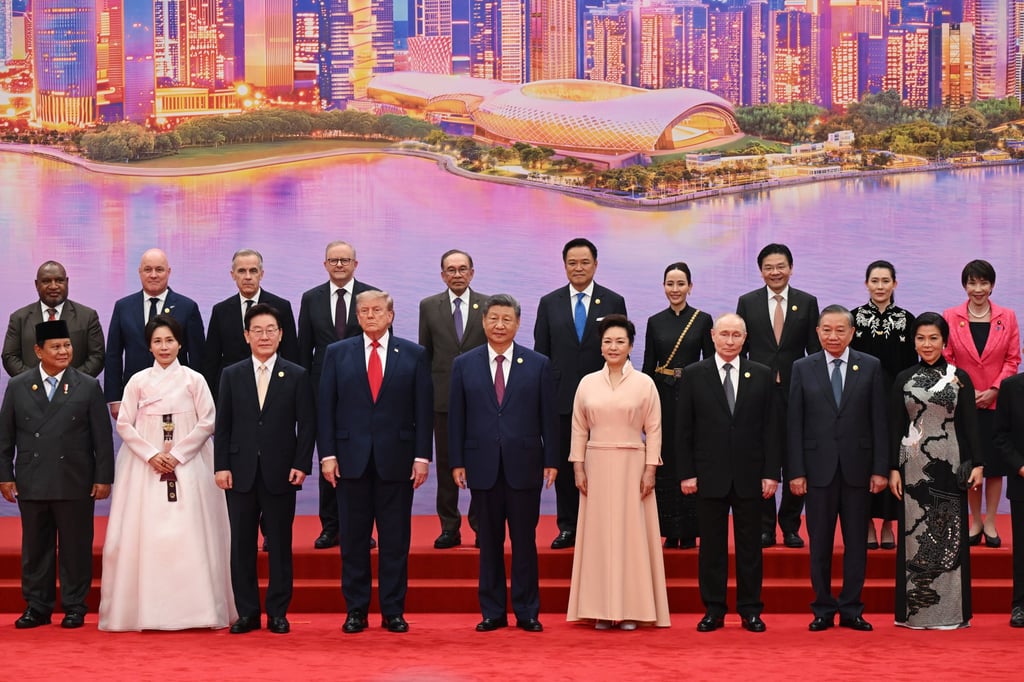
Thananon Charnvirakul, the wife of Thai Prime Minister Anutin Charnvirakul, wore a Boranpiman, a style of Thai royal dress. The black outfit was detailed with exquisite bead and crystal embroidery, complemented by a gold-inlaid handbag.
Kamjorn Saecheong, a scholar of Thai fashion history at Mahasarakham University’s Faculty of Fine and Applied Arts and Cultural Science, said the dress was worn on “formal evening occasions”.
Its clean, tailored silhouette “projects understated formality and poise”, he added.
“Wearing it at Apec is a thoughtful act of sartorial diplomacy,” Kamjorn said, adding that the choice “affirms the skill of local artisans and links regional craftsmanship to Thailand’s contemporary creative economy”.
Philippine first lady Liza Araneta-Marcos wore a red gown decorated with delicate flowers and leaves. Its shawl-like neckline and pleated overskirt recalled the Maria Clara, a traditional outfit worn with a shoulder scarf and a layered skirt.
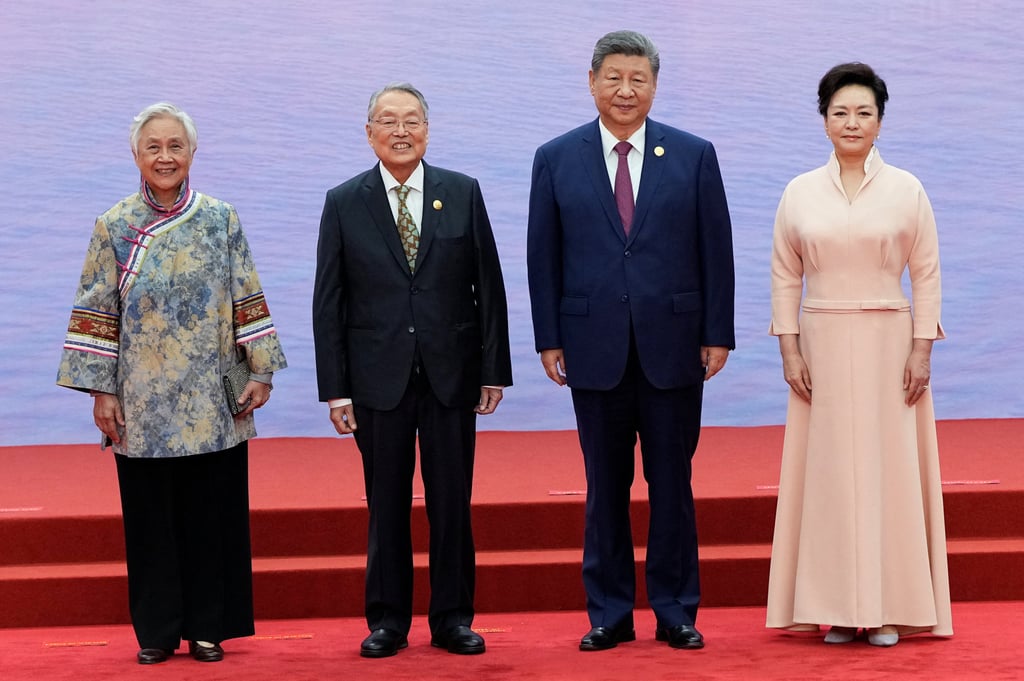
Among the other guests, Loo Tze Lui, the wife of Singapore’s prime minister, Chilean first lady Maria Pia Adriasola, and Carolyn Yeh, the wife of Taiwan’s Apec representative Stan Shih, all adopted outfits with cuts, patterns and silhouettes that echoed their native traditions.
Meanwhile, the male guests largely stuck to modern business suits, although Indonesian President Prabowo Subianto paired his with a kopiah – a traditional style of headgear – while the Philippine leader Ferdinand Marcos Jnr wore an embroidered formal shirt known as a barong Tagalog.
KioskNews shows a cleaned-up reading view extracted from the publisher’s page — the original always lives on their site, not ours.