Japanese hip-hop sensation Creepy Nuts on coming back to Malaysia, their meteoric rise to fame and performing on The Weeknd’s tour
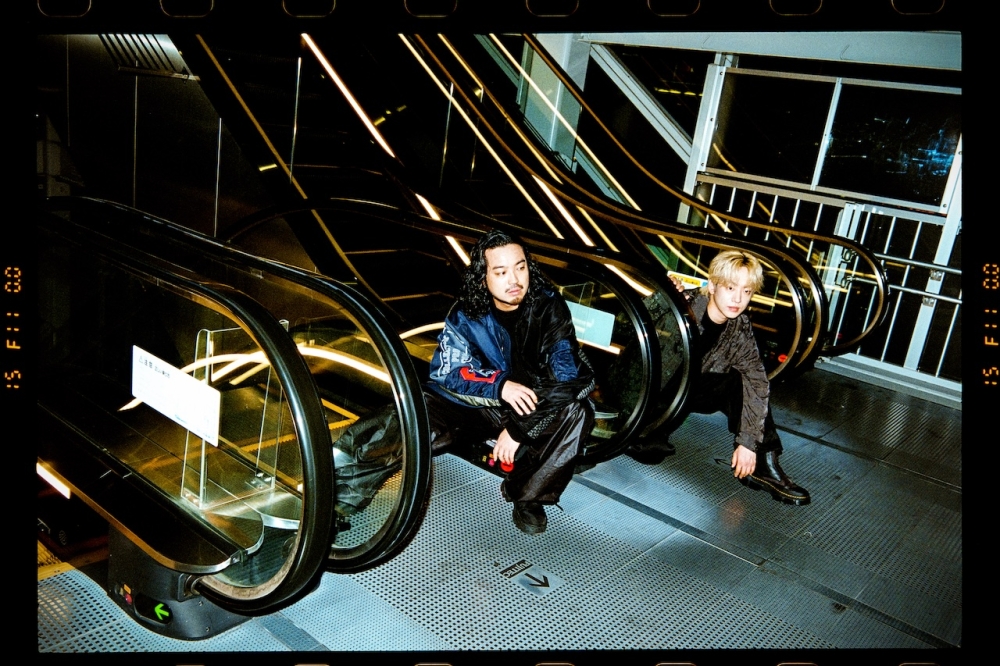

Creepy Nuts said they were surprised to get an invitation from The Weeknd to guest on his Asia tour. — Picture courtesy of Sony Music
By Erna Mahyuni
First Published: Wednesday, 28 Oct 2026 3:13 PM MYT
KUALA LUMPUR, Oct 28 — Malaysian concertgoers get a double treat next week when The Weeknd performs here for two nights, with a special guest in Japanese hip-hop duo Creepy Nuts.
Creepy Nuts performed in Kuala Lumpur just last year at the Central Music & Entertainment Festival and while the group has long been a respected stalwart of Japan’s hip-hop scene, they only made a huge global impact in 2024 with their single Bling-Bang-Bang-Born.
Making up the pair are rapper R-Shitei, a three-time consecutive champion of Japan’s premier rap battle competition, and DJ Matsunaga, who won the DMC World DJ Championship 2019.
The high-energy, melodic deftness and creative flow that is Creepy Nuts’ trademark will be on show when they perform at TM National Stadium during The Weeknd: After Hours Til Dawn Tour.
Malay Mail caught up with the artists on their success and returning to Kuala Lumpur.
Q: You’re the Special Guest Artist on the Asian leg of The Weeknd’s tour — could you tell us a little about how that came about, your feelings about it and your experience with The Weeknd?
R-Shitei (R): At the beginning of the year, The Weeknd came to Japan and we had a chance to meet him and talk to him. We only met for a short time, but I guess he knew about us and said he wanted to meet us.
So we met and just chatted. Then a few months later, he invited us on his Asia tour with him.
We were really surprised, we never thought we would go on tour with The Weeknd. We are very honoured.
Q: With over a billion streams on Spotify, just as many views on YouTube and then Coachella, what are your feelings about the last couple of years and how your music has come across so well globally?
DJ Matsunaga (M): We’re really surprised, we didn’t think it would happen. Up till 2023, we were really busy with our domestic activities, and so we decided to cut back a bit on our workload.
To us, we thought “Oh, we’re entering a calmer period now.” And we had no idea Bling-Bang-Bang-Born would be heard by so many people around the world.
It’s really beyond our imagination, we really didn’t think that this was what would be awaiting us.
R: It’s been really dizzying to me. The past two to three years have felt non-stop, in that things were happening on such a large scale.
For example, touring with The Weeknd, going to Coachella, and having our own tour overseas. The scale was just beyond my imagination and these gigs just kept pouring in.
Q: Did you manage to take a break at all?
R: We had breaks, and we had times where we could take it easy. It’s just that the scale of each gig was so big, it was like “Wow” each time.
Q: When people hear “Creepy Nuts has new music out” what do you want fans to anticipate?
R: I think when it comes to overseas fans who maybe got to know about us more recently, I hope they think about what music and sounds we’re going to play with next.
I hope they are looking forward to that. We’re always challenging each other and there’s a lot of experimental elements in our music.
And I hope they translate our lyrics as well so they can enjoy the content of the song too. That would make me really happy.
I think considering our songs, worldview, our album, I think if you listen in chronological order, the lyrics change to fit how my feelings evolve.
Like, previously I felt this way about something, and now I feel this way about it. I think if you translate the lyrics, you’ll be able to understand that on a deeper level.
Q: When it comes to music what do you think is your identity? How do you want to be perceived?
M: Well, I really feel like I make whatever I feel like making at the moment, because I want to make things that feel fresh.
I think listeners might think to themselves, oh this is a Matsunaga-like sound, or this is Matsunaga’s identity.
But I make music without really thinking about myself. No matter how much I try to make something that doesn’t sound like me, some of me will definitely remain.
I imagine listeners will probably see it like “Oh that’s his signature style”, or “That’s so Matsunaga-like.”
But I don’t want to be limited by such perceptions and I just want to keep making different things freely.
Q: What music, artists, creatives inspire you in your own work?
M: I listen to everything I come across and I pretty much get inspiration from everything. But the first CD I ever bought in elementary school was a CD of The Blues Brothers’ soundtrack.
I think that shaped my taste in music and was foundational for me. Even now, sometimes when I listen to it, I’m like “Oh this is the music I like”, and the sounds I want to make still stem from that soundtrack. It really all traces back to that album.
R: Obviously, I’m most influenced by Japanese rappers and hip-hop made by Japanese people. From there, I went back to the origins, which is American hip-hop, and these are all part of my musical identity.
That’s never changed and I still listen to my Japanese predecessors today. But I’m so influenced by all sorts of music around the world, even music I hear on the streets.
Just yesterday, I was walking around Arab Street, and I heard music that sounds like it has Arabic influences, and I was like, “Oh, what is this sound?”
I think that sort of music accumulates in me unconsciously. There’s such a diverse mix of cultures and communities in Singapore that if you’re at this spot maybe you hear Indian music, and you go somewhere else and suddenly it’s Latin music.
So I think it is important to listen closely to the music that you come across in daily life.
Q: Are you excited to be returning to Kuala Lumpur after performing here last year? Anything you hope to be able to do when back in KL?
R: Definitely. We had such a great time last year, I think it’s one of those gigs we really remember because we had a crowd that was just so enthusiastic. It’s really awesome to be able to go back to KL.
Q: Do you have anything you want to do there?
R: We didn’t stay for a long time when we last visited. It was only three days so we didn’t have a lot of time to sightsee and just enjoy ourselves. If we have more time on this upcoming trip, we hope to see more of KL.
Q: What do you think about Bling-Bang-Bang-Born being the song that introduced many people to your band? What are your thoughts on it being the huge phenomenon it was?
R: We honestly didn’t imagine that so many people would listen to it. We didn’t make it thinking that it would be this huge hit either.
It’s really a shock to us. And it still feels quite surreal even now, when we perform this song overseas and we see how well the audience reacts to it, it’s like: “Oh, people are really listening to it!” That still surprises us.
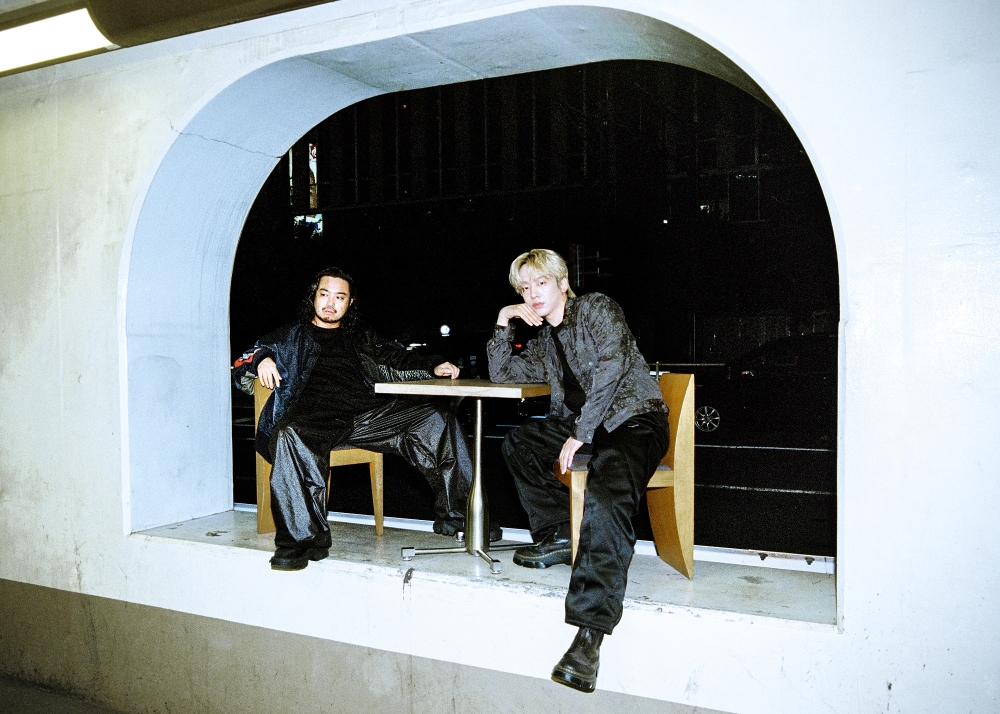
The duo say they didn’t start out with a goal of reaching an overseas audience but are happy to see the reception their music has gotten internationally. — Picture courtesy of Sony Music
Q: What should Kuala Lumpur fans look forward to when you perform in November?
R: Well, it’s a tour with The Weeknd so it’ll be a different type of show. We will also be playing songs that we didn’t play last time, so I think fans can look forward to songs that weren’t on the setlist during our last performance in KL.
Q: On the Japanese music scene — what are your thoughts on Japanese hip-hop and its particular unique characteristics? How does it stand out?
R: What I feel is especially strong in Japan is a mix of respect and inner conflict about the distance and the differences between Japanese and American hip hop.
Some people follow American hip hop closely and make a Japanese version of it.
Others take a completely different approach and make rap that has evolved in its own Galapagos-like way, something that exists only in Japan.
And I get the sense that all kinds of artists have kept doing this since hip hop first arrived in Japan.
Some have been searching for a way to take what’s cool about American hip-hop and somehow make it work in a Japanese way, while others, with that as a foundation, evolve in a direction where you think, “There’s nothing like this anywhere else in the world.”
These people push each other and sharpen each other, changing shape day by day. Of course, hip hop itself is always changing shape as it spreads around the world, and in the same way, I think it’s evolving day by day within Japan too.
(Translation note: Galapagos-like is an expression that means developing in relative isolation, becoming unique to Japan and appealing more to the Japanese market.)
Q: What does it mean for you to be one of the scene’s most recognisable names right now?
R: Well, I’m happy about it, and at the same time, people who grew up in Japan listened to American hip hop, were influenced by it in all sorts of ways, and evolved and changed it.
I think we’re descendants of that lineage ourselves, so I’d like to be a unique presence, rap that has gone through its own distinctive change in Japan.
But yeah, I’m happy about it. We absolutely didn’t start out with the goal of reaching an overseas audience.
We just wanted to make music that was fun for us, we kept diving deeper into that, into the stuff that felt good to do. So the fact that it actually managed to reach people overseas is something I’m glad about.
KioskNews shows a cleaned-up reading view extracted from the publisher’s page — the original always lives on their site, not ours.