Psychologists want us to rethink what we ask about school violence
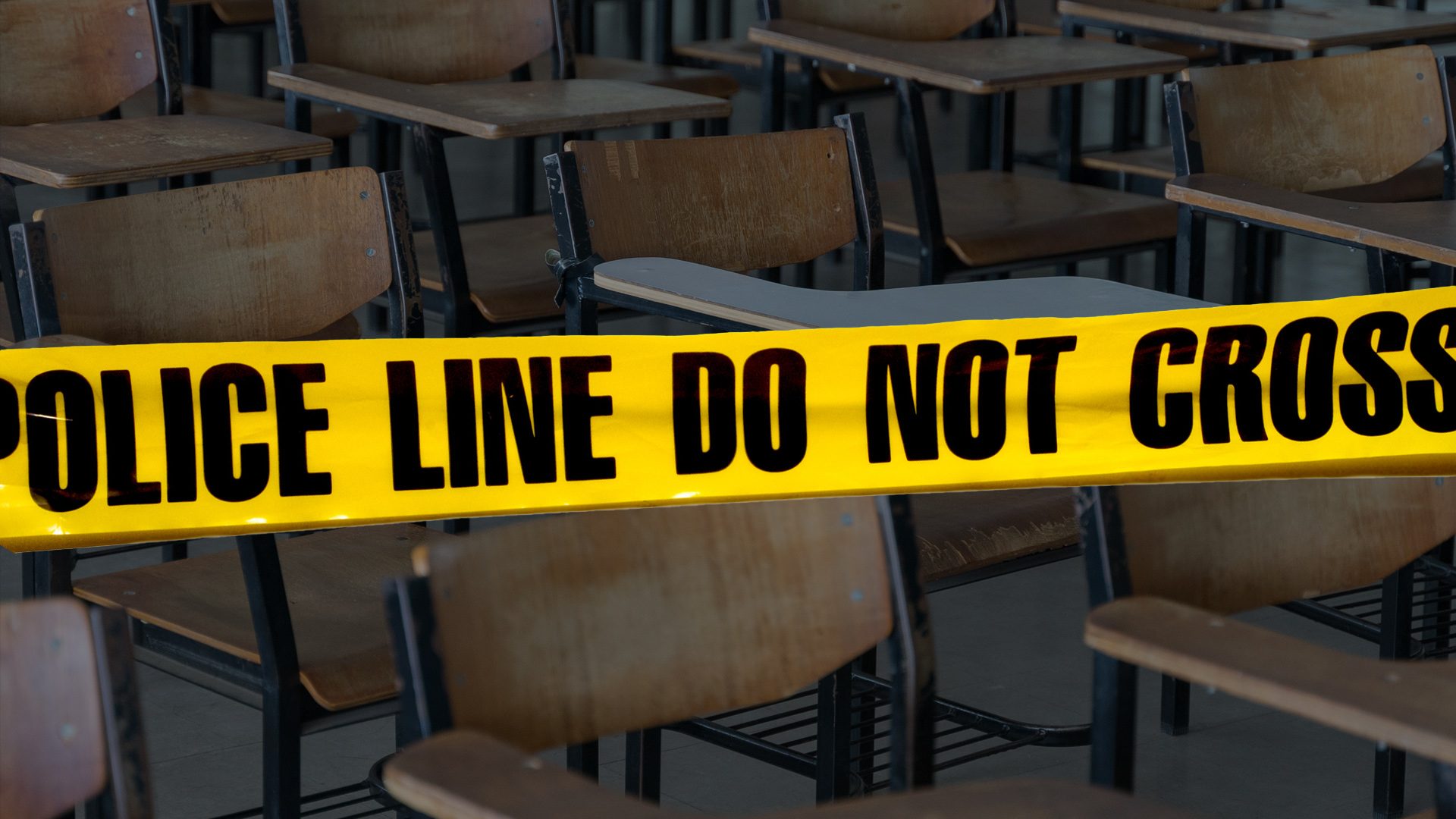
The kids aren’t alright. Only a few months into the school year, multiple cases of school violence have been reported throughout the Philippines, where the students themselves are the perpetrators inflicting harm on their school community. The most recent incident in Zamboanga was a school shooting that resulted in the death of two students: one who was fatally shot by his schoolmate, while the other was the shooter himself, who, after live streaming his violent acts on social media, ended his own life.
These incidents have alarmed psychologists and mental health practitioners, especially those who work with minors and young Filipinos. But rather than neatly condense all the violence and attribute it to one root cause, they choose to ask the difficult questions about each individual case. They want to understand each student not just as a perpetrator, but as a highly vulnerable person.
“When I heard about the school violence, I immediately asked, ‘What was happening to the teenager’s life that made her or him to be in that position?’” said psychologist Jannah Trixie Cuevas. “What was happening at home? What was happening in the school? Why did it happen in school? What comes to their mind before they started getting the gun? Did someone influence them? Did someone try to manipulate them?”
“No student will do that if they can handle things properly,” psychologist Arnel Sarte Jr. said. “We have to ask: What are they experiencing that pushed them to do that? What are they carrying on their own, until they reach a breaking point?”
Both Cuevas and Sarte work with Sapphire Clinics East Inc., a Filipino-owned rehabilitation and psychological services network in Metro Manila. In the two years they have been operating, the clinic has already handled more than 2,700 clients with a median age of 14 years old. In their work, they respond to warning signs in children and minors who exhibit mental health issues in order to prevent any “breaking points” from happening.
Inside the mind of a child
As minors, children and teenagers’ brains are not yet fully developed. Their prefrontal cortex, the part of their brain which manages decision making, emotion processing and control, and impulse regulation, will only fully mature around their mid-20s. Until then, they are “like sponges,” absorbing everything around them.
“Anything that they’re experiencing at school, at home, also what they’re seeing online, they will absorb quickly. Imagine all the risks that they can absorb while they’re growing up,” Sarte said. “If they’re exposed to bullying, invalidation, pressure, that can make them do things they don’t want to. As kids, their brain isn’t fully developed. They don’t have enough ways to properly process things.”
Processing difficult experiences and complex emotions with children is crucial for parents and schools. It is what will save their children from internalizing and carrying their struggles on their own to the point where they cannot bear it anymore. Once a child reaches a breaking point, they can either implode or explode; they can hurt themselves or hurt others.
In schools, experts say teachers and administrators are becoming more observant and attuned to the mental health warning signs and calls for help their students are exhibiting. Hannah Pellejo Jara, CEO and founder of Sapphire Clinics East, says that educational institutions have been partnering with them for more mental health support for their students because there are times when the school is no longer equipped to handle them.
“What they’re saying is there’s really a shift with the mental health of children,” she shared. “In their guidance office, they have concerns. That’s why they’re partnering with us. What we have seen are suicidal cases, depression cases. A lot of it is family conflict, I would say. We’re seeing a lot of anxiety, panic, and anger management, even in kids.”
Questions that seem reasonable to ask about this situation are, “Why are they like that?” or “What’s wrong with them?” But psychologists propose more productive questions that avoid connotations of defectiveness or blaming the child for things they perhaps could not control. “What are they going through?” “What is their family history like?” or “What did they experience?” are questions that instead seek to understand the child and see them as a whole person.
Guided by the biopsychosocial model, psychologists check the different dimensions of the child to understand their mental health vulnerabilities.
First is the biological factor, specifically their genes, brain chemistry, hormones, and overall physical health. Is their family vulnerable to mental health disorders? Is there a predisposition toward violence or issues like impulse control?
![[OPINION] If our answer starts at the school gate, we are too late](https://www.rappler.com/tachyon/2026/08/school-shootings-aug-20-2026.jpg?fit=449%2C449)
Second is the psychological factor. If they’re vulnerable to certain disorders, are they prone to being sensitive and emotionally or mentally overwhelmed? Are they moody? How do they cope with struggles and conflict? Do they have triggers?
Third, the social factor. What is their environment like at home? At school? Who are their support systems? Who are their friends? Do they feel supported and validated? What is their family’s socioeconomic situation?
Pick up the pieces, put them together
The answers to these questions are the puzzle pieces that form the bigger picture of what burdens a person and has built up inside them.
“For a certain person to develop a disorder, there should be an interaction with the genes, the predispositions, and the social factors or environmental factors that would really nurture the disorder,” Cuevas said. “For example, you cannot inherit gambling itself, but the problems when it comes to impulse control. And then, you get connected with people who usually have problems when it comes to impulse control. It creates more tendencies to develop, but it’s not a guarantee.”
Children with mental health vulnerabilities might not even develop disorders if they have access to adequate support systems and safe spaces at home and in their immediate community. “Sometimes what happens is that they just get worse when the environment, when the kid is repeatedly exposed to triggers,” said Sarte.
What could these triggering environments look like?
“There could be a lot of invalidations at home, a lot of unprocessed [experiences] at home, a lot of negative emotions inside the home that teenagers no longer feel safe at home, I think some part of it is when there’s a lot of violence inside the home,” Cuevas said as examples, looking back on past anxiety, depression, and trauma cases.
These environments normalize aggression and violence and elicit stress over feeling unsafe. “Even though we think that the kids don’t have any reaction to it, something is going on with their minds,” Cuevas warned. “Especially teenagers, this is the age that they are making sense of what’s happening in the world. As they’re making sense of the world, it was normalized to just shout at people, to just be aggressive to people, to just not talk when things are not going well at home. It usually starts with that.”
One effect this has on children can result in mirrored behavior, where a kid mirrors the violence at home by bullying others. Another is the child developing a persistent sense of helplessness, of feeling small and defenseless against those harming them.
Cuevas is worried, however, by how children who experience helplessness could perceive the school violence cases, especially the live streamed Zamboanga shooting.
“For some kids who feel very helpless, very small of themselves, seeing this all over the social media for two to three days, maybe one week, gives them an idea. ‘Oh, I can do it too. For them, for me to feel more powerful,’ that gives them a sense of power again.”
She echoed the calls of fellow psychologists at the Psychological Association of the Philippines for social media users and members of the media to be responsible about their coverage of the incidents, especially with the risk of copycat behavior.
“The child who feels helpless, upon seeing the social media post doing such a thing like that could unconsciously provide a hero [image]. Like holding a gun, everyone bowing their head, they could have a different way of seeing it, ‘I’m more powerful than you guys. Before you were bullying me, before you were saying that I’m small, but now, holding this weapon gives me more power than all of you guys.’”
![[Be The Good] Not another school shooting please](https://www.rappler.com/tachyon/2026/08/Be-the-good-not-another-school-shooting-August-19-2026.jpg?fit=449%2C449)
This is what makes the Ateneo de Zamboanga school shooting particularly troubling. According to authorities, the shooter was a “very bright student” whom no one would have expected would do such a thing.
“It’s a wake-up call,” Cuevas said, “that even though someone is still performing, that doesn’t guarantee that your child is doing well emotionally.”
Sarte said this is why we need to be attentive and not so dismissive of early warning signs of mental health issues. Children aren’t just asking for attention or being dramatic — and being depressed or anxious isn’t something they want to happen to or that they set out to do.
And maybe that is what Filipino children need the most: families, schools, and communities that refrain from quick assumptions or dismissive attitudes, and instead are attentive, curious, and concerned about the heavy burdens their young hearts carry. – Rappler.com
Part 2 to be published on Saturday, August 29.
Elise Suarez is a Rappler intern from Puerto Princesa City and a Humanities student of the University of Asia & the Pacific.
KioskNews shows a cleaned-up reading view extracted from the publisher’s page — the original always lives on their site, not ours.