8 2000s Sci-Fi Shows That Are Perfect From Start to Finish


Michael Block is a 14 time GLAM Award nominated writer, producer, and host of the podcast Block Talk. Throughout his time in the entertainment industry, he has worked on and off Broadway as a stage manager, written several produced plays, critiqued hundreds of theatrical performances, drag and cabaret shows, and has produced events randing from drag competitoons to variety concerts!
On Block Talk, he interviews nightlife personalities, covers the wide world of entertainment through features, ranking episodes, and recaps ALL of Drag Race, as well as Dragula and Survivor. He has interviewed hundreds of RuGirls that span the globe at DragCon NYC, DragCon LA, and DragCon UK.
In his free time, he makes one-of-a-kind jewelry and gift baskets with his mom. He is a proud member of the LGBTQ+ community.
Sign in to your Collider account
When it comes to science fiction television and film, every era has its aesthetic and niche. Whether it's based on the types of stories it tells or its unique imagery, you can often tell when a product was released. In the first decade of the 21st century, sci-fi shows were all the rage, though they didn't always get the respect they deserved.
A very formative decade, the sci-fi shows of the 2000s had an immense influence on the storytelling that would follow. We're here to celebrate eight of the very best of the decade. From a revival of a beloved, iconic character to a short-lived series that ended too soon, these shows still have a big place in our sci-fi hearts.
'Battlestar Galactica' (2004–2009)
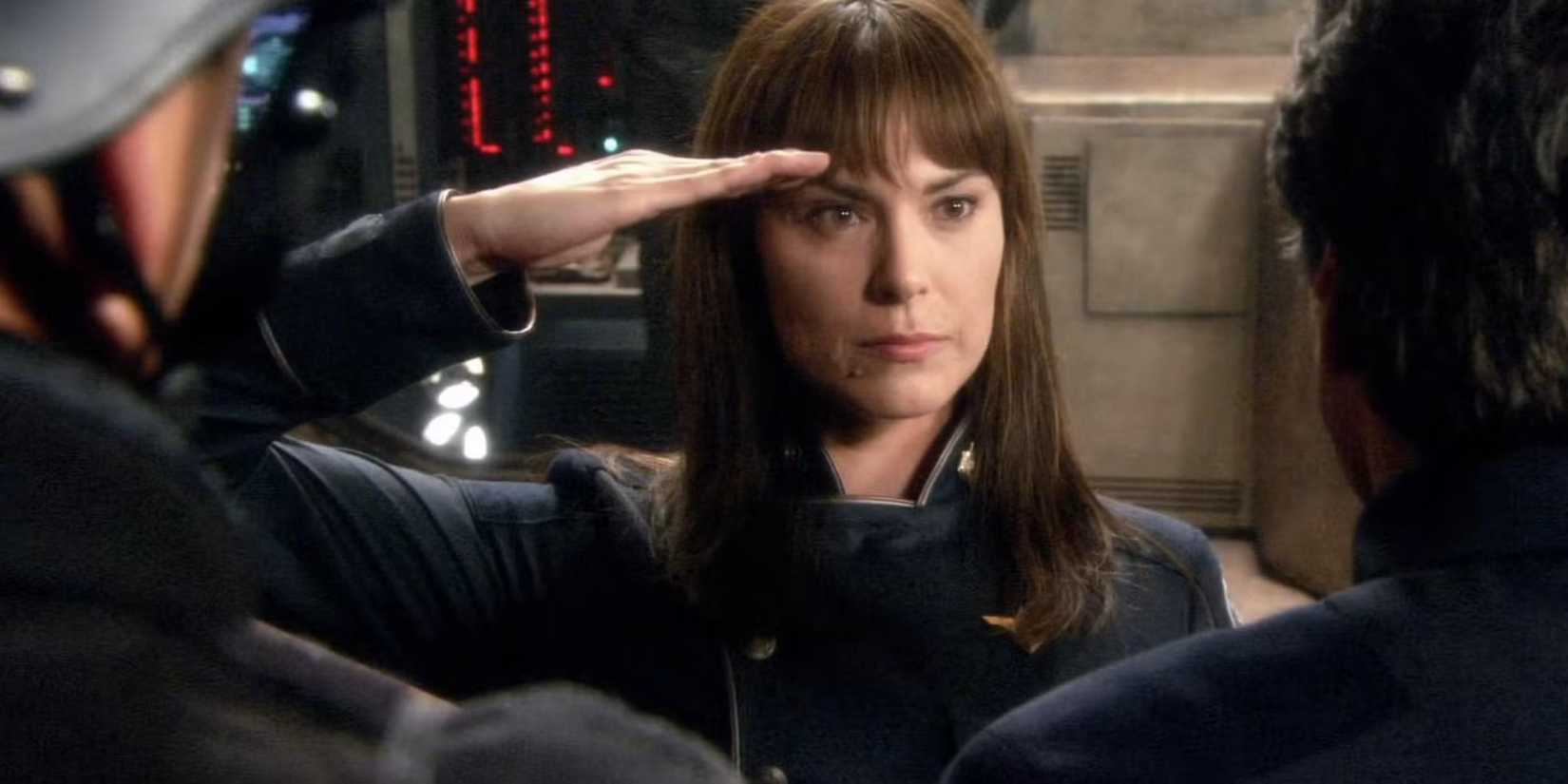
From a brilliant miniseries to a four-season run, the reimagining of Battlestar Galactica was a genuine game changer. Created by Ronald D. Moore based on Glen A. Larson's original series, Battlestar Galactica documents the last surviving remnants of humanity fleeing a genocidal attack by a robotic race of their own creation known as the Cylons. The survivors escape into space, protected by the Battlestar Galactica, an aging, un-networked military warship commanded by Commander William Adama (Edward James Olmos). Stripping away the campy space-opera melodrama, the new iteration used the paranoia of the time to craft a rich geopolitical survival story.
Arriving a few years after 9/11, Battlestar Galactica directly tackled contemporary anxieties through a masterclass in science fiction storytelling. By using the universe's lore to explore preemptive war, civil liberties, torture, suicide bombings, and the high cost of democracy during a national crisis, Battlestar Galactica was more than an entertaining series. The story wasn't straightforward, cut-and-dried with clear heroes and villains. A moral battle rages within the ranks, especially between Adama and the reluctant, terminally ill civilian leader Laura Roslin (Mary McDonnell), making the fight for civility evengrander. With a gritty aesthetic and bold creative decisions, famously gender-swapping iconic characters like Starbuck (Katee Sackhoff) and Boomer (Grace Park), and treating religion, faith, and philosophy with great depth, Battlestar Galactica was a profound product of the time.
'Doctor Who' (2005–2025)

As proud Whovians, we may be in limbo, but since 2005, we've been grateful for the brilliant highs and lows Doctor Who has brought. The reboot series continues the lore and mythology of the original run, telling the story of the Doctor, a Time Lord alien who travels through space and time to fix problems, save civilizations, and help the helpless. Joined by a human companion or three, the Doctor travels via his TARDIS, an old-fashioned blue British police telephone box that is bigger on the inside, and uses his Sonic Screwdriver to save the day. Continuing the process of regeneration, each Doctor faces off against some of the universe's biggest threats, including Cybermen, the Daleks, and the new infamous villain, the Weeping Angels. Over 15 seasons in 20 years, Doctor Who has reinvigorated our passion for serialized sci-fi.
Striking the right balance of childhood wonderment and adult themes, Doctor Who has remained a generational gift. Brought back to life by the perfectly passionate Russell T. Davies, the revival prioritized grounded, messy family dynamics, focusing heavily on the domestic lives, romantic entanglements, and emotional baggage of companions like Rose Tyler (Billie Piper) and Donna Noble (Catherine Tate). With the power of regeneration, the new run featured some profound performers navigating the TARDIS—Christopher Eccleston, David Tennant, Matt Smith, Peter Capaldi, Jodie Whittaker, and Ncuti Gatwa—each bringing their own individuality to the role. Balancing campy, eccentric sequences with brutally honest human emotion, Doctor Who, while debuting during the Iraq War and heightened global anxieties, championed heart, working-class dignity, and sympathetic inclusivity.
'Firefly' (2002)
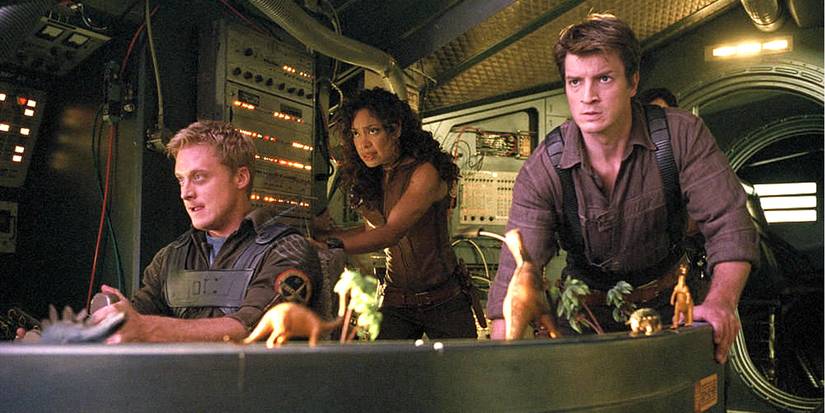
Imagine a brilliant space Western that was well ahead of its time and was cut short because of it, and you get Firefly. Created by Joss Whedon, this one-season wonder follows the ragtag crew of a small spaceship, led by Captain Malcolm "Mal" Reynolds (Nathan Fillion), as they try to survive on the outer edges of a futuristic star system. Featuring a Wild West blend of space frontier aesthetics with futuristic spaceships and ray guns, horses, saloons, and six-shooters, the crew takes on any legal or illegal odd jobs just to pay for fuel, food, and repairs. Earning a massive cult following and a 2005 movie, Serenity, Firefly thrived on its handcrafted charm long before the era's polish arrived.
Firefly defied the space dramas of yore, presenting a lived-in frontier that combined futuristic tech with frontier dirt, saloons, and spaghetti-western duels. The series relied heavily on the found family format. With sharp, natural dialogue, the characters' interactions with a genuine chemistry that resembled a fun, dysfunctional family. With a mix of war veterans and smugglers, the character dynamics led to morally gray storytelling. Yet it produced some of the best narratives in a pre-binge streaming world.
'Fringe' (2008–2013)
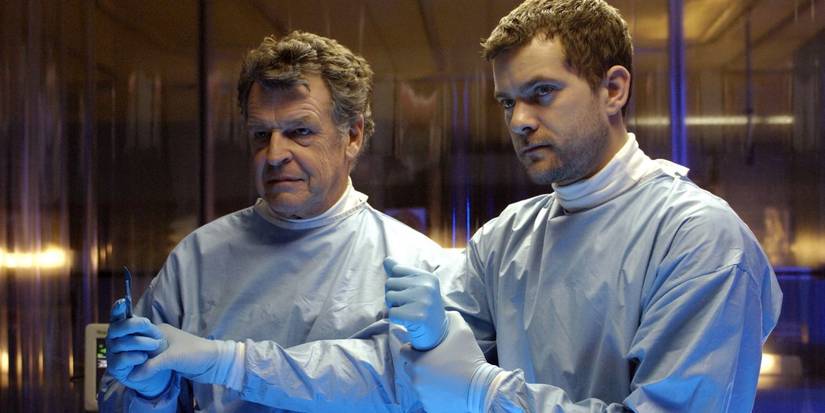
Joining the list of high-concept network sci-fi series, Fringe follows the Fringe Division, a specialized FBI task force in Boston that investigates bizarre, unexplained phenomena tied to "fringe science" and a parallel universe. Led by Agent Olivia Dunham (Anna Torv), eccentric and formerly institutionalized scientist Dr. Walter Bishop (John Noble), and Walter's multi-talented son, Peter Bishop (Joshua Jackson), the series started as a case-of-the-week procedural, tracking a global string of freak occurrences before exploring a larger overarching narrative involving a war and looming collision between our universe and a parallel universe that traces back to Walter's own tragic past. Standing at the crossroads of accessible 2000s sci-fi tropes and the dawn of serialized peak TV, Fringe struck the perfect balance of two distinct eras.
Fringe was a celebrated series in real time and still is today. What began as a tune-in-as-you-please weekly series evolved into a richer story with deeper mythology. Creators J. J. Abrams, Alex Kurtzman, and Roberto Orci subtly planted clues that built a massive, multi-season narrative that served as a gift to loyal viewers. Arriving at the apex of mystery-box thrillers, Fringe managed to transition from small-scale bioterrorism cases to an all-out interdimensional war without losing the plot. Like many shows of the era, it capitalized on the post-9/11 paranoia and cultural psyche. Leaning into tales of bioterrorism, corporate overreach, and out-of-control transhumanist science, Fringe balanced sci-fi with emotional resonance. Anchored by an unconventional trio you couldn't help but champion, Fringe was one of the last network appointment-television shows before the streaming boom.
Collider Exclusive · 8 Questions · 2 Minutes Which Star Wars Crew Should You Join? Falcon · Ghost · Skeleton Crew · Razor Crest
Eight honest questions about how you actually are: what your friends come to you for, how you handle a night that falls apart, what you want out of work, what keeps you going. Answer them and we will tell you which ship has your seat. Four crews are hiring: the smugglers, the rebels, the kids who got hopelessly lost, and the one man who works alone until he does not.
🚀Falcon(Original Trilogy)
👾Ghost(Star Wars Rebels)
🗺️Skeleton Crew(Skeleton Crew)
🪖Razor Crest(The Mandalorian)
01
What role do you play in your friend group? Everybody has one, whether they admit it or not.
02
How do you pack for a trip? This says more about people than it should.
03
Your plans collapse an hour before. What do you do? Everybody reacts to this differently.
04
What would you actually want out of a job? Be honest rather than impressive.
05
What do people come to you for? You already know which one it is.
06
How do you handle a disagreement with a friend? This is where people differ most.
07
What does a really good Saturday night look like? No wrong answers, but there are revealing ones.
08
What actually keeps you going? Eight questions in, this is the one that picks your crew.
Docking Clamps Released Your Crew Is…
Four ships, four completely different reasons to be up there at all. Here is the one that has your seat, what flying with them would cost you, and what it would give back.
Millennium Falcon
You belong on the fastest piece of junk in the galaxy, with a crew that took the job for the payday and then quietly stopped caring about the payday. Nothing on the Falcon has ever gone according to plan, and everybody aboard prefers it that way.
- You improvise better than you prepare, which is why you keep ending up in situations that a careful person would have avoided.
- The Falcon is the only ship on this list that is genuinely funny, and half of that comes from it breaking at the worst possible moment.
- You would pretend the whole thing is transactional right up until somebody you like is in trouble, and then the pretending stops instantly.
- This crew is the reason the rebellion had a chance at all, and not one of them would ever admit to that out loud.
The Ghost
You belong with the crew that turned a tiny cell of misfits into an actual rebellion. The Ghost is a home before it is a ship, and everybody who boards it arrived with something broken that the rest of them decided to look after.
- Found family is the whole engine here, and Rebels earns it by making you watch these people choose each other over and over again.
- You are in it for the cause, but what actually keeps you going is the four people who would notice immediately if you stopped showing up.
- Hera is one of the best captains in the franchise, and the show is smart enough to make her competence the quiet centre of everything.
- This crew pays for its wins, which is exactly what makes the wins land the way they do.
The Skeleton Crew
You belong with the four kids who found a buried ship, launched it by accident and are now extremely lost in a galaxy that eats people like them. Nobody here knows what they are doing, and that turns out to be the fun of it.
- Your instinct is to open the door that says do not open, and you would do it again tomorrow.
- Skeleton Crew is the closest Star Wars has come to an eighties adventure movie, where the stakes are real but the wonder never gets sanded off.
- You make friends out of whoever is standing next to you when things go wrong, which is a genuinely useful survival skill.
- The pirates in this one are properly frightening, and that is precisely why the kids being out of their depth works so well.
The Razor Crest
You belong in the quietest ship in the galaxy, with one small passenger and a code you have never explained to anybody. You told yourself this was a job, and then it stopped being a job somewhere around the second week.
- You work alone by preference and by habit, which lasts exactly as long as it takes for somebody small to need looking after.
- The Mandalorian works because almost nothing gets said out loud, and the armour does the acting that a face usually would.
- Your loyalty is narrow and absolute, so there are very few people on your list and nothing will move you off it.
- The Mandalorian and Grogu took all of that to the big screen over Memorial Day 2026, the first Star Wars film in seven years.
'Lost' (2004–2010)
The journey from beginning to end may have been rocky; there's simply no denying the absolute impact that Lost made on the genre and television at large. The game-changing sci-fi mystery thriller follows the survivors of Oceanic Flight 815 as they crash on a dangerously mysterious island in the South Pacific. The survivors quickly discover this is no ordinary island as they encounter a monstrous security system made of black smoke, polar bears in a tropical locale, a hostile group known as the Others, and underground research stations from the Dharma Initiative. Tossing in character-driven narratives through flashbacks and flash-forwards, Lost was a mythology-rich survival drama that mixed complex science fiction themes with a metaphysical puzzle.
Though there were always devoted fans who were unsatisfied by the series' conclusion, there was simply no other show doing it quite like Lost. Created by Jeffrey Lieber, J. J. Abrams, and Damon Lindelof, revolutionized the mystery box thriller. On a cinematic scale, the series hooked millions week after week with relentless cliffhangers and never-ending twists and turns that may eventually lead to an answer. Though created essentially in real-time, some answers were unfortunately left unanswered. Through explorations of morality, good and evil, time travel, mortality, faith, and more, Lost pushed the bounds of serialized storytelling. With a wide-ranging ensemble, each individual served as a crucial part of the narrative, with a rich backstory and purpose. A pioneering series that expanded far beyond the small screen, Lost became a cultural obsession we still can't quit.
'Star Trek: Enterprise' (2001–2005)

There have been quite a few Star Trek series, but standing out as one of the most beloved is Star Trek: Enterprise. Serving as a prequel to Star Trek: The Original Series, the story follows Captain Jonathan Archer (Scott Bakula) and the crew of the starship Enterprise as they explore the galaxy in the 22nd century. Depicting the infancy of Starfleet, the series charts the growing pains of humanity as they first make contact with alien species (including Klingons, Andorians, and the Suliban), lay the groundwork for interstellar diplomacy, and build toward the creation of the United Federation of Planets. With a distinct aesthetic that captured cultural anxieties of the time, Star Trek: Enterprise was a beacon for the transitional trends of the early 2000s.
Airing on the volatile UPN network, Star Trek: Enterprise didn't necessarily get a fair shake during its run. Yet, it remains a perfect product that served as a wonderful conduit for expanding the Star Trek lore and mythology. Over four seasons and nearly 100 episodes, Star Trek: Enterprise began with a long-running narrative in which the crew served as pawns in a mysterious conflict involving time-traveling factions from the future. Then it shifted to mini-arcs that built up to the original series while mirroring the decade's geopolitical climate. Using pop culture elements that ran rampant at the turn of the millennium, along with a shift away from '90s analog in favor of digital CGI and 16:9 widescreen, Star Trek: Enterprise had its own identity. Still today, it remains one of the very best.
'Star Wars: The Clone Wars' (2008–2020)

The 21st century was the resurgence of Star Wars thanks to the prequel trilogy. With the hype and desire for more Star Wars entertainment, finding new mediums to tell the stories of everyone's favorite galaxy far, far away was inevitable. Thus, the creation of Star Wars: The Clone Wars. Brought to life by George Lucas, the series is set after the events of Star Wars: Episode II – Attack of the Clones and both before and during Star Wars: Episode III – Revenge of the Sith. Depicting the grand galactic conflict between the Galactic Republic and the Separatist Alliance as Jedi Knights Anakin Skywalker (Matt Lanter) and Obi-Wan Kenobi (James Arnold Taylor) lead clone trooper armies against battle droid forces. Alongside Anakin's Jedi apprentice Ahsoka Tano (Ashley Eckstein), they must prepare for the terror of Chancellor Palpatine (Ian Abercrombie), who secretly controls both sides of the war. Showcasing the harsh, messy, and tragic parts of war, Star Wars: The Clone Wars deepens the characters and lore beyond the big screen.
Star Wars: The Clone Wars was quite a necessary series, as it helped rescue the prequel era from a bad reputation through mature storytelling and groundbreaking 3D animation. Able to push beyond the films, the series soared thanks to its adventurous spirit. Most importantly, Anakin earned a necessary redemption, becoming a more charming individual with tragic depth lost in the prequel films. Further, the series proved that it wasn't just a companion series but necessary world-building through a new lens. Whether you engage in the small-screen stories or not, Star Wars: The Clone Wars remains a crucial narrative that enriches one of pop culture's greatest products.
'Torchwood' (2006–2011)

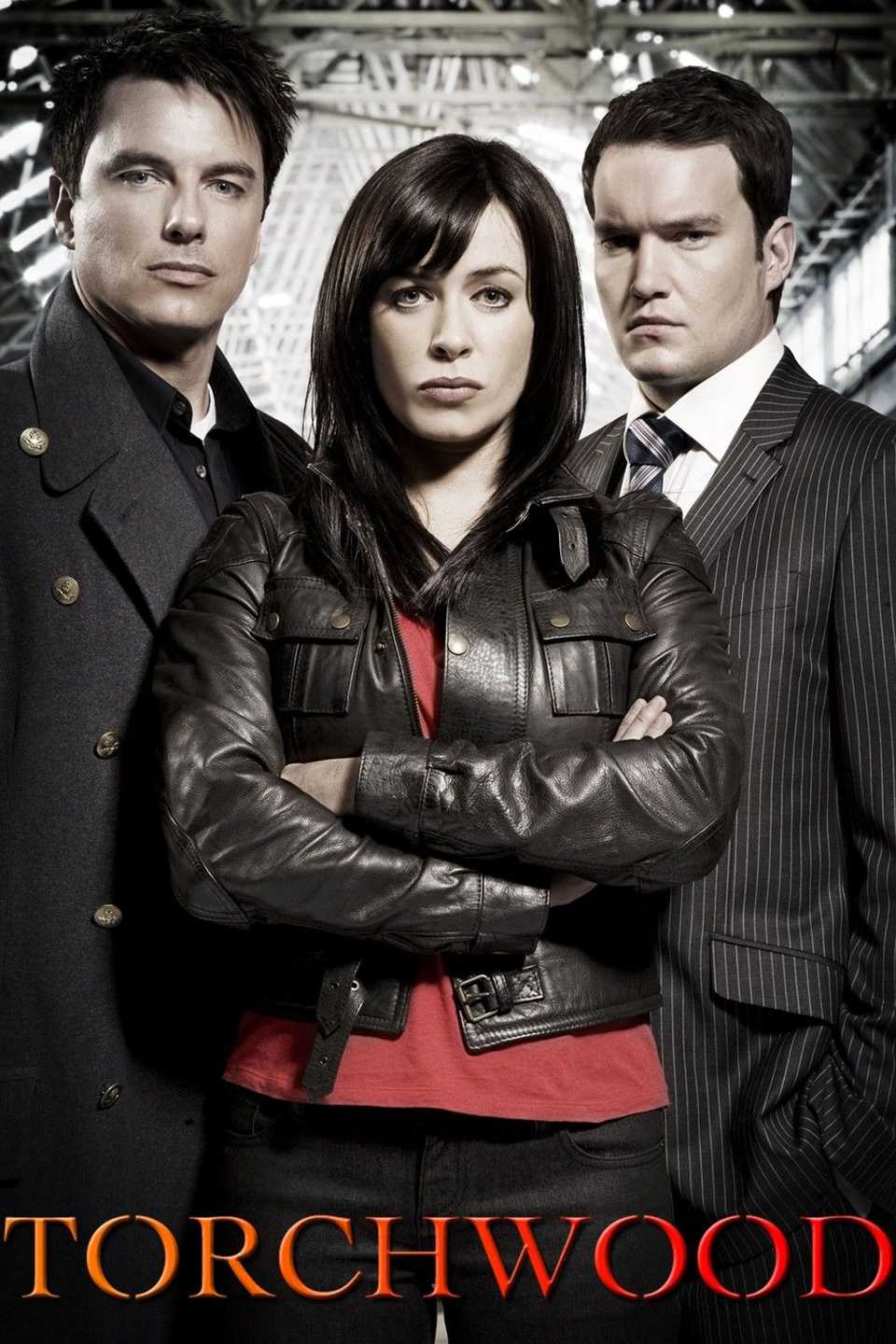
After Doctor Who's immediate success, Russell T. Davies was eager to expand that world with the spin-off Torchwood. The series follows the secret operatives of Torchwood, a covert branch based in Cardiff, founded by Queen Victoria. Led by Captain Jack Harkness (John Barrowman), the team of alien-hunters protects Earth from extraterrestrial and supernatural threats. Aimed at an older demographic, Torchwood explored darker themes including human corruption, death, existentialism, and sexuality. Torchwood was the perfect experimental and edgy answer to the sci-fi landscape of the time.
Torchwood was defined by its strong shift toward darker, grittier storytelling that strayed from the optimistic science fiction of the '90s. The narrative explored a more cynical approach where the action of preventing destruction comes with emotional turmoil, trauma, and, in some cases, even death. The series' aesthetic is best remembered for its clunky cyberpunk imagery meant to feel "futuristic." To capture the decade, the alternative and street fashion screamed 2000s, ensuring Torchwood wasn't timeless but a product of its time. Long before prestige television allowed sexuality to be mainstream, Torchwood was celebrated for its fluid depiction of sexuality. The series broke ground by allowing bisexuality and pansexuality to be the baseline for the characters. A peak monster-of-the-week thriller, Torchwood balanced the episodic formula with an overarching plot, culminating in two in-world miniseries: Children of Earth and Miracle Day.
Torchwood
- Release Date
- 2006 - 2011-00-00
- Network
- BBC
- Showrunner
- Andy Goddard
- Directors
- Andy Goddard
KioskNews shows a cleaned-up reading view extracted from the publisher’s page — the original always lives on their site, not ours.