‘The sexy stuff has got to be coming to an end, right?’: Rivals star Aidan Turner on beards, ballroom dancing and putting Poldark to bed

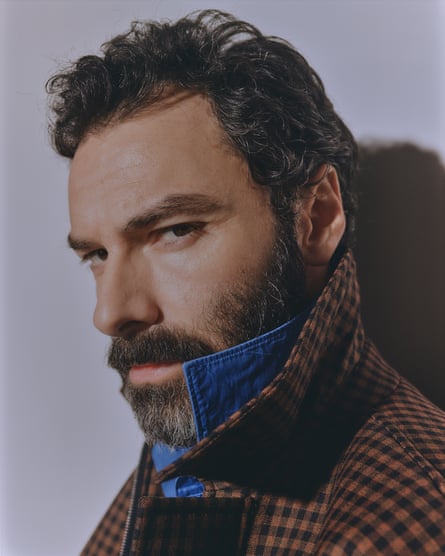
Aidan Turner has a tactical beard. For the last two decades or so, the actor has found himself in roles that have made him a smouldering pin-up. Audiences really love to look at him. You can buy mugs that say, “Today I don’t feel like doing anything … except Aidan Turner.” There are entire Reddit forums dedicated to sharing photographs of him looking hot. He knows this about himself, just like he knows that people want to ask him about it. “I do get asked these questions,” he says, a little wearily. “I do get the, you know, word ‘smoulder’ or ‘sexy’, and all that kind of shit.” So right now, he has a full beard, in the hope that he will not be accused of, for example, smouldering. “I thought it wouldn’t happen so much with the beard,” he sighs. “I thought I could get away with it. I was going for ‘dad’.”
The job of actors is to sell a story as well as they possibly can, and over the years plenty of the stories that Turner has sold have involved romance and sex. He appeared in Les Liaisons Dangereuses at the National Theatre in London this summer, and even the New Yorker noted how much he smoulders. In some ways, Turner is one of those male performers who is, well, a little bit objectified. The fact that he is a good actor, and also known for being sexy, places him in a peculiar bind. If he doesn’t gamely play along, if he points out that he’s getting a bit tired of it actually, then he risks being seen as a killjoy. Sure, there are worse burdens to bear, but at times the star of Poldark and Rivals finds himself in a curious position.
Turner is 43 now. (He is literally a dad – he and his wife, the American actor Caitlin FitzGerald, have got a small son.) His early roles showed off his ability to handsomely, pensively brood. He was a vampire in the sci-fi series Being Human, and played Dante Gabriel Rossetti in Desperate Romantics, writing moody poetry in soft light. Then, in 2015, he starred in the BBC’s hugely popular adaptation of Poldark, which turned him into a household name. As Ross Poldark, an 18th-century soldier, he loved, fought and, very famously, swung a scythe. The attention that came with it made his career, but it also put him off sexy roles for a while. Then a few years later, Rivals came along.
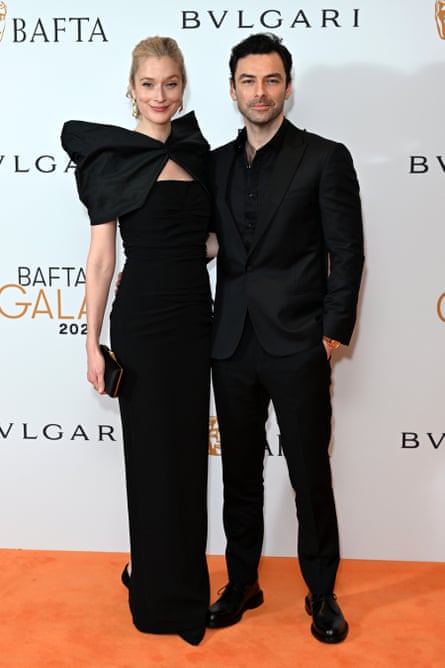
Rivals is outrageously fun and smutty. It adapts Jilly Cooper’s Rutshire Chronicles novels, the kind of books that would once have been known as bonkbusters, into big, brash television. In her fictionalised version of the Cotswolds in the 1980s, Cooper brought together aristocrats, MPs and cut‑throat television executives. Everyone is having sex with everyone; everyone is ready to stab their neighbour in their back, and probably have sex with them at the same time. Everyone, that is, except Turner’s character, Declan O’Hara, a serious‑minded broadcast journalist who is unusually faithful to his wife, Maud – and also dashingly handsome. So here Turner is again, fielding questions about intimacy coordinators, sex scenes and his very full moustache.
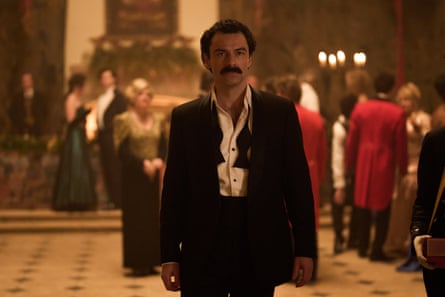
The moustache was his idea. “I say it was my idea,” he begins, then corrects himself. “It fucking was my idea.” Turner swears like it is going out of fashion. He has just finished today’s photoshoot, so we have gone to find a quiet spot to chat, and have ended up in a basement, surrounded by bikes and cleaning products and tools. He is out of the fancy clothes and back in his east London dad uniform of white T-shirt, navy chore jacket and jeans. He explains that he had turned up for the Rivals job with a full beard, and if they were going to shave it off, he told them, he had no intention of using a stick-on prosthetic. “You end up eating hairs all day and if you smile it falls off,” he says. “I think everyone on set has now learned the lesson of no stickies.” So they shaved him down to a moustache first, and decided they liked it, and that’s what stuck. It also gave Declan a bit more gravitas. “I don’t want to make this about getting into character or anything. All that stuff gives me the creeps, actors talking about that,” he says, squirming. “But [the moustache] is really helpful, because Declan feels older to me. Like, he’s a bit more of a grownup than I am.” Turner grew up in Dublin and has the accent to prove it, but Declan has a Westmeath accent, a bit deeper than his own, which he borrowed from his father, Pearse. “So with that, and the geography teacher outfits, everything feels more mature.”
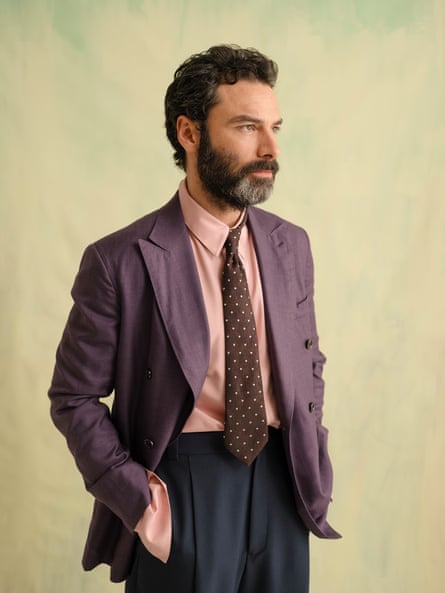
Rivals has been a juggernaut for all involved. The TV series is nostalgic and knowing, horny and hilarious, but the new episodes find the show in a more gloomy mood. It opens with a funeral – don’t panic; I counted, and it only takes 15 minutes to get to a sex scene – and trouble is brewing for Declan and Maud’s marriage. “It’s a big one,” Turner nods, though spoiler etiquette dictates he cannot say too much.
The fact that Rivals can swing so comfortably between profound grief, camp backstabbing and joyful infidelity gives it a very particular tone. Why does Turner think that audiences have lapped it up? “I mean, I was born in ’83, and there is this yearning for that nostalgia, I suppose. And Jilly Cooper has a certain tone. She was looked over for many years. It was seen as this low-rent, smutty kind of literature, and I don’t know if a lot of people gave it a chance. That doesn’t seem to be the case any more.” He has noticed that it appeals to lots of age groups, and for the first time in a while people in their 20s are coming up to him in the street. “Rivals is funny, and it knows exactly what it is,” he offers. “It’s unapologetic. It’s on the front foot and it’s out there, going, this is what we’re doing, this is who we are.”
Cooper was heavily involved in the first season, and they were in the middle of shooting the second when the author died suddenly, at the age of 88. Turner has fond memories of her. “She was famous for throwing these parties at her house in the Cotswolds that were just exactly what you would imagine,” Turner says. “They were so much fun. The champagne never stopped flowing, and her dogs were everywhere. She was so spirited.” He was filming the immediate aftermath of those funeral scenes when he sensed that something was going on. “It was eerie already, and I mentioned to Victoria [Smurfit, who plays Maud] that this feels weird. It feels very dark, and, like, not Rivals. And then we took a break, and I knew something was up.” The line producer broke the news to the cast that Cooper had died.
Five weeks earlier, Turner says, he had been at one of those famous parties. “And she was making speeches and drinking champagne and introducing me to people. She was her brilliant, funny, filthy self.” Cooper would often swing by the set. “I’m just glad that she got a chance to see the show, to see where it was going and how it was looking, and she was really proud of it.”
Given the amount of sex involved in Rivals, it is no surprise that they use intimacy coordinators to assist with the choreography. Turner remembers the time before intimacy coordinators were commonplace, and he finds it much better, and much easier, now that they are readily available on sets. In the past, he remembers working with directors who were hands-off or awkward when it came to sex scenes. “They just kind of leave it to you. And I don’t know whether that’s a really good thing, you know, because it’s, like, what the fuck do we do? And is this OK? And does this work?” Having a professional who is there to figure that out is really useful. “I think it’s important, especially in a show like this, to sell the scene and to do what we’re doing, because there are so many different types of sex in this show. It helps us a lot.”
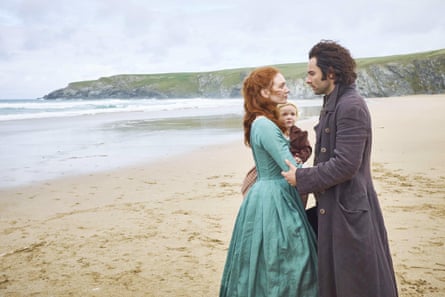
Turner was in his early 30s when he got the lead in Poldark, the BBC’s second adaptation of the Winston Graham novels, about a soldier returning home from the American revolutionary war. It turned you into a pin-up, I suggest. He takes a breath so deep that it could fill a Cornish tin mine. “I suppose they were positioning Ross to be that,” he concedes, carefully. “There was a sex in Ross, wasn’t there, I suppose,” he says, with a chuckle, “that previously wasn’t there.” He mentions the photograph of him taken behind the scenes, in a field, topless, with a scythe. For the last 10 years, it has appeared again and again, which, he says, is “all quite embarrassing. It kind of went everywhere.” In it, Turner is being touched up by the show’s makeup artist Jacqui Fowler, who is often airbrushed out of the shot, much to his disdain. “She’s there with the makeup brush, brilliant Jacqui, and I don’t know what she’s doing … ”
Was she painting his muscles? (I meant enhancing them, rather than adding them.) “No! That was something I fucking worked hard for,” he laughs. “I was 12 years younger. It was probably a lot easier to get in shape. But I was, like, no, this guy is a farmer. He’s on the horse all the time. We never really see him eating. When he is, it’s fucking gruel. He’s probably quite lean.” So Turner decided that he needed to get in shape, too. As with the Rivals moustache, it was his idea to go topless in the scything scene, and he had no idea that it would still be talked about a decade later. “I made some friends on the show that I’m still friends with now, and I’m proud of it. It had a really strong audience, and we tried to do something different with it, and I think we did. But all of that stuff was embarrassing, because it just kind of follows you around a little bit. But it might not have been successful if we didn’t have any of that at all.”
For a few years afterwards – until Rivals, in fact – Turner resisted taking roles that he knew would require him to be sexy. Did Poldark put him off? “It did, yeah,” he says. In photoshoots now, for example, he might politely decline to pose in a way that seems suggestive. “It just feels different, at 43, and being a dad,” he shrugs. Then again, he admits, he is here to talk about Rivals. Also, he has just finished Les Liaisons Dangereuses, that famously sex-focused play, in which his character Valmont manipulates women into bed, for sport and for the sheer sociopathic thrill of it. “And you’re, like, well, I mean, you’re asking for it, dude!” he laughs. He is nothing if not self-aware. “But then, I feel like this sexy stuff has got to be coming to an end. Right? Tell me it’s done.” I think that’s up to him. “For sure, and it is. But the roles are getting more interesting, and less about … that.”
Turner has never done social media and says he has never felt any pressure to sign up to it. “No. You would definitely get more free shit if you had a few million followers on Instagram. I do meet people and I’m, like, where did you get that? And they’re, like, oh, it got sent to me.” But he knows it’s not worth it. “I don’t need those trainers. Most people I know are on it, but I don’t really want to share those things. And I don’t think I’d be very good at doing it. I would probably get it wrong. I’d probably either overshare, or not do it enough.”
Turner does not strike me as an oversharer. He mentions early mornings taking his son to school after a late night at the theatre, or trips with him to the West End to see The Lion King and Paddington, but otherwise he is tight-lipped on life outside work. “I draw the line at the personal stuff. And plus, I’ve always just felt, like, who wants to hear from me? I always felt that, in the early days of Twitter or X or whatever. It takes so much confidence, doesn’t it, to go, ‘People want to hear exactly what I have to say in this sentence.’ Wow. The balls on that. Jesus. I’d love some of that courage.”
after newsletter promotion
When not being forced to examine the embarrassment of being objectified as a man in your 40s by horrible, intrusive journalists, Turner is great company. He is funny; he is as charming, as you might expect; and he is more than happy to discuss big, state‑of-the-world stuff. Take this morning. He was listening to a podcast about Meta’s new AI assistant, he says. “They will do shit for you. They’ll order food and deliver it to a friend of yours, and they’ll make sure that if you want to get paid, you’ll get paid, and they’ll make sure your mortgage gets done every month, and they’ll do everything. But you’ve just got to give them all of you.” He realised, for the first time, that he was scared of what might happen next. “There could be a moment where it’s, like, no, sorry, Aidan, there is no money for you. We need that money for a datacentre.” The podcast talked about how helpful AI could be, as well as how destructive. “But this has already been downloaded by millions of people, and I’m, like, we’re walking straight into this fire, aren’t we? This might be coming for us faster than I thought.”
Does he worry about AI coming for his job? The late Gene Wilder’s voice has been reactivated for a Netflix reality show; Tilly Norwood, the world’s first AI actor, has been unleashed on Hollywood, to middling results. “It will get better and better, and it’s about how comfortable we are when it does get amazing and we can’t tell the difference,” he says. “I don’t know whether I want to read a novel from an AI author. I want the human. I want the connection.” Maybe he is showing his age, he says, “but I don’t want to write us off yet. I don’t want a painting that’s been generated by AI. I want to see oil and canvas and acrylic. Call me old school, but I want the humans to win that battle.”
Turner lives in London now, with FitzGerald and their son. He moved to the city in his 20s, after a few years of doing theatre in Dublin. “My first TV job brought me over, and I never really went back,” he says. “I love London. For me, it’s still one of the most exciting cities in the world.” The couple have lived in the US for short periods of time, too, though neither was keen on settling there. For political reasons? “I’m not going to lie. Guns scare me, and we have a young child, and I don’t want to worry about that every day. I know we have our own problems in this country, but the guns thing scares me. I think the healthcare system is completely fucked [in America]. God forbid you’re not very wealthy, because if you get sick and you don’t have much money, or even if you’re doing all right, it will take everything. That just seems crazy to me.”
Turner grew up in Clondalkin, in the west of County Dublin, with his brother and his parents. “We were a working-class family. My dad retired a few years ago, but he was an electrician, and my mum is an accountant.” He had a grandmother who did amateur dramatics, but otherwise there was no history of performing in the family. When Turner realised he wanted to go to drama school, at 18, “there was a certain mould being broken, there”. But, he says, he did have some experience of being on stage. “It would be remiss of me not to say that there was an unusual part of my childhood where I danced,” he begins.
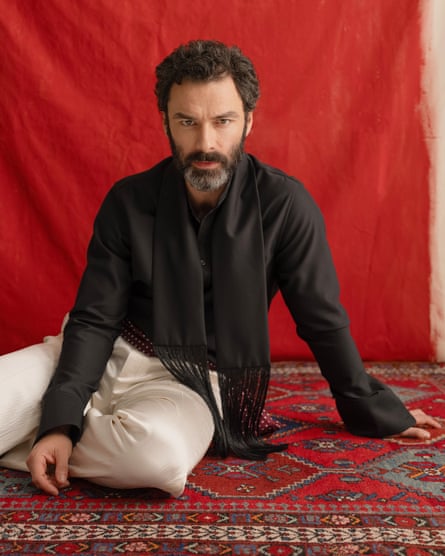
He was not just a casual dancer. He danced ballroom and Latin American from the age of six to 17, and at one point he came third in the All-Ireland dance championships. “That’s weird as fuck,” he laughs. “I mean, not odd, but just not the norm for a kid from west Dublin, which is quite poor. My mum and dad spent a lot of money to fund that.” He describes the world of competitive dancing in vivid detail. “There were trophies everywhere, and we went to a competition and it was tails and suits and numbers on the back, and fake tan and Elnett hairspray and pushy mums.
“I went to schools that were quite rough, and I danced right up until I was 17,” he continues. “And I told everyone!” Was he given a hard time for it? “I don’t think they believed me, that’s my theory.” He has seen old friends who have since read about his dancing years, and they told him that they didn’t think he was being serious. “These are working-class boys, who are 14, 15, and we’re all drinking cider on a Friday night and smoking cigarettes and doing whatever else. And you tell them that you’re away to Blackpool this weekend, that you dance, and they might believe you. But they don’t want to take part in this conversation. They move away. They still want to be your mate, but they don’t have the faculties to deal with this conversation.” He gave up dancing when his dance partner got injured, and while on a break, he applied on a whim for drama school. “I was actually quite a shy kid, and there’s still a lot of that in there,” he says. Acting made him less self-conscious, and he knew straight away that it was the life for him.
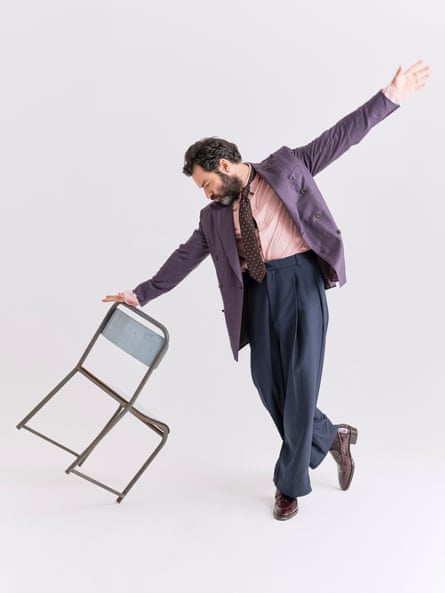
Turner has roles coming up that take him beyond the heart-throb. He is waiting for work to start on Grendel, the live-action adaptation of the 1971 novel, which tells the story of Beowulf from the monster’s perspective. Is he playing a monster? “No, no, he’s a warrior. He’s a shit warrior,” he jokes. “I don’t even know how much I can talk about that. I hope it’s still happening.” He also plays the Apostle Andrew in Terrence Malick’s forthcoming biblical epic, about the life of Jesus Christ, currently known as The Way of the Wind, though Malick is, famously, not a fast worker, and it was filmed in 2019. “Surely it’s coming out soon? I don’t know,” he says.
But he has also, briefly, returned to The Diplomat, Netflix’s popular political thriller, reprising his role as the British spy Callum Ellis. And there is no denying it: Callum is a sexy guy. “Oh, come off it. I am not sexy in The Diplomat,” he says, firmly. “That is all you.” He really does think, or hope, that this era is almost behind him. “It must be coming to an end,” he says. But what if he’s got another 20 years of it left? “Oh no,” he says, laughing. Then groans, as if he cannot think of anything worse.
KioskNews shows a cleaned-up reading view extracted from the publisher’s page — the original always lives on their site, not ours.