The U.S. economy before and after the Iran war, in five charts
On Feb. 27, the day before the United States and Israel attacked Iran, the American economy was on a steady course to lower inflation and attain greater buying power. Gas was cheap and interest rates were coming down.
Today, none of those things are true anymore. When it comes to the U.S. economy, there’s before the Iran war — and since.
Despite assurances from President Donald Trump as early as March that the war would prove a “short-term excursion,” the conflict is about to round its seventh month. On Tuesday, Trump suggested that a deal could arrive after November’s midterm elections.
The morass has short-circuited Trump’s ability to tout other, more positive economic developments during his second term. The Census Bureau reported last week that the median U.S. household income hit an all-time high in 2025, while the percentage of people in the U.S. living in poverty fell to its lowest level on record. The stock market has done well this year, and the unemployment rate remains low.
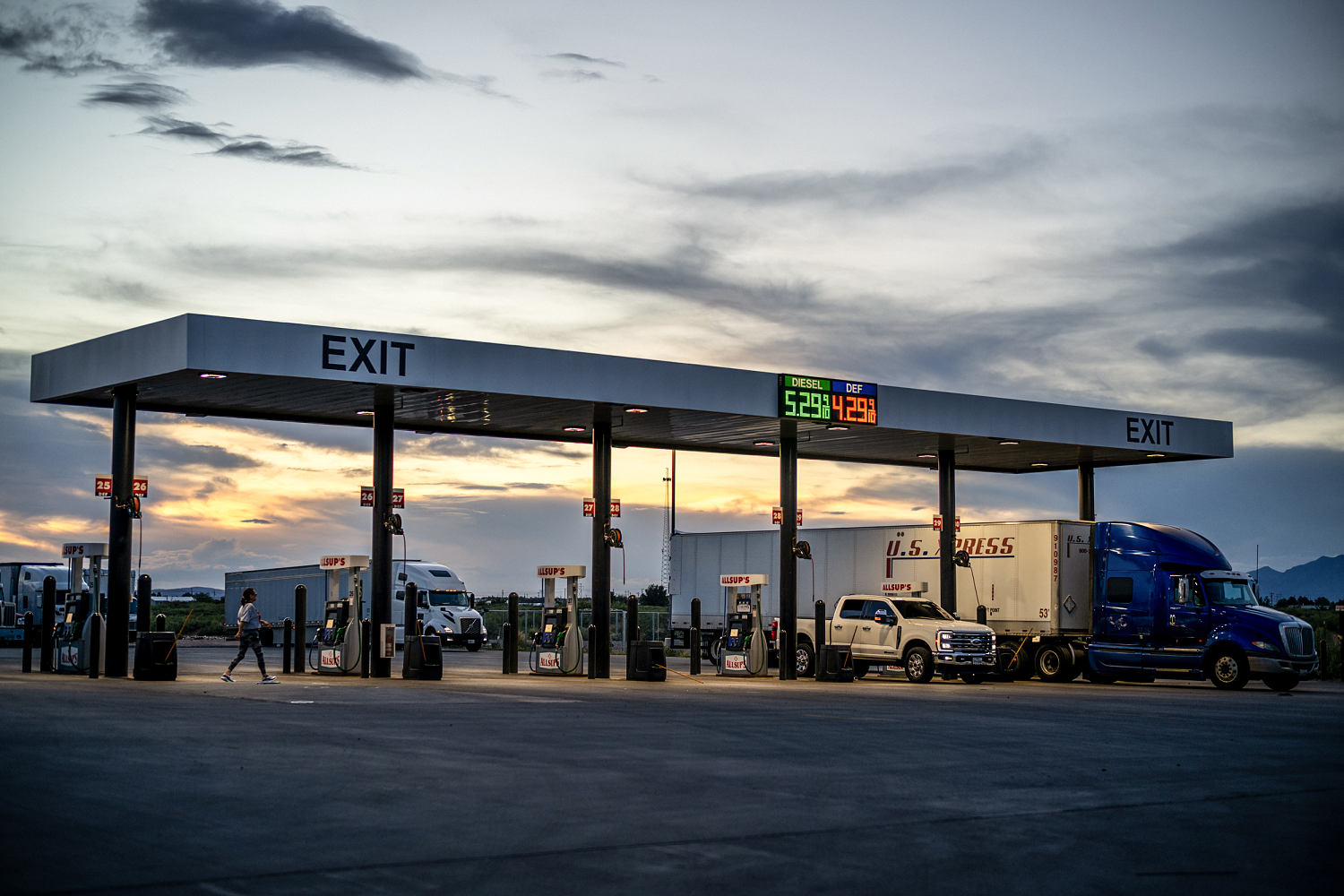
Yet, on balance, the negative news has served to obscure the good, both for individual consumers and the nation at large. Before the war, gas prices were just under $3 a gallon. Today they’re at approximately $4.50 on average. Diesel prices went from an average of $3.75 on Feb. 28 to an all-time high of more than $6.50 on Tuesday.
This has caused a domino effect in which inflation rose, then borrowing costs, then mortgage rates.
Surveys of consumer sentiment and presidential approval polls continue to drift lower even as household spending on extras such as travel and dining out remains steady. In March, 35% of respondents to an NBC News poll said Trump had helped the economy. By September, that figure had declined to just 26%.
The White House defended the president’s record in a statement to NBC News.
“President Trump has always been clear about temporary disruptions as a result of the Iran conflict, but the Trump administration has remained laser-focused delivering on the President’s long-term economic agenda on the home front,” White House spokesman Kush Desai said in a statement.
The changes wrought by the war are nevertheless unmistakable. With less than six weeks until the midterm elections, the charts below offer the clearest picture yet of the challenge the White House faces as it works to retain Republican control of Congress.
Gas and diesel prices
The major reason for inflation’s run-up has been higher energy prices, especially fuel. Prior to the war’s launch, average gas prices stood at just under $3 a gallon, while diesel prices were less than $4 a gallon. Today, gas is nearly $4.50 — its highest ever for late September — and diesel prices continue to set records, most recently hitting $6.52.
Volatile oil price movements have made forecasting their future path nearly impossible. The state of affairs was summed up by oil analysts with JP Morgan in a note published last week: “We simply don’t know how to model the endgame,” they wrote.
When the war began, the analysts said, they assumed the Trump administration wouldn’t let gas prices, inflation or the 10-year Treasury yield move to the levels they have now reached.
“Six months later, many of those lines have been crossed, yet the exit strategy is less clear, not more,” they wrote.
Inflation
When markets closed Feb. 27, the consumer price index sat at 2.4%, nearly matching its low of the second Trump administration. Today, the CPI, at 3.4%, is a full percentage point higher.
It’s a major reason why the Fed raised interest rates last week for the first time since 2023, said Kathy Bostjancic, senior vice president and chief economist for Nationwide Mutual.
“The longer inflation is persistently high, the more business and consumers’ expectations for it rise,” she said. “The Fed is trying to make sure they act in a way to avoid bringing that about.”
Last week, the Congressional Budget Office estimated that the war was responsible for adding at least 0.5 percentage points to inflation.
Bonds and mortgages
The yield on the 10-year Treasury note — a measure of inflation, fiscal risk, and economic growth — has climbed from 3.96% to nearly 5% since the war began. It represents a major run up that resembles the one seen in 2022, when pandemic-era inflation began to soar.
While inflation isn’t the only driver of higher yields — borrowing for AI investments has added pressure to the run-up — it is a major one, said Padhraic Garvey, regional head of research for the Americas and managing director at ING Financial Markets.
“At the moment we have inflation, and because we’ve got high inflation, that puts upward pressure on bond yields,” Garvey said.
Increased borrowing costs mean more taxpayer dollars must go toward paying interest, leaving less money available for more socially useful investments.
Alongside the rise in the 10-year yield has been mortgage prices, which closely track its movements. Today the average 30-year mortgage rate stands at more than 7%, compared with less than 6% before the start of the war.
Consumer sentiment
For consumers, high mortgage rates and stubborn inflation have compounded a feeling that many basic necessities are becoming unaffordable. The University of Michigan’s consumer sentiment survey continues to sit near all-time lows. Another measure of consumer confidence from the Conference Board economics consultancy has now declined for two straight months. The theme of affordability has come to dominate midterm House and Senate campaigns, where Democrats are hoping to win over disaffected Republicans and independents in November.
“With a resurgence in fuel prices and trade tensions, consumers anticipate greater pressures on their pocketbooks to come,” Joanne Hsu, director of the University of Michigan Survey of Consumers, wrote earlier this month.
Stocks
The stock market has charted its own course, largely fueled by ongoing investments in AI. While the index remains just a few percentage points below its all-time high, it has largely stagnated for the past month and closed Friday notching its second-straight losing week. That may be a sign that investors may be realizing that there is increasingly no end in sight to the conflict, said Matt Maley, chief strategist at Miller Tabak financial group.
“Eventually the market reacts in a meaningful way once it realizes the situation isn’t going to change,” he said.
KioskNews shows a cleaned-up reading view extracted from the publisher’s page — the original always lives on their site, not ours.