History in Morocco! How Nigeria’s Flamingos Won the World Cup
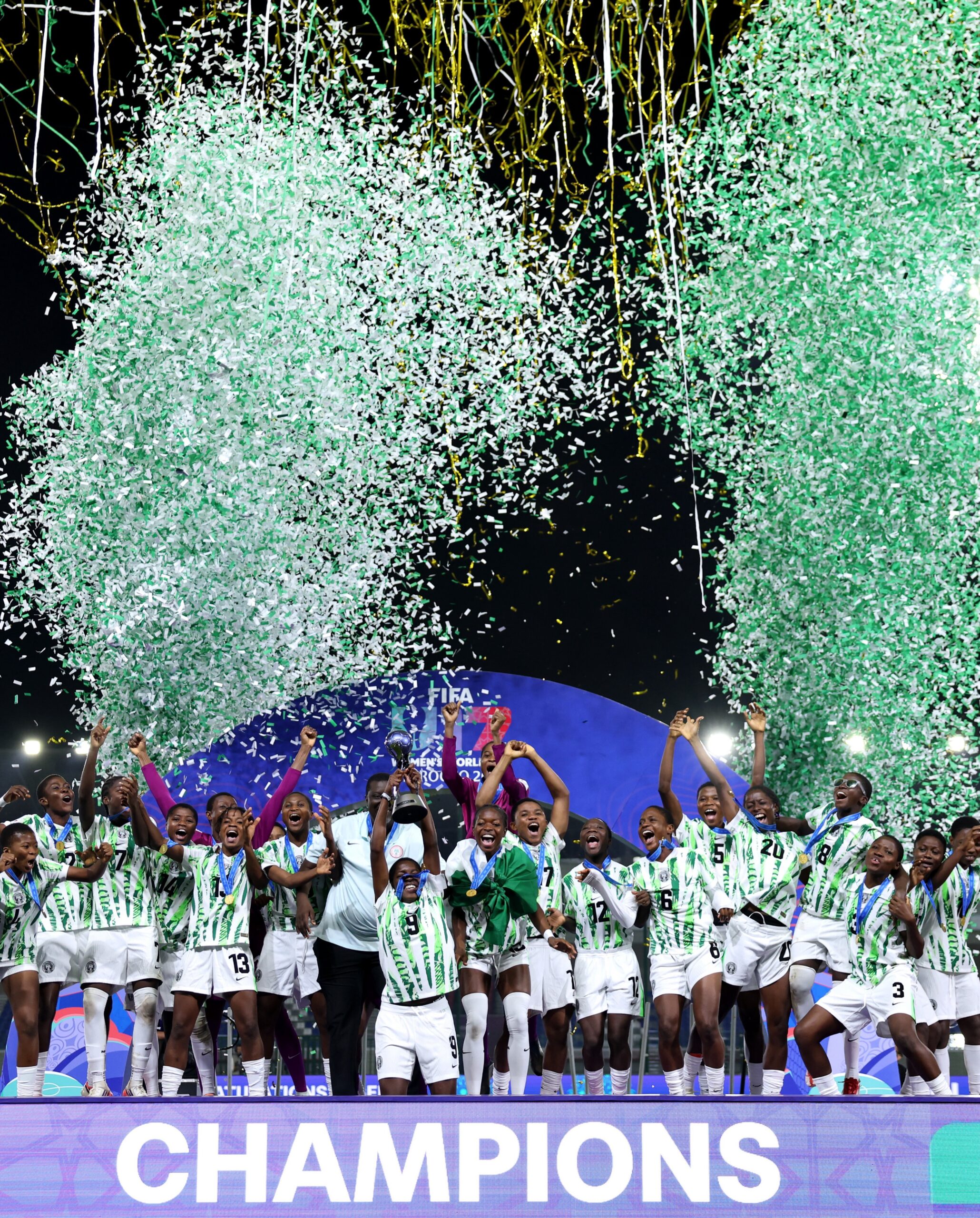
The Flamingos celebrate on stage with green and white confetti as they lift the 2026 FIFA U-17 Women’s World Cup trophy.
History was made in Rabat as the Flamingos of Nigeria conquered global football at the 2026 FIFA U-17 Women’s World Cup. Under head coach Akeem Busari, the team executed an extraordinary seven-match campaign at the finals, overcoming an early setback to claim six consecutive victories and become the first African nation to lift any FIFA women’s international trophy.
Midfielder Oluebube Umejiaku earned individual recognition by winning the FIFA Golden Ball as the Player of the Tournament alongside Player of the Match honors in the final. The squad also displayed exceptional attacking breadth, scoring goals through eight different players across seven matches at the finals while registering over 100 goal attempts.
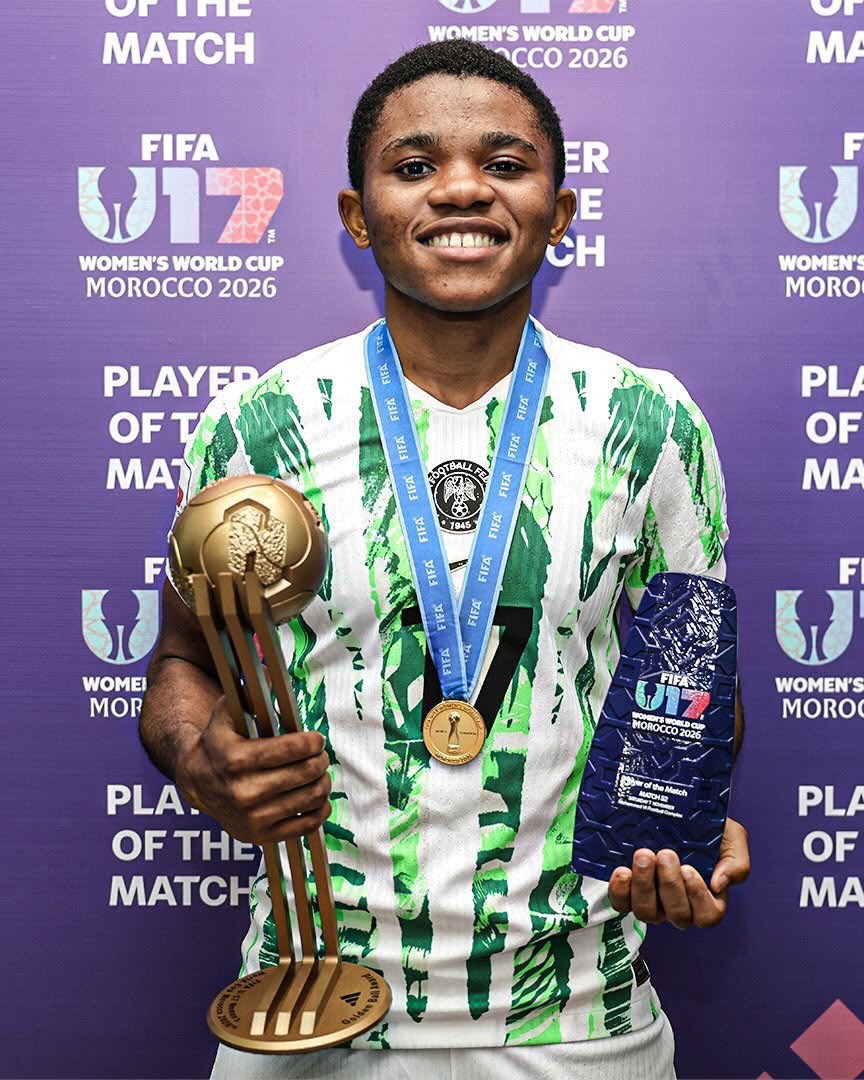
Oluebube Umejiaku poses with the FIFA Golden Ball and Player of the Match awards following Nigeria’s World Cup triumph.
Here is the match-by-match breakdown of how Nigeria navigated the African qualifiers, powered through the World Cup group stage, defeated multi-time global champions in the knockouts, and clinched the ultimate trophy in Morocco.
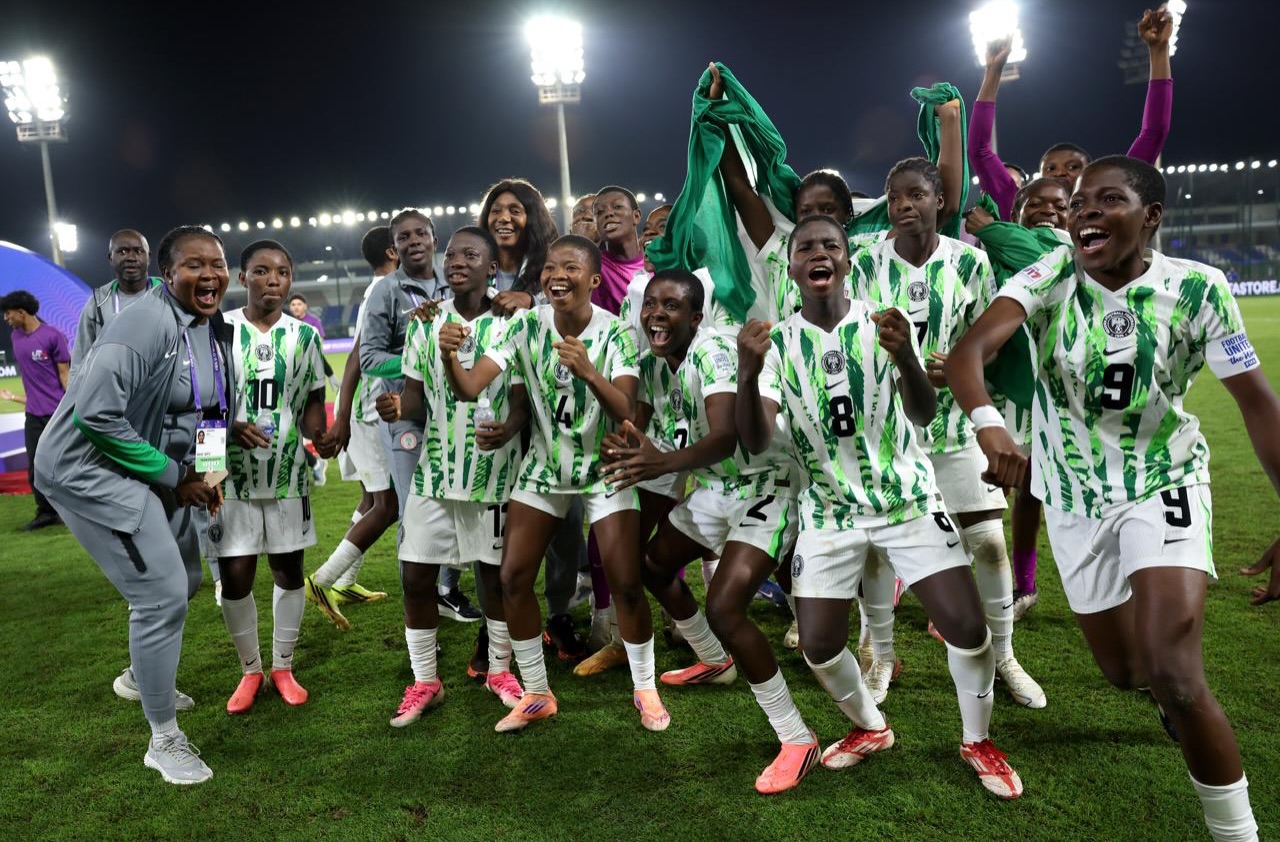
Nigeria’s Flamingos celebrate becoming the first African nation to win the FIFA U-17 Women’s World Cup after defeating Japan 2-1 in Rabat.
Phase 1: The African Qualifying Journey
Nigeria entered the African U-17 World Cup qualifying campaign in the second round, establishing dominance in home-and-away aggregate ties across West Africa. The Flamingos opened their qualification run with an emphatic 5–0 away victory in Guinea, led by team captain Harmony Chidi’s first-half hat-trick alongside goals from Oluwakemi Adegbuyi and Mary Dunstan. They followed up with a 7–0 victory in the home leg in Ogun State to complete a 12–0 aggregate shutout.
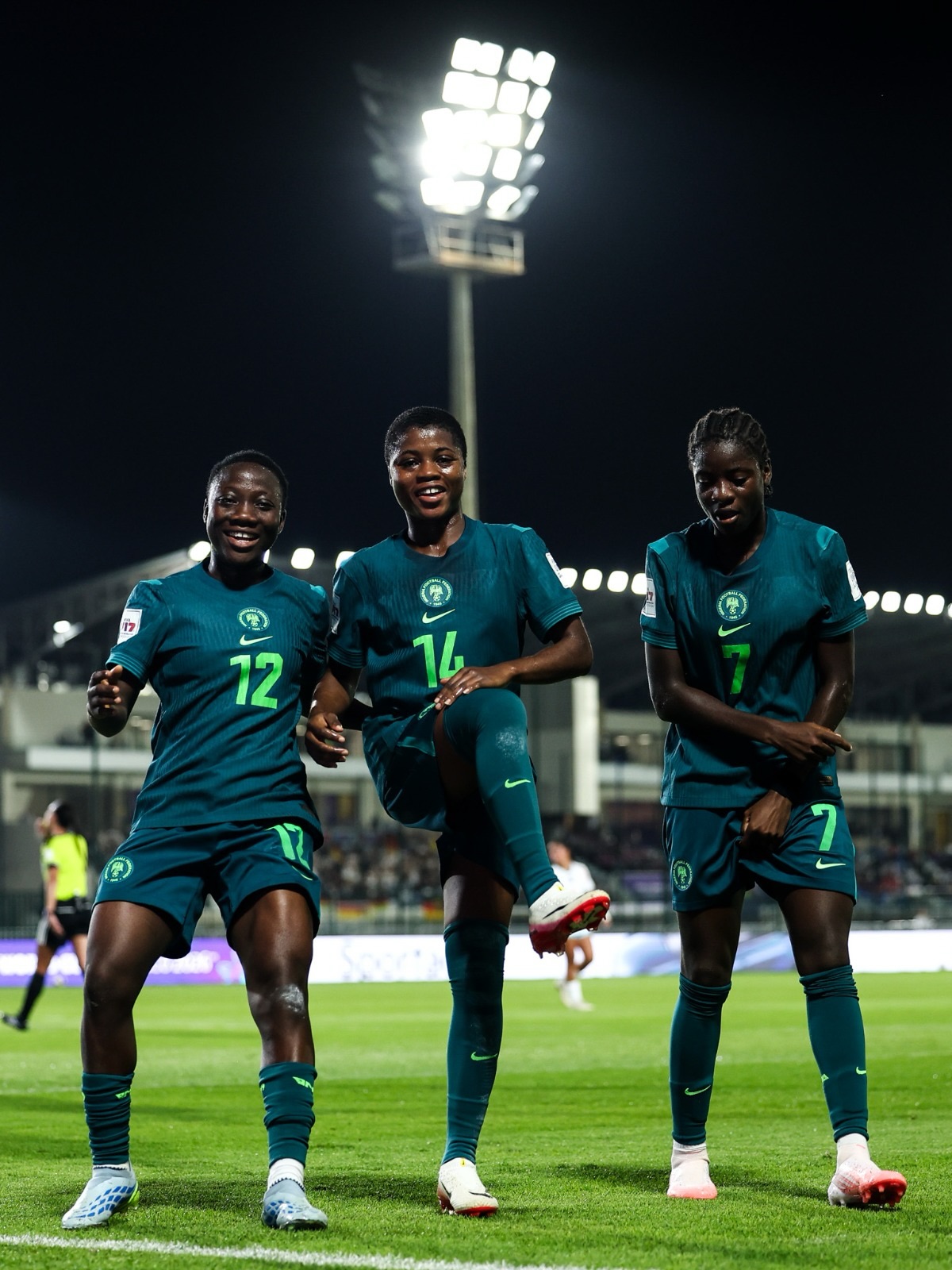
The Flamingos celebrate on the pitch following their matchday four fixture at the 2026 FIFA U-17 Women’s World Cup.
In the final qualifying round, Nigeria established a three-goal lead in Monrovia by defeating Liberia 4–1, thanks to a brace from Harmony Chidi and goals from Shakirat Moshood and Peace Effiong. Chidi then sealed a 2–0 second-leg win back home to finish the qualifiers with 12 goals and secure Nigeria’s ticket to Morocco.
Phase 2: Group B at the World Cup (Morocco)
Placed in Group B alongside Poland, Puerto Rico, and defending world champions DPR Korea, Nigeria had to battle through one of the tournament’s most competitive pools. The campaign started with a tight 2–1 loss to Poland in Rabat, putting pressure on the team to perform in their remaining fixtures. The Flamingos bounced back immediately with a 2–0 shutout victory over Puerto Rico to claim their first three points.
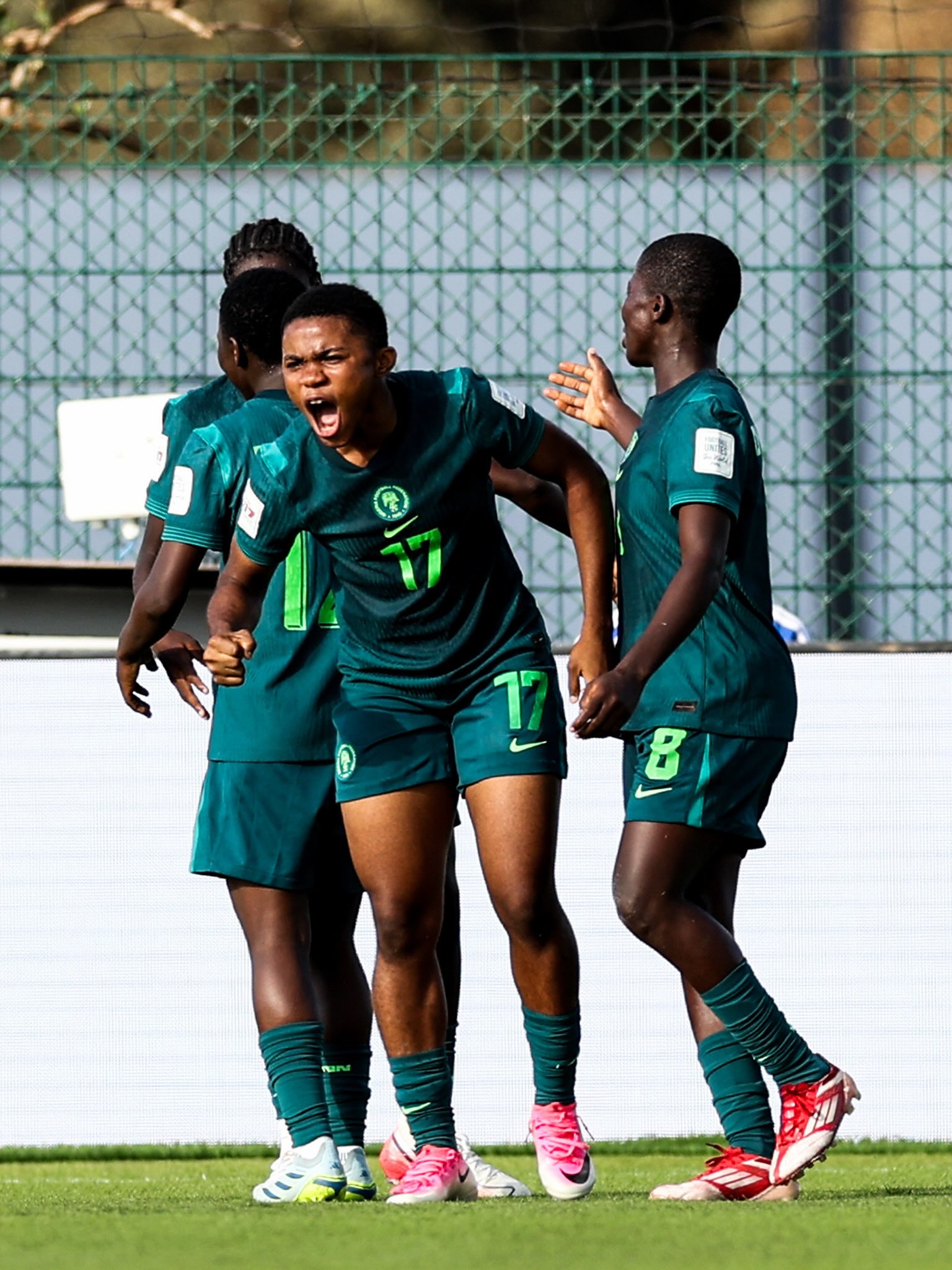
Nigeria’s Flamingos celebrate their historic 3-1 Group B victory over defending champions DPR Korea in Morocco.
In their final group match, Nigeria produced one of the tournament’s biggest tactical upsets by defeating two-time defending champions DPR Korea 3–1. Goals from Oluwakemi Adegbuyi, Oluebube Umejiaku, and Kanyinsola Yusuf snapped DPR Korea’s long unbeaten regulation-time streak at the U-17 World Cup and sent Nigeria through to the knockouts at the top of Group B on head-to-head tiebreakers.
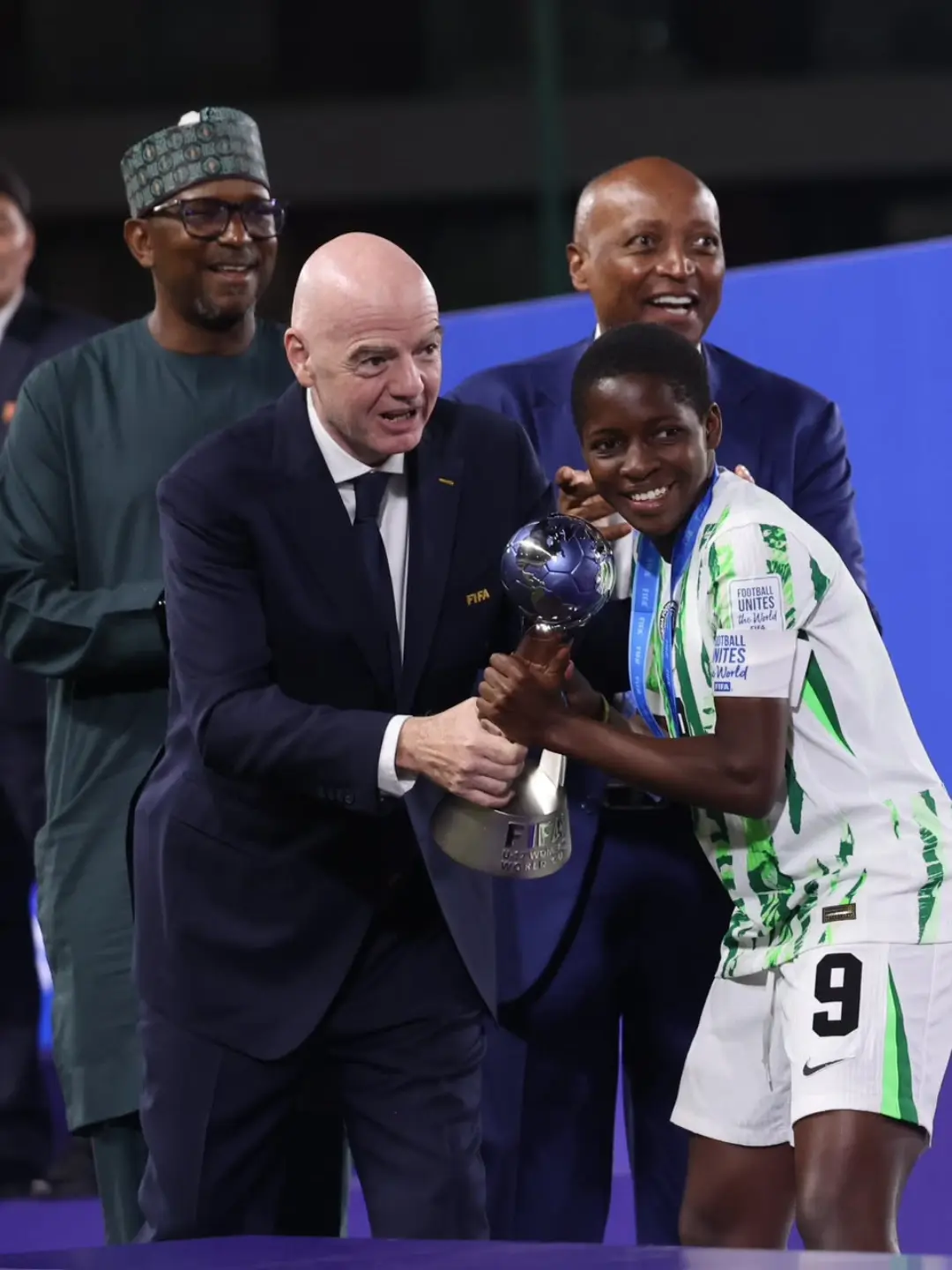
FIFA President Gianni Infantino presents the FIFA U-17 Women’s World Cup trophy to Nigeria captain Harmony Chidi alongside CAF President Patrice Motsepe.
Phase 3: The Knockout Stages
Nigeria entered the expanded 16-team knockout rounds, defeating top-tier opponents from CONCACAF, CONMEBOL, and AFC. In the Round of 16, Nigeria put together a strong performance against Mexico, winning 2–1 through goals from Oluebube Umejiaku and Mary Dunstan. The quarter-final against Venezuela proved to be a tense affair, remaining scoreless until the 89th minute when Oluebube Umejiaku won a late penalty.
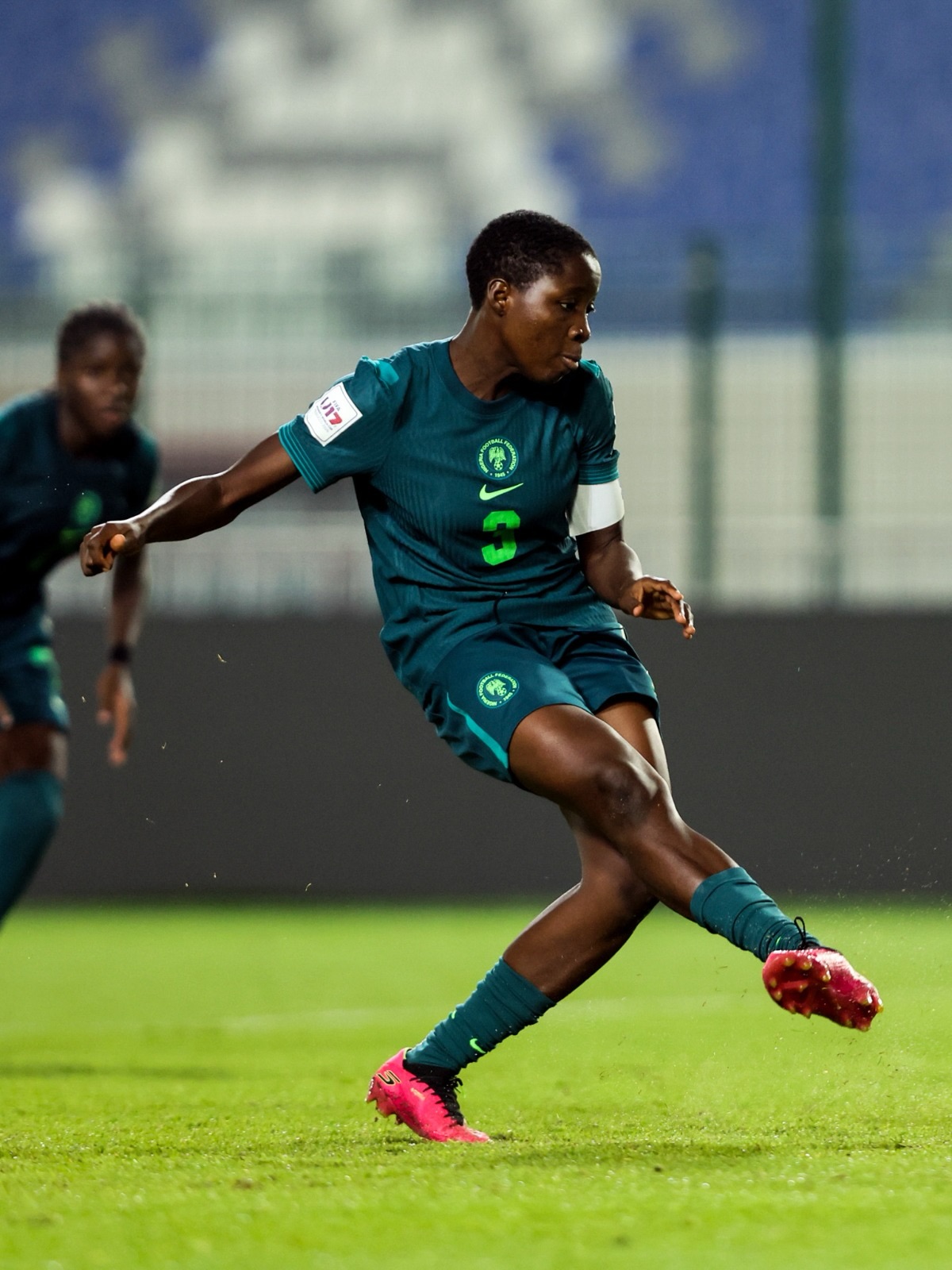
Nigeria captain Harmony Chidi in action during the Round of 16 as the Flamingos secured a 2-1 victory over Mexico in Morocco
Substitute defender Azeezat Oduntan converted from the spot to send Nigeria to the semi-finals. Facing South American champions Brazil in Rabat, Nigeria broke through in the 56th minute with a strike from Queen Joseph before forward Awawu Bashiru scored twice in the 71st and 80th minutes to lock in a 3–1 win and book Nigeria’s place in the final.
The Final: Nigeria 2–1 Japan
Played at the Mohammed VI Football Complex in Rabat, Morocco, Nigeria claimed the World Cup title with a 2–1 victory over Japan. Awawu Bashiru opened the scoring in the 39th minute with a long-range shot.
Two minutes after half-time, tournament MVP Oluebube Umejiaku doubled the advantage. Japan pulled a goal back through Fuki Ito in the 80th minute, but Nigeria defended their lead through stoppage time to secure the World Cup trophy.
Nigeria’s Flamingos celebrate becoming the first African nation to win the FIFA U-17 Women’s World Cup after defeating Japan 2-1 in Rabat.
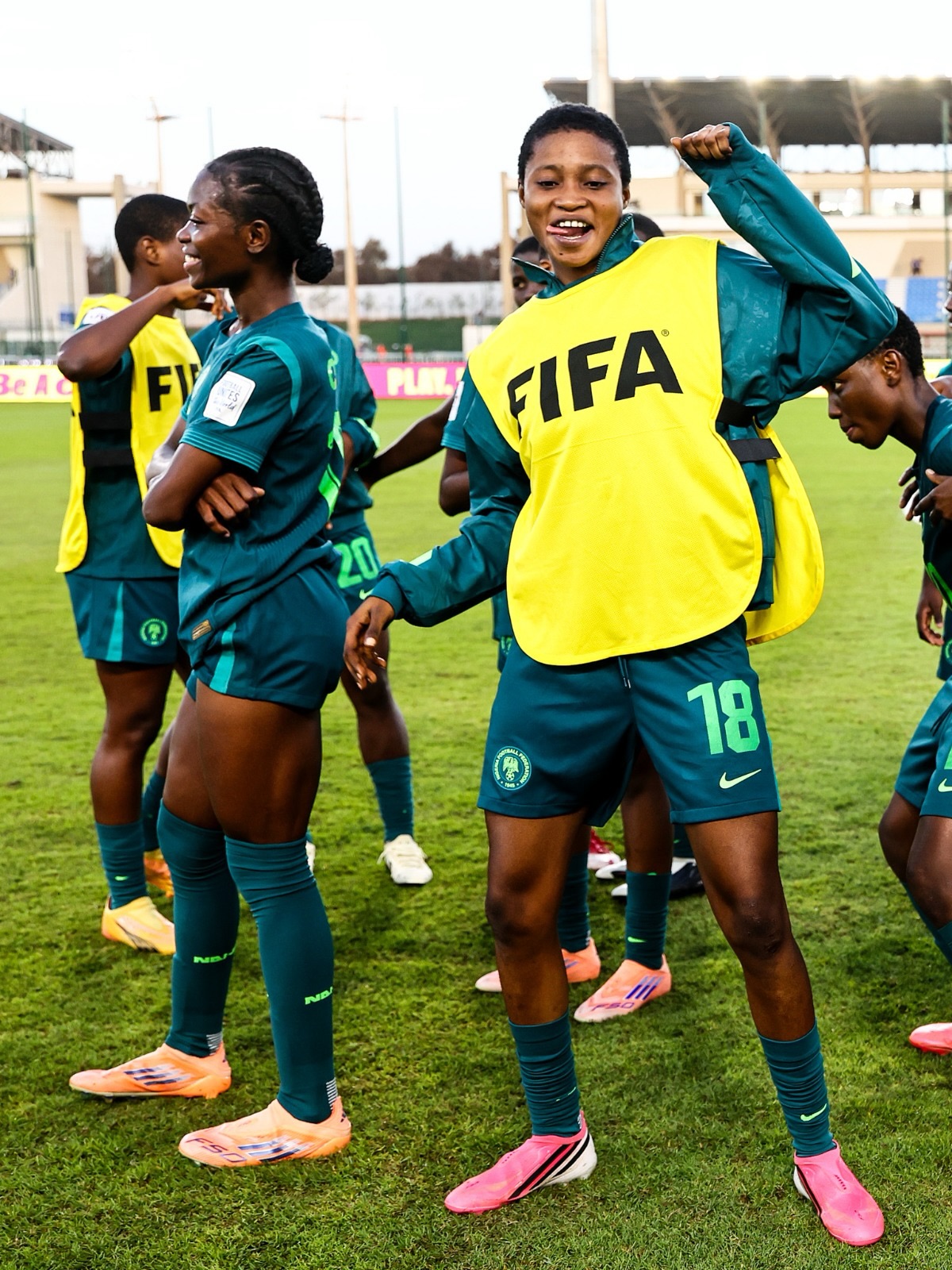
The Flamingos react after earning a spot in the quarter-finals of the 2026 FIFA U-17 Women’s World Cup.
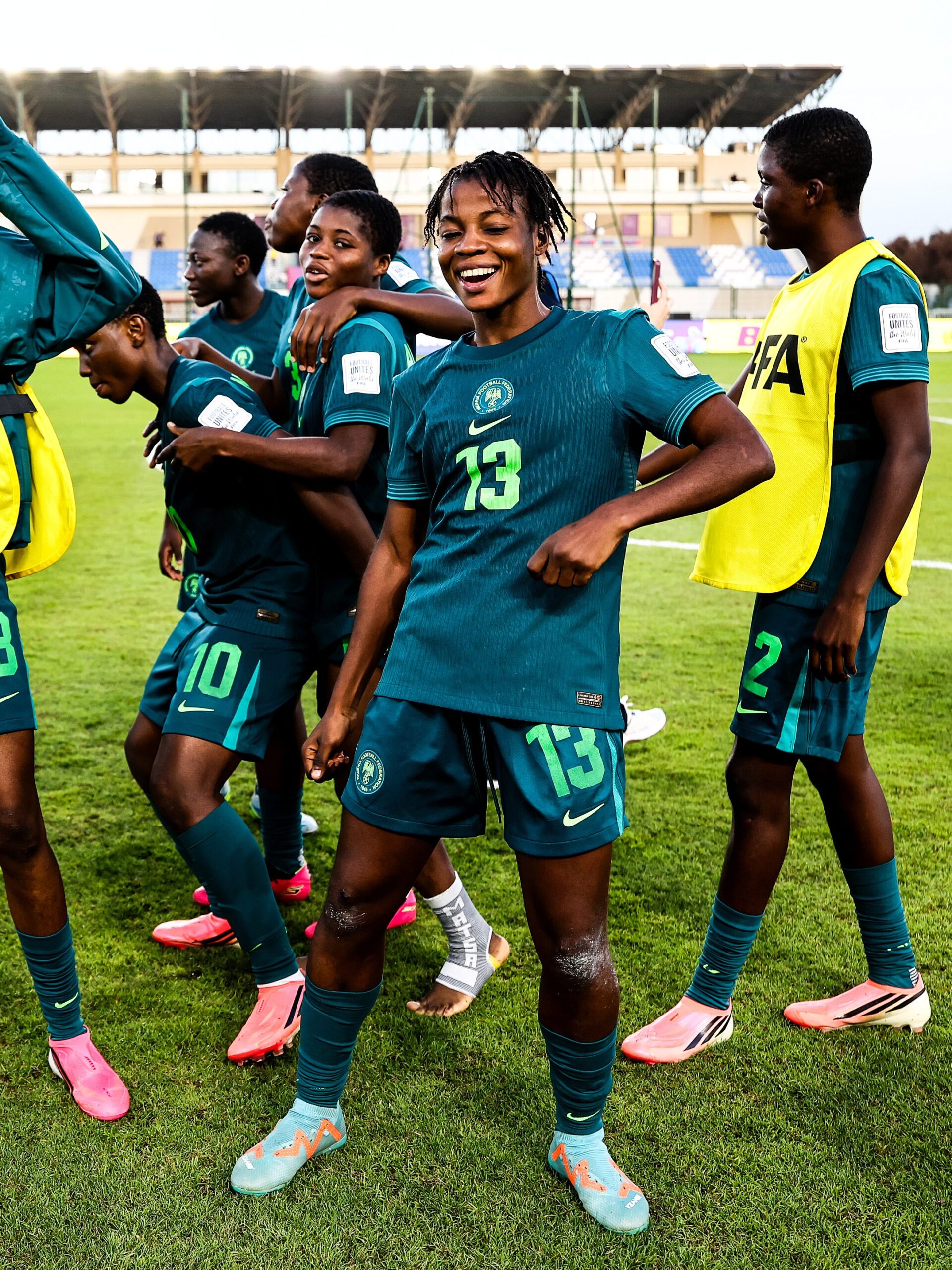
Nigeria’s Flamingos celebrate on the field following their quarter-final win over Venezuela.
KioskNews shows a cleaned-up reading view extracted from the publisher’s page — the original always lives on their site, not ours.