Greg Schiano is staying, but Rutgers' bigger problem is the cost of keeping up in the Big Ten
Saddled with mounting debt, poor on-field results and diminishing television value, the Scarlet Knights are turning into an expensive liability for their conference

• 4 min read
Rutgers wants to be in the Big Ten, it just doesn't want to act like a Big Ten school.
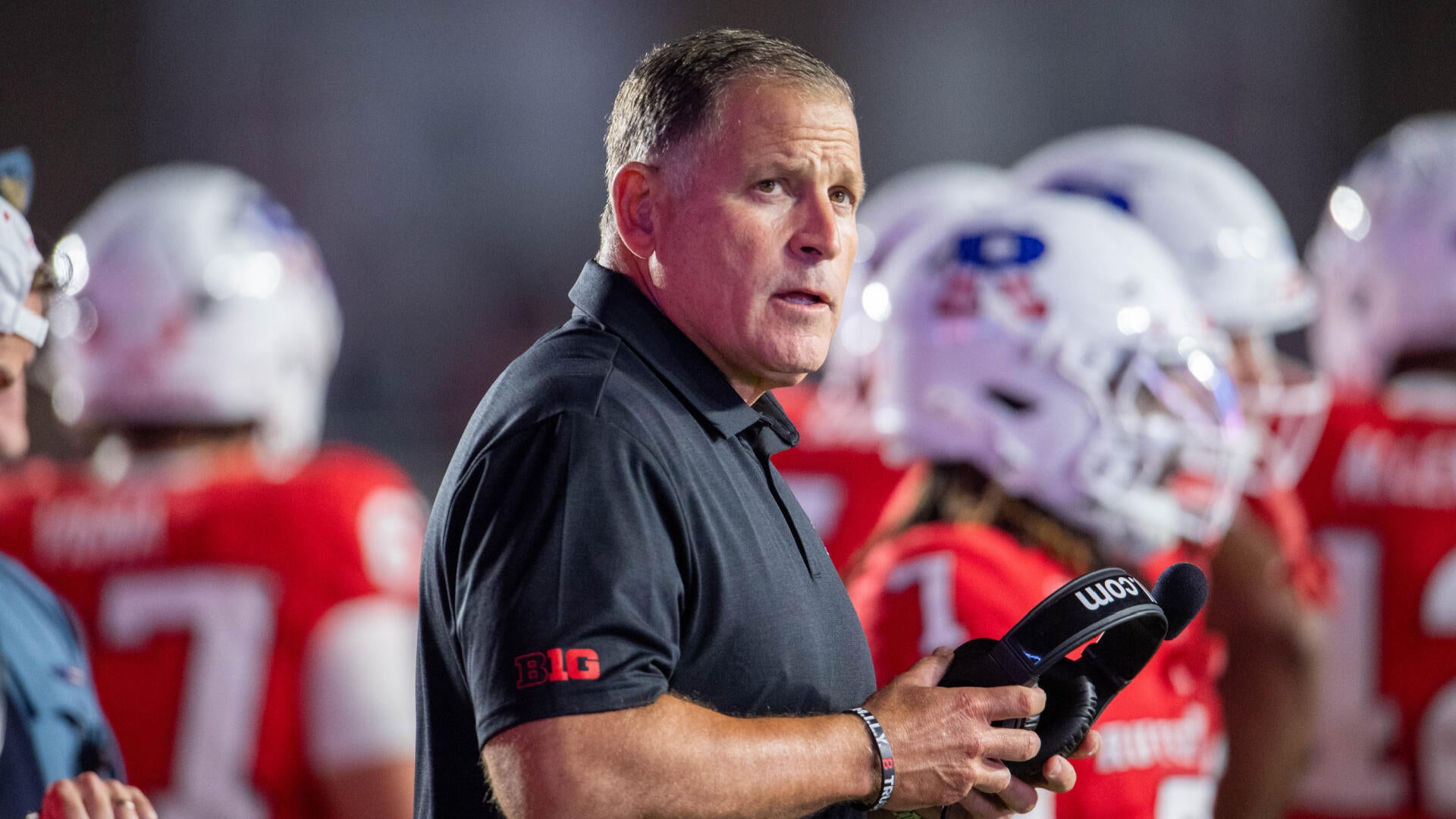
Rutgers announced Tuesday that longtime head coach Greg Schiano will be back for the 2027 season. There had been plenty of speculation building about Schiano's status at the school as Rutgers is off to a 2-7 start, ensuring it will miss out on a bowl game for the second consecutive season. The Knights are also only 3-12 in Big Ten play over the last two seasons.
Even when you consider what Greg Schiano has meant to the program -- his 101 wins are 23 more than any other coach in program history, and he's been the coach for nine of the school's 13 bowl games -- those are the kind of results that tend to lead to changes.
Yet, in the announcement that Schiano would be returning, Rutgers athletics director Keli Zinn made it clear that this decision had nothing to do with accepting the results.
"Our results are not acceptable for the expectations we have for our football program and for the athletics program we are building," Zinn said. "However, I also have an obligation to make decisions that serve the best long-term interests of Rutgers University.
"Let me be very clear: this decision is not reflective of a lowering of standards or an indication that everything is fine. It is not. This is instead a reflection of my belief that we have an opportunity to make meaningful changes that will strengthen our roster and better position our program to compete and win at a higher level."
I'll translate that for you: "We know we're not playing well enough right now but we don't have the money to pay Greg Schiano and his staff to go away, replace them with a new one, and then be able to put a roster on the field that can compete."
If Rutgers were to fire Schiano now, it would owe him a little more than a $17 million buyout. A hefty price for sure, but in the grand scheme of college football, it is not an exorbitant amount, which gets to the heart of the issue with Rutgers, at least from the Big Ten's perspective.
Rutgers enjoys being a Big Ten school, it just can't afford to live in the neighborhood anymore.
I understand why Rutgers is making the decision. The athletic department dealt with a $78 million deficit for the 2024-25 season. It truly does not have the money to make this move, and asking them to spend more money to overhaul everything would be fiscally irresponsible.
The school was already in trouble financially when former Big Ten commissioner Jim Delany went for The Great Cable Box Heist of 2012. Rutgers was an athletic department in need of cash, and the Big Ten was a conference in need of cable boxes for its network. So Rutgers agreed to join at a serious discount for the infusion of short-term gains, while the Big Ten got their network on cable in the New York/New Jersey metro area.
The problem is the cost of running an athletic department has skyrocketed since. You aren't just paying coaches anymore, you're paying players, and they're essentially free agents. The price of playing poker in a league like the Big Ten isn't getting cheaper any time soon, and Rutgers has struggled to keep up.
From a competitive standpoint, Rutgers isn't bringing much of anything to the league. As we enter an era of the 24-team playoff in which 19 spots in the field will go to at-large bids, Rutgers could prove to be a drag on the resumes of all the Big Ten schools actually competing for those spots. There's a reason 3-loss SEC teams get treated as playoff contenders and 3-loss Big Ten teams don't, and it's not just because SEC coaches are better at lobbying.
I mean, when Rutgers is losing non-conference games to UMass, any Big Ten team that beats it doesn't have much of an argument to make about the value of that win. The problem isn't related strictly to football, either. Rutgers joined the Big Ten in 2014. It's only reached the NCAA Tournament twice in men's basketball, which is th
Further complicating matters is the fact that those cable boxes Rutgers brought to the Big Ten over a decade ago don't matter much, if at all, anymore. When the league's current television deal expires, and it shops it around to networks, I don't know that any of them will be clamoring for Rutgers games to be made available to them. While the current iteration of the Protect College Sports Act (PCSA) seems less likely to pass following recent mid-term election results, part of the act was to cap the number of teams a conference can have in it.
If whatever the new form of the bill is in the future has the same provision, how long until conferences do what was once unthinkable and kick schools out to bring new ones in?
Rutgers bringing back Schiano for at least one more season seems to be the financially prudent thing for the athletic department, and Rutgers' first priority should always be to do what's best for Rutgers. But is Rutgers what's best for the Big Ten? That's a question likely to come up at Big Ten headquarters, if it hasn't already, and Rutgers would be wise to close out the 2020s with a better sense of the moment.
KioskNews shows a cleaned-up reading view extracted from the publisher’s page — the original always lives on their site, not ours.