Snowball fight: Cadbury owner in trademark row over festive chocolate treat
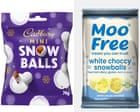
The owner of Cadbury and Toblerone has demanded that a small vegan chocolate brand remove its products from shelves in a trademark dispute over the use of the word snowball.
Mondelēz International has written a legal letter to Moo Free accusing it of trademark infringement by selling its White Choccy Snowballs – gluten free biscuit-flavoured rice balls covered in dairy free white chocolate.
Cadbury Snowballs first launched in the UK in 1966, and have been sold in their current form as packs of Mini Snow Balls since 2023. The brand registered use of the word Snowball and Snowballs for use in chocolate confectionery as a trademark in 2001. Its Mini Snow Balls are made from Dairy Milk chocolate covered in a crispy shell of white icing sugar.
The legal fight has emerged just days after Mondelez launched legal action against another small vegan chocolate brand, Catherine’s Originals, accusing it of copying the famous chunky shape of Toblerone with its O’bar.
Moo Free, which has products stocked in several major supermarkets and online, said it had been selling its Snowballs for about two years before Mondelēz demanded it immediately remove the items from sale just ahead of the busy Christmas period.
Mike Jessop, who co-founded Devon-based Moo Free in 2010 when he and his wife could not find allergen-free chocolates for Easter or Christmas, said they began selling online before being picked up by Waitrose and then other supermarkets.
He said he had “never even heard of” Cadbury Snow Balls and was lactose intolerant so couldn’t try one. He was surprised Mondelēz had been so “heavy-handed” in its letter and questioned whether it could be possible to trademark an apparently generic term. “It’s a snowball, it is not like we are making a Freddo,” he said, referring to Cadbury’s famous frog-shaped bar.
In a letter to customers, Moo Free wrote: “Moo Free takes intellectual property concerns seriously. However, we do not accept that any infringement has been established and have responded accordingly … We are disappointed to find ourselves in this position, and we stand in solidarity with Catherine’s Originals as it addresses its own situation. We hope to resolve these matters appropriately.”
A spokesperson for Mondelēz International said: “Cadbury Snow Balls are one of our most popular Christmas products, enjoyed by households across the UK. No legal action has been taken, but we have been in touch with Moo Free to make them aware of our trademark. We are open to reaching an amicable resolution.”
It is not the UK’s first snowball fight.
Tunnock’s and Lees of Scotland won legal action against HMRC in 2014 after proving they did not have to pay VAT on their coconut-covered confections, as they were deemed sufficiently similar to a cake for an exemption. Snowballs made by these two suppliers – defined as “a dome of marshmallow coated in any combination” of chocolate, sugar strands, carob, cocoa or coconut – were subsequently given their own VAT-free status.
KioskNews shows a cleaned-up reading view extracted from the publisher’s page — the original always lives on their site, not ours.