Kyle MacLachlan on David Lynch, Dale Cooper and that severed ear
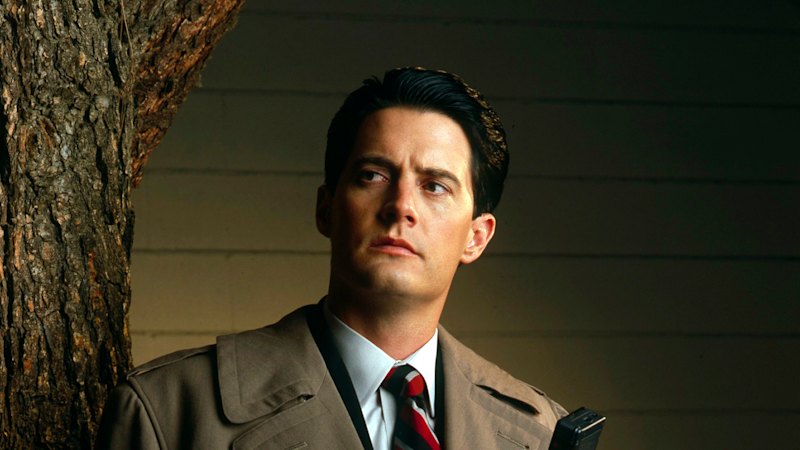
In another world, Kyle MacLachlan might have been known for straight up and down leading man roles – the handsome lead of a worthy drama, say, or the dashing love interest in a romantic comedy. He has the looks for it, and the talent. But in this timeline, MacLachlan is best known for playing – there’s no other way to put this – absolute oddballs. The kind of characters who seem normal at first blush, but are revealed to be something much darker, more eccentric, more deviant.
Take Blue Velvet (1986), David Lynch’s surreal, simmering and at times darkly funny story of violence, voyeurism and an amyl nitrite-inhaling psychopath that effectively launched MacLachlan’s career. In it, he plays Jeffrey Beaumont, a young man whose discovery of a severed human ear on a suburban lawn propels him into an unsettling world that lurks beneath the sunny surface of his home town. MacLachlan brings a wide-eyed earnestness to the role that makes his descent into darkness all the more troubling.
It’s this same earnest quality in the face of strangeness that makes him so compelling as Special Agent Dale Cooper in Twin Peaks. Lynch, it seems, recognised something essential about MacLachlan as an actor: he is someone an audience will trust. And no matter how strange things get, they will go wherever he leads.
How MacLachlan ended up in this peculiar niche is the subject of his new memoir, Fictional Selves, written with Jon Sternfeld. When I log on to our video call to discuss the book, we immediately run into technical problems: MacLachlan can see me, but I can’t see him. After futzing around with the settings for a few minutes, we decide to push on with the interview.
“Oh, shoot,” he says, sounding genuinely apologetic that he can’t fix a problem that is almost certainly my fault. “Well, I look great. I’ve got a cool sweater on. I’ve got wireframe glasses. My hair is grey.” He’s drinking a flask of coffee and calling from somewhere in the bowels of the Today Show studios in New York, in between filming two segments. He’s feeling what he describes as “a sense of terror” about the book’s release, because Fictional Selves is a catalogue not just of his successes and the things he’s proud of, but a frank assessment of his failures and mistakes too. “It doesn’t pull any punches,” he says.
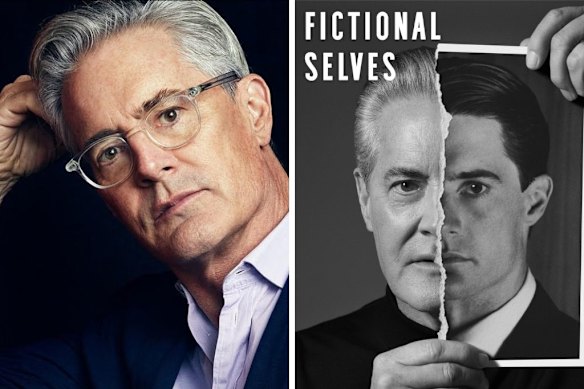
The memoir, he says, came about partially from a place of regret. When his father died of cancer in 2011, MacLachlan was left with a sense there was so much more he wanted to know about his inner life, so many things he wished he’d thought to ask. His father, he says, came from “a different generation”. Talking about his emotions – especially anything difficult or uncomfortable – was something he just didn’t do. Now that MacLachlan is a father himself (he and Desiree Gruber have been married since 2002; their son, Callum, is 18), he’s determined not to repeat the same pattern. He wanted to tell the story of his life – unvarnished, in his own words – so that one day, his son could read it and know exactly who his father was.
Fictional Selves begins with his vertiginous ascent from community theatre in Seattle to landing the lead role in a Hollywood movie that, when it was released, was meant to shake blockbuster cinema to its foundations. That movie was David Lynch’s Dune (1984) and it was an unqualified commercial and critical failure, almost killing MacLachlan’s career before it had even begun. Still, he and Lynch hit it off: they both grew up in the Pacific Northwest (MacLachlan in Washington, Lynch in Montana), had similar childhoods, similar values. Lynch gave him the Blue Velvet script to read while Dune was shooting. MacLachlan initially turned it down, but couldn’t get the dark, unsettling tale out of his mind.
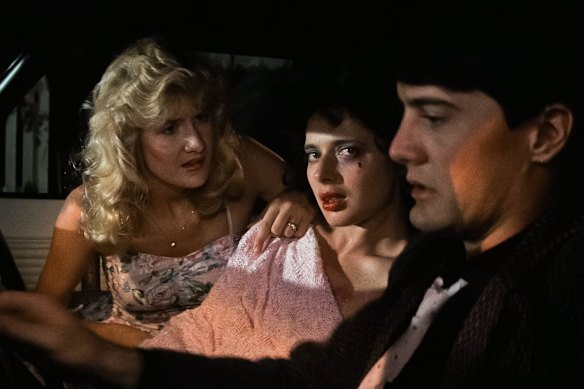
“I was immediately drawn in and enthralled in the story,” he says. “I identified with Jeffrey – I would have these curiosities, I would have this fascination with this dark side of things. The world [Lynch] had created was so frightening, enticing, relatable, surreal.” Also, he was out of work: “There literally was nothing else that was available to me to do.”
When Blue Velvet was released, it became a critical darling and MacLachlan was anointed an actor to watch. But by that point he was already wise to how changeable stardom can be. “It’s been a bit fraught, my relationship with fame,” he says. “I had enough of an experience [with Dune] to distrust it and to not give it value. I still feel that way. Apart from making you more desirable to someone who’s doing a movie because you’ve attained a certain stature – in that case, yes, it does have value. But in terms of life, it has no meaning.”
If Dune had been the smash success it was predicted to be, would he have been seduced by the Hollywood fame machine? He’s not so sure. “I think I’ve always been grounded,” he says. “I grew up in Yakima, I picked fruit when I was a kid, I was part of the greens-keeping staff at the golf course near my house. My parents were not in the business. My two younger brothers and I had a regular upbringing.”
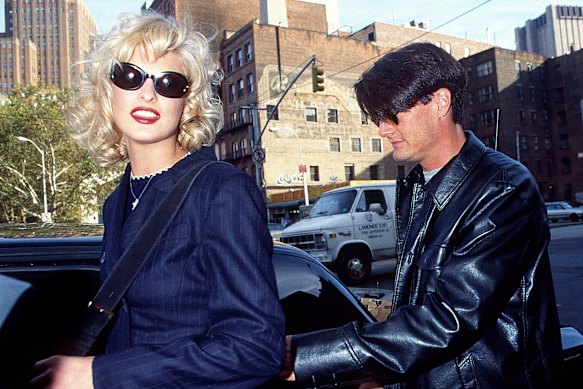
This trait – of being grounded, of maintaining distance from fame’s seductions – pervades the memoir. It is refreshingly free of self-mythologising. Instead, MacLachlan writes about his self-doubt, his tendency to people-please and tamp down on his emotions, and his “very strong inner critic”, who is rendered on the page as “Other Kyle” – a kind of ego-driven doppelganger who pops up throughout the memoir as a foil. He’s open about his romantic relationships (he dated his co-stars Laura Dern and Lara Flynn Boyle, as well as supermodel Linda Evangelista, among others) in a way that feels more about holding his younger self accountable for his actions than an exercise in vanity.
That’s not to say the book is without Hollywood gossip. Some of the dishiest parts of Fictional Selves are his recollections about the movies he wasn’t cast in – either because another actor won the part (Top Gun, Bram Stoker’s Dracula, The Matrix) or because he turned down the role and later regretted it (Platoon, Sex, Lies and Videotape). Those curious about how he ended up starring in the notorious erotic drama Showgirls (1995) – and what it was like being dragged through critical hell in the aftermath – will not be disappointed.
Then there’s his television work: as Dale Cooper in Twin Peaks, and later as Cooper’s multiple doppelgangers in Twin Peaks: The Return, his scene-stealing turns in Desperate Housewives, Portlandia and Sex and the City, and what he refers to in the book as “a long line of ‘doctors with issues’” in Law & Order: SVU, Agents of S.H.I.E.L.D and others.
Of all the roles he’s played, MacLachlan knows he’ll probably be remembered best as Twin Peaks’ coffee-drinking, cherry pie-loving FBI agent, whose idealism in the face of darkness is his defining character trait. In his memoir, MacLachlan writes that Cooper’s optimism is “a choice, not a result of naivete”. Is that true for him too?
“I think it is,” he says. “As I’ve gotten older, as I’ve matured, my sense of gratitude has expanded – for the career I’ve had, for the relationships I’ve had, for my marriage. I’ve always tried to lead with love. I was embarrassed about it when I was younger, because it seems so – I don’t know – almost childlike. But the older I get, the more I realise we should make the best of the time we have. There’s a lot more that I want to do and have to do. So, yeah, optimism is a choice.”
He seems to be leaning into this sense of optimism. Online, he’s connected with a new generation of fans through his Instagram and TikTok accounts, where he posts goofy skits and executes knowing, self-aware memes – a playful antidote to the relentless onslaught of bad news, bad takes and AI slop that he’s clearly having enormous fun with. He’s also launched a podcast called What Are We Even Doing?, where he sits down with Gen Z actors, musicians and comedians for a cross-generational discussion about life in the entertainment industry.
“It’s a conversation primarily about creativity,” he says. “I want to know what’s driving them, how they started, I want to know the impulse. They’re all pursuing their creativity, they’re all doing interesting things. I want to shine a light on that. It’s a joy, it’s a positive, and I want to tell that story.”
This unerring commitment to the creative life is something that he and David Lynch also had in common – perhaps it’s one of the reasons why Lynch (who died in 2025) tended to cast MacLachlan as versions of himself (both Jeffrey Beaumont and Dale Cooper share some of the director’s personality traits, his unique speech patterns and even sense of style). Because of this, MacLachlan has found himself in the position of being Lynch’s surrogate and explainer – an impossible task for an auteur whose work was stubbornly, bewilderingly opaque, existing somewhere beyond the reach of language. When I ask how he feels about being seen as a kind of avatar for the director, he pauses, thinks.
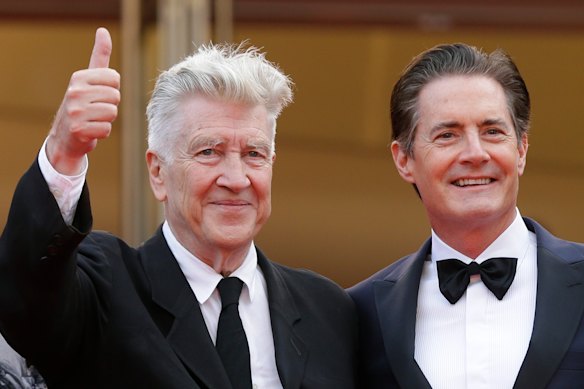
“You know, it’s an interesting word,” he says. “Is it an alter ego? Is it a doppelganger? Is it an avatar? I finally came up with it recently: I feel like I’m like a little submersible, right? If David’s the mothership, I’m tethered to the mothership, but I’m going down into the unconscious, going through these dark places, and I’m the little submersible with the light on who’s carrying the audience through these worlds he’s created. And I’m so honoured to be that.”
When he talks about Lynch over the course of our conversation, he reflexively refers to him in the present tense, sometimes correcting himself, sometimes not. “There’s nobody – was nobody – like David. I’m thrilled people look to me as a connection to him. I’ll always cherish and recognise that. I could never create a world or an environment or a scenario like David, but I lived in it and loved it, and I will miss that so much. There’s just no one like him.”
Fictional Selves (Penguin, $55) is out now.
More from Spectrum
- Jason Donovan on Kylie, his dad, and wrestling ‘a monster’
- What a late-night tweet taught Ai Weiwei
- How My Fair Lady made Julie Andrews a superstar
KioskNews shows a cleaned-up reading view extracted from the publisher’s page — the original always lives on their site, not ours.