Low Danube water level: Romania shuts down its only nuclear power plant completely
Auto-translated to English. Show original
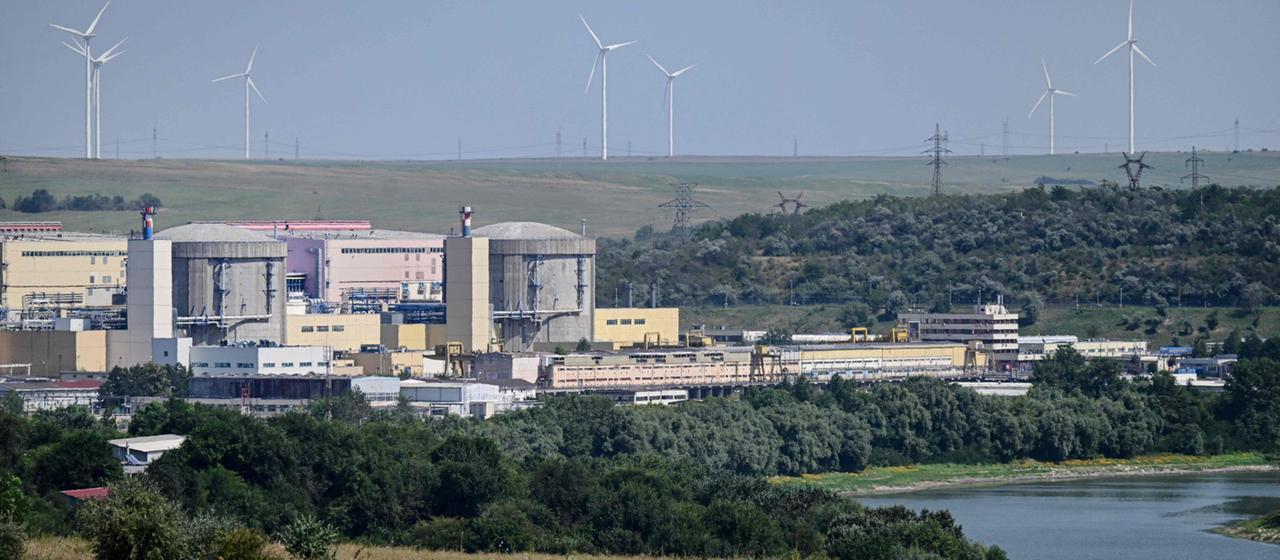
Low water level of the Danube Romania shuts down its only nuclear power plant completely
Status: 13.08.2026 • 15:36
Because the Danube has too little water, Romania has to shut down its only nuclear power plant completely. This means one-fifth of the country's electricity production is lost. People in Romania are dealing with the energy crisis in different ways.

In the small village of Scoarța, a four-hour drive from Bucharest, not much happens at night. Every now and then a car drives through, otherwise there is silence. And since the beginning of August, it has also been pitch black in Scoarța from midnight. To save energy, the street lighting is switched off at night.
"Everyone has to save," explains Scoarța's mayor Ion Grigore Stamatoiu. The municipal administration has also taken some measures. "Specifically: shortened operating times for street lighting. We have reduced the lighting by four hours." From midnight to four in the morning, the street lighting is now switched off, says Stamatoiu.
The idea, says Stamatoiu, came from some villagers. The acceptance among the population is correspondingly high: "It doesn't affect us, because the public street lighting works in the evening. And at night, from 11:30 p.m., 12:00 a.m., when it is switched off, we have no reason to be out on the street."
Second unit taken off the grid
Energy in Romania has been scarcer than usual for two weeks now: the first reactor unit was already shut down at the end of July at the only nuclear power plant, Cernavoda. The country had subsequently tried to keep the power plant's second reactor in operation with unusual measures.
Barges loaded with stones were recently sunk in the Danube to direct more water to the power plant. Previously, the army had blasted a rock, also to get more water to the power plant. This allowed the operation of the second reactor to be extended by at least a few days.
But now the second reactor also had to be shut down, explained Cristian Bușoi, State Secretary in the Romanian Ministry of Energy: "The reason for this is the low flow rate of the Danube or the low water level required for the operation of the cooling pumps. Therefore, the gradual shutdown of Unit 2 began this morning."
Postpone the decommissioning of coal-fired power plants?
Cernavoda has now been off the grid since the morning. This means 20 percent of Romania's electricity demand is lost. According to Cristian Bușoi, however, this can be replaced in the short term: "We will mainly compensate for the 680 to 700 megawatts that Unit 2 in Cernavoda produces on average through imports. Wind energy is also helping us these days."
For the coming week, if necessary, a unit of the Rovinari coal-fired power plant with around 300 megawatts is in reserve, says Bușoi. Romania has meanwhile informed the European Commission that it would like to postpone the decommissioning of some coal-fired power plants because of the energy crisis.
Two units are currently running in Rovinari. The director of the coal-fired power plant is Marius Bîzgă. He expects that a third unit could be back on the grid as early as Monday: "We are ready. The unit is in good technical condition. The employees are prepared to start up again."
Solar park as an alternative
Rovinari is not far from Scoarța, the village that turns off the lights at night. The entire region was long characterized by coal mining. In Scoarța, some people therefore wonder why parts of the power plant were shut down and others are to follow.
In the meantime, however, they are switching to other energy sources. The village has built a solar park, says Scoarța's mayor Ion Grigore Stamatoiu: "It is completed. We are just waiting for commissioning, the storage and the connection to the grid."
In the future, one will no longer be able to complain about a lack of energy, in the town hall, in the schools, in the cultural centers, in the medical centers, says Stamatoiu: "We will ensure the energy needed for the municipality of Scoarța ourselves in the coming years."
In the current energy crisis, however, Romania will not be able to avoid importing more energy than usual, for example from Hungary and Bulgaria. In the neighboring countries, the situation is currently a bit more relaxed again. In the nuclear power plant in the Hungarian town of Paks, two turbines have been back in operation since the day before yesterday. The Bulgarian nuclear power plant Kozloduy is running without restrictions.
KioskNews shows a cleaned-up reading view extracted from the publisher’s page — the original always lives on their site, not ours.