5 books and 5 films to understand the 1968 social protests in Mexico
A lot has been said about the 1968 social protests in Mexico, but there are some pieces of cinema and literature that are key to understanding the motives behind the movement, the effect it had on people and the consequences we still face today. These are 10 key works that will guide you through 1968 in Mexico.
BOOKS
‘La noche de Tlatelolco’
Perhaps the most renowned book on this specific event, “La noche de Tlatelolco” was crafted by Elena Poniatowska as a stepping stone for all the research that came after it. The author divides the book into two parts: before and after the night of Oct. 2. In the first, she explains all the events that had been unfolding to create the movement and depicts the effervescent environment around student life.
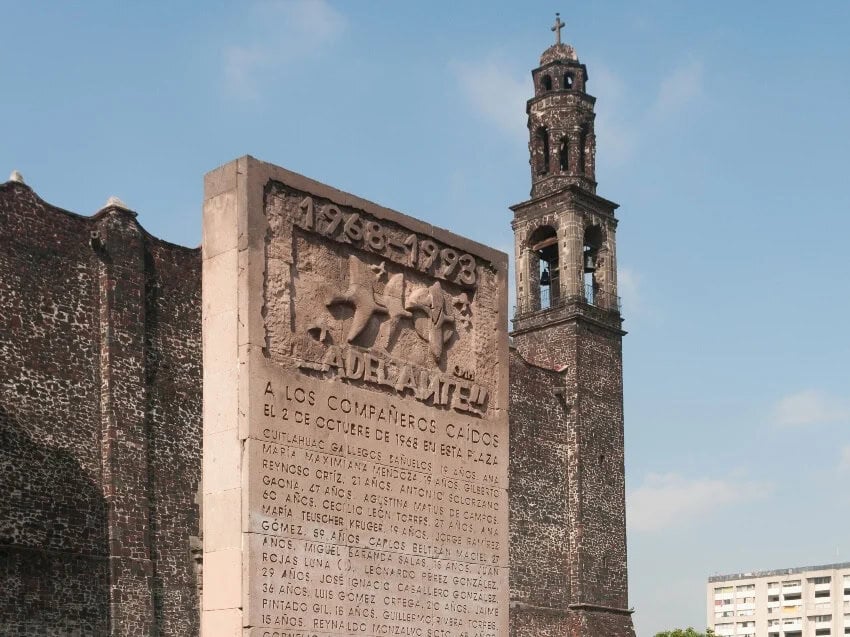
The second part is much more bitter, as it collects testimonies of people who were directly affected by the violent events. Elena interviewed not only those who managed to survive the slaughter but also families who lost a member and people in general, to create a broad contrast in how this day was lived by different sectors of society.
“The square woke up swept; the newspapers gave as their front-page news the weather” — Extract from Rosario Castellanos’s “Memorial de Tlatelolco,” written to open the second part of “La noche de Tlatelolco”
‘México 68: Juventud y Revolución’
Written by one of the most eager intellectuals of the movement, José Revueltas, “México 68: Juventud y Revolución” is a compilation of texts written for, during and about the student movement of 1968. The variety of texts includes letters, thoughts, essays and documents that transform the book into a chronicle, offering a “behind-the-scenes” look through Revueltas’ thick Coke-bottle glasses at a movement that was about to change Mexico’s history.

The author also took moral responsibility for the movement in order to free students from the brutal consequences they were facing. Revueltas was imprisoned with all the people captured during the protests; there he wrote “El Apando,” telling his story during the time he was incarcerated.
“The Student-Democratic Movement of 1968 has vanished, has not been stymied and its supply of Revolution remains intact.”
‘París, Praga, México, 1968’
We cannot understand the movement of 1968 without contextualizing the protests. Citizens from all around the world were organizing to ask for rights they felt entitled to. Three of the main cities where the fire was growing were Paris, Prague and Mexico City. Carlos Fuentes took a step back to revisit the events in 2005.
On the first page of the book, Fuentes recalled the movement through the lens of time. He claimed the event was not a total failure, but rather a pyrrhic defeat, as a counter-idea to the concept of pyrrhic victory. He explained that the results could only be appreciated in the long-term consequences it had on our society, one of the most important being the repeal of Article 145 of the Federal Penal Code, which condemned as a felony organizing gatherings that discussed ideas opposed to the government, limiting freedom of speech.
“Revolution contains the idyllic temptation of owning poetry, and poets welcome it because through Revolution they and their poetry will be loved.”
‘Amuleto’
Roberto Bolaño’s “Amuleto” is a work of fiction based on a true story. It follows Auxilio Lacouture (real-life Alcira Soust Scaffo), a Uruguayan poet and teacher who couldn’t manage to get out of Ciudad Universitaria when the army occupied it. Throughout the narration, you can feel Auxilio’s desperation growing bigger as the days go by. During her time locked inside a university toilet, she narrates different passages of her life, talks to imaginary people and starts predicting the future.
“The only thing that kept me from going mad was my sense of humor.”
‘Regina’
Antonio Velasco Piña’s “Regina” is perhaps the first novelized version of what happened around the student movement of 1968. It is also an important turning point in the comprehension of the events, as the author tries to give a spiritual meaning to a tremendously violent episode.
The story follows a young Mexican girl called Regina, who at a very early age is taken to Tibet to develop skills that will be useful in awakening Mexicans’ consciousness when she gets back. Once in her homeland, she is the piece that starts igniting the fire of the movement, accomplishing her mission of sparking a needed revolution.
“In a matter of days, basically the entire youth of a country stood with the pioneers of the protest.”
MOVIES
‘Borrar de la memoria’
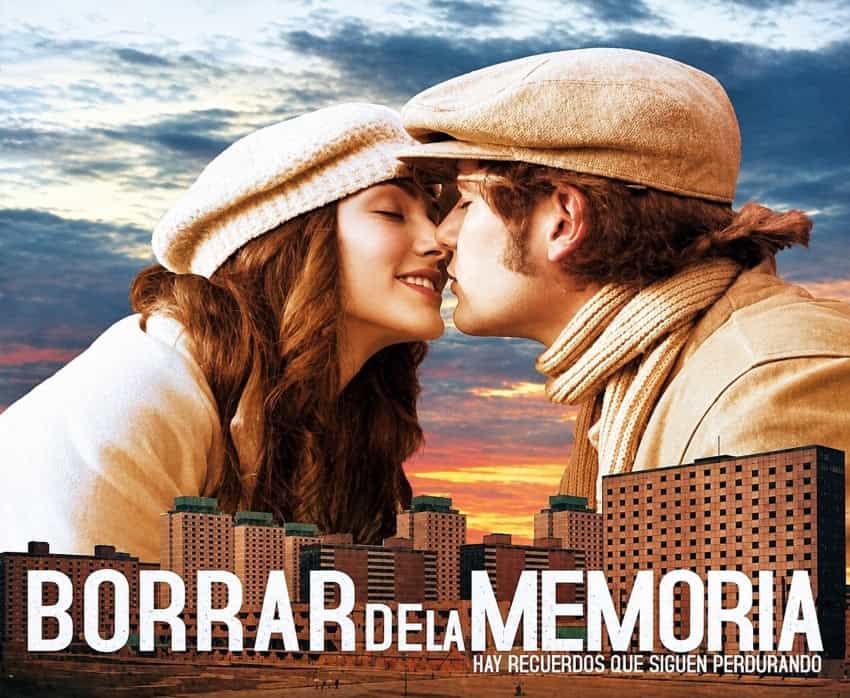
This film follows crime journalist Germán Acosta on his endeavor to unveil the mysterious death of a young woman during the 1968 movement. Throughout the movie, Acosta gathers clues that lead him down an uncertain path. What seems to be an individual story turns into an investigation of all the injustices and loose ends around the presence of armed forces during the night of Oct. 2, 1968.
‘El Grito’
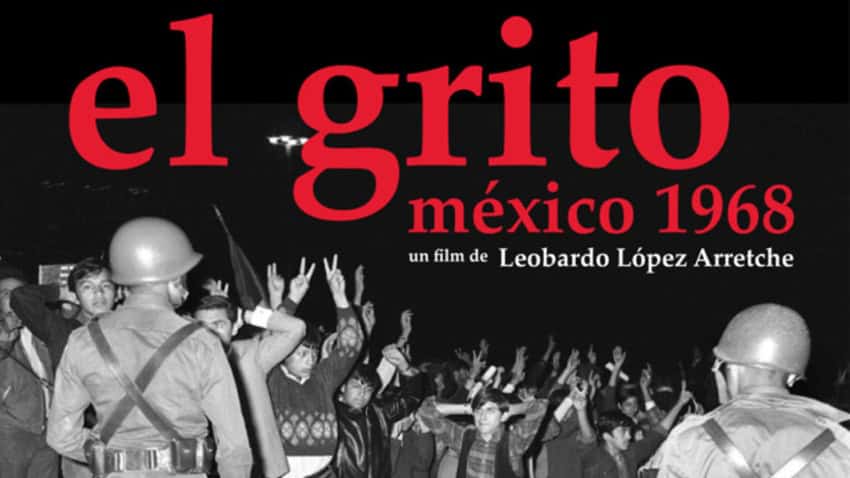
During their days as film students at UNAM in 1968, Leobardo López Arretche and his team had the clarity to see that what they were living was something to be remembered (and registered). “El Grito” is a privileged 16 mm window into the assemblies, the organization and everything that went on from July to October of 1968. It is available online, for free, on UNAM’s Filmoteca YouTube channel.
‘Rojo Amanecer’
"ROJO AMANECER: EL CINE QUE NO SE OLVIDA"
Adding to the fictionalized characters and breakthroughs, “Rojo Amanecer” depicts some of the most famous events related to the movement and is one of the first cinematic pieces about it. The film tells the story of a family living in Tlatelolco; it introduces the context during a seemingly normal breakfast discussion. Later during the day, the members will be involved in the violent repression that happened on Oct. 2.
‘Los rollos perdidos’
Los Rollos Perdidos Trailer Oficial
Can a big, awful accident be the lead-in to a breakthrough? On March 24, 1982, a massive fire swept through Cineteca Nacional and its archive in a matter of minutes. Although one of the theories was that this accident was a way of getting rid of film evidence of the real responsibility for Tlatelolco’s events, this idea was discouraged, as there was indeed a misplacement of materials that caused the accident.
As a counterpart to “El Grito,” the first part of the documentary “Los rollos perdidos” explores the tapes that were recorded from the armed forces’ point of view and directed by Servando González. The filmmaker installed several 35 mm film cameras in the then-Foreign Affairs building to register the terrible event that would happen hours later, from the beginning of the gathering till its tragic end.
‘No nos moverán’
No nos moverán (We shall not be moved) | Official Trailer New HULU
Released in 2024, “No nos moverán” is the directorial debut of Pierre Saint-Martin Castellanos. Viewed from a contemporary perspective, the plot centers on the search for justice by a lawyer whose brother was assassinated in the Tlatelolco massacre and, when she finally finds a hint, she starts planning her revenge.
Lydia Leija is a linguist, journalist and visual storyteller. She has directed three feature films, and her audiovisual work has been featured in national and international media. She’s been part of National Geographic, Muy Interesante and Cosmopolitan.
KioskNews shows a cleaned-up reading view extracted from the publisher’s page — the original always lives on their site, not ours.