DRDO develops portable system to sniff out enemy radars, track drone threats
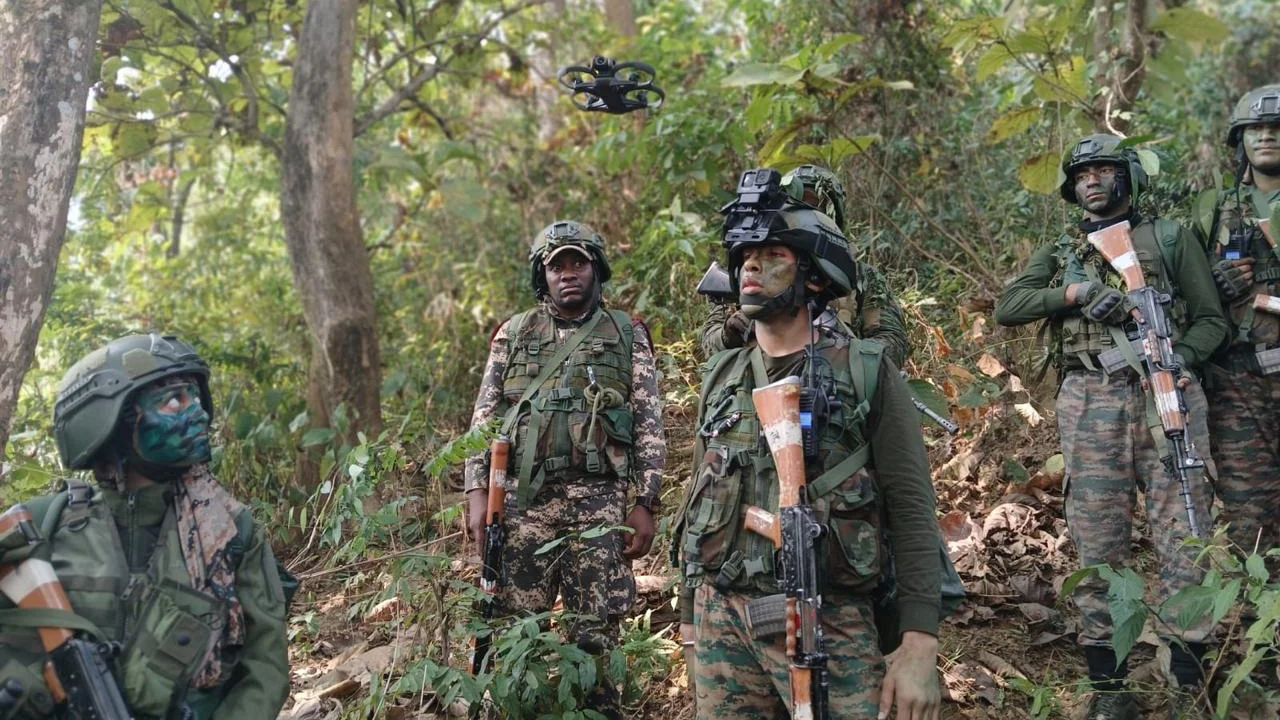
Indian Army soldiers use a drone during a field exercise. (image credit: Indian Army)
The Defence Research and Development Organisation (DRDO) is moving to develop man-portable electronic intelligence modules, a compact system meant to pick up and analyse the signals that enemy radars or any other antennas emit. The tender has been issued by the Defence Electronics Research Laboratory (DRDL) located in Hyderabad.
Electronic intelligence, or ELINT, is the practice of capturing signals from radars and other electronic equipment and studying them to work out what kind of system is operating and its technical characteristics are. A radar or an drone operator could be emitting signals, which could inform about the frequency range of the device sending out signals. This could help jam the system more effectively, focussing on those particular frequencies and thereby rendering the effectiveness of the system.The process begins with the antenna and receiver, which pick up signals across several frequency bands, since different radars work on different frequencies. The system then measures the signal's characteristics, including frequency, pulse width, the interval between pulses, the number of pulses sent in a given time, signal strength, direction of arrival and the modulation within the signal.In an operational area, several radars may be active at once and their signals reach the receiver together.
Separating them is known as deinterleaving, and it relies on frequency, timing between pulses and other inbuilt features, with digital processing and machine learning used in modern systems. The separated signal is then compared with a library of known radar signatures, which lets the system judge what type of radar is being used to, be it a search radar, a tracking radar or a fire control radar.
Search radars scan a wide area for targets, tracking radars keep watch on a particular target and fire control radars support the use of weapons.Portability for such a system is important, especially in mountainous and remote terrain, where deploying large vehicles or fixed surveillance equipment could be difficult. A small system can give field formations information on electronic activity without depending on assets available with larger platforms. In an era, where drones are taking centre stage, the deployment of such systems could help pinpoint the location of a drone operator or could give early waring of an approaching inimical drone, thus providing own forces more time to activate counter drone drills.The system can also estimate where a signal is coming from. If sensors at different locations pick up the same signal, their readings can be combined to estimate a location, using techniques such as triangulation and time difference of arrival of radar waves. Different digital techniques, helps analyse a signal by frequency. Once the signal is identified, the system assesses the threat and a change in a radar's signal may indicate that its mode of operation has changed.The DRDL project has three separate parts which are defined as development, integration and qualification. Development will cover the equipment and its modules, integration brings the parts together into one working system and qualification tests it against technical and environmental standards, including temperature, humidity, vibration, shock and electromagnetic interference.
KioskNews shows a cleaned-up reading view extracted from the publisher’s page — the original always lives on their site, not ours.