By all memes: why Asia’s Gen Z are revolting
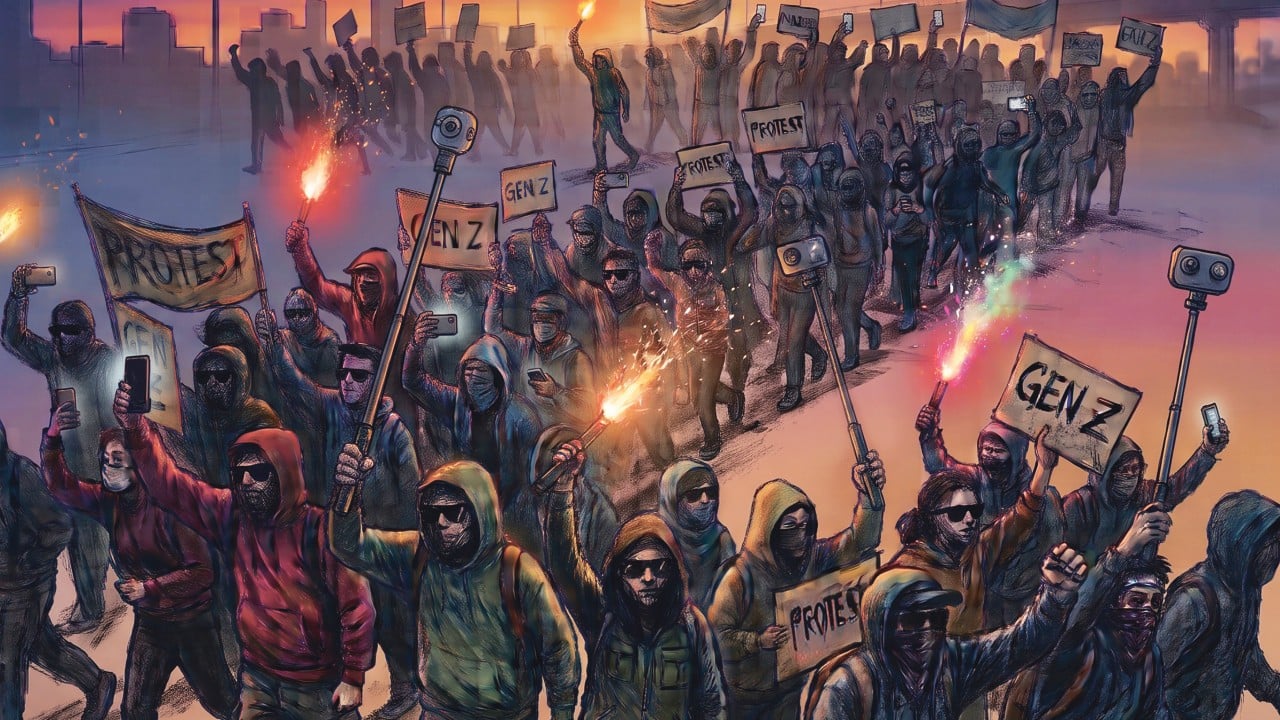
All across Asia, anti-establishment protests have been flaring up, led by a generation that came of age in the digital era.
Memes are mobilising a young, permanently online cohort against specific government policies, insults and injustices – its many members determined to seize their own destinies before the future they fear takes root.
Asia is home to 60 per cent of the world’s adolescents and young people, or some 1 billion in total, according to UN estimates.
Gen Z, roughly defined as those born between 1997 and 2012, are among the most vocal, their grievances and values often first coalescing on social media before shape-shifting into street protests at a speed that can catch authorities cold.
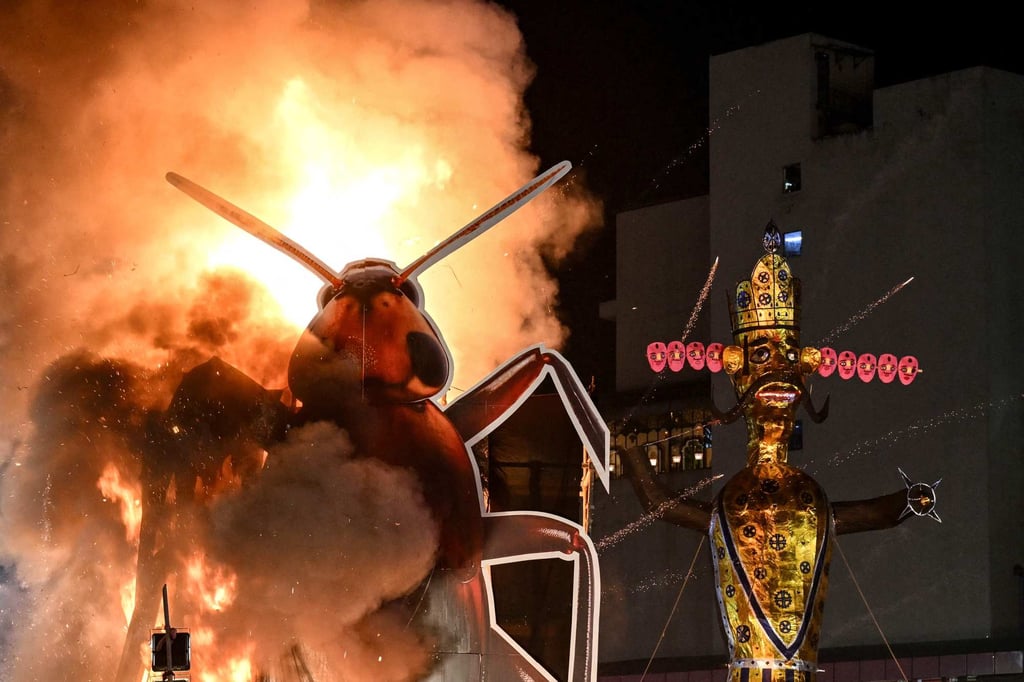
In India, the viral youth movement of the moment took a cockroach as its emblem. This year’s student-led protests against the government, which began in May, have since merged into a wider pro-democracy challenge to the country’s perennial prime minister of 12 years and counting, Narendra Modi.
In Indonesia, student protesters last year adopted the Straw Hats’ Jolly Roger, a skull and crossbones flag ripped from the pages of Japanese anime One Piece, to rail against economic pressures and perceived mismanagement. It made a return last month as youth anger at toxic air from the worst wildfire season in over a decade boiled over.
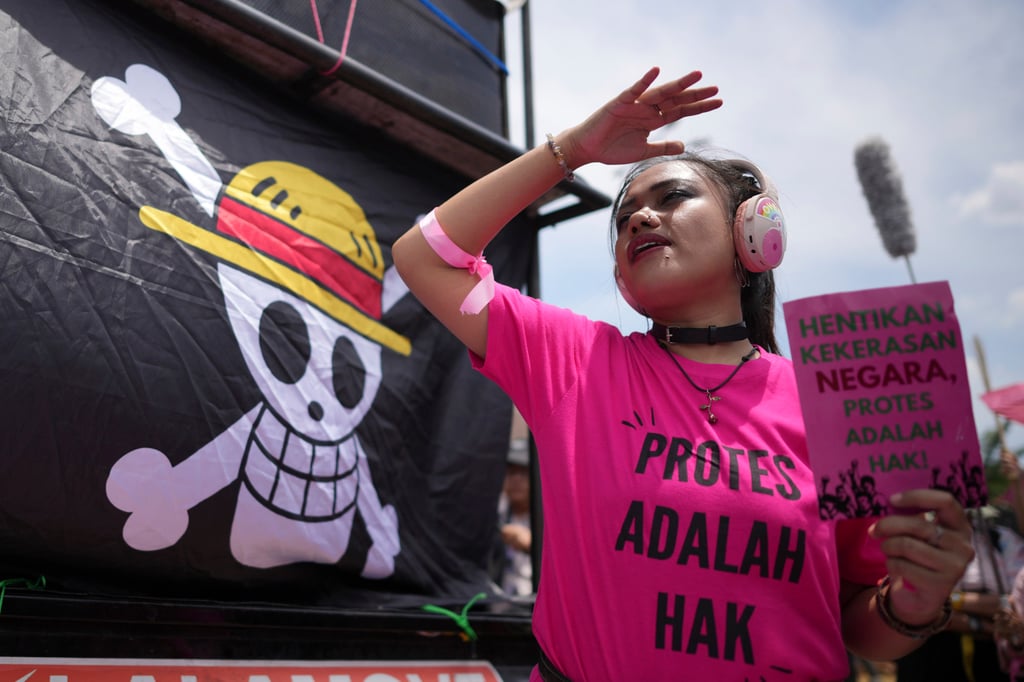
Each protest has its own unique triggers, but they share a common wellspring of discontent – the rising cost of living, anger at corruption and nepotism, and education systems that no longer prepare them for a job market whose only real guarantee appears to be menial, low-paid gig work.
Humour, desperation and a loss of fear of authority have combined to form movements that have shattered “the stereotype of apathy” attached to Gen Z, according to Indonesian sociologist Oki Rahadianto Sutopo of Gadjah Mada University in Yogyakarta, displaying a previously unappreciated “capacity for collaborative efforts and engagement on issues they care about”.
The phenomenon is not confined to Asia, either. Buildings in Paris, Milan and Lisbon also bear the scorch marks of unrest as the youth of Europe, similarly anxious about their uncertain futures, have taken to the streets in protest.
Virality makes today’s protests far faster to spread than many governments can react. Officials all too often blame agitators, fifth columnists or the temper tantrums of political rookies for the upheaval, before sending in police armed with batons and tear gas.
Yet underestimating the power of Gen Z protest is a mistake, as Asia’s recently ousted autocrats can attest.
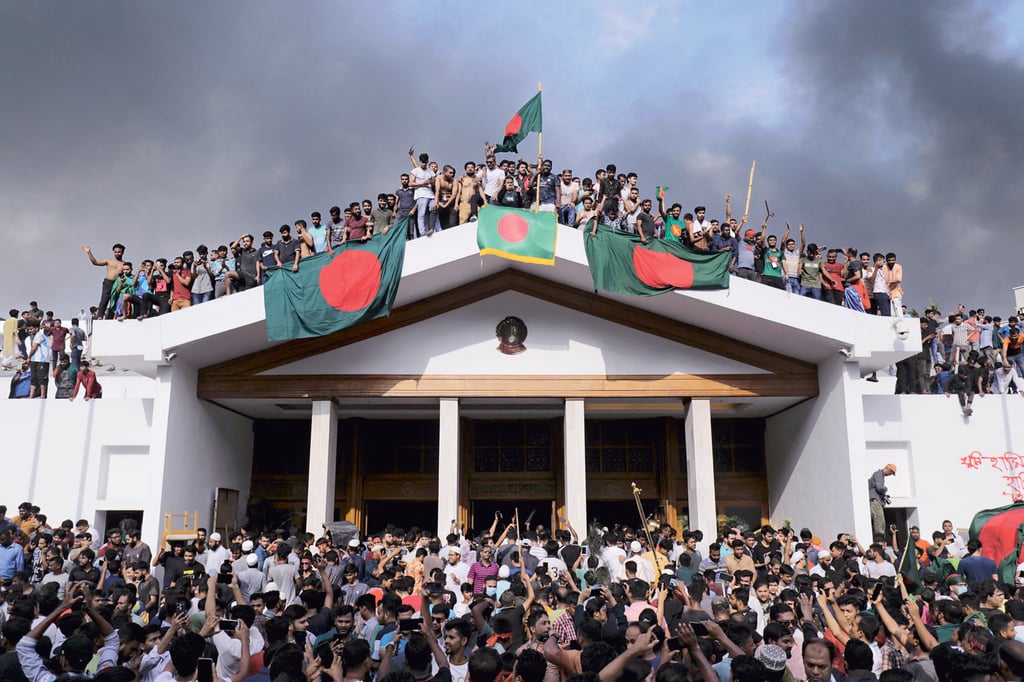
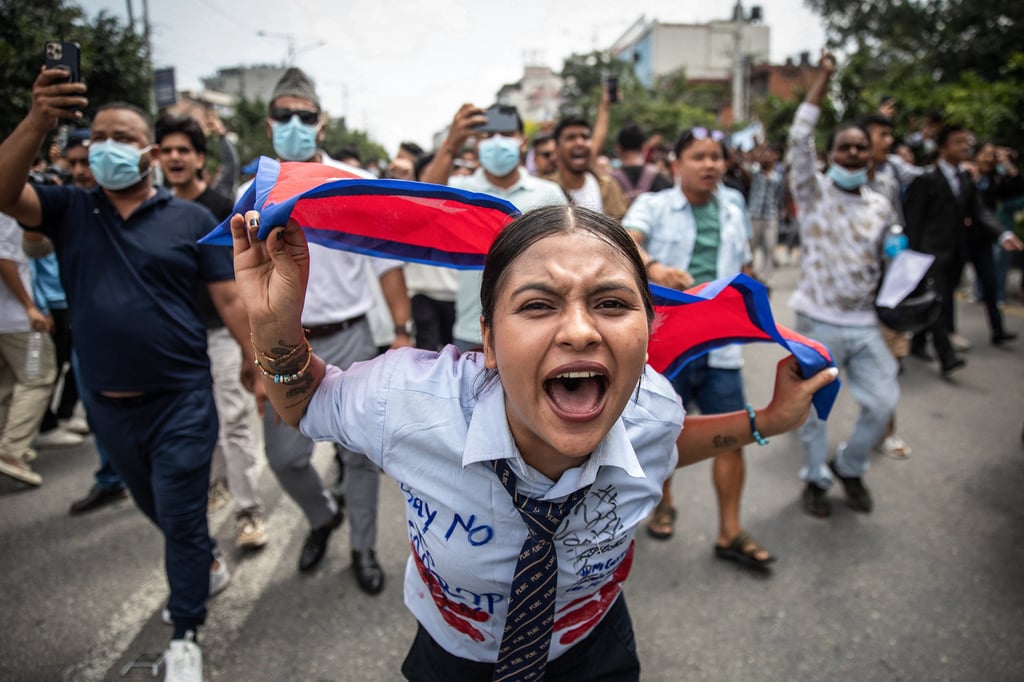
A year later in Nepal, student-led protests took aim at a governing elite derided for its cronyism, corruption and nepotistic tendencies, ultimately toppling the government after a violent struggle and a bungled social media shutdown that aimed to hush the baying crowds.
Connecting these disparate, far-flung protest movements is one quintessentially 21st century thread: social media.
It was “instrumental” in organising Bangladesh’s protests, according to student organiser Rezwan Ahmed, pointing to a blockade of Dhaka in July 2024 that brought the capital to a standstill. Ahmed, now 25, ran a viral Facebook coordination page that had amassed over a million followers by the time Hasina’s regime crumbled and she fled the country.
In the Philippines, where nearly 96 million people are on social media, memes have become a vehicle for political messaging that helped spawn last year’s anti-government protests over a multibillion dollar flood control corruption scandal.
Mark Anicas, the 29-year-old founder and media director of satirical Facebook page Filipino Trends That Matter (FTTM) – curated by a Gen Z team and boasting around 4.6 million followers engaging with its daily sideswipes at government policies – says such platforms are now where the real power lies.
“Our goal isn’t necessarily to tell people what to think, but to encourage them to think,” he told This Week in Asia.
01:53
Mock cockroach-themed political party draws India’s jobless youth, Modi’s rivals
A movement with legs?
Nowhere has dominated this year’s narrative of Gen Z discontent more than India, where a dismissive remark by a chief justice, who called jobless young people “parasites” and “cockroaches”, lit the fires of defiance that gave rise to the eponymous movement.
Its founder, political strategist Abhijeet Dipke – himself a younger millennial, aged 31 – unwittingly launched the viral online movement for Gen Z Indians with what began as a simple, satirical question on the X platform aimed squarely at Chief Justice Surya Kant: “What if all cockroaches come together?”
The remark landed like a bombshell in a country where the UN estimates around 400 million people, or around one in four of the population, are Gen Z.
Millions liked Dipke’s post and with it the Cockroach Janta Party (CJP), an online movement whose name lampoons Modi’s own long-governing Bharatiya Janata Party, was born.
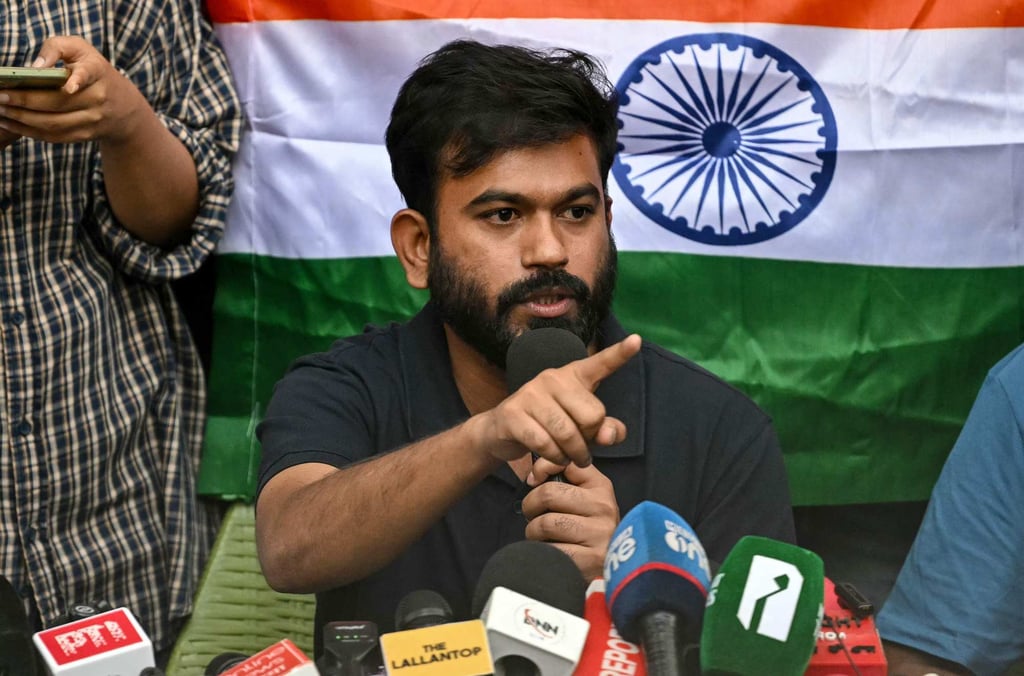
Within weeks, its members had taken to the streets wielding memes of cockroaches wearing sunglasses with the Indian tiranga (tricolour) flag draped over their shoulders.
Ayush Bhattacharya, 24, was typical of those who joined the rallies that began on June 6 at Jantar Mantar – a historical observatory in the heart of the Indian capital, a short walk away from parliament, that doubled as a designated protest site until its official removal last month.
“There was a lot of frustration among the youth,” said the college graduate from Mumbai, citing both the country’s politics and its lack of job opportunities for young people.
“Our parents’ generation always made us feel that we did not know well enough about what was happening when they talked about politics. When the chief justice made the remark and Dipke tweeted about it, the post simply got amplified.”
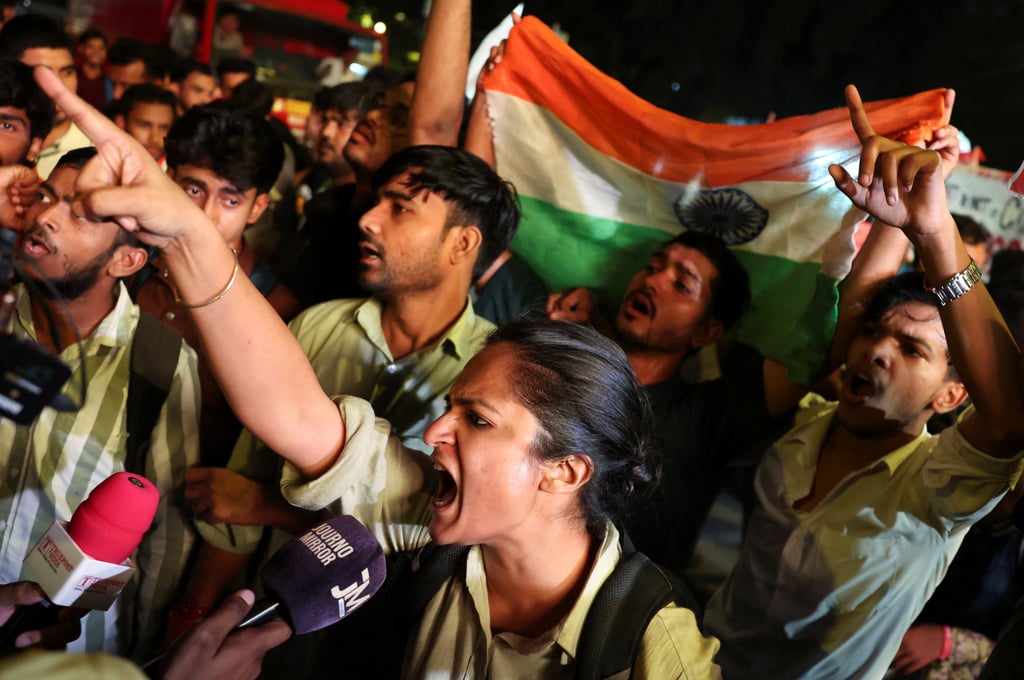
A series of loud, colourful protests followed, attracting a crackdown that spurred allegations of police brutality and ultimately forced the resignation of an education minister in July after demonstrators took aim at a scandal involving exam papers being leaked to wealthy students.
In late September, the movement launched another campaign, organised through WhatsApp and Instagram, demanding the resignation of Chief Election Commissioner Gyanesh Kumar, who oversaw the removal of some 130 million names from electoral rolls nationwide on the grounds that they were supposedly duplicates or belonged to dead people.
Critics, including the main opposition Congress party that has joined the protests, said it was an attempt to disenfranchise millions by stealth, in another flagrant assault on democratic rights by Modi, a Hindu nationalist leader who has repeatedly been accused of fomenting animosity against religious minorities in the world’s largest democracy.
CJP spokeswoman Mehr Pasricha linked the movement’s protests to a rebuttal of “the shift towards right-wing governments [that] has been happening over the past decade” across the globe.
“Young people have just seen the short end of the stick,” she said. “They have gone through a bad schooling system, entering into an economy where there are no jobs, so what does one do?”
Rohit Sharma, 21, spoke to This Week in Asia from a CJP rally in central Delhi on October 16 calling for Kumar to go. It was his third protest.
“The aim of coming here is to save democracy,” said Sharma, a student at the Maharaja Agrasen Institute of Technology in Delhi. “Manipulation of voter lists is not acceptable in a country like ours … This is our democratic right to hold the government accountable.”
Though India’s protests have been growing, they do not appear to pose an existential threat to Modi’s government, at least for now.
Ahmed, the Bangladeshi student leader, said that toppling an entrenched power required a confluence of preconditions to be in place. Bangladesh was already a tinderbox for revolution when Hasina fell, with years of state repression building resentment among the country’s youth and opposition parties’ boycott of an election months stripping her government of its legitimacy.
“It was in the back of our minds that this kind of dictatorial authoritarian regime will not be able to be toppled by mainstream parties of protest alone,” he said. “The people have to be prepared, society has to be prepared … In India I don’t see that at all.”
Burning anger
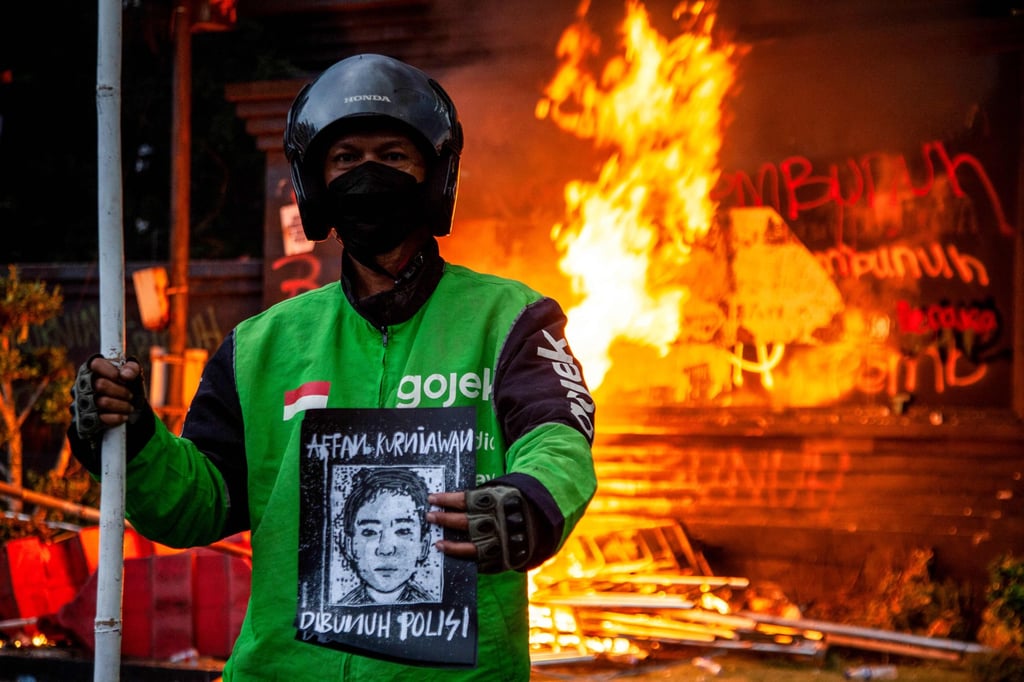
Back in Southeast Asia, Indonesia has seen multiple rounds of angry protests in recent years over economic conditions and the treatment of gig workers.
Last month, Indonesia’s protesters returned to the streets, this time with a new cause: choking pollution from the wildfires raging in Kalimantan and elsewhere across the Indonesian archipelago.
On October 28, simultaneous student protests swept across Jakarta, Yogyakarta, Solo, Malang, Bandung and Surabaya on Java island, Makassar over on Sulawesi, Palangkaraya in the heart of Kalimantan and even Banda Aceh, thousands of kilometres away at the far northwestern tip of Sumatra.
The mostly Gen Z protesters demanded that the government acknowledge the full scale of the disaster, but their anger also spilled over to other issues, including allegations of widespread corruption, the militarisation of civilian life and costly, wasteful state policies. Demonstrators clashed with police, who used tear gas to disperse the crowds.
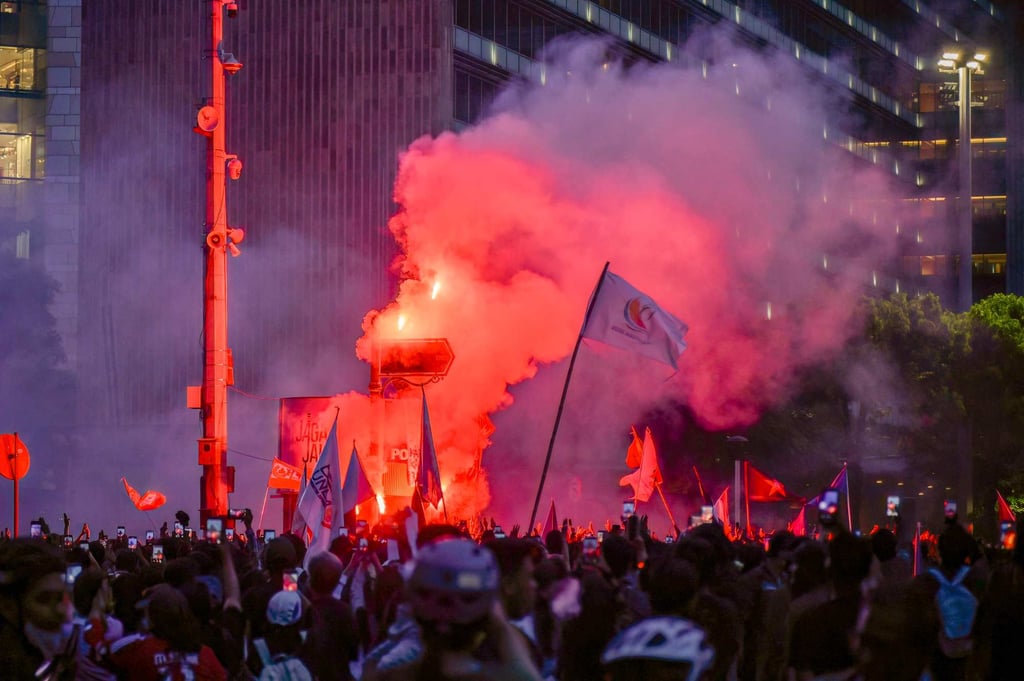
“There’s a definite lack of urgency in how they [officials] have treated what is essentially an ecological disaster,” said Naomi Artika Simamora, the 21-year-old head of the student council at the University of Palangkaraya’s law faculty who travelled some 1,000km (620 miles) from Kalimantan to join a rally in Jakarta.
She was joined by Yosafat Menteng, 23, who said they both wanted to pressure the government to declare the ongoing fires a “national disaster” – a status that would allow logistical aid and funding to reach affected areas more efficiently.
Nearly 2 million hectares (4.9 million acres) of forest and peatland in Sumatra, Kalimantan and Papua have burned this year, producing a toxic haze that has blanketed much of Indonesia and neighbouring countries.
Government spokesman Kurnia Ramadhana has said President Prabowo Subianto’s administration “appreciates and understands the students’ concerns” and is working to address them.
But as yet, there has been no declaration of a national disaster. “Our fight continues,” Naomi said.
Delimiting dissent
Across much of the rests of Southeast Asia, protest is neither uniform nor sometimes even possible. Governments wield powerful tools, including defamation, treason and subversion laws, to curb opposition and silence dissent.
In Malaysia, online anger has brought young protesters out onto the streets, but racial and religious divisions impede a broader generational revolt against the political establishment.
“We are not organised by class, but still by race, religion,” said Syaza Farhana Mohamad Shukri, an associate professor of political science at the International Islamic University Malaysia.
Shared concerns about jobs and living costs had yet to overcome these loyalties, she said, further pointing to a “political culture where we are encouraged to be respectful, parochial basically” and to show deference to leaders “even if they make mistakes”.
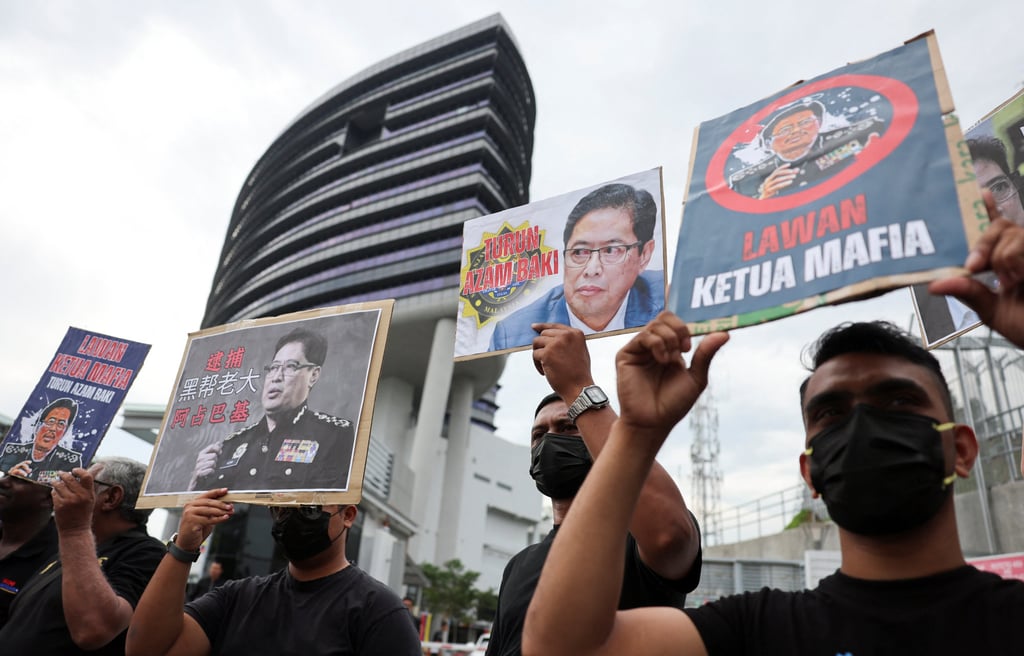
Dobby Chew, co-founder of Mandiri, a civil society organisation founded in 2024 to strengthen democratic participation, social justice and civic engagement among young people, said politicians’ “hypocrisy and double dealing” did motivate young Malaysians to become politically active, but that their frustrations had been largely “channelled through social media” with only the slightest “potential of crossing into physical protest”.
Earlier this year, young activists joined the hundreds who rallied in the capital demanding the tangkap (arrest) of former anti-corruption chief Azam Baki, who denies any wrongdoing, over his suspiciously large shareholdings.
Yet rights groups have repeatedly flagged limitations on freedom of assembly in Malaysia and a “systemic disregard for student activism”. Efforts to give young voters a political home have also struggled. The youth-focused Malaysian United Democratic Alliance, also known as Muda, lost all four seats it contested in Johor’s election this July, including the one it already held.
Efforts to give young voters a political home have also struggled. The youth-focused Malaysian United Democratic Alliance, also known as Muda, lost all four seats it contested in Johor’s election this July, including the one it already held.
In neighbouring Thailand, protest is routinely repressed and defused. Mass youth-led demonstrations against military-aligned rule in 2020-21 did open up previously untouchable assumptions of power – including the role of the monarchy – to public debate.
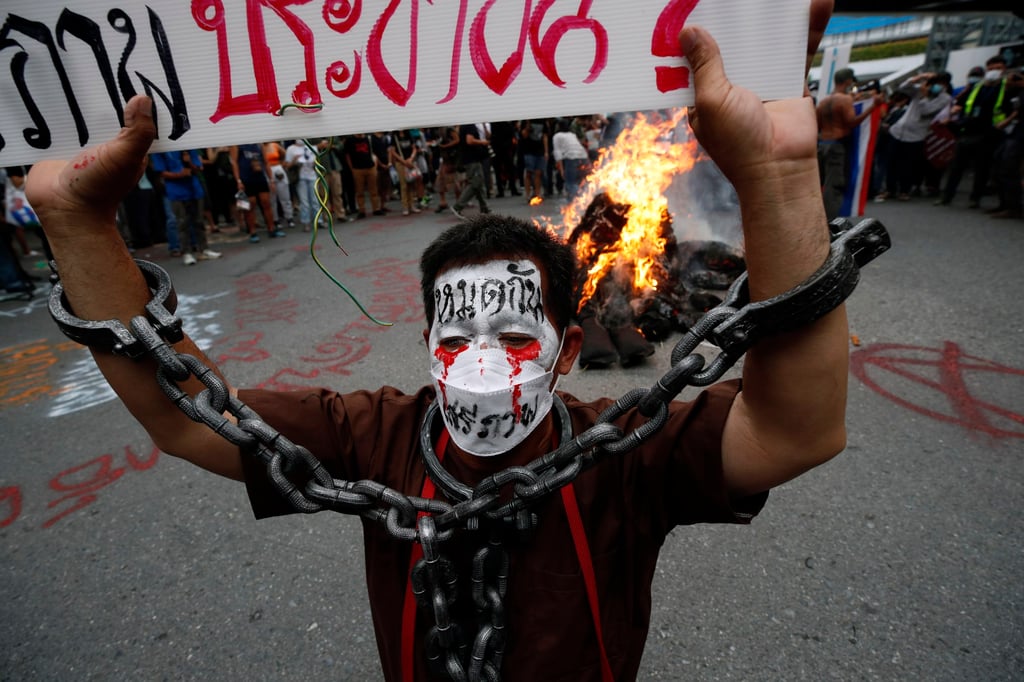
But the establishment pegged them back, arresting and prosecuting scores of young protest leaders and reshuffling the political deck behind the scenes to ensure its interests came out on top.
But observers say social media still provides the region’s youth with an outlet and a way to organise, often with unpredictable results.
In the Philippines, memes do much of the leg work. “Political memes speak to concrete frustrations towards institutions and politicians,” said Petronilo Figueroa, a media and communications lecturer at the University of the Philippines Diliman.
Satirical Facebook page FTTM often used humour “to make complicated or sometimes uncomfortable issues more accessible” to its millions of followers, founder Anicas said.
Among its biggest draws, he said, were posts about last year’s flood control corruption scandal that sparked mass street protests amid allegations that officials and contractors had siphoned off billions in state funds by using substandard materials or inventing nonexistent projects.
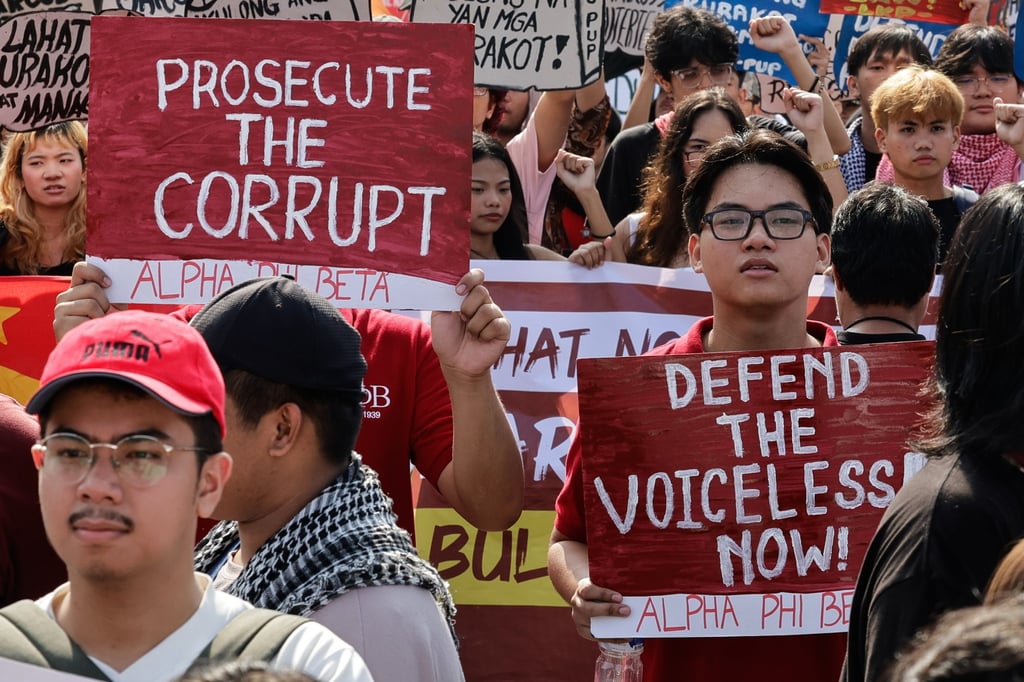
The page has also faced legal backlash, including libel charges brought by a Caloocan city official over a viral post about a traffic violation and a subpoena from a provincial governor over a separate post he claimed was malicious and factually incorrect.
Yet Anicas said the public stuck by them. “People actually look up to [us], especially the Gen Zs … they say, ‘I’ve started involving myself because of you’,” he said.
That support could help shape the country’s next presidential election in 2028, when the Commission on Elections projects nearly one in three Filipino voters will be members of Gen Z.
That said, “Gen Z is far from a homogeneous bloc”, Figueroa cautioned. “So winning their support will take more than a single message.”
KioskNews shows a cleaned-up reading view extracted from the publisher’s page — the original always lives on their site, not ours.