Defending Collegium, Supreme Court says government’s remarks ‘disquieting’
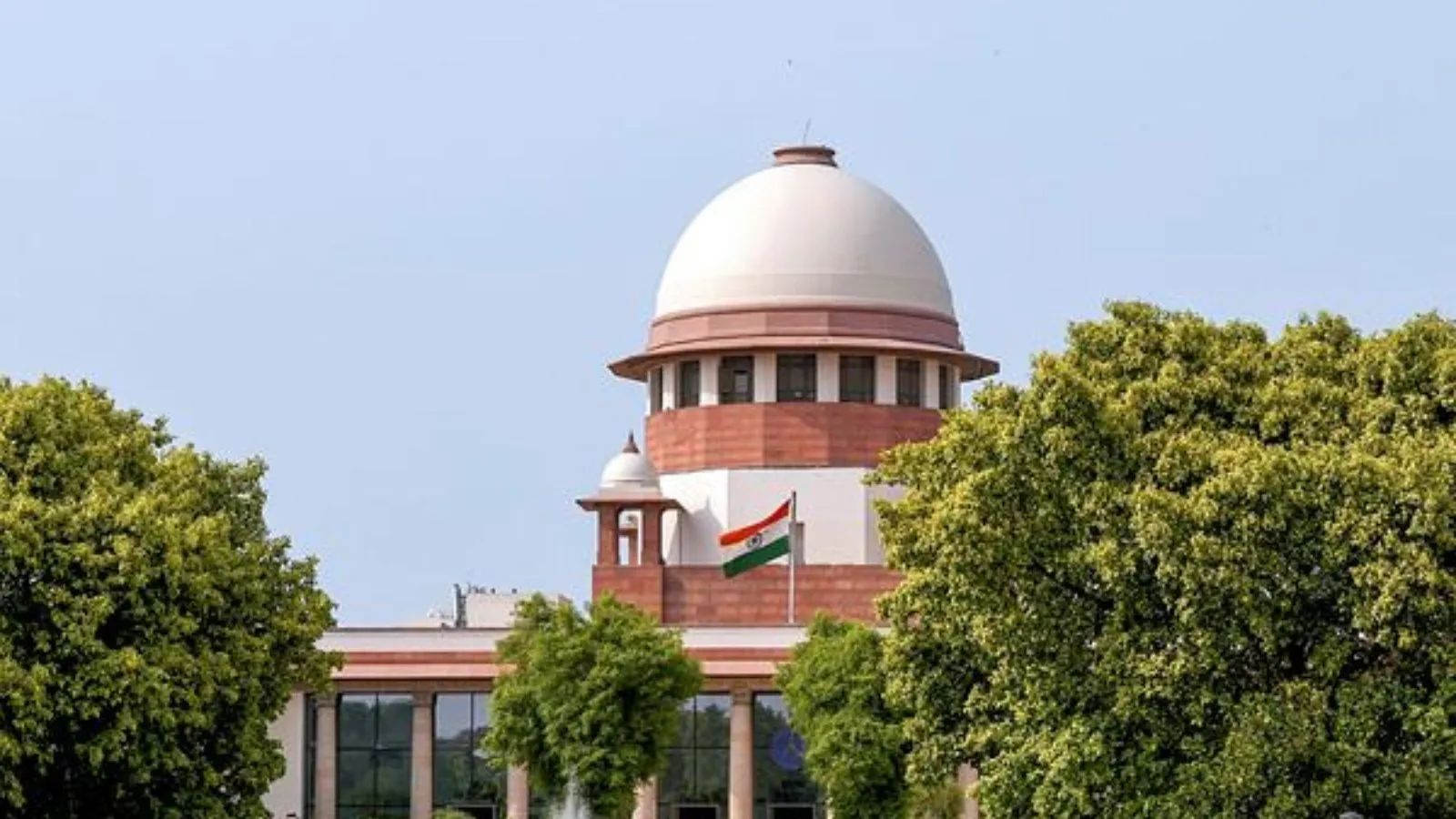
Justice Datta said the submissions sought to “draw a parallel with judicial appointments...has a bearing on the integrity of the institution”.
Rejecting a plea to refer petitions against the 2023 law on the appointment of Chief Election Commissioner and other Election Commissioners to a five-judge Constitution bench, Justice Dipankar Datta on Wednesday termed as “disingenuous, evasive and disquieting” the Centre’s oral submissions that the Supreme Court cannot call for “participation of outsiders” in appointing poll officials when the collegium system which has been criticised as “judges appointing judges” does not allow an “outsider”.
“In the context of the present challenge, reference to the criticism on such a sensitive issue ought best to have been left alone. In the course of the hearing, this Court preferred not to seriously react. The first instinct, too, while writing this opinion, was to be reticent and let such criticism pass. But on a second thought, it is realised that the judiciary cannot always be at the receiving end. A couple of relevant observations in response need to be made, lest the silence be misunderstood as a tacit acceptance by the Court of such unworthy criticism in circulation,” Justice Datta wrote.
The response to the submissions which were made by Solicitor General (SG) Tushar Mehta on behalf of the Centre came in the court’s 70-page split verdict.
The other judge on the bench, Justice S C Sharma, however, said the SG’s “submission was not as a criticism of the Collegium system or regarding the role of the executive in the appointment of Judges…nor initiating any debate regarding the manner in which the system of selection has worked” but one “to the effect that if the Constitution Bench has held that the presence of outsiders in the collegium as violative of doctrine of separation of powers, a similar independence should be read in the executive also and the rules framed under Article 324 be not declared void on the ground either that it does not have any outsider in the Committee of Selection or there is predominance of only executive in the Committee of Selection.”
Justice Datta said the submissions sought to “draw a parallel with judicial appointments…has a bearing on the integrity of the institution”.
“At every stage prior to the recommendations taking shape, the executive is involved. Whispers are heard in the corridors that unless approval of the […]; however, let whispers remain whispers and not drown the constitutional wisdom that has sustained the institution. What is, however, unmissable is that even at the end of the day, acceptance of the recommendations is within the exclusive domain of the executive; it may, or may not, accept the recommendations. The final say rests with the executive,” Justice Datta said.
He also chided the Centre for “selectively” clearing names recommended by the Collegium.
Story continues below this ad
“A sweeping generalisation that the Collegium acts as a law unto itself overlooks the detailed consultative process envisaged under the Constitution. And the intrinsic role of the executive, both at the Centre, and in the states, as well as intelligence and other agencies in the appointment process…and the fact that every appointment bears the imprimatur of the President.”
Justice Datta said people “have…been made to believe that the Collegium…comprises judges who appoint judges. And it has become fashionable nowadays to blame the Collegium for every infelicitous choice, conveniently forgetting that aberrations are exceptions and not the norm and that no system can guarantee infallibility of human choice.”
He said “this court is left to wonder why, even after the judiciary has been relegated to playing second fiddle to the executive in the matter of appointments of judges, is there still a clamour to induct an outsider at the stage of selection?” and expressed the “hope and trust that henceforth, only judicious and apposite choices shall be made by the present Collegium, under the able leadership of the CJI, leaving little room for future criticism of the system’s working.”
He stressed that “despite all its opacity and imperfections, the Collegium system still remains the most viable option for safeguarding independence…”.

Ananthakrishnan G. is a Senior Assistant Editor with The Indian Express. He has been in the field for over 26 years, kicking off his journalism career as a freelancer in the late nineties with bylines in The Hindu. A graduate in law, he practised in the District judiciary in Kerala for about two years before switching to journalism. His first permanent assignment was with The Press Trust of India in Delhi where he was assigned to cover the lower courts and various commissions of inquiry. He reported from the Delhi High Court and the Supreme Court of India during his first stint with The Indian Express in 2005-2006. Currently, in his second stint with the daily newspaper, he reports from the Supreme Court and writes on topics related to law and the administration of justice. Legal reporting is his forte though he has extensive experience in political and community reporting too, having spent a decade as Kerala state correspondent, The Times of India and The Telegraph. He is a stickler for facts and has several impactful stories to his credit. ... Read More
KioskNews shows a cleaned-up reading view extracted from the publisher’s page — the original always lives on their site, not ours.