7 Near-Perfect Thriller Books From the Last 20 Years, Ranked

At any given moment, Scott Simone has at least three books jockeying for his attention. He’ll never turn down a campus novel with a literary bent, nor will he hesitate to add yet another mystery to his Leaning Tower of Pisa-inspired to-be-read pile — which is built upon the bedrocks of too many short story collections, how-are-these-real true crime books, and classics waiting to be cracked open again. Topics that have him ripping through pages the fastest include closed-circle murders, unhappy professors, life-questioning philosophical deep dives, so long as they feature sharp sentences, a dark sense of humor, and at least a little malice.
He’s spent so much time in book shops over the years he is, to his wife’s chagrin, continuing to build a library that doesn’t quite respect the dimensions of the apartment meant to contain it.
Here’s the thing about thrillers: They have an expiration point. The suspense can only balloon so far, until the pressure pops and the air dissipates. The missing person is found, or the conspiracy wraps up neatly enough; the murderer is unmasked, or the vengeance is redeemed. Whatever it is, that puzzle being constructed through 300 pages finally gets its last piece. And sometimes, the full picture seems a little less impressive once you take a step back.
But the great ones are different. You stare at their ornateness, pondering how they fit such impossibly mismatched pieces together — and how it took you so long to connect them. They rely on overly unreliable narrators that defy cliché. Murder becomes a vehicle to explore the depths of marriage and family. Answers come, but never ease the unsettled pit in your stomach. They’re not suspenseful for suspense’s sake, and when the final page turns over and all is wrapped up, knowing how you got there never makes the trip less interesting. Here are seven near-perfect thriller books from the last 20 years.
7 'The God of the Woods' by Liz Moore (2024)

The God of the Woods rifles through the bad, the worse, the terrible. The bad: Barbara Van Laar disappears from summer camp in 1975. The worse: The camp belongs to her family. The terrible: Her older brother, Bear, vanished from the same property 14 years earlier. It’s fertile thriller ground, and Liz Moore plants plenty of seeds. Barbara has been sneaking out at night; her counselor was gone the night of the disappearance; a convicted murderer and expert survivalist has escaped from prison nearby. But as the investigation blooms, its roots stay grounded in Bear’s disappearance — and to the people blamed, protected, and overlooked when a Van Laar child disappeared for the first time.
The adults around Bear failed him, burying his death to protect the family. Barbara grew through the cracks of the damage that it all left behind, eventually escaping on her own terms. In that way, Moore turns the twin disappearances into something bigger: an exploration of inheritance — of grief, secrecy, and mistakes.
6 'The Plot' by Jean Hanff Korelitz (2021)

Jacob Finch Bonner is a writer whose career has flatlined — a once promising novelist in purgatory teaching at a third-rate MFA program. But then a student, Evan Parker, tells him his idea for a novel. Jacob has two thoughts: Evan is insufferable, and the plot is incredible. When Evan dies, Jacob steals the idea. The resulting novel jolts life back into his career, becoming a bestseller. But then an anonymous message arrives: You are a thief. What follows is a thriller in which Jacob digs through Evan’s life, trying to figure out who knows what he did — and where the story came from in the first place.
But what makes The Plot so impactful is how hard Jean Hanff Korelitz makes it to hate Jacob. What he does is plainly wrong, but Korelitz allows each justification to marinate — Evan is dead and so, too, the idea — so that it all becomes a little too relatable as Jacob becomes a kind of antihero. Ultimately, the book delves much deeper than plagiarism and the question of who owns an idea — instead becoming a treatise on how quickly wanting what somebody else has can turn into believing you deserve it.
5 'In the Woods' by Tana French (2007)

In 1984, three kids walk into the woods outside Dublin. Adam Ryan — blood in his shoes and almost no memory of what happened — is found alone. But his two friends are never seen again. 20 years later, Adam is a homicide detective. And when another child is murdered near those same woods, he and his partner, Cassie Maddox, take the case. But Adam neglects to mention that he’s the surviving child from the first one.
It's an omission that gives In the Woods so much depth. As Adam digs deeper into the new murder, he uncovers more of the childhood he spent decades burying. As memories return in scraps, his judgment gets worse. His relationship with Cassie crumbles. The closer Adam gets to the truth, the less he can trust the person trying to uncover it: himself. Tana French turns buried trauma into an active threat, which makes In the Woods more about psychological turmoil than it is about murder.
Collider Exclusive · Villain Personality Quiz Which Criminal Mastermind Would Be Your Nemesis? Lecter · Joker · Moriarty · Chigurh
Four of the finest criminal minds ever put on screen. One of them would look at you and see something worth their time. Eight questions decide which one comes for you, why they picked you, and what they would want when they arrived.
🍷Lecter
🃏Joker
♟️Moriarty
🪙Chigurh
01
What would a criminal mastermind notice about you first? Great villains choose their opponents carefully. Something about you got their attention.
02
How do they make first contact? The introduction tells you everything about what is coming next.
03
What do you actually believe about right and wrong? Every nemesis is really an argument about the thing you believe most.
04
What finally gets under your skin? Everybody has a pressure point. Finding yours is the whole plan.
05
They have made their move. How do you fight back? This is the part of the film where the audience finds out who you are.
06
What would they use against you? A good villain never brings a weapon you have not already handed them.
07
What do they actually want from you? The money is never the point. Something else always is.
08
How does it end between the two of you? Eight questions in, this is the one that decides who comes for you.
The Case File Is Complete Your Nemesis Is…
Four criminal masterminds. One of them was always going to be yours. Here is who comes for you, why they picked you out of everyone available, and what they want from the encounter.
Hannibal Lecter
Your nemesis does not want to beat you. He wants to know you completely, and he is patient enough to wait for it. The frightening part is how good the conversation is.
- Lecter is the most dangerous kind of opponent: the one who finds you interesting. He never raises his voice, because he has never needed to.
- You keep a great deal to yourself and you are careful about what you show. That reserve is exactly the door he would knock on.
- The films understood something other thrillers missed. The horror is not the violence. It is being perfectly understood by the wrong person.
- He would be unfailingly polite about all of it. That is the worst part.
The Joker
Your nemesis is not after money, territory or revenge. He is after a demonstration, and you are the person he has chosen to prove his point on.
- The Joker only picks opponents who believe in something. Your decency is not a defence against him. It is the entire reason he showed up.
- He has no plan you can predict and nothing you can take away, which removes every tool you would normally reach for.
- His whole argument is that you are one bad day away from being him, and you would spend the rest of your life proving him wrong.
- He would call it a magic trick. You would call it the worst night of your life.
Moriarty
Your nemesis respects you, which sounds flattering until you work out what it means. He chose you because nobody else was worth his time.
- Moriarty is the original criminal mastermind, the template every later one borrows from: a mind the equal of the hero's, pointed the wrong way.
- You enjoy being the cleverest person in the room. He is counting on exactly that, and he has already built the room.
- This is the rare nemesis who would be genuinely disappointed if you lost badly. He needs the game to be worth playing.
- It ends the way these things always end. Two people, one problem, and only one way down.
Anton Chigurh
Your nemesis has no personal interest in you whatsoever, and that is precisely what makes him unsurvivable. You are not a rival. You are a stop on the way.
- Chigurh does not negotiate, gloat or explain. He arrives, he asks one question, and the answer was decided long before you opened your mouth.
- You trust yourself to handle things. He is the one problem in the world that has no interest in how capable you are.
- No Country for Old Men rewrote the screen villain by removing the thing audiences quietly rely on: the sense that talking might work.
- Call it. He will wait.
4 'Slow Horses' by Mick Herron (2010)

Slough House is an unlikely birthing room for thrills. It's the purgatory to which MI5 sends its less-than-stellar agents. River Cartwright is sentenced there after a blown training exercise, surrounded by agents with similar stains on their files. They spend their days buried beneath piles of pointless paperwork. Helming the screw-up squad is the chain-smoking and spectacularly rude Jackson Lamb. Then a young man is kidnapped by far-right extremists, dragging River and the rest of Slough House out from under their paperwork and back into the world of intelligence work.
It’s a setup that allows Mick Herron to drill holes into the foundation spy novels are built upon: These operatives aren't slick, never three moves ahead. They’re bitter and bumbling, yet they're deeply familiar with MI5's history of self-protection. But their failures don't disappear; Herron just finds ways to make them useful. Through that, Slow Horses becomes a thriller wrapped in a critique of institutions — and a lesson in how the enemy without is never as vicious as the enemy within.
3 'The Girl on the Train' by Paula Hawkins (2015)
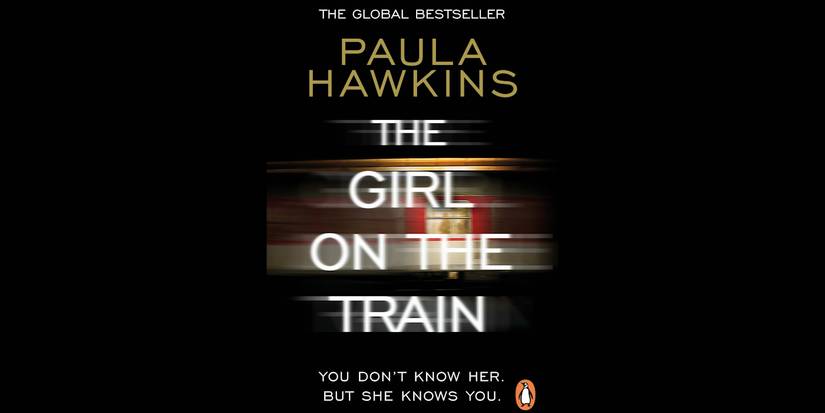
Rachel Watson knows the couple who lives by the train tracks. At least she’s convinced herself she does. As her train creeps past their house each morning, she stares in. Fleeting fantasy becomes rigid reality. She’s named them — Jess and Jason — and built a perfect little life for them one daydream at a time. It’s a funhouse mirror she holds up to reality, where her ex-husband now lives with the woman he left her for and their new baby. But then “Jess” disappears, and Rachel’s harmless voyeurism becomes a key. The problem: Rachel drinks, losing entire chunks of memory.
She becomes more than just an unreliable narrator. Paula Hawkins traps her alongside the reader in a current of uncertainty. Characters recount things she can’t remember doing, and scraps of memory return without enough context to trust them. And that's the sticking power of The Girl on the Train: The central mystery isn’t only what happened to Megan, but whether or not Rachel has any business believing herself.
2 'Razorblade Tears' by S.A. Cosby (2021)

Ike Randolph and Buddy Lee Jenkins are brought together by the worst thing they have in common: Their sons — a married couple, Isiah and Derek — are dead. When the police investigation stalls, Ike and Buddy Lee are left simmering with grief and guilt. The criminal instincts neither has completely forgotten begin to boil over, and so they go hunting for the killers through bars and back roads. It pulls them back into the criminal circles both men had supposedly left behind.
The revenge is vicious, beatings and gunfire aplenty. But the further they go, the more painful their grief becomes as they wrestle with the realization they waited until Isiah and Derek were gone to defend them. So every act of vengeance doubles as an apology that can no longer be heard. And that’s what gives Razorblade Tears its staying power: S.A. Cosby taps into the universal fear of understanding something too late — and how no matter the pain you inflict on others, the self-inflicted wounds may never heal.
1 'Gone Girl' by Gillian Flynn (2012)
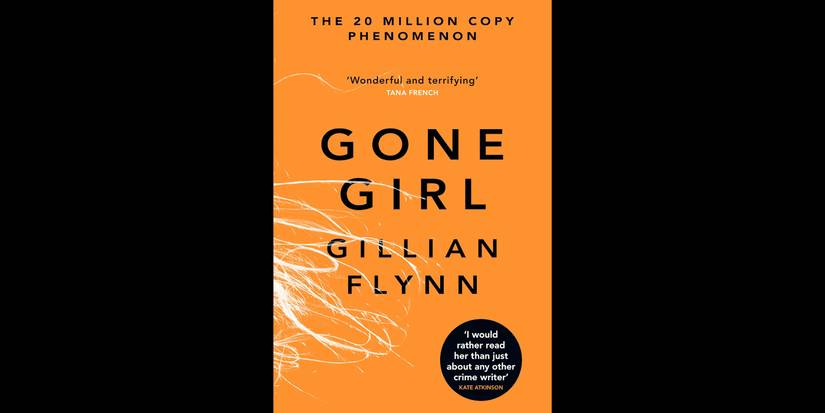
Nick Dunne comes home on his fifth wedding anniversary to find his wife missing and signs of a struggle. Police show up, and the perfect picture of marital bliss starts to smudge. Nick acts suspicious — withholding, awkward, and smarmy. Secrets about his marriage to Amy continue to reveal themselves to make the whole thing look much uglier than the version he first describes. Amy’s diary tells a different truth — a romance everyone dreamed of morphed into a nightmare.
That plot alone would make Gone Girl a great thriller. But Gillian Flynn turns Nick and Amy into more than unreliable narrators. She turns their marriage into a fight over who gets to define truth. Because each knows exactly where the other is weakest and what version of events outsiders are most likely to believe. That’s what has kept Gone Girl relevant when so many twist-heavy thrillers have been forgotten in history: the fun is watching two people who know each other frighteningly well use that knowledge as a weapon.
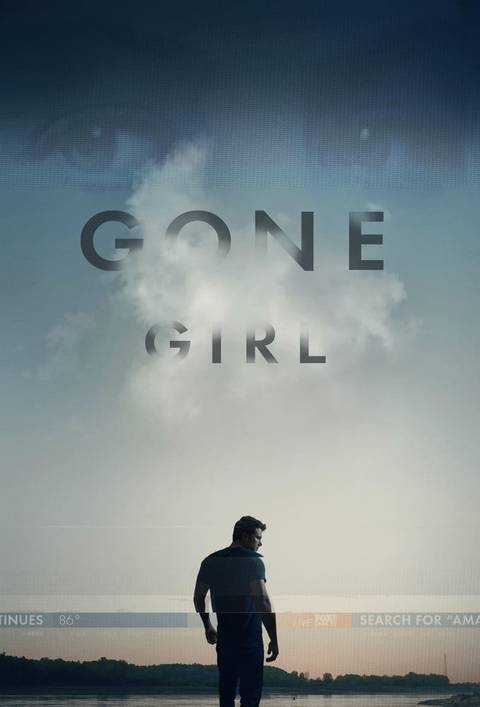
- Release Date
- October 3, 2014
- Runtime
- 149 minutes
- Director
- David Fincher
- Writers
- Gillian Flynn
- Producers
- Arnon Milchan, Ceán Chaffin, Joshua Donen
KioskNews shows a cleaned-up reading view extracted from the publisher’s page — the original always lives on their site, not ours.