Opinion: Opinion | Asim Munir Wants To Redraw Pakistan's Map - And He Has Big Ideas
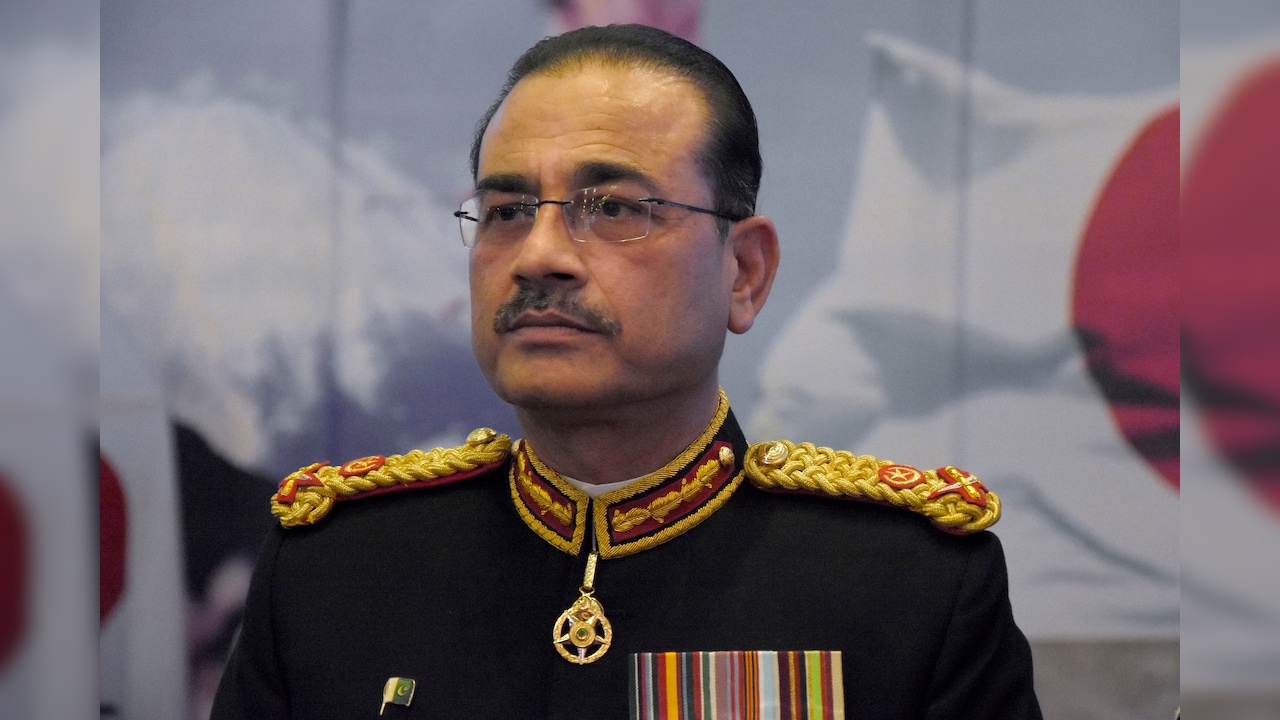
The reported push by Pakistan's Field Marshal Asim Munir, the country's army chief and Chief of Defence Forces, to redraw the country's provincial map is beginning to look like considerably more than an exercise in administrative rationalisation. Beneath the language of governance reform lies a potentially consequential attempt to restructure Pakistan's federal compact, rearrange its political geography and, perhaps most importantly, recalibrate the balance of power between the provinces and the centre.
Pakistan has lived with essentially the same four-province arrangement since 1947. Punjab, Sindh, Khyber Pakhtunkhwa (KP), and Balochistan constitute a federation marked by extraordinary demographic and territorial asymmetries. Punjab, with approximately 128 million people, accounts for nearly half the country's population. Balochistan, by contrast, occupies the largest share of national territory but has a population of barely 15 million. Such disparities have long fuelled arguments about administrative inefficiency, unequal representation, and the concentration of political power. But the timing, political sponsorship, and strategic implications of the latest proposals deserve considerably closer scrutiny.
Advertisement - Scroll to continue
The Cartography of Power
The proposals circulating in the media envisage anything from 12 to 15 provinces, with one formula reportedly proposing a division of Punjab into four units, Sindh into two, and KP and Balochistan into three each. Other versions suggest dividing Punjab into three, separating the Hazara region from the Pashtun-majority areas of KP, splitting Balochistan into two, and potentially bringing Karachi, and occasionally Gwadar, under direct federal administration.
An alternative approach would retain the existing provincial boundaries while transferring greater authority to local governments across approximately 160 districts. The government's preferred justification is familiar: smaller administrative units, more efficient service delivery, better access to healthcare and education, and a more accountable system of governance. Planning Minister Ahsan Iqbal and Interior Minister Mohsin Naqvi have lent political weight to the discussion, while Defence Minister Khawaja Asif has indicated that a clearer proposal could emerge towards the end of 2026, potentially opening the way for movement in early 2027.
Advertisement - Scroll to continue
While Munir himself has not publicly presented a formal blueprint, the initiative is nevertheless widely associated with the military establishment operating under his leadership. That distinction matters. In Pakistan, administrative restructuring is rarely just administrative restructuring. The provincial map is also a map of political influence, ethnic identity, economic resources, and constitutional power.
There is a growing suspicion that the proposed restructuring could weaken established political fiefdoms, particularly the PML-N's dominance in Punjab and the PPP's entrenched position in Sindh. Smaller provinces could produce fragmented political constituencies, new dependent elites, and additional opportunities for the federal establishment to exercise influence over provincial administration and resource allocation. The question, therefore, is not simply whether Pakistan needs smaller provinces. It is whether the country's military establishment is attempting to use administrative reform as an instrument of political re-engineering.
Sindh Says No
The constitutional obstacles are formidable. Article 239 requires a two-thirds majority in both houses of Parliament for a constitutional amendment. More significantly, any amendment affecting the boundaries of a province must also secure the approval of two-thirds of that province's assembly. This provision gives Sindh a particularly consequential position in the unfolding confrontation. On September 3, 2026, the PPP-dominated Sindh Assembly unanimously adopted a resolution rejecting any division of the province, the creation of a new province from its territory, or the transfer of any part of it to federal administration.
Chief Minister Murad Ali Shah and other PPP leaders have subsequently reiterated that Sindh's territorial integrity is non-negotiable. This is not merely partisan resistance. It reflects a deeper anxiety about the nature of Pakistan's federation. For Sindh, provincial autonomy is not an administrative convenience; it is a constitutional safeguard against the political and economic domination of the centre. Any attempt to circumvent that safeguard would expose the fundamental contradiction in Pakistan's political system: a federation whose military establishment has repeatedly demonstrated an inclination to centralise authority.
The Most Dangerous Political Battleground
The resistance has been particularly intense in Sindh, where the proposed restructuring intersects with questions of ethnicity, historical identity, economic control, and political survival. PPP leaders, including Bilawal Bhutto-Zardari, have warned that any attempt to forcibly divide Sindh could provoke violence in Karachi, Hyderabad, and other urban centres. Their argument is straightforward: constitutional procedures cannot be bypassed through political manoeuvring or an ostensibly popular referendum.
Karachi makes this confrontation particularly consequential. As Pakistan's principal commercial centre and a critical hub for trade and port activity, the city is central to Sindh's economic viability. Separating it from the province, particularly through federal administration, would have implications extending far beyond provincial politics. It would fundamentally alter the economic and political balance within the federation.
Sindhi nationalist organisations have mobilised against the proposals. Their protests have accused the military establishment, portrayed by these groups as dominated by Punjab, of attempting to undermine Sindh's identity and appropriate control over its resources. Some have revived demands for an independent 'Sindhudesh', while others have threatened economic blockades targeting Punjab.
The issue is acquiring a momentum that the federal government may find increasingly difficult to contain. The political implications extend beyond Sindh. Sections of political opinion in KP have expressed solidarity with Sindh's opposition to provincial division. MQM-P and other political actors have displayed more complicated positions, with some favouring empowered local governments rather than wholesale changes to provincial boundaries. What is emerging is a potentially destabilising contest over the very meaning of federalism in Pakistan.
The Military's Federalism Problem
The larger strategic concern is that provincial restructuring could become another mechanism for strengthening the centre at the expense of an already fragile federal arrangement. Pakistan's provincial autonomy has historically been contested, not least because the military establishment has regarded excessive provincial political authority as an obstacle to centralised state management. The proposed restructuring could provide an opportunity to weaken established provincial power centres without necessarily addressing the institutional weaknesses that have produced poor governance in the first place.
There are obvious political incentives. Fragmenting Punjab could dilute the PML-N's electoral dominance. Dividing Sindh could undermine the PPP's principal political stronghold. Creating smaller administrative units could also generate new political actors whose survival depends more heavily on federal patronage. For a military establishment accustomed to exercising influence over the country's political architecture, this is hardly an insignificant consideration. But the strategy carries substantial risks. Balochistan remains afflicted by insurgency and longstanding grievances over political representation and resource distribution. KP continues to confront militancy and security instability. Introducing contentious territorial changes into these already sensitive environments could intensify existing tensions rather than resolve them.
The economic argument is equally complicated. Creating additional provincial capitals, assemblies, ministries, bureaucracies, and administrative structures would impose substantial recurring expenditure. Estimates of the financial burden have run into hundreds of billions of rupees annually. There would also be difficult negotiations over water distribution, taxation, natural resources, public debt, and the allocation of federal revenues.
The irony is that Pakistan has previously entertained similar ideas of creating numerous smaller administrative units, including during the Zia-ul-Haq period. The persistence of these proposals suggests that the issue is not simply administrative inefficiency but the unresolved question of how power should be distributed within the Pakistani state.
Reform Without Consensus?
There is, of course, a legitimate case for administrative decentralisation. Pakistan's oversized provinces face genuine governance challenges. But administrative efficiency cannot become a convenient justification for politically motivated territorial engineering.
The Munir-led establishment may be underestimating the political and emotional significance of provincial identity. As of now, there is no publicly established final map, formal constitutional amendment, or political consensus on the proposed restructuring. The debate remains unresolved, with Sindh's constitutional resistance representing the most immediate obstacle. Pakistan's provincial redrawing debate is less about the number of provinces than about the distribution of power. It raises an uncomfortable question for the country's military establishment: can a state struggling to reconcile its competing nationalities, political interests, and federal aspirations achieve greater cohesion by redrawing its internal boundaries? Or will another attempt at centralised political engineering simply reinforce the very fissures that have historically weakened the Pakistani state? The danger is that, in attempting to make Pakistan more administratively manageable, its establishment could make the federation considerably more politically unmanageable.
(Harsh V Pant is Vice President, ORF. Shivam Shekhawat is a Junior Fellow with ORF's Strategic Studies Programme)
KioskNews shows a cleaned-up reading view extracted from the publisher’s page — the original always lives on their site, not ours.