How the iPhone Duo's camera is different from the iPhone 18 Pro's
Apple
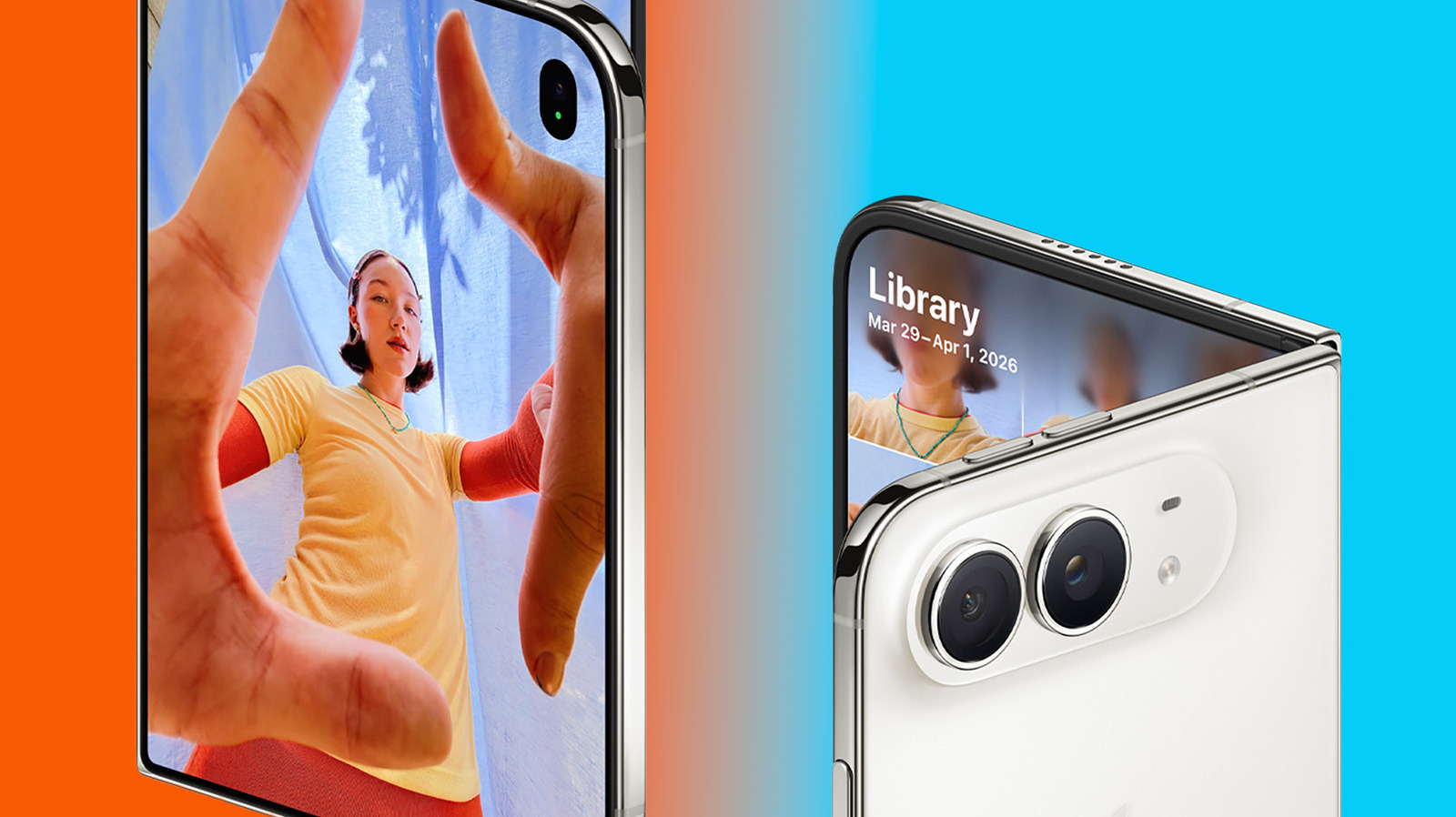
The iPhone Duo has by far the highest starting price of any iPhone to date. Which makes sense in a way, since it's basically two devices in one. But at $1,999, it still lacks the iPhone 18 Pro's more advanced camera hardware. A telephoto lens and variable aperture are out, while tricks that take advantage of its foldable design are in. Most of the differences exist due to the limitations and benefits of any dual-screen phone, including challenges around squeezing more cameras into an already crowded device and being able to use an external display for more content. Here's exactly what your photography gives up (and gains) if you choose the Duo over the iPhone 18 Pro.
Fewer cameras, shorter range
Apple
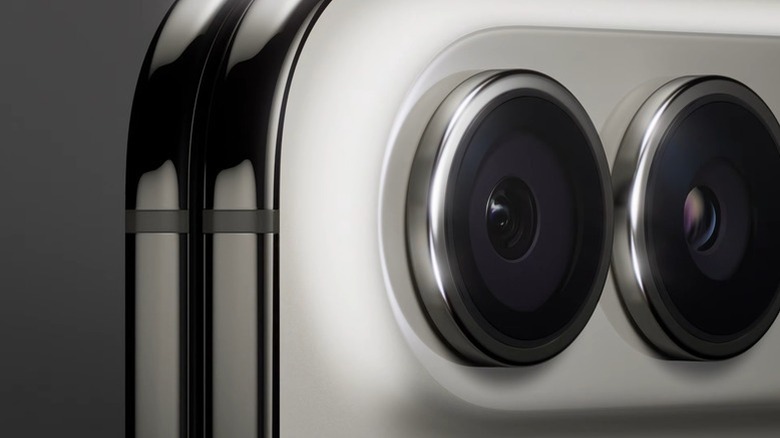
Sensor resolution isn't where the iPhone Duo loses ground. It has two 48-megapixel rear cameras: a main camera and an ultrawide, which also handles macro shots. But camera count is another story, as Apple does not offer the telephoto camera on the Duo.
With their high resolution, both phones offer a 2x view by cropping into their 48MP main sensors. But the iPhone 18 Pro has a dedicated 4x telephoto camera, which can also crop its 48MP sensor to make a 12MP "optical quality" 8x zoomed shot. The best the Duo can do is 2x optical-quality zoom.
In practice, that means the iPhone Duo probably won't be a great choice for shooting distant subjects like a performer on a concert stage or athlete at a sporting event. Sure, you can use digital zoom to go past that "optical" limit, but quality will suffer the farther you go past 2x.
Why would Apple leave something as basic as a telephoto lens out of its first $2,000 iPhone? Well, the company hasn't said, but it may be as simple as physical constraints. Since a foldable phone opens into a bigger device, its cameras have to fit into one very thin half. Camera modules also have to compete with other hardware (especially batteries) for extremely limited internal space.
That doesn't mean future versions of the Duo won't get a dedicated zoom lens. After all, other foldable manufacturers have managed to squeeze one in. And it leaves at least one obvious place for Apple to entice upgraders with sequels.
Another big omission is variable aperture, which is one of the iPhone 18 Pro's headline features. It can physically widen or narrow its opening, adjusting how much light enters (and how much of the scene stays in focus). The Duo's aperture is fixed, just like on all previous iPhones. It still supports portrait-mode background blur, but that digital effect isn't the same.
The Duo's unique tricks

Apple
Since the Duo can stay upright and basically prop itself up when partially folded, its camera can take advantage of this faux built-in tripod. This makes it an interesting choice for things like group photos and video calls.
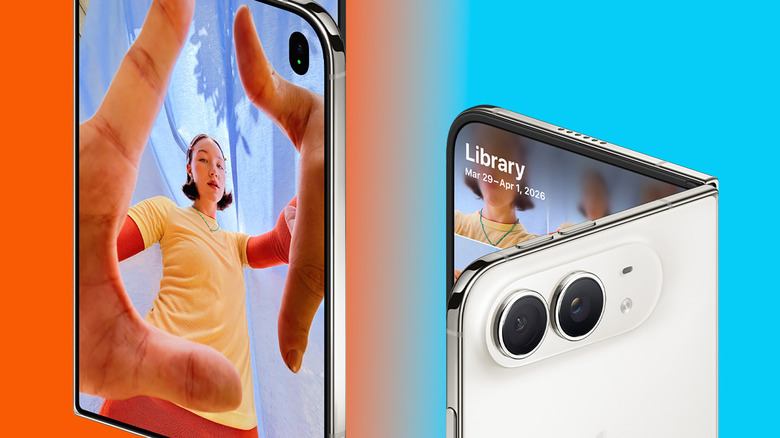
The Duo has a 12MP selfie camera on its outer screen, along with a separate 1080p FaceTime camera hidden beneath the inner folding display. The outer screen can also act as a viewfinder for the higher-resolution 48MP rear cameras, and if you open the Duo all the way, you can point those cameras at your face while still seeing what's in the shot. Perfect for high-res selfies.
You can also set it down somewhere and join the shot while using the outer screen to check the framing. Traditional slab-like iPhones can't do that.
A Duo-specific feature called Smart Take goes a step further: it recognizes when everyone in a group photo is ready and takes the photo automatically.
The Duo also has a trick for video calls: Duo FaceTime lets someone around you join the call using the outer display and camera, rather than crowding next to you for the inner screen. Then there's Kid Cue, which shows Peanuts animations on the outer display to get kids to look toward the phone.
So, it's not that the Duo's camera setup is without its own unique (if quirkier) perks. It's just that the iPhone 18 Pro provides the more complete and traditional camera experience.
The iPhone 18 Pro's other advantages
The two still have plenty of overlap. Both support 24MP and 48MP photos, adjustable portraits and updated Photographic Styles, including texture and grain adjustments. They can each record in 4K Dolby Vision at up to 120 fps, and both let you apply Cinematic effects after the fact.
But the Pro's advantages become clearer when you want to take over from the phone's automatic settings. Thanks to the new variable aperture, the Pro offers, well, Pro Controls, which are manual adjustments for things like shutter speed, white balance and aperture. The Duo doesn't offer that.
The Duo also lacks ProRAW photos, which preserve extra sensor data for advanced editing in apps like Lightroom. Video gets shorted, too: there's no ProRes, ProRes RAW or Apple Log 2 for more flexibility in post-production. Of course, those features will be missed by those who are into fine-tuning professional-class shots with professional-class tools. But if your photography doesn't go much farther than selfies and capturing the dog doing something funny? Well, you probably won't miss them.
Other features are also MIA. The iPhone 18 Pro has second-generation sensor-shift stabilization (the Duo uses the older version), an Adaptive True Tone flash (the Duo's isn't adaptive) and a studio-quality four-microphone array. The Duo also can't record spatial photos or videos, and it lacks Apple's new Reference Image feature, which captures signed sensor data alongside the photo to verify what the camera originally saw.
So, the iPhone 18 Pro is better if you want to shoot distant subjects, more advanced manual control or edits or the more all-around capable camera system.
With cameras that are a step down in several ways, the Duo isn't simply an iPhone 18 Pro that folds. For $2,000 and up, that might be a hard pill to swallow. If you're forking that over, it's probably because you like the folding design and have disposable income. But hey, as a bonus, at least it's also easier to prop up, join the group shot and let everyone check their framing.
KioskNews shows a cleaned-up reading view extracted from the publisher’s page — the original always lives on their site, not ours.