Experience: I’ve climbed Mount Everest 20 times
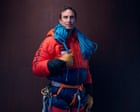
I grew up in Slough, Berkshire, in a bungalow beside a farm. My father was a scout leader, and I was always outside, building dams and dens, sleeping out and hiding in trees. In my teens, family holidays were two weeks in Wales. At home, nature was my playground.
When I was 17, a school friend took me to a climbing wall where he was a regular. I loved the physicality of it and trying to work out where to put my hands and feet next. We would go there twice a week. In sixth form, we headed to the south coast in Dorset for my first real climbing outing. The waves were crashing and it felt scary and exhilarating. I thought it was magical.
We would go climbing there or in the Peak District whenever we could. After A-levels, we caught a bus to Chamonix, in the Alps, for five weeks of camping; we climbed Mont Blanc and made stupid mistakes like starting too late in the day. It was a huge learning curve, but it was fabulous.
I did a geology degree at the University of Leeds and joined the climbing club. I wanted to see the Himalayas, so organised a trip to Pakistan. That was a turning point. The climbing was wonderful, but it was the people I fell in love with.
Over the next decade, I spent half my year working in ski and climbing shops, and the other half climbing across Europe, New Zealand and Asia. It was treacherous at times. In 1996 I fell from a rock face, shattering both heel bones, and was told I wouldn’t walk again unaided. After several surgeries and three months in a wheelchair, I defied doctors to climb – and even ski – some of the world’s highest peaks. A group of us took on harder and higher routes and were nominated for a Piolet d’Or – the Oscars of the climbing world – after establishing a trail on Annapurna III, a 7,555-metre peak in Nepal, in 2003.
That caught the attention of a Sheffield adventure company, which asked if I would guide an expedition of two to Everest. I was an accomplished climber, but I had never been to 8,000 metres or led at high altitude; it was a huge leap of faith.
The ascent took eight weeks and I relied heavily on Sherpa expertise. We climbed through the night, with thunderstorms and stars lighting the sky, and I soaked in the feeling of being on the summit at the highest point on the planet, looking down at the Himalayas spread below.
I loved facilitating someone else’s journey. I did three more Everest ascents for the company before setting up my own in 2006. Now I take on one client a year, preparing together for up to three years.
I’ve climbed Everest most years since that first time. This May, I clocked up my 20th summit. There have been testing times – once, we encountered a catastrophic oxygen delivery failure and had to share tanks.
But there have been beautiful moments, too. The best was in 2017: we had summit day to ourselves – warm, no wind and just the right amount of snow. I could see Kangchenjunga and Makalu, the third and fifth highest peaks, respectively, and into Tibet. In 2013, I climbed Everest’s neighbouring peak, Nuptse, looking back from 7,900 metres and recalling years of memories.
after newsletter promotion
That same year, I encountered my hardest night when I came across a dying climber who passed away in my arms. Another time, I pulled a dead Sherpa off the fixed line ropes, the barriers designed to stop people falling. The mountain doesn’t respect whether you have climbed it 20 times or once – anybody can die there.
In 2022, I took the record for the most Everest summits by a non‑Sherpa after my 16th ascent. Meanwhile Kami Rita Sherpa holds the general record. I still hold mine, although it has never been about numbers; it’s about experiences.
There will be a time when I stop climbing Everest, but it won’t be soon. It has given me everything and I feel humbled by that. But it’s the place and its people that mean the most to me – Sherpas I have climbed with; locals who fed me in their homes or nursed me when I was ill; people who have become my friends. The mountain is simply the vehicle that got me there.
As told to Deborah Linton
Do you have an experience to share? Email experience@theguardian.com
KioskNews shows a cleaned-up reading view extracted from the publisher’s page — the original always lives on their site, not ours.