88 years ago, an Indian doctor became China’s hero. Now, AI makeover will tell his story
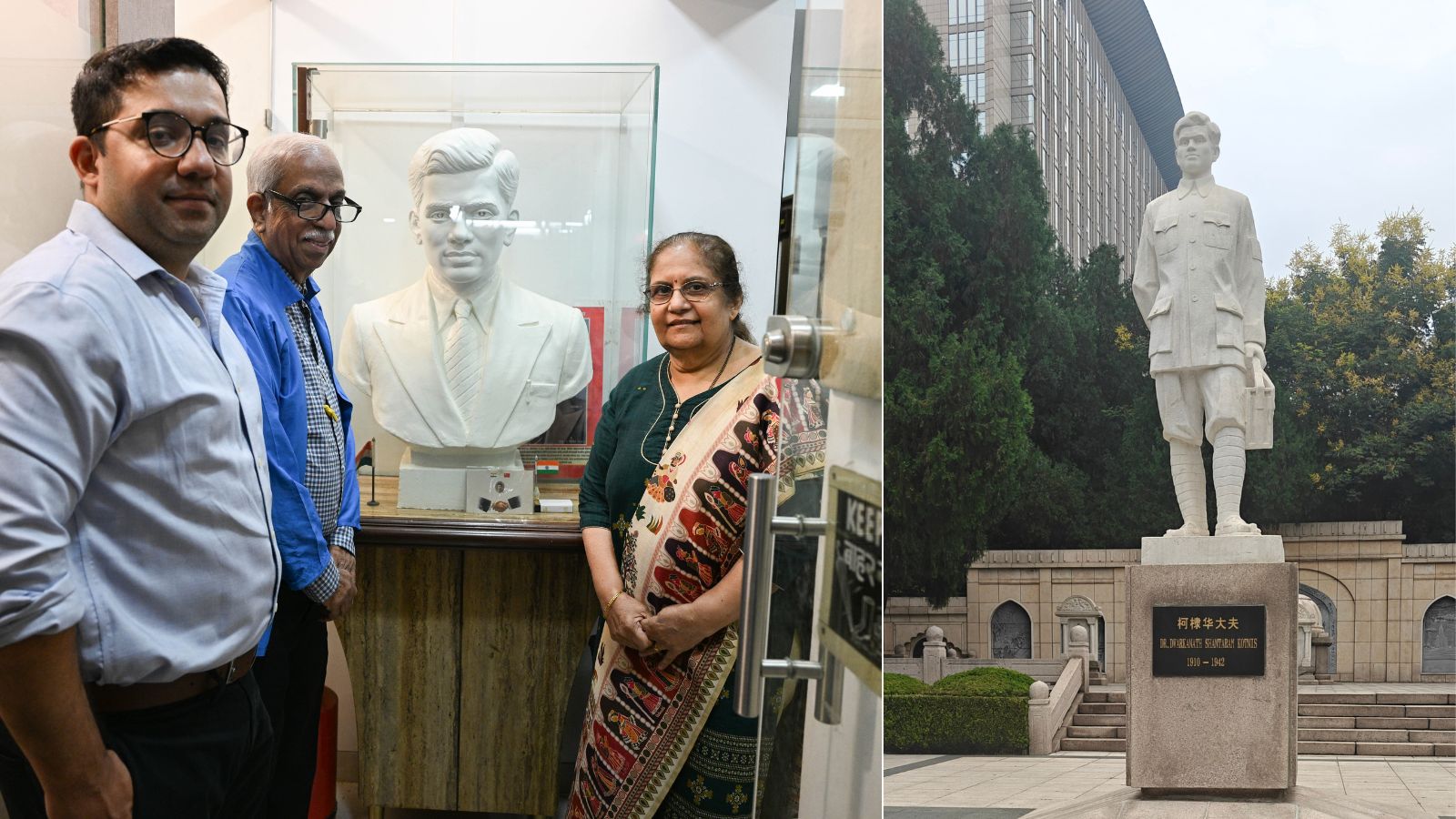
In a quiet corner of Shijiazhuang, the capital of China’s Hebei province, a nine-foot marble statue of an Indian doctor stands amid stone panels depicting the Taj Mahal, elephants, lotuses and other Indian motifs. At its feet lies the tombstone of Dr Dwarkanath Kotnis, a physician from Maharashtra’s Solapur who travelled to China in 1938 as part of an Indian medical mission during the Second Sino-Japanese War.
Nearly nine decades after Kotnis and four other Indian doctors arrived in China to treat wounded soldiers, the memorial dedicated to their service is set for a technological makeover.
Authorities at the North China Military Region Martyrs Cemetery plan to introduce artificial intelligence and interactive technologies at the memorial hall to make the history of the Indian medical mission more accessible to visitors. The work is expected to begin by the end of this year, representatives of the cemetery told The Indian Express.
Established in the 1970s, the memorial hall houses sculptures of the five doctors, letters, photographs, artefacts and information panels documenting their work. The proposed upgrade aims to make the exhibits more interactive.
The plan comes amid China’s broader efforts to modernise its cultural institutions. On October 20, the country announced a programme to upgrade small and medium-sized museums during the 15th Five-Year Plan period (2026-2030), focusing on collections, exhibitions and educational programmes.
The Indian medical mission
In 1938, as China battled the Japanese invasion, Chinese military commander-in-chief General Zhu De, wrote to Jawaharlal Nehru seeking assistance from the Indian National Congress. A five-member Indian Medical Mission was subsequently dispatched, arriving in Guangzhou in September that year.
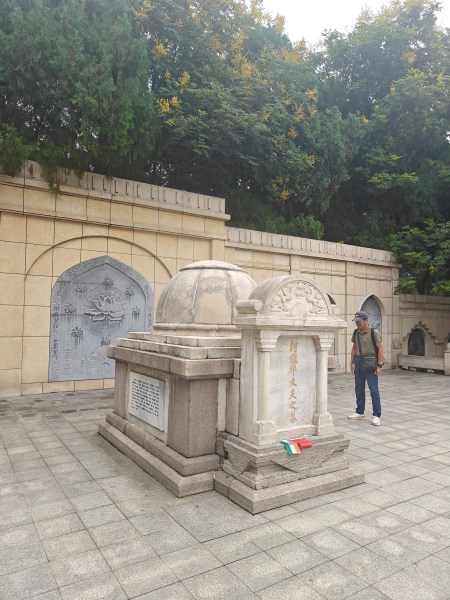 Initially buried in a nearby village, Dr Kotnis’ remains were transferred to the North China Military Region Martyrs Cemetery in the 1970s. (Express Photo)
The team comprised Dr Kotnis, Dr Bejoy Kumar Basu, Dr Madan Atal, Dr Mohanlal Cholkar and Dr Debesh Mukherjee. They began treating wounded soldiers at Guaimao Hospital under difficult conditions. In a letter to his family, Kotnis recalled that between 500 and 800 patients arrived daily from nearby battlefronts.
Story continues below this ad
By December 1939, Kotnis, Basu and Atal had reached the headquarters of the Eighth Route Army in Shanxi province, serving close to the frontlines. Kotnis learnt Chinese and gradually became immersed in local society. In 1941, he became the first president of the International Peace Hospital, where he performed operations, treated patients and trained medical students. He also married Chinese nurse Guo Qinglan, with whom he had a son, Yinhua.
While the other members of the mission eventually returned to India, Kotnis continued working in China. He died in Gegong village while serving with the Eighth Route Army. Initially buried in a nearby village, his remains were transferred to the North China Military Region Martyrs Cemetery in the 1970s.
A section of the cemetery is dedicated to the Indian medical mission, with memorials to Kotnis, Basu and Atal. Known in China by his Chinese name, Ke Dihua, Kotnis remains a symbol of India-China friendship.
A family’s enduring connection
In Mumbai, Kotnis’s extended family has followed the evolution of the memorial over the decades, making repeated visits to Shijiazhuang.
Story continues below this ad
Dr Sumangala Kotnis Borkar, his grand-niece, said her father, Kotnis’s brother, was among the first family members to visit the memorial soon after it opened in the 1970s. Her first visit was in 1982.
“It was an emotional moment, and we were touched by the respect bestowed by the Chinese. When I visited again in 2015, the museum had evolved into a much bigger facility. They had carried out renovations, while still carefully preserving the artefacts,” she said.
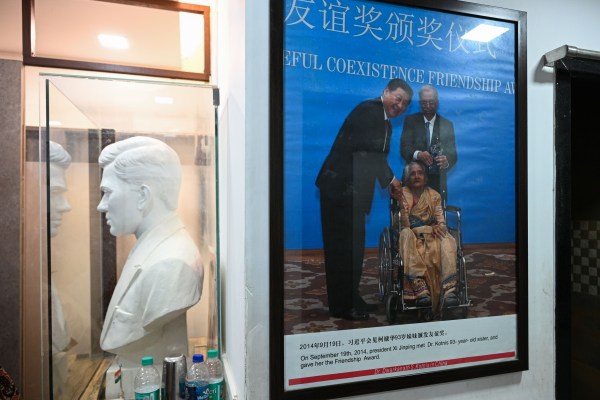 In 2014, Chinese President Xi Jinping honoured Kotnis’s last surviving sibling, Manorama, during his visit to India (Express Photo by Sankhadeep Banerjee)
The family’s most recent visit was in 2025, when they retraced Kotnis’s journey through China. Her son, Dr Mangesh Borkar, said they also visited the museum and attended an event in Beijing marking the 80th anniversary of the war.
In 2014, Chinese President Xi Jinping honoured Kotnis’s last surviving sibling, Manorama, during his visit to India. She died in 2015. Chinese delegations continue to pay tribute to the physician by visiting his memorial in Solapur.
Story continues below this ad
Kotnis’s legacy has also shaped the family’s professional choices, with several members pursuing careers in medicine. The family established the Dr Kotnis Memorial Clinic, a hospital in Vile Parle that has been operating for 49 years.
“I grew up on the stories of his sacrifices. It is one thing to be a good doctor, but he went away from his family to help the wounded in a war-torn country. He knew about the risks to his life, and yet, he worked tirelessly. The humanitarian role played by him is an inspiration for the whole family,” Mangesh, who now works as a physiotherapist, said.
KioskNews shows a cleaned-up reading view extracted from the publisher’s page — the original always lives on their site, not ours.