6 Greatest Matt Damon Action Movies, Ranked

Sign in to your Collider account
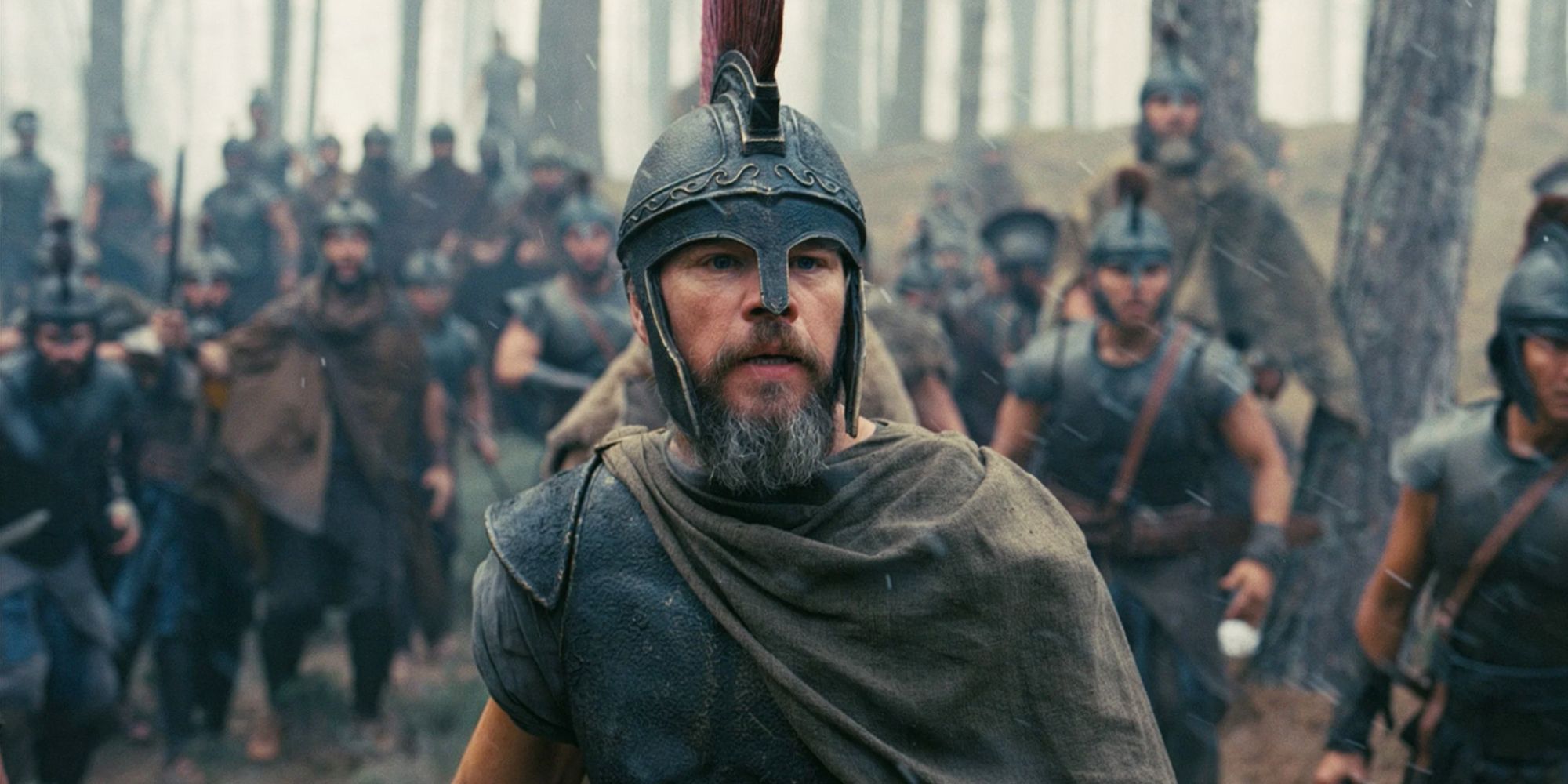
Matt Damon has never really looked like a man who entered the room expecting a gunfight. That is half the magic. Put him beside the traditional action hero and he looks almost aggressively normal, like he should be arguing with an airline employee or trying to remember where he parked. Then somebody comes at him with a knife and suddenly the ordinary guy knows where every exit is, what object on the table can become a weapon, and exactly how much violence the next ten seconds require. That, however, did change with The Odyssey a bit.
But that whole persona makes his action movies feel unusually desperate. Damon is at his best when surviving costs something — memory, loyalty, morality, another human being, sometimes simply the belief that the institutions around him deserve trust. Even when he is playing a Greek king crossing the known world, the interesting part is still the same. He looks like a man who desperately wants to get through this alive.
6 'Jason Bourne' (2016)

Jason Bourne follows the former CIA assassin after Nicky Parsons (Julia Stiles) uncovers classified information connecting Bourne (Matt Damon) and his father to the creation of Treadstone, dragging him back into a world he has spent years trying to leave. What begins as another hunt for buried pieces of his identity puts him against CIA director Robert Dewey (Tommy Lee Jones), cyber specialist Heather Lee (Alicia Vikander), and an assassin known only as the Asset (Vincent Cassel).
The Athens sequence is the reason I still defend this movie harder than most people do. Riots are exploding around Bourne while Nicky is trying to reach him, police are everywhere, surveillance is tracking movement in real time, and Bourne is somehow reading the entire mess faster than everyone watching from headquarters. Later, the Las Vegas chase goes full blunt-force spectacle, with an armored SWAT vehicle smashing through traffic like road design has become optional. The film is not as emotionally sharp as the original trilogy, but Damon slipping back into Bourne’s physical intelligence is still ridiculously satisfying.
5 'Green Zone' (2010)

Green Zone follows Chief Warrant Officer Roy Miller (Matt Damon), an American soldier searching Iraq for weapons of mass destruction in 2003, who becomes suspicious when one supposedly reliable intelligence site after another turns up empty and begins investigating where the information actually came from. Damon plays Miller as a soldier who starts with a practical problem. The intel is wrong. And he slowly realizes that admitting why it is wrong could embarrass people far above him.
Paul Greengrass directed the film, and yes, the Bourne DNA is obvious in the handheld movement and frantic pursuit scenes. But Miller is a very different Damon action character. He does not have secret-program reflexes or an erased identity. He has questions, military training, and the extremely inconvenient habit of wanting the answer even after everyone around him starts suggesting he stop asking. The Baghdad chase near the end is chaotic because several groups are pursuing different outcomes at once. Miller is physically running through a political lie that has become impossible to contain. That anger gives the action more bite than the movie usually gets credit for.
4 'Elysium' (2013)

Elysium follows Max Da Costa (Matt Damon), a factory worker on an overcrowded and impoverished Earth in 2154 who receives a fatal dose of radiation and learns that his only chance of survival is reaching Elysium, an orbital habitat where the wealthy have medical machines capable of curing almost any disease. After a criminal operation bolts a powered exoskeleton directly onto his body, Max accepts a dangerous data heist that could get him onto the station.
This is Damon in wonderfully battered mode. Max spends most of the movie looking like every movement hurts because it probably does. The exoskeleton makes him stronger without magically making him healthy, so even the cool sci-fi upgrade feels grim. Then Kruger (Sharlto Copley) shows up as this completely feral counterweight, wielding futuristic weapons while sounding delighted by the opportunity to hurt somebody. Neill Blomkamp directed the film, and the class politics are about as subtle as the metal frame screwed into Max’s skeleton. Fine by me. When the action is this physical and the desperation this clear, subtlety is overrated.
Collider Exclusive · Action Franchise Quiz What Action Series Would You Thrive In? Wick · Fast · Mission · Die Hard
Four franchises. Four completely different ideas of what a hero is: the assassin with a code, the family that never leaves anyone behind, the man who does his own stunts, and the guy who simply refuses to die. Only one of them runs on your particular brand of trouble. Eight questions will tell you which one you would survive.
🐕Wick
🏁Fast
🧨Mission
🎄Die Hard
01
How does a room know you've walked into it? Every action hero arrives differently. Some of them arrive before they arrive.
02
It turns physical. What does your fighting actually look like? Choreography is character. Yours says something about you.
03
Who is standing beside you when it starts? Some franchises are built on a team. Others are built on one person walking in alone.
04
It has gone badly wrong. What keeps you upright? Act two exists to find out what you're actually made of.
05
There's a vehicle. What are you driving, and how? No action franchise has ever survived without a car chase. This one is yours.
06
How do you feel about the people giving the orders? There is always an institution. There is rarely a good one.
07
Underneath all of it, what are you actually doing this for? The stunts are the reason people come. This is the reason they stay.
08
When the credits roll, what do people say about you? Every franchise is really an argument about what makes someone worth watching.
Casting Has Been Completed Your Franchise Is…
Four action series. One of them is built around exactly the way you handle pressure, people, and a room that has just gone very quiet. Here is where you would survive the trilogy, and probably headline it.
John Wick
You are precision with a grudge. You don't posture, you don't escalate, and you don't warn anybody twice. That is exactly why the people who know you are so careful never to be the reason you start.
- The Wick films run on discipline: an underworld with actual etiquette, a hero who honours every rule of it, and a world that unravels the instant someone breaks one against him.
- You share that quality. You are extraordinarily reasonable right up to the line, and then completely immovable past it.
- Focus, commitment and sheer will. You'd be the one carrying grief through three sequels and turning it into technique rather than noise.
- People wouldn't call you dangerous. They'd say your name quietly and let that do the work.
Fast & Furious
You understand the thing the whole franchise is secretly about: the cars are spectacular, but the crew is the point. You collect people, you keep them, and you'd drive through a building for any one of them.
- This series went from street racing to orbit without ever changing its actual subject, because loyalty scales and plot doesn't have to.
- You have the same instinct. You build a family out of whoever turns up, and then you defend it past the point of reason.
- You'd thrive here because the franchise rewards exactly your strengths: warmth, nerve, an absolute refusal to leave anyone behind, and a relaxed relationship with physics.
- The mission can wait. The barbecue cannot.
Mission: Impossible
You over-prepare and then take the dangerous part yourself anyway. It looks like control, but it's really responsibility. You have never worked out how to ask somebody else to carry the risk.
- This is the franchise of the plan that collapses on schedule: the team, the mask, the rooftop, and the one person sprinting flat out because sprinting is all that's left.
- You share that refusal to accept an outcome. Told the odds, you treat them as an administrative error.
- You'd thrive here because these films reward competence and loyalty in equal measure. The mission matters, but nobody on the team gets left on the wrong side of a door.
- Some people delegate the cliff. You have never once been that person.
Die Hard
You are not the most trained person in the building, the best equipped, or the one anybody would have picked. You are simply the one still standing at the end, which turns out to be the only qualification that matters.
- Die Hard invented the modern action hero by making him mortal: outgunned, out-planned, bleeding, and extremely funny about it.
- You share that stubbornness. Adversity doesn't make you noble, it makes you sarcastic, and then it makes you unstoppable.
- You'd thrive here because these films reward improvisation and nerve over preparation, and you've never had the luxury of preparing anyway.
- You didn't want any of this. You just declined to be the person who let it happen.
3 'Saving Private Ryan' (1998)

Saving Private Ryan follows Captain John Miller (Tom Hanks) and a small squad of American soldiers sent across Nazi-occupied France after D-Day to locate Private James Ryan (Matt Damon), whose three brothers have already been killed in the war, so he can be sent home to his mother. Damon’s Ryan arrives relatively late, but once Miller finally finds him, Ryan refuses to abandon the men defending Ramelle simply because the Army has decided his life is now worth more than theirs.
That refusal is the key to why Damon belongs in this movie rather than merely appearing in it. Ryan does not deliver some grand heroic speech. He is confused, devastated by the news about his brothers, then looks around at the men beside him and cannot accept leaving them before the fight. Steven Spielberg helmed this film. The final battle makes every inch of that decision hurt. Improvised explosives, collapsing positions, tanks pushing through streets, men running out of ammunition, heroism stops looking glamorous very quickly. Then old Ryan stands in the cemetery decades later asking whether he became good enough to justify the lives spent bringing him home. Suddenly the whole war movie becomes one man asking whether survival itself created a debt he could ever repay.
2 'The Odyssey' (2026)

The Odyssey follows Odysseus (Matt Damon), king of Ithaca, on his long journey home after the Trojan War as storms, monsters, gods, temptation, lost years, and his own pride keep separating him from Penelope (Anne Hathaway) and Telemachus (Tom Holland). Damon’s Odysseus is already worn down when we meet him, which is exactly right. This is less a hero beginning an adventure than a man wondering how many adventures one human body is expected to survive.
And then the movie goes absolutely enormous. The Cyclops sequence turns Polyphemus into a genuine physical nightmare, Circe’s section becomes stranger and more dangerous than the usual “mythological episode” treatment, and the Trojan Horse material gives the story the scale of something civilization has been retelling for three thousand years. This is perhaps Christopher Nolan’s greatest work till date. He restructured Homer’s story non-linearly and shot the whole spectacle like every coastline might be the end of the world. Damon is the anchor because Odysseus keeps looking less like a statue from mythology and more like an exhausted husband who cannot believe home is still this far away. Audiences clearly felt it too: by September 2026, the film has reached roughly $1.68 billion worldwide, becoming Universal’s highest-grossing film ever.
1 'The Bourne Trilogy' (2002–2007)
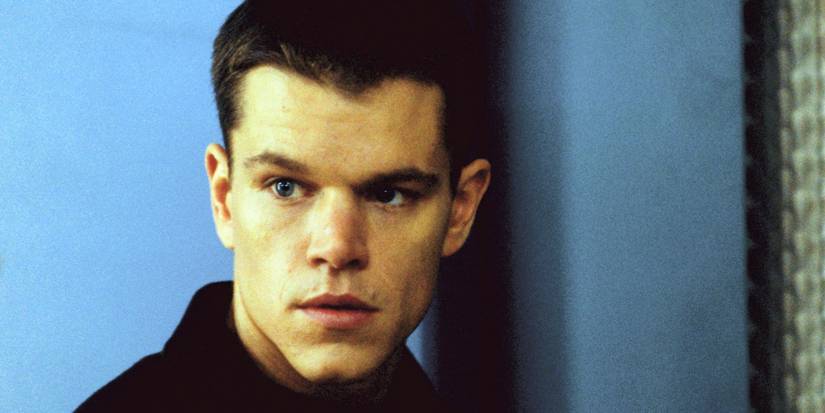
The Bourne Trilogy begins with a man pulled from the Mediterranean with bullets in his back, no memory of his name, and a bank-account number implanted beneath his skin, then follows Jason Bourne (Matt Damon) as he discovers that he was trained by the CIA’s Treadstone program to become an elite assassin and spends three films trying to understand, escape, and finally expose the system that made him. The Bourne Identity gives him the mystery. The Bourne Supremacy makes the past hurt. The Bourne Ultimatum turns the answer into a target.
What I love most is how Bourne’s body knows the truth before his mind does. In Zurich, he calmly tells Marie (Franka Potente) that he knows the license plates outside, can estimate how much everyone weighs, and already knows where the exits are — and he is terrified by that knowledge. Then the trilogy keeps turning instinct into character. Bourne can destroy people physically, but what he actually wants is to stop being the man those skills were created for. The Waterloo Station sequence in Ultimatum may be the purest expression of that intelligence, with Bourne trying to guide journalist Simon Ross through surveillance while CIA teams close in from every angle. Doug Liman directed the first film, while Paul Greengrass directed the second and third, and together they changed the rhythm of modern action cinema. Damon changed the hero. Bourne looked ordinary right up until somebody made the mistake of forcing him to move.

The Bourne Identity
- Release Date
- June 14, 2002
- Runtime
- 119 minutes
- Director
- Doug Liman
- Writers
- Tony Gilroy, William Blake Herron, Robert Ludlum
KioskNews shows a cleaned-up reading view extracted from the publisher’s page — the original always lives on their site, not ours.