The EU is its own worst enemy
Another day, another hardline statement from the European Union. This week, the European Parliament voted by a landslide for a significantly tougher China position, despite long-standing Beijing lobbying.
The report labels China a “decisive enabler” of Russia, calls for a “continuous” European naval presence and joint exercises in and around the Taiwan Strait, and describes Beijing’s industrial policy as an “existential threat to the EU”. “[T]his parliament can send a clear message: no more dumping, no more spying and fair competition,” said its lead author, the Belgian lawmaker Hilde Vautmans.
The message may be clear; its wisdom is not. European warships near Taiwan will not make Beijing back down. Reunification is the one issue on which Beijing will never compromise.
This came after France and Germany demanded a new trade weapon, set out in a joint paper and a letter to European Commission President Ursula von der Leyen. It threatens to cut off access to the EU market when third countries cause severe distortions. In effect a kill switch, it would grant the European Commission dramatic new powers to respond swiftly.
Brussels wanted to present a united, hardline front ahead of the crucial negotiations with Beijing this week. But France, Germany and the union itself were negotiating from a position of profound weakness, without the traditional backing of Washington, which has even turned hostile.
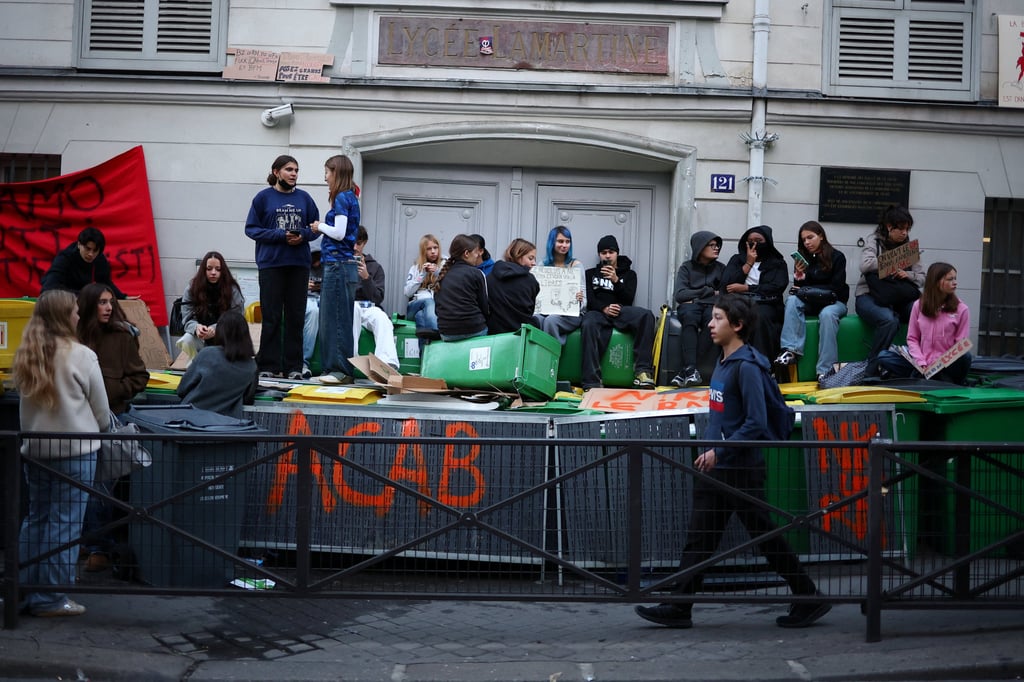
France faces a mounting fiscal crisis. Students have led violent mass protests against austerity cuts, while bond markets signal deep discontent. Borrowing costs have hit their highest in 24 years, now exceeding those of Italy and Greece.
Debt has surged to €3.6 trillion (US$4 trillion) – 119 per cent of gross domestic product – during Emmanuel Macron’s presidency, and a hung parliament hampers consolidation. Analysts warn of a self-fulfilling spiral in which rising debt-servicing costs widen the deficit and push borrowing costs higher still, raising fears of euro-zone contagion requiring European Central Bank intervention. The far right’s rising polls before next year’s presidential election add uncertainty.
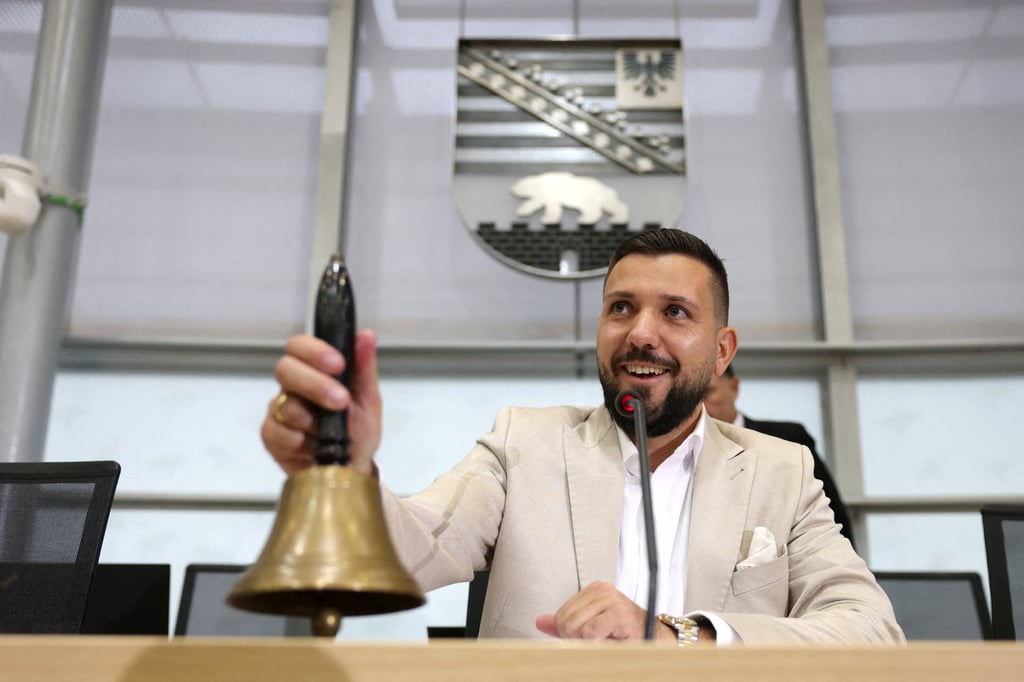
Germany’s growth has stalled since 2020, with latest projections of roughly 1 per cent this year, and that’s considered high. Rising energy costs, bureaucracy and crumbling infrastructure have hurt manufacturing and the chemical industry, while Chinese competition has undercut its traditional strengths in cars and high-end machinery. Frustration has fuelled record gains for the far-right Alternative for Germany, notably in eastern states such as Saxony-Anhalt.
Chancellor Friedrich Merz’s government languishes at historic lows in public approval, and executives from Siemens, Mercedes-Benz and Deutsche Bank have warned that right-wing extremism threatens investment and talent recruitment.
Europe led in technology in the 1970s but has stagnated since 1990, missing both the IT and artificial intelligence revolutions. Its labour productivity lags America’s by 20 per cent; only two of the world’s 100 most valuable hi-tech companies are EU-based. While America’s leading companies change each decade, Europe’s remain dominated by German carmakers. Tesla and SpaceX flourished through venture capital as Europe’s auto and space industries declined.
Rigid labour laws, a fragmented single market, excessive regulation and a lack of business leaders able to mentor and invest in entrepreneurs have stifled a genuine start-up ecosystem. Only about 30 per cent of the reforms prompted by Mario Draghi’s 2024 competitiveness report have been implemented, and these prove insufficient. Brussels must drastically simplify rules such as the General Data Protection Regulation and the AI Act, which have reduced venture capital investment. China, meanwhile, learned from the US and is now a close rival.
While America’s leading companies change each decade, Europe’s remain dominated by German carmakers
Ordinary Europeans pay the price. The costly decoupling from cheap Russian fossil fuels brought record energy bills and supply shortages, driving inflation in the euro area to a peak of 10.6 per cent in 2022. Black Sea blockades disrupted grain supplies and raised food costs. The bloc has committed vast sums, including a €90 billion loan programme for Ukraine, while managing millions of refugees. Ageing populations resisting reform, and elites dismissive of voter grievances, notably over immigration, fuel populism and democratic erosion.
Europe’s moral authority has also suffered. As then EU foreign policy chief Josep Borrell acknowledged, the bloc stands accused of double standards. It called Russia’s targeting of Ukrainian infrastructure “acts of pure terror” and imposed comprehensive sanctions, yet has struggled to condemn comparable violations in Gaza. The perceived hypocrisy has alienated much of the Global South and weakened the soft power on which EU influence rests.
Caught between America, Russia and China, European leaders should recognise Beijing may be the least of their worries. They can make China a trading partner or an existential enemy. China can live with either outcome. The EU cannot.
KioskNews shows a cleaned-up reading view extracted from the publisher’s page — the original always lives on their site, not ours.