10 Most Visually Stunning Network TV Shows of All Time, Ranked

Brad LaCour is a Senior List Writer for Collider. Based out of Los Angeles, California, Brad lives close enough to the stars but is too busy to find out where exactly they live. Brad is fairly certain he's seen Paul Stanley twice in a grocery store, but was too afraid to ask.
Sign in to your Collider account
In an era where viewers are drawn to the high production values of prestige television, the cinematic network shows often get overlooked. Although network television was designed to produce a high volume of episodes per season, there were still shows that raised the quality viewers expected to see on their screens week after week.
Even when networks were the only destination for TV viewers, there were still those creators who pushed themselves to innovate an industry and leave a lasting mark. From ingenious action shows to dark Gothic mysteries, these are the most visually stunning network TV shows to air. The following shows are ranked by the originality of their visuals and how distinctive they remain after their debut.
10 '24' (2001–2010)
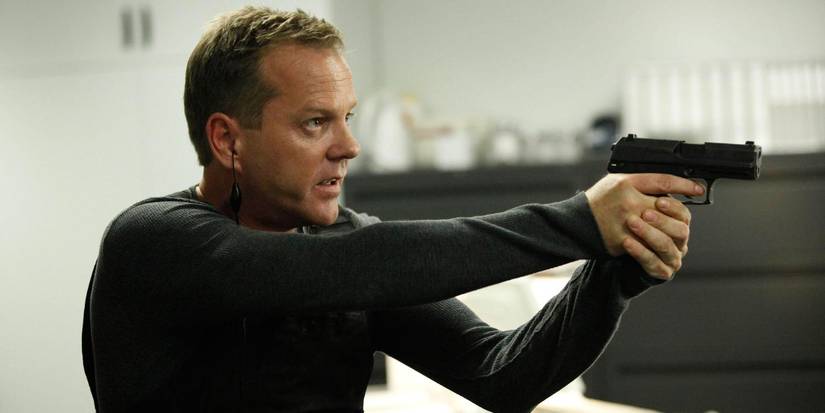
In the fast-paced action series 24, Kiefer Sutherland starred as Jack Bauer, a resourceful federal agent who could do more in one hour than other characters could manage in a season. Bauer's specialty was counterterrorism, and each season would put his skills to the test as he raced against the clock to prevent city-wide disasters and elaborately planned assassinations. 24’s ingenious premise, to make each season one day broken down into one hour per episode, promised constant forward momentum.
The concept of a show taking place over a day was already interesting enough, but the visual presentation that included split screens and a digital clock sold the idea that time was always the enemy (along with all the terrorists). 24’s intricate plotlines filled with double crosses and conspiracies gained it the reputation as one of the best spy shows of the 2000s, but it was the precise, Emmy-winning editing and up-close camerawork that made viewers feel like they were watching something that had never been attempted.
9 'Miami Vice' (1984–1990)
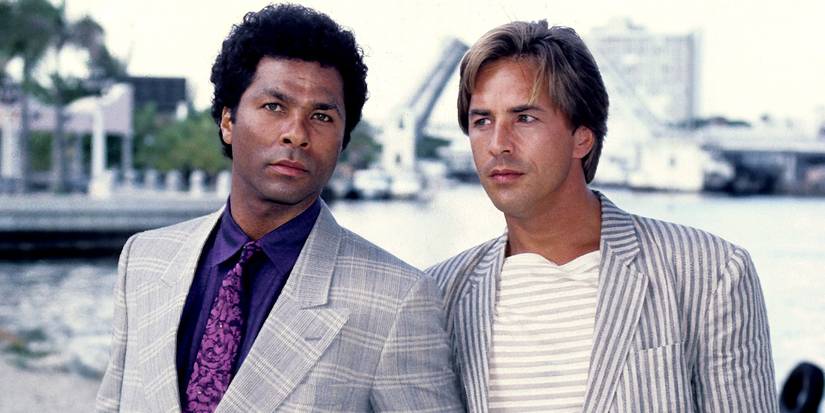
Miami Vice followed two police detectives, James "Sonny" Crockett (Don Johnson) and Ricardo "Rico" Tubbs (Philip Michael Thomas), as they worked on criminal cases in Miami. Each episode, Sonny and Rico use their street smarts and police training to infiltrate the criminal world of Miami, getting the most dangerous offenders off the street. The series broke new ground in terms of edgier adult content and an exciting visual style new to network television.
Crime shows and police procedurals typically approached the visual presentation in a way that prioritized simplicity, which would make producing multiple episodes a season quick and efficient. Miami Vice took the formula of a police procedural and used a cinematic approach that made Crockett and Rico's adventures look like something normally seen on the big screen. More artistically inspired camera work, along with music montages, gave Miami Vice a distinct visual flair that changed viewers' expectations regarding what TV was capable of.
8 'The X-Files' (1993–2018)

The Fox network found a surprising hit with the moody and mysterious drama The X-Files. The seminal science fiction mystery series followed FBI Agent Fox Mulder (David Duchovny) as he worked on a series of cases, nicknamed "The X-Files", that involved elements of the paranormal or supernatural. When Mulder is assigned the skeptical Agent Dana Scully (Gillian Anderson) as a partner, the two will have their philosophies tested while solving cases where no scientific explanation can apply.
The eerie monster-of-the-week cases that were more prevalent in the show's early years dictated a darker color palette than other network shows of the '90s. Budgetary limitations in the first few seasons meant less needed to be more, and the dark, shadowy aesthetic became The X-Files' signature look, established right from the start with its haunting opening credits. The Emmy-winning cinematography for The X-Files not only created an unforgettable atmosphere, but it also demonstrated there was a place for horror and science fiction on primetime television.
7 'CSI: Crime Scene Investigation' (2000–2015)

Police procedurals are one of the most reliable genres to pull ratings for a network, but CSI added a new visual flair to create a television dynasty. The Vegas-set series followed a group of Crime Scene Investigators as they used their scientific knowledge to crack impossible cases. Each week brought a new investigation, typically a murder, and a studious analysis of the crime scene would reveal an unexpected clue to reveal the culprit.
Lab work is not visually dynamic on its own, but CSI solved that problem by using CGI shots that broke down microscopic evidence details or the trajectory of a bullet through a body. The team's base of operations was sleek, futuristic, and highly stylized to the point it would be easy to forget they were in a Las Vegas police lab. These visual tricks and polished sheen would inspire multiple imitators to follow suit and kick off a franchise that dominated network television for roughly a decade.
Collider Exclusive · 8 Questions · 2 Minutes What Fantasy World Do You Belong To? Middle-earth · Grand Line · The Continent · Camp Half-Blood
Pick your magic, your crew, where you want to wake up and who you would rather be fighting, and we will tell you which world you actually belong in. Four are open to you: an ancient kingdom living through its last good age, an endless sea full of pirates, a continent that pays people to kill monsters, and a summer camp where the Greek gods are extremely real and mostly a nuisance.
💍Middle-earth(Rings of Power)
👒Grand Line(One Piece)
🐺The Continent(The Witcher)
🔱Camp Half-Blood(Percy Jackson)
01
What kind of power do you want? Every one of these worlds runs on a completely different sort of magic.
02
Who is travelling with you? Nobody gets through any of these stories entirely on their own.
03
Where do you want to wake up tomorrow? The best fantasy is usually just somewhere you would genuinely like to live.
04
How are you making a living out there? Even in fantasy somebody has to pay for the horse.
05
There is something in the woods. What do you do about it? All four of these worlds keep something unpleasant out there in the dark.
06
Who is the villain of your story? The enemy tells you far more about a world than the hero ever does.
07
What do you actually believe in out there? Every world hands its heroes one rule and asks them to hold onto it.
08
A thousand years from now, how are you remembered? Eight questions in, this is the one that decides your world.
The Map Is Drawn Your World Is…
Four worlds and four completely different ideas of what a good life looks like. This is where you belong, what it would ask of you, and what you would get back in return.
Middle-earth
You belong somewhere old enough that the mountains have names and somebody can still tell you who gave them. Middle-earth is for people who think the right thing is worth doing even when it will not be finished in their lifetime.
- This is the only world on the list where doing good is understood as a very long defeat, fought anyway, by people who will never see how it ends.
- You are drawn to grandeur, to white cities and deep forges and the sense that almost everything you touch is older than your entire family line.
- The Rings of Power is set in the last good age before it all goes wrong, which gives every quiet scene in it a slightly unbearable weight.
- You would take the hard road, and you would take it on foot.
The Grand Line
You want the sea, a crew, and absolutely nobody telling you where you are allowed to go. The Grand Line is the world for people whose main ambition in life is finding out what is over there.
- One Piece has run for decades on one very simple engine, which is a group of people who each want something impossible and have decided to go and get it together.
- You collect people. Your ideal crew is a set of misfits who were each written off somewhere else before you turned up and offered them a better idea.
- The world is enormous and deliberately ridiculous, and the emotional gut punches land harder because of that rather than in spite of it.
- You would set sail knowing the map runs out, which is more or less the entire point of it.
The Continent
You would rather be feared and useful than liked and useless. The Continent is a world where the monsters are the straightforward part of the job and the people are where it all gets complicated.
- Witchers get paid to do what nobody else will and resented for existing at all, which is a trade most people would refuse and you would probably accept.
- You have no real illusions about which side is the good one, largely because on the Continent that question tends to have a disappointing answer.
- The best of these stories are not about the fighting. They are about somebody with a rigid code being repeatedly cornered into caring about people.
- You would take the coin, finish the job properly, and be out of town before the story got told wrong.
Camp Half-Blood
You want the myths to be real and loose in the actual world, and you want to find out at about thirteen that you were never anywhere near as ordinary as everybody kept telling you.
- Percy Jackson takes the oldest stories we have and drops them into car parks and diners, which makes the gods considerably funnier and a great deal worse.
- You would be the kid every school gave up on, who turns out to have been built for something nobody thought to test for.
- The series is genuinely about friendship rather than destiny, and it says so out loud every time a prophecy tries to get in the way.
- Camp Half-Blood is the real fantasy here: a place where the thing that made you difficult everywhere else is the thing that makes you belong.
6 'Little House on the Prairie' (1974–1983)

Going back to basics led to a visually charming portrayal of the past in the long-running NBC series Little House on the Prairie. Based on the Little House on the Prairie book series by Laura Ingalls Wilder, the period drama followed the lives of the Ingalls family as they established a homestead in the late 1800s. Episodes featured slice-of-life scenarios covering everything from financial hardship to social challenges with the nearby townspeople.
The attention paid to period-specific costumes, along with sweeping shots of the vast, untouched land, allowed Little House on the Prairie to serve as counter-programming to the urban set shows of the '70s. The use of natural light, from the sunny exteriors during the day to the candlelit interiors at night, required shots to be more thoughtfully planned, leading to a more movie-like final product. Little House on the Prairie set a high bar for excellence during its run, and received six Emmy nominations for Best Cinematography, winning two.
5 'Roots' (1977)
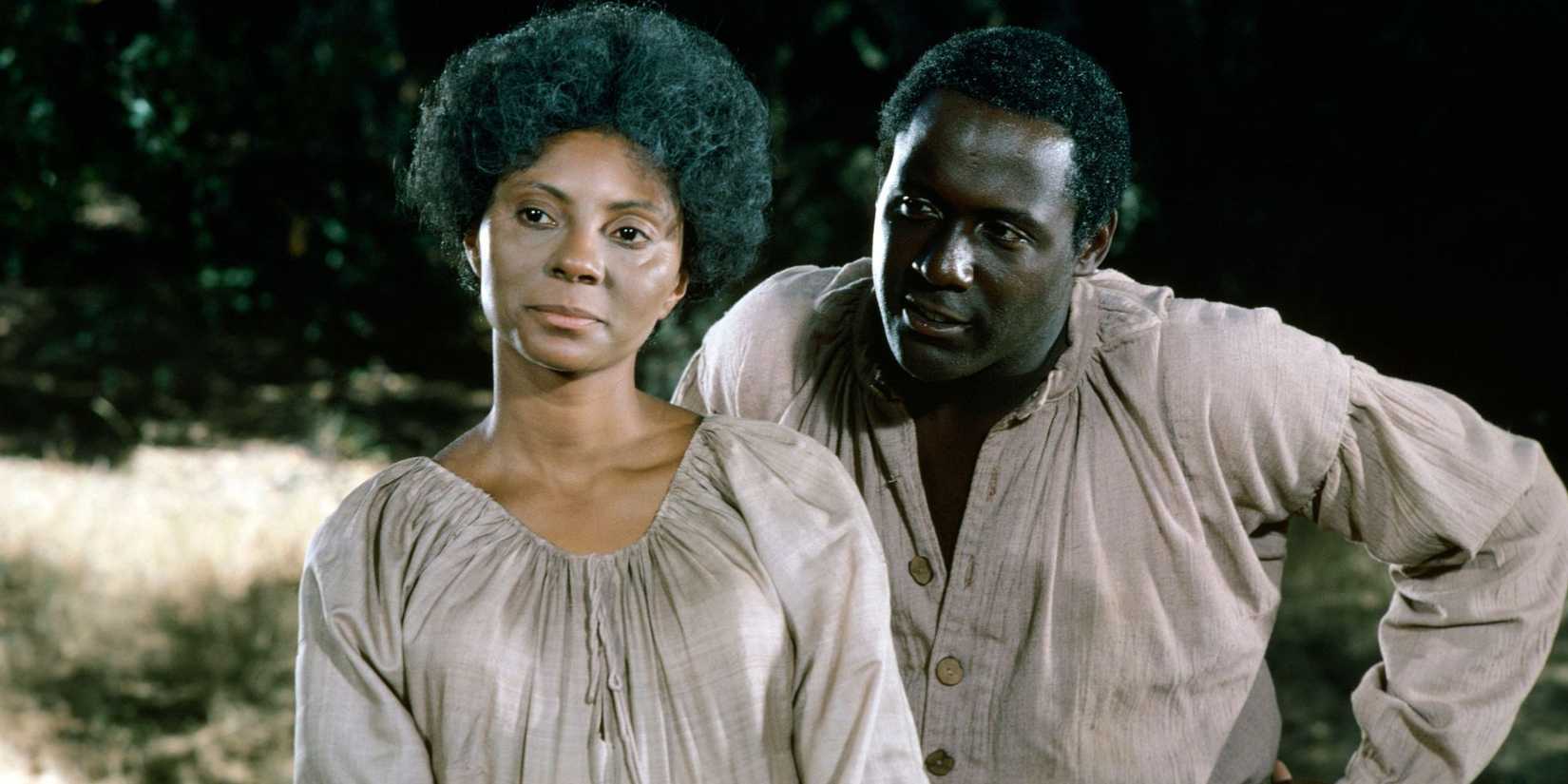
Roots was more than a miniseries when it premiered in 1977; it was a television event telling a story of epic scope. Based on the novel Roots: The Saga of an American Family by Alex Haley, the eight-episode series explores the horrors of slavery through the bloodline of the Haley family. Starting with the capture and enslavement of Kunta Kinte (LeVar Burton and John Amos) and continuing through to the Civil War, racism and the resilience to thrive despite it are chronicled in striking detail.
Authentic costumes and sets recreated the many time periods of Roots with stunning accuracy, further enhancing the realism of each moment on screen. Even by the standards of a miniseries that could focus more attention on fewer installments, Roots possesses a cinematic quality that still holds up today. Roots left a lasting legacy as a high point for modern television, receiving an astounding 37 Emmy nominations and winning nine.
4 'Lost' (2004–2010)
A plane crash leaves a group of survivors on a strange and mysterious island in the ABC hit Lost. While the stranded people are initially only concerned about finding help, they soon begin to sense that the jungle is hiding strange and impossible secrets waiting to be unearthed. As the survivors learn more about the island, the viewers learn more about each passenger during extended flashbacks of their lives before the crash.
Featuring the production values of a multi-million-dollar blockbuster, Lost lured viewers to the small-screen spectacle with a pilot episode where pieces of a giant plane threatened the lives of the recently crashed cast. Vitally important were the flashbacks to different characters' lives, allowing changes in scenery that sent the audience around the globe in full cinematic glory, letting those at home know there was more to see than just the island.
3 'Twin Peaks' (1990–1991)

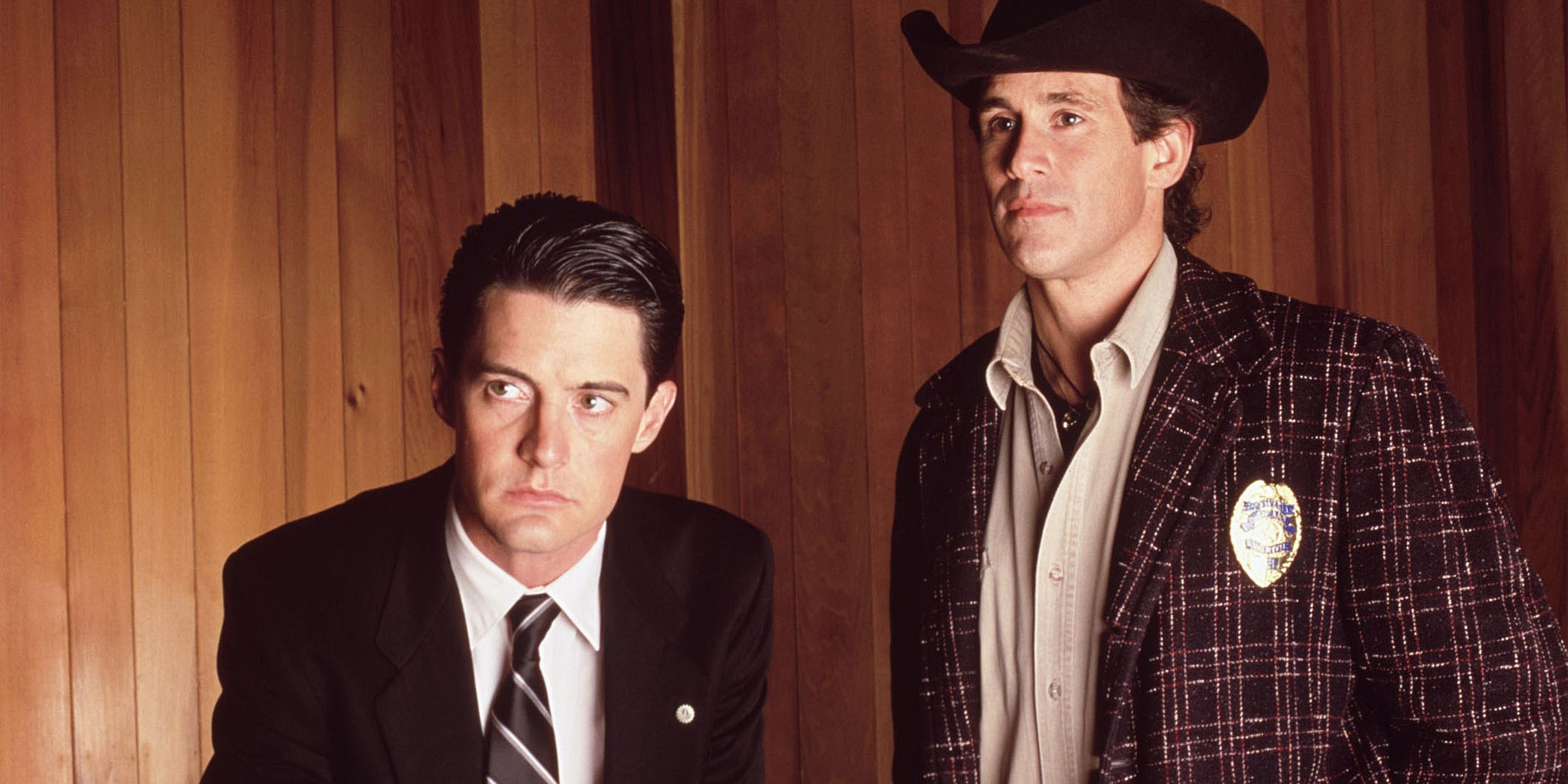
No one at home was prepared for what they were about to watch on the night Twin Peaks premiered. The ABC mystery tells the story of a teen beauty queen, Laura Palmer (Sheryl Lee), who is found murdered and disposed of on a beach in the logging town of Twin Peaks. Soon, FBI Agent Dale Cooper (Kyle MacLachlan) arrives to solve the case, but to do so, he'll first dig into the seemingly quaint community to find out who would be capable of such a crime.
Twin Peaks pushed every boundary and created new boundaries to push during its two-season run on ABC. Twin Peaks co-creator David Lynch revisited the theme of a sinister darkness existing under the surface of the ordinary in much of his work, and he was able to fully embrace that concept with the small town of Twin Peaks. Using surreal, German Expressionist-inspired imagery during moments such as Cooper's bizarre dreams made the show exciting, if not baffling, to viewers witnessing art house sensibilities snuck into a murder mystery.
2 'Hannibal' (2013–2015)

Based on the characters from the novels of Thomas Harris, Hannibal explores the relationship between the gifted FBI profiler Will Graham (Hugh Dancy) and the calculating psychiatrist Dr. Hannibal Lecter (Mads Mikkelsen). After Graham experiences acute mental stress from working in the field, he's strongly urged to seek counseling with the frequent FBI consultant Lecter. This leads to a mental chess match of manipulation between Graham, who doubts his instincts, and Lecter, the secret serial killer, curious about how far he can push his new client.
Each set, from Lecter's office to his home, carries a touch of gothic sensibility that reflects the darkness hiding under his polished surface. Death becomes a work of art in Hannibal, sometimes quite literally, when the killer of the week has their victim on display in a way no network television had ever dreamed of attempting. Hannibal ended its third and final season roughly a decade ago, but for those who watched, the visuals will stay with them forever.
1 'Pushing Daisies' (2007–2009)

Easily the most visually stunning show to ever air on network television was the romantic comedy mystery series Pushing Daisies. The series tells the unusual story of pie-maker Ned (Lee Pace), who has the gift of momentarily reviving dead tissue back to life. While moonlighting as an aid to a private detective (Chi McBride), Ned is reunited with the corpse of his childhood love, Chuck (Anna Friel), who gets a second shot at life thanks to his touch.
Pushing Daisies was a quirky mix of contrasting ideas, a technicolor world full of bold styles that gave a whimsical veneer to a dark premise. Ned and Chuck lived in a fairytale where magic was real, shops were shaped like pies, and people who died didn’t always stay dead. It was a brilliant world of fantasy and darkness, and even though Pushing Daisies only received two criminally short seasons before cancellation, the episodes produced will remain as timeless as the picture-perfect land in which they took place.
KioskNews shows a cleaned-up reading view extracted from the publisher’s page — the original always lives on their site, not ours.