Former MI5 chief warns Burnham he can’t pit international aid against defence spending
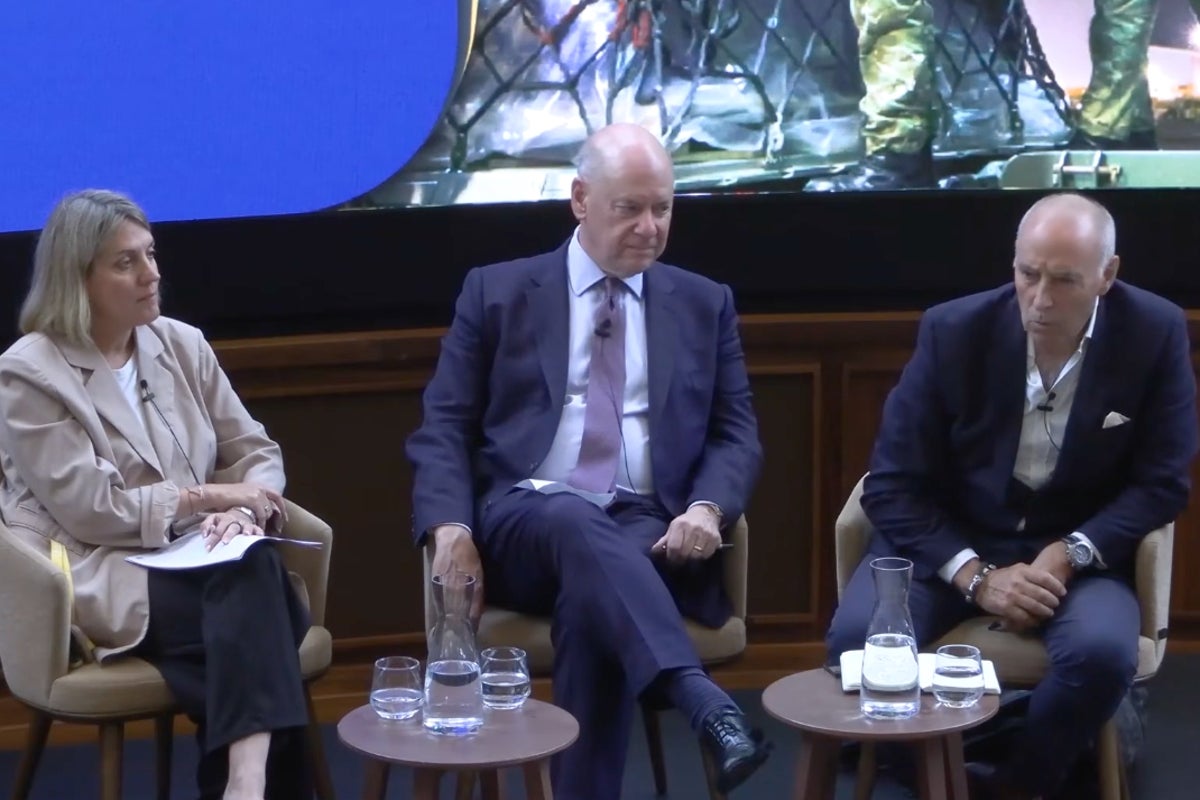
A former head of MI5 has warned Andy Burnham that the prime minister cannot pit international aid against defence spending – by using cuts in the former to pay for the latter – and should instead take a "holistic" approach.
Lord Jonathan Evans, who was director general of the intelligence agency between 2007 and 2013, was speaking at an event hosted by the Royal United Services Institute (RUSI) in London about the decision last year to reduce aid spending from 0.5 per cent of Gross National Income (GNI) to 0.3 per cent over the next few years, in order to fund increased defence spending.
Asked for his advice for the Mr Burnham on the national security implications from the aid cuts, Lord Evans said: “My advice to the prime minister would be to say you need to think about this as a holistic issue. You can't say 'we're not going to do aid, but we are going to do defence', because defence doesn't stand alone. It stands as part of a stable environment within which we can continue to build allies.”
When asked asked how to get “maximum impact” from a shrinking aid budget, given that countries across Africa – and others impacted by conflict – are going to be hit hard, Lord Evans said: “The best way that we can invest in the finite resources we can put into this is pre-emptively, rather than in response. So we shouldn't be focusing just on clearing up problems after they have emerged. We should be intervening early to prevent conflict."
"Conflict prevention – and that is an area where the UK has traditionally had a fund [the Integrated Security Fund] which worked very effectively and which worked locally, and that has been cut back, and in my view that is a false economy because we will have bigger problems to sort out later," he added.
Funding for conflict-prevention work through the aid-powered part of the Integrated Security Fund (ISF) is down from £343 million in 2024-25 to £194 million in 2026-27. That is despite more conflicts currently raging around the world than at any time since the Second World War.
Lord Evans said that this ensures we are not getting the maximum impact for UK aid spending. “If you map where are the conflicts and where is the most poverty and lack of development, they overlap with each other," he said. "So, if we can reduce conflict, look at places like Sudan, Syria, etc. then we can actually get better effect for our resources than responding to problems as they emerge."
“Put it into prevention rather than cure – that is what we have got to do,” Lord Evans added.
This article has been produced as part of The Independent’s Rethinking Global Aid project
KioskNews shows a cleaned-up reading view extracted from the publisher’s page — the original always lives on their site, not ours.