The 10 Greatest Stephen King Books of the '80s, Ranked

Luc Haasbroek is a writer and videographer from Durban, South Africa. He has been writing professionally about pop culture for eight years. Luc's areas of interest are broad: he's just as passionate about psychology and history as he is about movies and TV. He's especially drawn to the places where these topics overlap.
Luc is also an avid producer of video essays and looks forward to expanding his writing career. When not writing, he can be found hiking, playing Dungeons & Dragons, hanging out with his cats, and doing deep dives on whatever topic happens to have captured his interest that week.
Sign in to your Collider account
Stephen King is truly prolific, having cranked out bangers in each of the last 6 decades. That said, his 1970s and '80s output is his truly classic stuff, the books that readers will return to for a long time to come. In particular, the 1980s saw the author getting much more ambitious and varied with his craft.
The result was a strong collection of novels and short stories, containing killer dogs, haunted hotels, ancient evils, telekinetic children, obsessive fans, alien spaceships, and apocalyptic visions. Even the weakest of these King books are pretty solid, while the best rank among the finest horror stories of all time.
10 'Thinner' (1984)

"It's hard for a man to give up all his pleasures, even when they don't pleasure him no more." Originally published under King's Richard Bachman pseudonym, Thinner tells the story of Billy Halleck, an overweight lawyer who accidentally kills an elderly Romani woman while driving. His connections allow him to escape serious consequences, but the victim's father delivers a very different kind of punishment: he curses Billy, causing him to begin wasting away. Our protagonist initially welcomes his inexplicable weight loss. Then it refuses to stop.
No matter how much he eats, the pounds keep disappearing, eventually putting Billy's life at risk. It's a wonderfully nasty King premise, taking the desire for effortless weight loss and pushing it to grotesque extremes (it might have renewed relevance in our current Ozempic age). The author executes it with punchy, economical prose, narrative momentum, and deep philosophical bleakness.
9 'The Running Man' (1982)

"Minus 100 and counting." This one was recently adapted for the screen by Edgar Wright, though the original book is grimmer and even more violent. Another Bachman book, The Running Man centers on Ben Richards, a man living in a dystopian future who enters the Games Network in the hope of earning money for his desperately ill daughter. He is selected for The Running Man, a television program in which contestants are hunted across the country while viewers are financially rewarded for reporting their whereabouts.
While that sounds like the setup for a pulpy action movie, the novel boasts darker themes and deeper characterization than most in its subgenre. Richards isn't an invincible hero but an angry, desperate man whose rage is his main driving force. The game gives King an excuse to maintain an almost absurdly fast pace, but underneath the chase is a vicious satire of television, inequality, corporate power, and an audience increasingly desensitized to suffering, complicit in the crimes that keep them subdued.
8 'The Dark Half' (1989)

"Most of us keep that inner-being locked up, hidden away." Few writers were better positioned to write The Dark Half than Stephen King. After years of secretly publishing novels as Richard Bachman, he turned the idea of a literary alter ego into a gruesome supernatural thriller, a writerly riff on Jekyll & Hyde. In the book, Thad Beaumont is a successful author whose more violent novels are published under the name George Stark. When the secret becomes public, Thad symbolically kills off Stark with a mock funeral. Unfortunately, his fictional doppelganger doesn't appear particularly interested in staying dead.
Here, King has enormous fun with the idea of a writer possessing two creative identities. Thad is relatively mild-mannered, while Stark is nasty and brutal... and soon begins murdering people. Yet The Dark Half ultimately goes beyond a simple evil-double story. King uses it to examine the strange relationship writers can develop with the voices they create, particularly when the work audiences embrace isn't necessarily the work the author considers most representative of themselves.
7 'The Tommyknockers' (1987)

“Late last night and the night before, Tommyknockers, Tommyknockers, knocking at the door.” While King himself has spoken critically about The Tommyknockers, it's still entertaining in its own way, if a little drawn out and underwhelming. In it, Bobbi Anderson is walking through the woods near her home in Haven, Maine, when she stumbles across a mysterious piece of metal protruding from the ground. She begins excavating it and gradually discovers something enormous buried beneath the earth. Meanwhile, the residents of Haven start changing.
As the buried object exerts greater influence, the cast of ensemble characters becomes extraordinarily creative while simultaneously losing parts of themselves. The novel sprawls wildly from there, mixing alien sci-fi, body horror, addiction, small-town paranoia, and some spectacularly bizarre inventions. The Tommyknockers is undeniably messy, but that excess is also part of its strange appeal. Here, we see King operating without much apparent interest in restraint, following warped ideas wherever they lead.
Collider Exclusive · 8 Questions · 2 Minutes What Is Your Biggest Horror Nightmare? Elm Street · Chucky · Scream · The Conjuring
Four horror franchises. Four completely different ways of scaring you. One waits until you fall asleep. One makes sure nobody believes you. One is already in your group of friends. And one is in the house with your family. Answer eight quick questions about how you actually watch horror, and find out which nightmare was built for you.
😴Elm Street(Freddy Krueger)
🧸Chucky(Child's Play)
📞Scream(Ghostface)
🕯️The Conjuring(The Warren Files)
01
Which horror scene makes you cover your eyes? Four classic images. One of them is worse than the others for you.
02
You are home alone and you hear a noise. First thought? Everybody has one. It arrives before you have decided anything.
03
Which horror movie rule would you break first? Everybody thinks they would survive. Almost nobody actually does.
04
Something genuinely frightening happens. What do you do? Not in a film. In your actual living room, tonight.
05
How do you actually watch a horror film? Be honest about this one. Nobody is checking.
06
Somebody offers you serious money. Which do you still refuse? The amount does not matter. There is one on this list you are not doing.
07
Which feeling stays with you a week after the film? Good horror does not stop when the credits do.
08
Something wakes you at 3am. What is the worst possibility? Eight questions in, this is the one that decides your nightmare.
The Lights Just Went Out Your Nightmare Is…
Four franchises, four completely different ways of getting underneath your skin. This is the one built out of your particular fear, why it works so well on you, and what it would leave behind.
Elm Street
Your nightmare does not wait outside the door. It waits for you to close your eyes, which you are going to have to do eventually, because nobody has ever won that particular argument.
- Freddy is horror's cruellest idea: a threat that lives in the one place you cannot guard, cannot lock, and cannot avoid forever.
- You are the one who is fine during the film and wide awake at two in the morning. Your own head is where this does its damage.
- These films understood exhaustion as a horror engine. The kids on Elm Street do not lose because they are weak. They lose because they are tired.
- You can lock every door in the house. You still have to sleep.
Chucky
Your nightmare is not really the doll. It is the face of the person you tell, and the way they decide, very kindly, that you have imagined all of it.
- Chucky works precisely because he is absurd. That is the trap: the more accurately you describe him, the less anybody is going to believe you.
- You are the one shouting at the screen because the characters are not listening. You know that feeling from real life too.
- The franchise is at its best when the adults in the room are the real obstacle, and you have met those adults.
- By the time somebody finally believes you, you will have handled most of it on your own.
Scream
Your nightmare has your number, knows your name, and has almost certainly been inside your house before. The worst part is that you already know them.
- Scream is the only one of these where the killer takes the mask off and turns out to be somebody who was at the party.
- You are the person who calls the twist out loud before it lands. You watch people the same way you watch films.
- The franchise made the rules of horror part of the plot, which means the survivors are the ones paying attention. You would be paying attention.
- Everybody is a suspect, including the person who just offered to walk you home.
The Conjuring
Your nightmare is not really about you. It is about the people asleep down the hall, and the feeling that whatever is here is not interested in leaving.
- The Conjuring films are domestic horror. The house, the family, the perfectly ordinary room that quietly stops feeling ordinary.
- Your instinct is to get everybody into one room. Your fear is protective rather than personal, which is rarer than it sounds.
- This is the one franchise where belief is the weapon. The people who come through it are the ones who are not alone and refuse to be.
- Whatever is here did not come for you. It came for the household, and you are the one standing in the hallway.
6 'Firestarter' (1980)

"Daddy, I'm tired." Here, King returns to some ideas he had explored with Carrie, but gives them a very different treatment. The main character is Charlie McGee, a girl with devastating pyrokinetic powers as a result of a government experiment. A secret organization known as the Shop wants to capture and study her, forcing Charlie and her father Andy to remain constantly on the run. The central father-daughter relationship gives Firestarter considerably more emotional weight than the average sci-fi thriller.
Andy knows that Charlie's abilities could become catastrophically destructive, but he also understands that the people pursuing them see his daughter primarily as a weapon. In other words, on top of being a fast-paced chase story, it's also the tale of a parent desperately trying to protect his child from institutions far more powerful than either of them. This presentation of the government as the villains reflected the distrustful, anti-establishment mood of the era, echoing countless paranoid thrillers of the '70s.
5 'The Dark Tower: The Gunslinger' (1982)

"The man in black fled across the desert, and the gunslinger followed." The film adaptation was awful, but the Dark Tower books are still worth reading if you're a fan of dark fantasy. The opening chapter introduces us to Roland Deschain, the last gunslinger, as he pursues the mysterious Man in Black across a barren, magic-haunted landscape that resembles the American West. Here, horror and fantasy meet Western tropes. It's like Middle-earth fused with The Good, the Bad, and the Ugly.
The Gunslinger is occasionally a little rough around the edges, but it compensates with a fittingly surreal atmosphere and a ton of memorable imagery. More importantly, its mythology, gradually revealed as the series unfolds, establishes the foundation for what would eventually become the central connecting point of King's fictional universe. For the author's hardcore fans, it's fun to spot connections between The Dark Tower and his other books.
4 'Cujo' (1981)
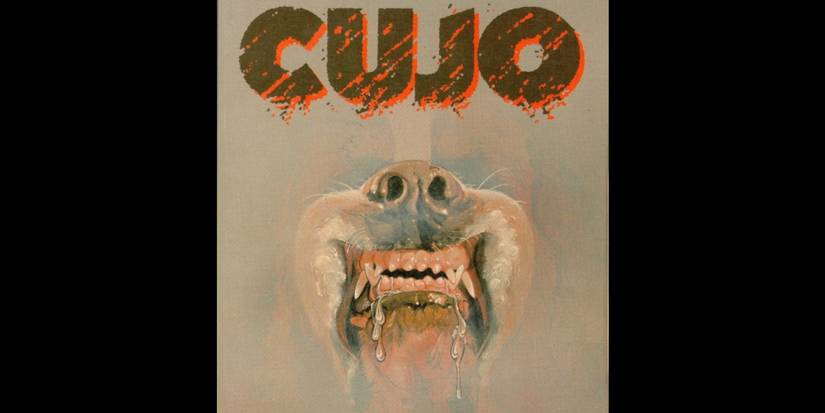
"Monsters are real. Ghosts are too. They live inside of us, and sometimes, they win." A simple concept, masterfully executed: the antagonist of Cujo isn't a walking corpse or mind-invading alien, but simply a sick dog. The story begins with an almost painfully ordinary piece of bad luck when the titular friendly Saint Bernard is bitten by a rabid bat. As the disease gradually transforms Cujo into a dangerous animal, Donna Trenton and her young son Tad become trapped inside their broken-down Ford Pinto while the increasingly violent dog waits outside.
In this pressure cooker, heat, dehydration, exhaustion, and sheer bad timing become every bit as threatening as the animal outside. That would have been enough for a tense survival story, but King elevates it through rich character building. The protagonists have believable backstories and layered personalities: they feel real, so we actually care about them. We also care about the dog, even as it grows increasingly dangerous and it becomes clear that tragedy will strike, one way or another.
3 'Misery' (1987)
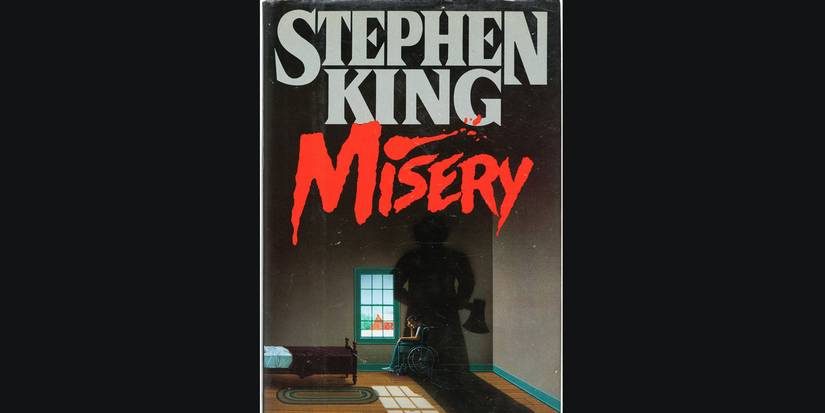
"I am your number-one fan." One of the most white-knuckle tense stories King has ever written. Successful novelist Paul Sheldon crashes his car during a snowstorm and is rescued by Annie Wilkes, a former nurse who also happens to describe herself as his "number-one fan." Initially, Paul seems extraordinarily lucky to have survived. Then Annie discovers that his latest novel kills off her beloved character, Misery Chastain, and Paul realizes that his rescuer has no intention of letting him leave until he writes the story she wants.
The restricted setting makes Misery incredibly claustrophobic. Paul spends much of the book trapped inside Annie's isolated house and frequently inside a single room, leaving King without the huge cast or supernatural mythology found in many of his other classics. He doesn't need them. Annie is terrifying precisely because her behavior can shift from apparently caring to brutally violent with almost no warning. Truly a marvelously hateable and profoundly disturbing creation.
2 'Pet Sematary' (1983)

"Sometimes dead is better." Here, King takes on one of the eternal human wishes: What if death didn't have to be permanent? Dr. Louis Creed moves with his wife Rachel and their children to a house in rural Maine, where their neighbor Jud Crandall introduces them to a local pet cemetery. Beyond it lies an older burial ground possessing the apparently miraculous ability to return the dead to life. Louis understands increasingly well that the burial ground returns things changed, yet grief has a way of making knowledge irrelevant.
Reanimation and the unquiet dead are well-worn tropes both in horror more generally and in King's body of work, yet Pet Sematary is no mere zombie story. Its real subject is people's inability to accept loss, particularly the death of a child. King spends enough time establishing the Creed family as ordinary and loving that the tragedy awaiting them becomes almost unbearable. Scary and profound.
1 'It' (1986)

"We lie best when we lie to ourselves." It ranks among King's most ambitious works ever. This enormous book (more than 1100 pages) moves between two periods in the lives of seven friends from Derry, Maine. As children, the members of the Losers' Club confront an ancient shape-shifting entity that most famously appears as Pennywise the Dancing Clown. Decades later, they return to Derry after realizing that the creature has awakened again, and that the battle they thought they finished as children was never truly over.
Along the way, King constructs one of his most elaborate fictional communities, populated by literally dozens of well-developed characters. Derry has its own history, recurring patterns of violence, local tragedies, bullies, families, landmarks, and buried secrets. At the eye of the storm are the Losers themselves. Through them, King captures the intensity of childhood friendship, when a summer can feel endless, and a small group of friends can become someone's entire world.
KioskNews shows a cleaned-up reading view extracted from the publisher’s page — the original always lives on their site, not ours.