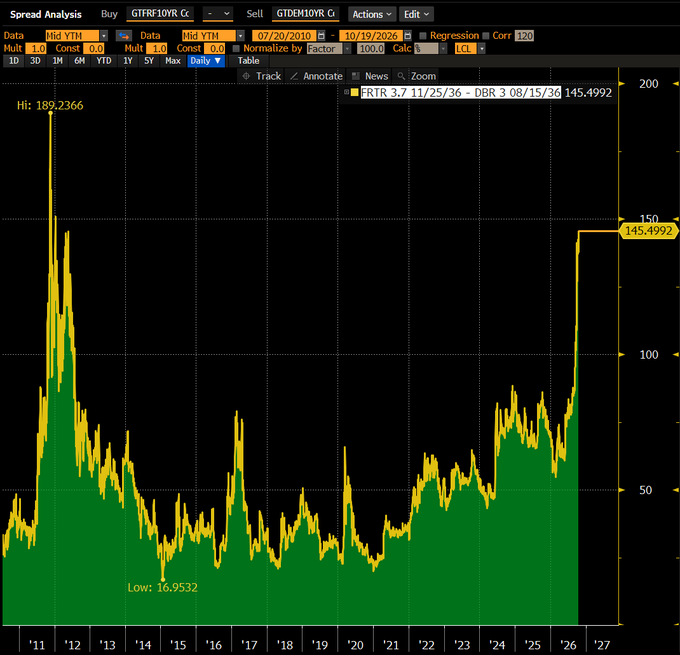
French-German bond spread widens to new post-2012 highs

Ramberg/E+ via Getty Images
The yield spread between French and German 10-year government bonds on Monday spiked to new post-2012 highs as investors dumped French sovereign debt in the face of escalating fiscal strain and political turmoil.
The risk premium on French 10-year bonds over German Bunds reached roughly 145.5 basis points on Monday, reflecting the steepest jump in borrowing costs among G7 nations and prompting a flight to German safe-haven paper.
The market fallout spilled into equities, where France's benchmark CAC 40 index (CAC:IND) slid 1.7% to lead losses across Europe against a broader backdrop of global bond volatility, high energy costs and mounting worldwide debt loads.
At the center of the sell-off is France’s deteriorating balance sheet, marked by a massive deficit each year that's now about 120% of GDP. President Emmanuel Macron’s minority administration has struggled to push an austerity budget through a fractured parliament, where opposition figures have advanced sweeping fiscal proposals, including France Unbowed leader Jean-Luc Mélenchon's call to cancel a fifth of public debt and National Rally's Marine Le Pen seeking to lower the retirement age to 60.
The legislative gridlock is being compounded by social unrest, with widespread street protests and riots over proposed spending cuts and the cost of living entrenching market jitters. Because the French government already absorbs more than half of private economic resources to fund extensive pension and entitlement systems, policymakers are left with few viable options to stem the loss of investor confidence.
Dear Readers: We recognize that politics often intersect with the financial news of the day, so we invite you to click here to join the separate political discussion.
Lisa Abramowicz
Recommended For You


Create Your Free Account to Keep Reading
Get the confidence to navigate an uncertain market with free breaking news and stock alerts.
KioskNews shows a cleaned-up reading view extracted from the publisher’s page — the original always lives on their site, not ours.