Punjab has money for DA arrears, employees say. Do the numbers back them up?
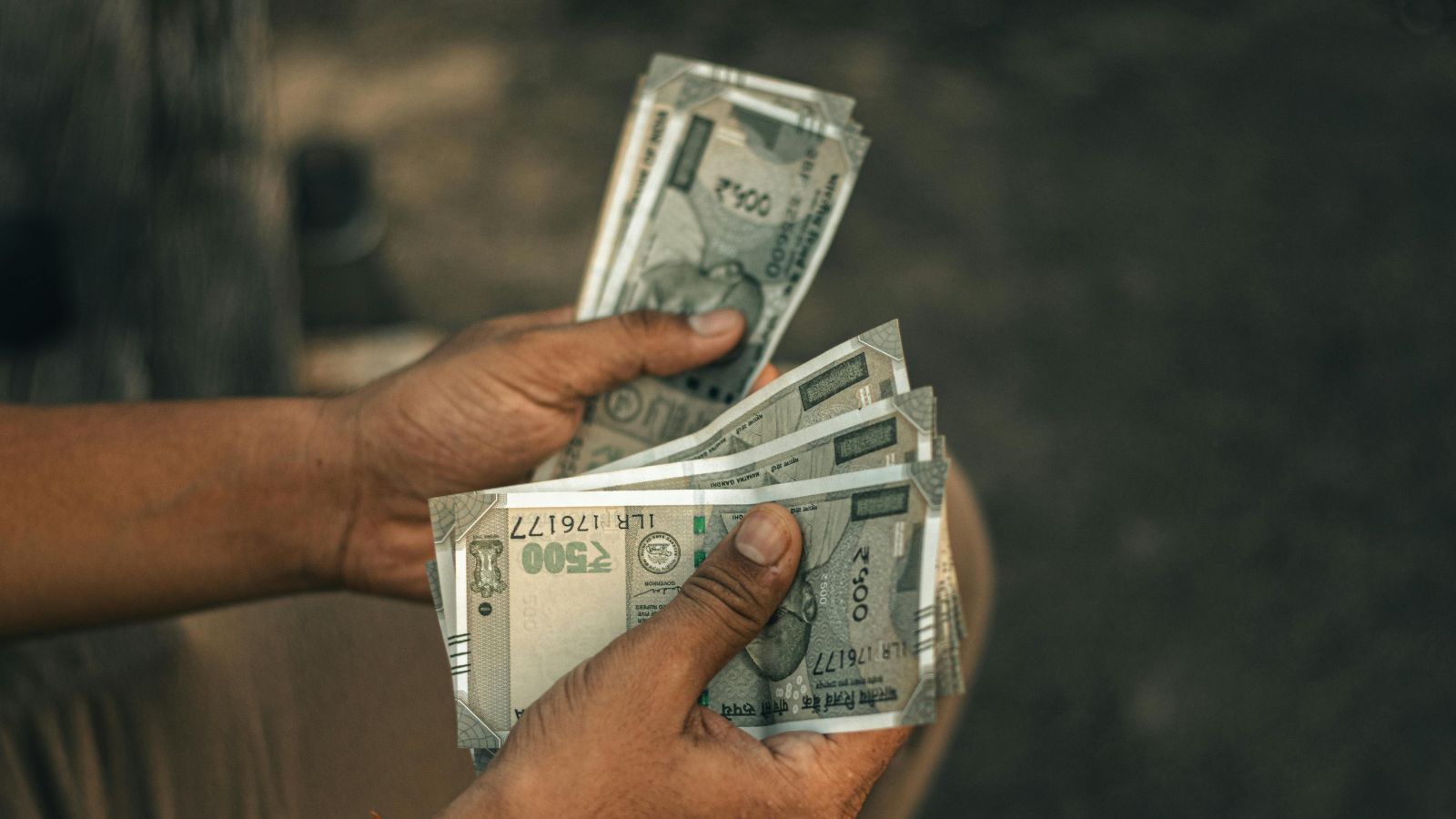
Revenue receipts during April-July 2026 reached 29.08 per cent of the annual target, compared with 27.44 per cent during the corresponding period a year earlier. (File photo/Canva)
Citing a sharp rise in Punjab’s tax revenues over the past four years, employees’ unions say the state can afford to clear the roughly Rs 14,200 crore in pending Dearness Allowance (DA) and related arrears sooner than later.
Punjab’s own revenue numbers form the centrepiece of their argument. Tax revenue has risen from about Rs 37,300 crore in 2021-22 to Rs 57,900 crore in 2024-25, according to figures cited by the unions.
Citing the Comptroller and Auditor General report, they point to a similar increase across major revenue heads. Excise collections, which averaged about Rs 4,406 crore in 2016-17 under the SAD-BJP government and Rs 6,158 crore under the Congress government in 2021-22, are expected to touch Rs 12,800 crore under the current government this financial year. GST inflows have nearly doubled on an annual average basis, from Rs 15,541 crore in 2021-22 to about Rs 32,000 crore this year.
Stamp duty collections of about Rs 19,500 crore in the four years till January this year have already exceeded the collections under either of the previous two five-year governments over their full terms, the unions claim.
Early figures for the current financial year, they say, point in the same direction. Revenue receipts during April-July 2026 reached 29.08 per cent of the annual target, compared with 27.44 per cent during the corresponding period a year earlier. Non-tax revenue nearly doubled over the same period, while both the revenue and fiscal deficits were accumulating at a slower pace than last year.
Employees and some economists say the trend indicates that the state has greater fiscal room than the government is willing to acknowledge.
That is only part of the unions’ argument. Employee leaders say the government’s case for staggered payments rests on what they allege is a misleading assessment of the state’s finances.
Story continues below this ad
“The calculations were manipulated,” alleged Vikram Dev Singh, president of the Democratic Teachers Front and a state leader of the Joint Coordination Committee of the Democratic Employees Federation.
Vikram Dev pointed to a sealed report submitted by the government to the Punjab and Haryana High Court when the DA dispute first arose, which, he said, claimed that Punjab was spending a higher proportion of its income on salaries and pensions than other states.
He alleged that the calculation was skewed. According to him, the share of state income going towards salaries has actually fallen from 104 per cent to 70 per cent over the past five to six years if central grants, Punjab’s share of GST and loans are counted as income.
Vikram Dev also argued that DA should not be clubbed with the broader salary bill. Punjab’s per capita income, he noted, is over Rs 2 lakh, a factor that the state’s Pay Commission is required to consider while reviewing pay scales every 10 years. DA, however, is an inflation-linked allowance that is decided separately from Pay Commission awards.
Story continues below this ad
“You cannot connect DA with salaries. These are two different things,” Vikram Dev said.
Germanjeet Singh, state president of the Democratic Employees Federation (DEF / DMF / Democratic Mulazam Federation), also disputed the government’s estimate of the DA arrears.
He said the Rs 14,191 crore figure cited by the government was inflated. According to the union’s calculations, Sixth Pay Commission dues for 66 months from January 2016 to June 2021 amount to about Rs 12,600 crore, comprising roughly Rs 7,200 crore in pensioners’ arrears and Rs 5,400 crore owed to employees.
He pointed out that the government’s own letters in April had proposed clearing the dues over 36 instalments, amounting to about Rs 4,200 crore a year. This, he said, was within the state’s means given the improvement in revenue collections.
Story continues below this ad
Germanjeet Singh also disputed the government’s claim that 51 per cent of its earnings go towards employee costs, saying that the bill included MLA salaries and the pensions of bureaucrats, making the liability appear larger and the room for paying DA smaller.
Finance Minister Harpal Cheema does not dispute that collections have improved but said the government did not create the liability. “We inherited it… and we have already paid over Rs 6,000 crore to employees,” Cheema said.
In early September, the government paid 60 per cent DA to 85,000 employees recruited after July 2022, saying they had been receiving lower salaries.
The government maintains that higher revenue does not automatically translate into spare cash. The state still has to meet salaries, pensions, interest payments and debt-servicing obligations, while its revenue and fiscal deficits, although declining, remain substantial.
Story continues below this ad
It has challenged in the Supreme Court a High Court direction to pay the full remaining amount within about two weeks, arguing that such a payment would be impractical under treasury rules and could disrupt other essential expenditure.
Economists too don’t support the unions’ reading of the revenue numbers.
Economist R S Ghuman, a former member of the Sixth Punjab Finance Commission, said the improvement in collections should not be mistaken for financial health. Punjab remains deficit-ridden and heavily indebted, while low investment continues to constrain its economy, he said.
The increase in revenue receipts during the first four months of the financial year does not materially alter that picture, Ghuman said. “The financial position of the Punjab government is problematic,” he said.
© The Indian Express Pvt Ltd

Manraj Grewal Sharma is a senior journalist and National Editor (North) based out of Chandigarh. From Punjab and Haryana to Himachal Pradesh and the Union Territory of Chandigarh, she reports at the intersection of governance, law, politics and society. She also reports on the diaspora, especially in Canada and the US. With a career spanning journalism across several countries, academia and international development, Manraj brings a rare depth of perspective to regional reporting. She is widely regarded as a leading chronicler of Punjab’s contemporary history and socio-political evolution, particularly its long shadow of militancy, federal tensions and identity politics. Her book, Dreams after Darkness, remains a definitive account of the militancy years and their enduring aftermath. Professional Background & Expertise A gold medalist in mass communication and a post-graduate in English literature, Manraj has a multifaceted career spanning journalism, academia, and international development. She was also awarded a fellowship by National Foundation of India and did several in-depth pieces on Manipur. Internationally, she has reported from Israel, US, UK, Myanmar, and Mauritius Her key focus areas include: Regional Politics, History, Agriculture, Diaspora, and Security. Of late, she has started focusing on Legal & Judicial Affairs: Much of her recent work involves reporting on high-stakes cases in the Punjab and Haryana High Court, ranging from environmental policy to civil rights. International Consulting: She previously served as a consulting editor for the Asia Pacific Adaptation Network and a publishing consultant for the Asian Development Bank (ADB) in Manila. Academia: For five years, she was the managing editor of Gender, Technology and Development, a peer-reviewed international journal at the Asian Institute of Technology, Bangkok. Recent Notable Articles (Late 2025) Her recent reportage focuses heavily on judicial interventions and regional governance: 1. Environment & Governance "‘NGT can’t test legality of policy’: HC hears challenge to Punjab’s ‘Green Habitat’ plan" (Dec 22, 2025): Covering a critical legal battle over whether the National Green Tribunal has the authority to strike down a state policy regularizing farmhouses on delisted forest land. "High court pulls up Punjab poll panel over audio clip probe" (Dec 10, 2025): Reporting on judicial concerns regarding the transparency and fairness of local body elections. 2. Legal Rights & Social Welfare "HC issues notice to Punjab, Haryana over delay in building old age homes" (Dec 22, 2025): Reporting on a contempt petition against top officials for failing to establish government-run homes for the elderly as promised in 2019. "Victims can appeal acquittals in sessions court without seeking special leave" (Dec 19, 2025): Highlighting a significant procedural shift in criminal law following a Supreme Court ruling. "HC upholds benefits for Punjab FCI officer acquitted in 20-year-old bribery case" (Dec 19, 2025): A report on the concept of "honourable acquittal" and its impact on employee benefits. 3. Human Rights & Identity "As Punjab denies parole to MP Amritpal Singh, HC asks it to submit ‘foundational material’" (Dec 1, 2025): Covering the legal proceedings regarding the radical preacher and sitting MP's request to attend Parliament. "Protecting life paramount: HC backs Muslim woman in live-in after verbal divorce" (Nov 6, 2025): Analyzing judicial protections for personal liberty in the context of traditional practices. Signature Beats Manraj is recognized for her ability to decode complex judicial rulings and relate them to the everyday lives of citizens. Whether it is a 30-year-old land battle in Fazilka or the political implications of Kangana Ranaut’s candidacy in Mandi, her writing provides deep historical and regional context. Contact @grewal_sharma on X manrajgrewalsharma on Instagram ... Read More
Stay updated with the latest - Click here to follow us on Instagram
KioskNews shows a cleaned-up reading view extracted from the publisher’s page — the original always lives on their site, not ours.