The 10 Best Thriller Shows Released Since 1990, Ranked


Sign in to your Collider account
Thrillers work best when they make the audience feel slightly uncomfortable. That feeling doesn’t necessarily need a complicated mystery. All it takes is one problem and just enough pressure to keep viewers on the edge of their seats because they know one bad decision could make everything worse. The 1990s became an important turning point for this kind of television, as darker stories and serialized narratives gave writers more freedom to stretch that tension across entire seasons instead of resolving everything in a single episode.
Suddenly, characters could make mistakes that followed them for years; mysteries could expand in increasingly unpredictable directions. These shows understood that suspense is not just about keeping secrets from the audience, but about controlling exactly when those secrets matter. They know that the real trick is making one more episode feel less like a choice and more like a reflex that cannot be controlled. Here is a list of 10 such series released since 1990 that mastered the art of thriller storytelling.
10 '24' (2001–2010)
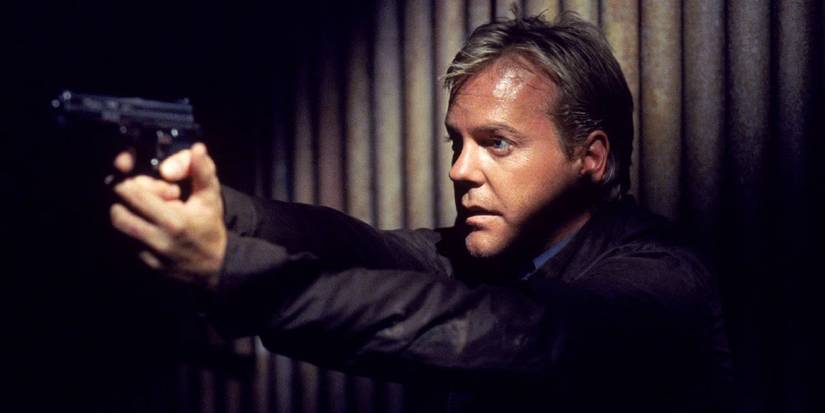
24 uses the seemingly simple ticking clock format to deliver one great story after another. The series follows counterterrorism agent Jack Bauer (Kiefer Sutherland), with each season unfolding over a single day and every episode covering roughly one hour in real time. That means when Jack is trying to stop an assassination or prevent a terrorist attack, the audience is moving through the crisis almost alongside him. Split screens constantly show several threats developing at once, and a constant digital clock reminds viewers that this isn’t the kind of story where the hero gets several moments to stop, think, and restrategize.
This high-pressure format became the show’s defining feature and helped make 24 one of the most distinctive network thrillers of its era. The show isn’t concerned with the meticulousness of a procedural and keeps forcing Jack into making choices that carry heavy consequences. He has to cross boundaries and even risk his career along the way, but the fact that he is willing to do almost anything to but the fact that he is willing to do almost anything to stop the threat at hand is exactly what makes him such a compelling protagonist. 24 practically proved that television could sustain blockbuster-level urgency for an entire season, and paved the way for plenty of other thriller series to treat pacing as part of the story.
9 'Ozark' (2017–2022)

Ozark begins with financial adviser Marty Byrde (Jason Bateman) taking a gamble that puts his entire life at risk. After his business partner steals money from a Mexican drug cartel, Marty convinces cartel boss Omar Navarro (Felix Solis) to spare his life by offering to move his family from Chicago to the Missouri Ozarks and launder hundreds of millions of dollars there. Marty arrives there with his wife Wendy (Laura Linney) and their two children. He believes if he can just move enough money quickly enough, they might eventually find a way out. Of course, things only get worse as the Byrdes become involved with local criminals, the FBI, and people who quickly realize that Marty is hiding something.
That premise gives the acclaimed 21st-century crime show its sense of adrenaline, but what’s actually interesting is how much the family changes while trying to survive. Marty begins as someone who wants to control every problem with numbers and careful planning, while Wendy slowly becomes much more comfortable with the power their criminal connections give them. Their children also stop being innocent bystanders and begin understanding exactly what their parents are doing. Even Ruth Langmore (Julia Garner), who first becomes involved with Marty because of his money, ends up becoming one of the most important people in his life and one of the clearest examples of the damage the Byrdes leave behind. Ozark begins as a story about laundering cartel money, but turns into something much more personal as the Byrdes slowly lose sight of where survival ends and ambition begins.
8 'Money Heist' (2017–2021)

For a while there, Money Heist felt almost impossible to escape. The red jumpsuits, Salvador Dalí masks, and “Bella Ciao” marked an iconic moment in global pop culture, and that impact makes even more sense once you actually watch the show. The series follows a mysterious mastermind known as the Professor (Álvaro Morte), who recruits eight thieves for an absurdly ambitious plan that involves taking over the Royal Mint of Spain, holding everyone inside hostage, and printing billions of euros rather than stealing money that already exists. Now, the Professor thinks of almost everything in advance to make sure that nothing goes wrong. However, the people carrying out his plan are nowhere near as careful.
Tokyo (Úrsula Corberó) is impulsive, Berlin (Pedro Alonso) is dangerously controlling, and soon enough, relationships begin forming between crew who seem to keep forgetting the very job they have been hired for. However, that eventually becomes the show’s greatest strength. Money Heist doesn’t treat its characters as faceless criminals. Instead, it gives them individual storylines, loyalties, and romances to make the audience see things from their perspective. The plan may belong to the Professor, but Money Heist works because the people executing it are messy enough to make every victory, betrayal, and escape feel personal.
7 'Squid Game' (2021–2025)

Squid Game is another show on the list that became a global phenomenon almost immediately, and it’s not hard to understand why. The series follows Seong Gi-hun (Lee Jung-jae), a divorced father drowning in debt who accepts a mysterious invitation to compete for an enormous cash prize. He soon finds himself alongside 455 other desperate contestants playing children’s games like Red Light, Green Light. The catch is that losing means being permanently eliminated… for life! The second catch is that every eliminated player adds more money to the prize waiting for whoever survives. The premise is fairly simple. The audience and characters understand the rules of the game within seconds, which leaves the show free to focus on what people do once fear and survival instincts take over.
No friendship can be trusted, alliances can break within seconds, and the colorful playgrounds along with the familiar childhood games only make all this violence feel more jarring. More importantly, the series does not keep Gi-hun trapped in the same story for three seasons. After surviving the games, he becomes obsessed with the people running them and eventually returns determined to bring the entire operation down. That turns his conflict with the Front Man (Lee Byung-hun) into something bigger than another fight for survival, as the two represent completely different belief systems. Squid Game begins as a gripping survival thriller that was fueled by shock value, but by its final season, the series addresses the much bigger question of how much humanity someone can hold onto when the entire system is designed to put a price on it.
6 'The Americans' (2013–2018)
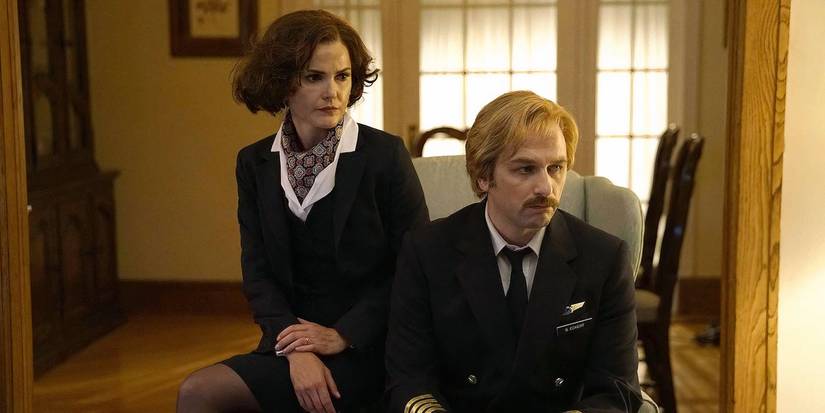
The Americans takes one of the oldest spy-story setups and puts an emotionally heavy spin on it. The series is set during the Cold War, and follows Elizabeth (Keri Russell) and Philip Jennings (Matthew Rhys), two Soviet KGB agents living outside Washington, D.C. under the guise of an ordinary American married couple. Their children have no idea who they really are, and neither does their new neighbor Stan Beeman (Noah Emmerich), an FBI counterintelligence agent whose very job is to catch people like them. That setup gives the show plenty of suspense, but the real brilliance of The Americans is how thoroughly it ties espionage to Elizabeth and Philip’s relationship. Elizabeth is deeply committed to the Soviet cause, while Philip becomes increasingly attached to the life they were originally only supposed to pretend to have.
Every mission then creates tension on two levels, where a dangerous assignment might threaten their cover, but it can also expose a disagreement about loyalty, family, or the kind of people they are becoming. The longer the series runs, the harder it becomes to separate the Jennings’ two worlds. Their children grow older, their marriage changes, and the country they were sent to infiltrate starts feeling more like home. That is what makes The Americans such a serious crime and espionage drama. The disguises, surveillance, and covert operations are gripping, but the show’s most painful moments come from watching Elizabeth and Philip realize that every successful mission costs them something in the life they have built together.
Collider Exclusive · Villain Personality Quiz Which Criminal Mastermind Would Be Your Nemesis? Lecter · Joker · Moriarty · Chigurh
Four of the finest criminal minds ever put on screen. One of them would look at you and see something worth their time. Eight questions decide which one comes for you, why they picked you, and what they would want when they arrived.
🍷Lecter
🃏Joker
♟️Moriarty
🪙Chigurh
01
What would a criminal mastermind notice about you first? Great villains choose their opponents carefully. Something about you got their attention.
02
How do they make first contact? The introduction tells you everything about what is coming next.
03
What do you actually believe about right and wrong? Every nemesis is really an argument about the thing you believe most.
04
What finally gets under your skin? Everybody has a pressure point. Finding yours is the whole plan.
05
They have made their move. How do you fight back? This is the part of the film where the audience finds out who you are.
06
What would they use against you? A good villain never brings a weapon you have not already handed them.
07
What do they actually want from you? The money is never the point. Something else always is.
08
How does it end between the two of you? Eight questions in, this is the one that decides who comes for you.
The Case File Is Complete Your Nemesis Is…
Four criminal masterminds. One of them was always going to be yours. Here is who comes for you, why they picked you out of everyone available, and what they want from the encounter.
Hannibal Lecter
Your nemesis does not want to beat you. He wants to know you completely, and he is patient enough to wait for it. The frightening part is how good the conversation is.
- Lecter is the most dangerous kind of opponent: the one who finds you interesting. He never raises his voice, because he has never needed to.
- You keep a great deal to yourself and you are careful about what you show. That reserve is exactly the door he would knock on.
- The films understood something other thrillers missed. The horror is not the violence. It is being perfectly understood by the wrong person.
- He would be unfailingly polite about all of it. That is the worst part.
The Joker
Your nemesis is not after money, territory or revenge. He is after a demonstration, and you are the person he has chosen to prove his point on.
- The Joker only picks opponents who believe in something. Your decency is not a defence against him. It is the entire reason he showed up.
- He has no plan you can predict and nothing you can take away, which removes every tool you would normally reach for.
- His whole argument is that you are one bad day away from being him, and you would spend the rest of your life proving him wrong.
- He would call it a magic trick. You would call it the worst night of your life.
Moriarty
Your nemesis respects you, which sounds flattering until you work out what it means. He chose you because nobody else was worth his time.
- Moriarty is the original criminal mastermind, the template every later one borrows from: a mind the equal of the hero's, pointed the wrong way.
- You enjoy being the cleverest person in the room. He is counting on exactly that, and he has already built the room.
- This is the rare nemesis who would be genuinely disappointed if you lost badly. He needs the game to be worth playing.
- It ends the way these things always end. Two people, one problem, and only one way down.
Anton Chigurh
Your nemesis has no personal interest in you whatsoever, and that is precisely what makes him unsurvivable. You are not a rival. You are a stop on the way.
- Chigurh does not negotiate, gloat or explain. He arrives, he asks one question, and the answer was decided long before you opened your mouth.
- You trust yourself to handle things. He is the one problem in the world that has no interest in how capable you are.
- No Country for Old Men rewrote the screen villain by removing the thing audiences quietly rely on: the sense that talking might work.
- Call it. He will wait.
5 'Mr. Robot' (2015–2019)
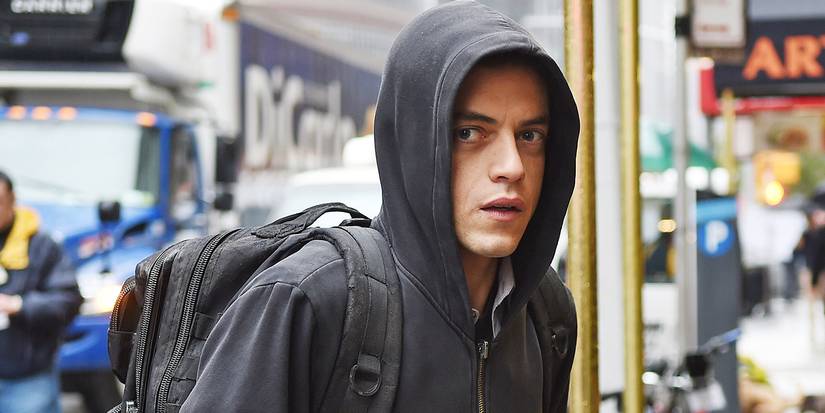
Mr. Robot thrives on keeping its audience on edge until the very last episode, and that is the mark of a great thriller. The series follows cybersecurity engineer Elliot Alderson (Rami Malek), who spends his nights secretly hacking people he believes should be exposed. His life changes when the mysterious Mr. Robot (Christian Slater) recruits him into fsociety, a hacker group planning to take down the enormously powerful E Corp and erase consumer debt in the process. However, what begins as an anti-corporate revolution quickly grows into something much harder for him to control. Mr. Robot is especially gripping because Elliot is both the audience’s guide and the person they can trust the least. His narration pulls viewers directly into his head, but his isolation and unstable sense of reality mean that even he does not always understand what is happening around him.
That allows the series to constantly shift the ground beneath the audience without relying on empty twists for shock value. Every revelation forces viewers to reconsider Elliot, his relationships, and sometimes entire stretches of the story they thought they understood. The show also makes the brilliant choice of using hacking as an extension of Elliot himself, because he understands people far better through their secrets than through normal human connection. Mr. Robot manages to remain compelling until the very end because its most powerful mystery is ultimately Elliot himself, and the show spends four seasons exploring that concept without losing control of where it is going.
4 'The Day of the Jackal' (2024–Present)

The Day of the Jackal presents an interesting take on the classic assassin story. The series follows an elite killer known only as the Jackal (Eddie Redmayne), who makes his living carrying out extremely difficult hits for enormous sums of money. After one particularly ambitious assassination attracts the attention of British intelligence, weapons expert Bianca Pullman (Lashana Lynch) becomes convinced that she can track him down. From there, the show turns into a chase across Europe where both sides are constantly trying to predict what the other will do next. However, neither character exists only for the chase.
In fact, the audience learns that the Jackal has a wife, Nuria (Úrsula Corberó), and a family who know almost nothing about what he really does. This means that every new job threatens the normal life he has carefully built around himself. Bianca has a family of her own, but her obsession with catching the Jackal begins pulling her further away from them. That parallel gives the story much more weight than any other straightforward thriller. The suspense in The Day of the Jackal does not come from who will win, but from knowing exactly what both sides are planning and waiting to see which mistake finally gives one of them away.
3 'Dark' (2017–2020)

Dark begins with the disappearance of a child in the small German town of Winden, but the mystery quickly becomes much bigger than anyone expects. The story picks up when several families become involved in the search, and teenager Jonas Kahnwald (Louis Hofmann) starts uncovering connections between people and events that stretch across different generations. The biggest discovery, though, is a passage hidden inside Winden’s caves that allows people to travel through time. This revelation transforms the simple missing-person case into a story where the past, present, and future are constantly affecting one another. Dark has a premise that could have been impossible to follow with all its convoluted structure, but the series is actually very disciplined about its complexity.
New timelines and different versions of the same characters keep appearing, yet almost every reveal connects back to something the audience has already seen. The show never treats time travel as a gimmick, but uses it to drive the narrative, with every trip through time creating consequences that reshape the past, present, and future at once. The Netflix show's biggest twists completely change the meaning of earlier scenes, and the family trees become increasingly tangled, but the emotional core of people trying to save their loved ones remains the same. By the final season, Dark has built one of television’s most complicated puzzles, but the real achievement is that its ending makes all that complexity feel purposeful rather than just complex for its own sake.
2 'Severance' (2022–Present)
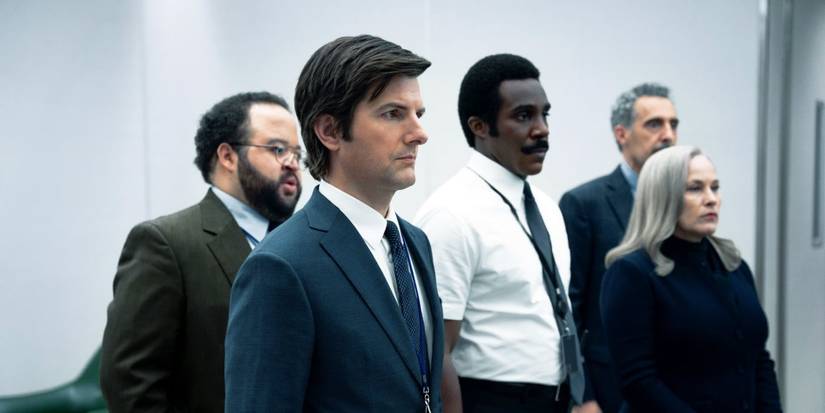
Severance is a modern classic in the making. The Apple TV show takes the idea of work-life balance and runs wild with it using a genuinely compelling sci-fi premise. The story follows Mark Scout (Adam Scott), who works at the mysterious Lumon Industries, where employees undergo a procedure that completely separates their work memories from their personal ones. The version of Mark who enters the office remembers nothing about the outside world, while the version who goes home has no idea what happens during his eight-hour shift. On paper, that sounds almost convenient. However, the setup is more complicated than it might seem.
This idea gives Severance a kind of tension that very few thrillers can copy. Lumon does not need traditional villains constantly threatening its workers because the entire workplace already feels wrong with its endless white hallways, bizarre corporate rituals, and meaningless rewards. The employees there barely understand what their jobs are, and the mystery grows as Mark and his coworkers Helly (Britt Lower), Irving (John Turturro), and Dylan (Zach Cherry) begin questioning why they were severed and what Lumon is actually hiding from them. The clever part is that the procedure creates two versions of the same person who can eventually want completely different things. An “outie” may choose to keep working at Lumon, while their “innie” is essentially trapped there forever. That turns Severance’s strange corporate mystery into a much darker question about identity and free will.
1 'Slow Horses' (2022–Present)
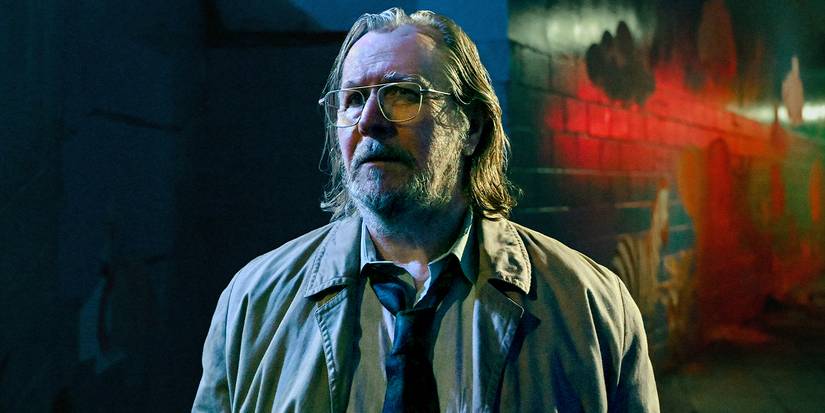
Slow Horses removes all the glitz and glamor from the spy thriller genre and strips it down to its bare bones. The series follows ambitious MI5 agent River Cartwright (Jack Lowden), whose career falls apart after a disastrous training exercise gets him sent to Slough House, the place where British intelligence dumps agents who have made career-ending mistakes. The idea is to give them boring work until they eventually quit themselves. The brilliant but extremely unpleasant Jackson Lamb (Gary Oldman) heads the unit, but is more interested in constantly insulting his team instead of actually helping him. However, despite all that, the people at Slough House have a habit of getting dragged into real threats anyway.
It’s almost funny how this group of supposed failures keeps stumbling into the kind of work they were told they were no longer good enough to do, and doing a better job at it than everyone else. Slow Horses uses this premise to have a lot of fun with the usual spy-show fantasy. Lamb is nothing like the polished intelligence officers audiences are used to seeing, and his team regularly makes mistakes that create as many problems as they solve. Yet the joke is never that these people are useless. Every mission in the show has an underdog quality to it, and every victory feels earned because of how dysfunctional the team can be at times. Slow Horses is messy, funny, and incredibly real, a combination that is definitely rare in the thriller genre.

Slow Horses
- Release Date
- April 1, 2022
- Network
- Apple TV+
- Showrunner
- Douglas Urbanski
- Directors
- Adam Randall, James Hawes, Jeremy Lovering, Saul Metzstein
KioskNews shows a cleaned-up reading view extracted from the publisher’s page — the original always lives on their site, not ours.