The 10 Most Suspenseful Classic Movies, Ranked

Ryan Heffernan is a Senior Writer at Collider. Storytelling has been one of his interests since an early age, with his appreciation for film and television becoming a particular interest of his during his teenage years.
This passion saw Ryan graduate from the University of Canberra in 2020 with an Honours Degree in Film Production. In the years since, he has found freelance work as a videographer and editor in the Canberra region while also becoming entrenched in the city's film-making community.
In addition to cinema and writing, Ryan's other major interest is sport, with him having a particular love for Australian Rules football, Formula 1, and cricket. He also has casual interests in reading, gaming, and history.
Sign in to your Collider account
It’s the chill that creeps up your spine, the clammy awareness that your pulse has quickened, and the festering imagination that dreads to even consider the terrible question, “What comes next?”. “It”, of course, refers to the greatness of cinematic suspense, the epitome of thriller film that has stood as one of the medium’s foundational and most influential genres dating as far back as the 1930s. Needless to say, there are a great many classic movies that are still every bit as suspenseful today as they were upon release.
Of course, the art of conjuring tension was different back then. With social appetites for graphic content being far more limited and the censorship of the Hays Code governing what filmmakers could portray, thriller classics of yesteryear had to rely on astute technical prowess and the unease of implication rather than resort to shocking audiences with explicit imagery. Even within those confined parameters, a great many masterpieces of cinematic suspense were produced, with these 10 being the most agonizing.
10 'The Third Man' (1949)
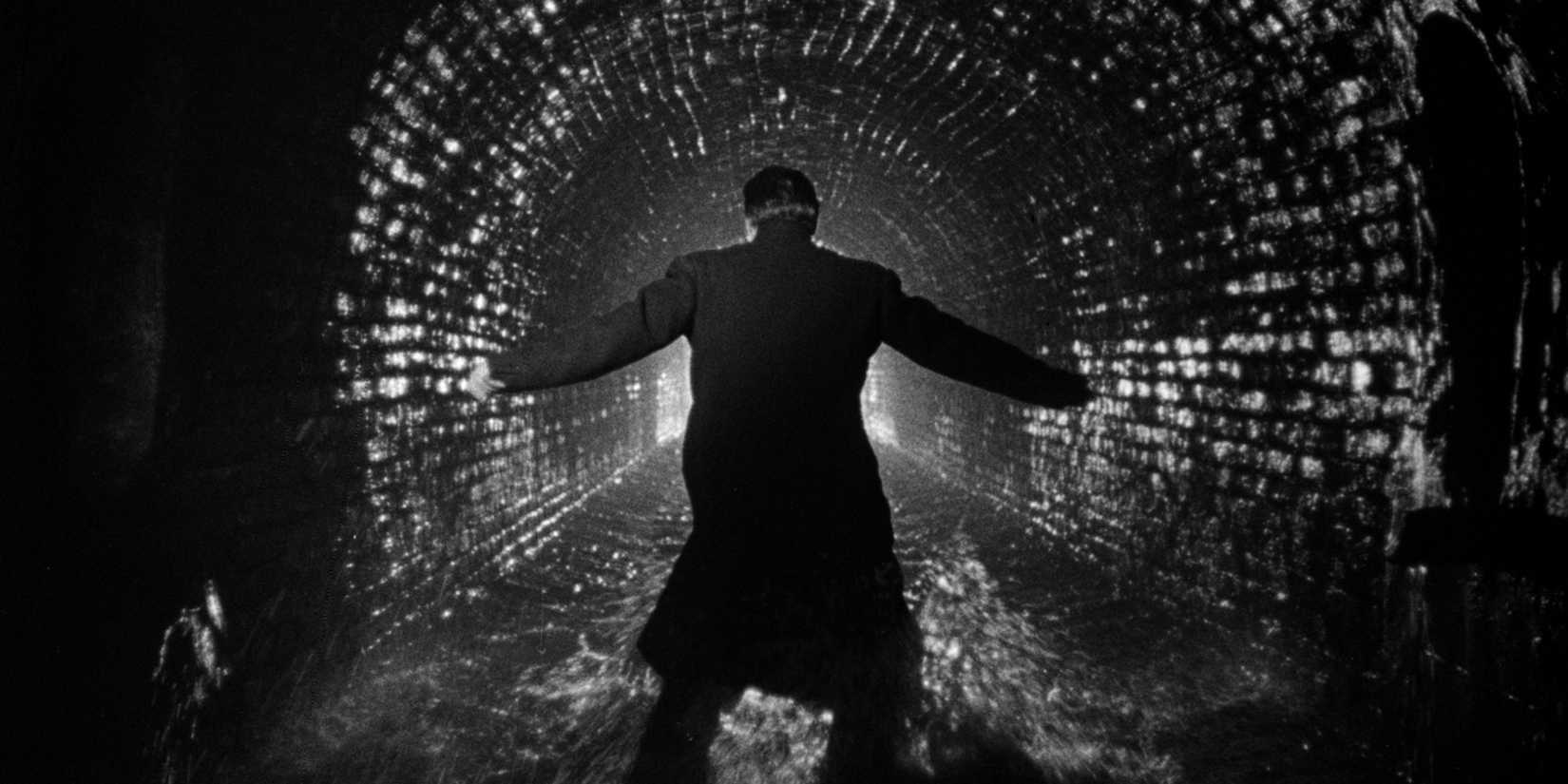
Film noir was a driving force of cinematic suspense throughout the 1940s. The Third Man is a masterclass in combining the genre’s set tropes—an elaborate mystery, moral ambiguity, and striking black-and-white cinematography—with more subversive qualities like the post-WWII Venice setting, creative Dutch tilts, and the unconventional yet eerie zither score. The end result is an enduring achievement of taut tension and unnerving mystery as it follows an American novelist’s endeavor to unearth the truth behind his friend’s death.
Shrouded in secrecy and inconsistencies, Holly Martins’ (Joseph Cotten) investigation into the unknown third man who was present at Harry Lime’s (Orson Welles) demise delivers a blunt and confronting descent into divided territory, with the author navigating a city of corruption, espionage, and underhand deals under the split command of America, France, Britain, and the Soviet Union. Bolstered by a flawless final act that deepens the nature of the mystery and ratchets up the tension, with help from Welles’ unforgettable supporting performance, The Third Man is an exceptional thriller that captures Old Hollywood angst at its best.
9 'What Ever Happened to Baby Jane?' (1962)

Blending grim claustrophobia with two exceptional performances, What Ever Happened to Baby Jane? is a gripping descent into a murderous sibling rivalry imbued with a palpable venom courtesy of the two leads’ real-life hostility. Bette Davis and Joan Crawford star as two sisters, both aging child stars of Hollywood. The line between villain and victim is constantly crossed as Jane (Davis) reluctantly cares for the wheelchair-bound Blanche (Crawford) while striving to re-ignite her career and plotting to get rid of her sister once and for all.
A pervasive air of sickness permeates every aspect of the movie, from the decaying Hollywood manner setting to the precise plotting that blends morbid backstory with murderous intentions, the thematic horror of an abusive caregiver, and particularly to Davis’ frightful performance, which shifts violently between delusional, childlike playfulness and sadistic cruelty. With every second an anxiety-inducing descent into a nightmarish domestic environment, What Ever Happened to Baby Jane? digs beneath the surface of stardom and ambition to be a fierce portrait of human desperation and manipulation.
8 'Touch of Evil' (1958)

Directed with astonishing poise by Orson Welles, Touch of Evil simmers as a ferocious pressure-cooker of police corruption, border-town hostilities, and sprawling mystery that conjures gripping suspense from the first scene. It famously opens with a long-take that sees a time-bomb planted in a car before the unsuspecting owners begin driving through the busy streets, with every stop and every subtle swerve around pedestrians a wince-inducing beat of visceral tension.
The eventual explosion kicks the story into gear, with Mexican special prosecutor Miguel Vargas (Charlton Heston) targeting his investigation for the attack towards a crime syndicate while clashing with the corrupt and bigoted American police captain, Hank Quinlan (Welles). Welles uses everything from intimidating and claustrophobic camera angles to pulsing diegetic sound design to immerse viewers in the grimy amorality of the town, establishing an asphyxiating, disconcerting atmosphere that permeates across every aspect of the story and only grows more potent as the plot and mystery unravel.
7 'Rear Window' (1954)

It will come as no surprise to anyone that Alfred Hitchcock, the Master of Suspense himself, delivered many of the most intense classics ever made. One of his finest is 1954’s one-location chiller, Rear Window, which follows photographer L. B. Jeffries (James Stewart) as he takes an interest in spying on his neighbors as he nurses a broken leg. His wicked, voyeuristic hobby soon becomes a morbid obsession when he believes he witnesses one of his neighbors commit murder and sets his mind to unearthing the truth.
Every second of the 112-minute runtime features Hitchcock’s trademark mastery of camera direction and plotting precision, but the true highlight of Rear Window is how it embeds the viewer in Jeffries’ forbidden nosiness. It encourages the audience to revel in his curiosity, to sneer and jeer at his neighbors as he does, and when his playful intrigue pivots to mortal danger, the viewer feels the same dread as he does. We’re trapped in his vulnerability and immobilization, and when the hunter becomes the hunted, it becomes one of the most suspenseful triumphs cinema has ever seen.
6 'The Night of the Hunter' (1955)

It is always fascinating when thriller movies cast the villain as the protagonist. The Night of the Hunter does so better than most, with Robert Mitchum starring as Harry Powell, a misogynistic serial killer who dresses himself as a preacher in order to get close to an executed bank robber’s family hoping he can manipulate them into telling him where the thief stashed the stolen money. As Powell grows more irritated, he begins to clash with the stubborn young son, and his violent, sadistic nature starts to emerge.
Gorgeously directed by Charles Laughton in what was his only filmmaking credit, The Night of the Hunter bolsters the engrossing good vs. evil focus of the story with astonishing visuals. It combines elements of Southern Gothic gloom, striking noir shadows, the distorted set design and lighting of German Expressionism to create a haunting yet ensnaring fairy tale nightmare of a backdrop. Complimented by brilliant plotting and Mitchum’s terrifying performance, the underrated 1955 classic remains one of the most thrilling movies of its decade.
Collider Exclusive · 8 Questions · 2 Minutes What Is Your Biggest Horror Nightmare? Elm Street · Chucky · Scream · The Conjuring
Four horror franchises. Four completely different ways of scaring you. One waits until you fall asleep. One makes sure nobody believes you. One is already in your group of friends. And one is in the house with your family. Answer eight quick questions about how you actually watch horror, and find out which nightmare was built for you.
😴Elm Street(Freddy Krueger)
🧸Chucky(Child's Play)
📞Scream(Ghostface)
🕯️The Conjuring(The Warren Files)
01
Which horror scene makes you cover your eyes? Four classic images. One of them is worse than the others for you.
02
You are home alone and you hear a noise. First thought? Everybody has one. It arrives before you have decided anything.
03
Which horror movie rule would you break first? Everybody thinks they would survive. Almost nobody actually does.
04
Something genuinely frightening happens. What do you do? Not in a film. In your actual living room, tonight.
05
How do you actually watch a horror film? Be honest about this one. Nobody is checking.
06
Somebody offers you serious money. Which do you still refuse? The amount does not matter. There is one on this list you are not doing.
07
Which feeling stays with you a week after the film? Good horror does not stop when the credits do.
08
Something wakes you at 3am. What is the worst possibility? Eight questions in, this is the one that decides your nightmare.
The Lights Just Went Out Your Nightmare Is…
Four franchises, four completely different ways of getting underneath your skin. This is the one built out of your particular fear, why it works so well on you, and what it would leave behind.
Elm Street
Your nightmare does not wait outside the door. It waits for you to close your eyes, which you are going to have to do eventually, because nobody has ever won that particular argument.
- Freddy is horror's cruellest idea: a threat that lives in the one place you cannot guard, cannot lock, and cannot avoid forever.
- You are the one who is fine during the film and wide awake at two in the morning. Your own head is where this does its damage.
- These films understood exhaustion as a horror engine. The kids on Elm Street do not lose because they are weak. They lose because they are tired.
- You can lock every door in the house. You still have to sleep.
Chucky
Your nightmare is not really the doll. It is the face of the person you tell, and the way they decide, very kindly, that you have imagined all of it.
- Chucky works precisely because he is absurd. That is the trap: the more accurately you describe him, the less anybody is going to believe you.
- You are the one shouting at the screen because the characters are not listening. You know that feeling from real life too.
- The franchise is at its best when the adults in the room are the real obstacle, and you have met those adults.
- By the time somebody finally believes you, you will have handled most of it on your own.
Scream
Your nightmare has your number, knows your name, and has almost certainly been inside your house before. The worst part is that you already know them.
- Scream is the only one of these where the killer takes the mask off and turns out to be somebody who was at the party.
- You are the person who calls the twist out loud before it lands. You watch people the same way you watch films.
- The franchise made the rules of horror part of the plot, which means the survivors are the ones paying attention. You would be paying attention.
- Everybody is a suspect, including the person who just offered to walk you home.
The Conjuring
Your nightmare is not really about you. It is about the people asleep down the hall, and the feeling that whatever is here is not interested in leaving.
- The Conjuring films are domestic horror. The house, the family, the perfectly ordinary room that quietly stops feeling ordinary.
- Your instinct is to get everybody into one room. Your fear is protective rather than personal, which is rarer than it sounds.
- This is the one franchise where belief is the weapon. The people who come through it are the ones who are not alone and refuse to be.
- Whatever is here did not come for you. It came for the household, and you are the one standing in the hallway.
5 'High and Low' (1963)
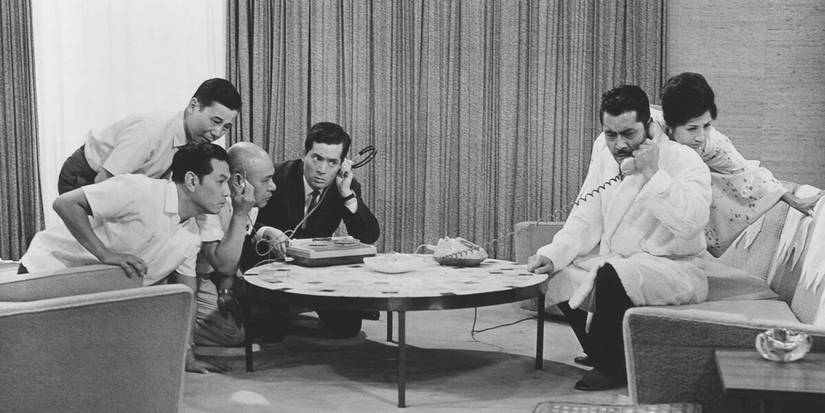
From period epics to meditative dramas, there isn’t a single genre that Akira Kurosawa touched that he didn’t master. He proved his proficiency in crime thriller cinema many times over, with 1963’s High and Low being a noteworthy standout. Much of its brilliance resides in its unique structure, with the film being split into two distinct halves as it revolves the abduction of the son of a wealthy businessman’s chauffeur. With the wrong boy being kidnapped, Kingo Gondō (Toshirō Mifune) is forced into deciding between using his money to save a bold business deal or save the child’s life.
The first half of the movie runs as a character-focused pressure-cooker set entirely in Gondō’s house before the second half evolves into a city-spanning police investigation to catch the culprit. Both halves are handled with astonishing craft by Kurosawa, who enhances the high-stakes intensity with precise staging and bold character work that allows the audience the grapple with the moral dilemma. The end result is a defining masterpiece of Japanese cinema as well as one of the most suspenseful international movies ever made.
4 'Double Indemnity' (1944)
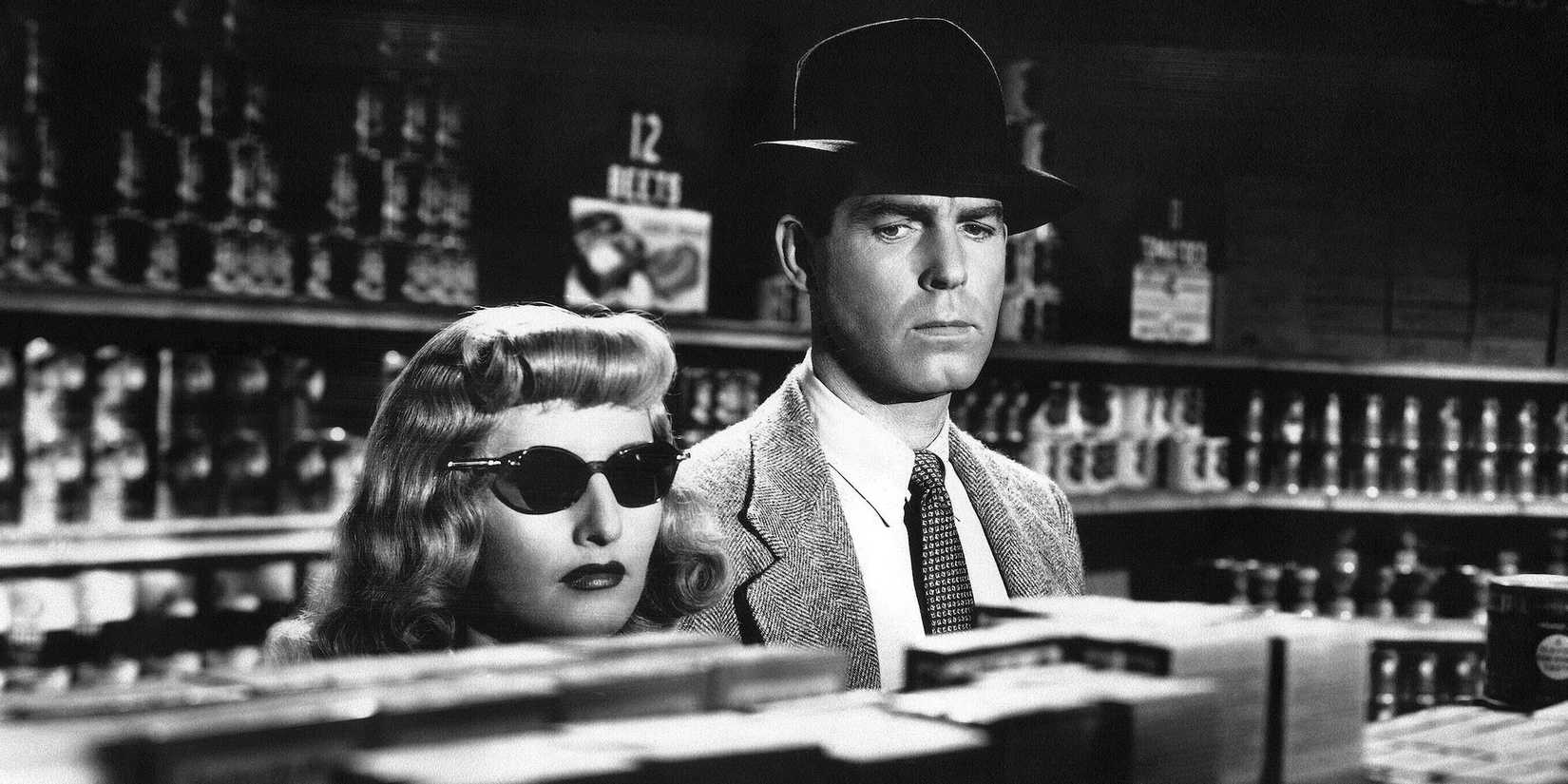
The most transfixing and pulsating of all the classic noir movies, Double Indemnity basks in a seductive and dangerous atmosphere of temptation, lust, and conspiracy. Perfectly handled by Billy Wilder, it follows insurance salesman Walter Neff (Fred MacMurray) as he enters into a deplorable ploy with Phyllis Dietrichson (Barbara Stanwyck) to murder her husband and claim his life insurance payout. Just when their wicked scheme appears to be a success, veteran claims manager Barton Keyes (Edward G. Robinson) grows suspicious and begins investigating the case.
Framed as a gravely injured Neff’s recorded confession, Double Indemnity holds both grim intrigue and fatalistic resignation hand-in-hand. The audience knows the deceitful conspiracy is going to go bad, but they never know how or when. The inverted whodunit narrative works beautifully in tandem with the unraveling relationship between Neff and the murderously psychotic Dietrichson, with Stanwyck’s performance imbuing the movie with a frightful volatility. Buoyed by astounding technical perfection and incredible plotting that invites the viewer to cheer on the murderous villains, Double Indemnity epitomizes thriller cinema at its invigorating and addictive best.
3 'M' (1931)
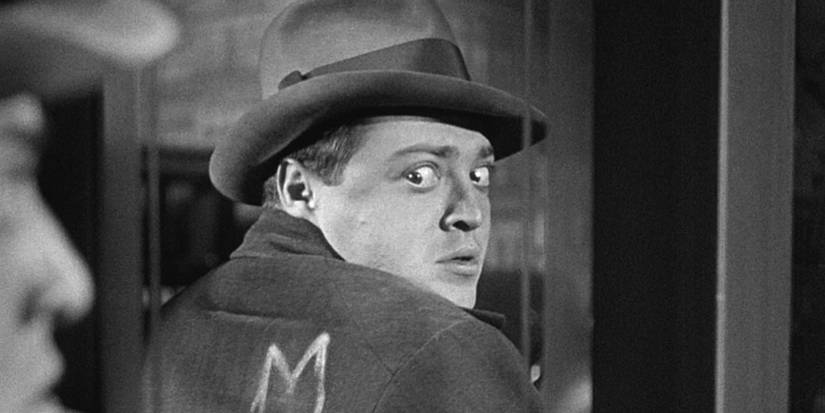
Despite the fact that it is almost 100 years old, M still excels as one of the most transfixing and terrifying thrillers ever made. It unfolds as a child murderer wreaks havoc in Berlin, causing police to elevate their presence in order to find him and ease a festering community anxiety. With the operations of organized crime thwarted by the abundance of police on the streets, the mob conducts its own investigation to apprehend the killer. All the while, the culprit, Hans Beckert (Peter Lorre), roams the street in search of his next victim.
The opening sequence alone is a masterclass in cinematic suspense, using a balloon caught in wiring, a ball rolling down the street, and an anxious mother setting an empty table to make the viewer’s mind comprehend the horror of Beckert’s actions. Also extracting grueling intensity from empty, shadowy spaces, the innovative use of “In the Hall of the Mountain King” as a dread-inducing leitmotif, Lorre’s astonishing performance, and the moral and systemic wrath of both the police procedure and the mob’s manhunt, M endures as one of the most captivating and suspenseful movies of all time.
2 'Jaws' (1975)
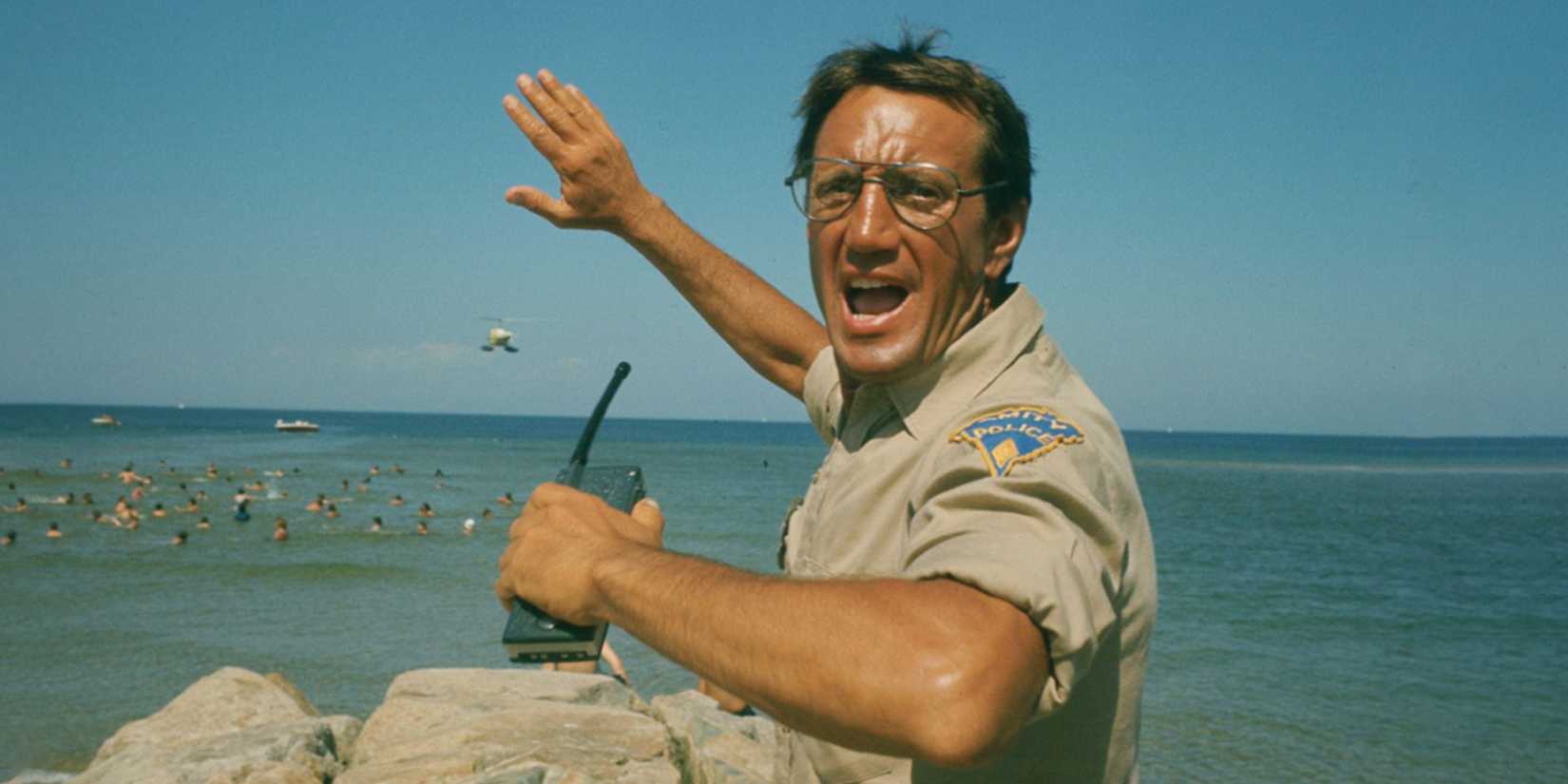
In the context of cinematic history, Jaws marks a monumental watershed moment for a variety of reasons. It spearheaded the ongoing New Hollywood movement that pushed for more violence and realism in film, pioneered the blueprint for the summer blockbuster, and revolutionized how major releases were marketed and distributed. Additionally, it also endures as one of the greatest thriller/horror movies of all time.
It runs an agonizing adventure of unrelenting dread, following Sheriff Martin Brody (Roy Scheider) as he treks into the ocean to hunt down a great white shark that is besieging the holiday season of Amity Island. Steven Spielberg’s ability to conjure suspense through mere glimpses, editing, POV shots, and pacing has always been extraordinary, but Jaws is his magnum opus in this regard. Complimented by John Williams’ iconic score, Jaws presents a masterclass in cinematic tension from its opening minutes, but its ability to combine that raw, visceral suspense with outstanding characters and a compelling story is what has made it such a beloved, timeless triumph.
1 'Psycho' (1960)
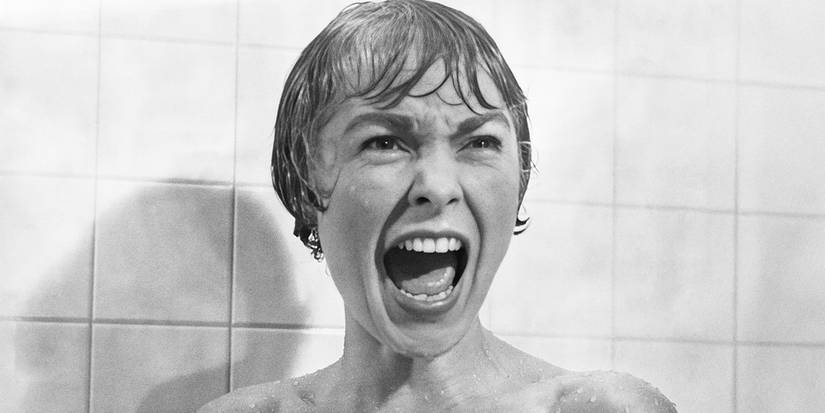
Another Hitchcock classic, Psycho still stands tall even against modern movies as one of the most imposing and intense movies ever made. It initially follows Marion Crane (Janet Leigh) as she embezzles a large sum of money from her employer and flees Phoenix, eventually ending up at the Bates Motel. Then comes the greatest plot twist in cinematic history, with Crane being killed halfway through the movie, leading to an investigation headed by her fiancé and sister which puts enormous strain on Norman Bates’ (Anthony Perkins) complex relationship with his mother.
The iconic shower scene alone epitomizes Psycho’s mastery of cinematic suspense, with Hitchcock creating a perfect assembly of cinematography, editing, and music that conjures what is still one of the most heart-stopping sequences of all time. The film’s ability to manipulate audience empathy while establishing an unnerving atmosphere of conceit, hostility, and mystery ensures that every second of the picture ensnares viewers in its pervasive dread. The shocking final twist compliments and enriches all that came before it, making Psycho a truly perfect thriller from beginning to end that few films in recent years can even come close to matching.

Psycho
- Release Date
- June 22, 1960
- Runtime
- 109 minutes
- Director
- Alfred Hitchcock
- Writers
- Joseph Stefano
KioskNews shows a cleaned-up reading view extracted from the publisher’s page — the original always lives on their site, not ours.