Possessed nuns and sexual deviance: the history behind Ken Russell’s highly-censored film The Devils
The long-awaited director’s cut of the late Ken Russell’s 1971 film The Devils will be released this month, featuring previously unseen censored material such as the notorious “rape of Christ” sequence.
The film is a dramatisation of the supposed demonic possessions of a convent of nuns that unfolded in 17th century Loudon, in western France.
It focuses on the religious fanaticism that consumed the town, and the tragic figure at the centre of it – Urbain Grandier – the Catholic priest who was ultimately charged with witchcraft and burned at the stake.
At the heart of The Devils is a powerful critique of institutional religion and its union with the state, scapegoating and violent oppression.
An attack on the Catholic Church
Upon its release, The Devils was banned in several countries and heavily censored in others.
The film is full of wild imagery of spiritual ecstasies, torture, violence and sexual impurities. The most egregious examples of this imagery had to be cut before the United Kingdom and United States film boards would even classify the film.
Cuts ranged from minor close-ups of graphic torture and nudity, to a brief scene of a nun pleasuring herself with a charred human femur bone.
The most lengthy cut was the “rape of Christ”, where the possessed nuns defile a life-sized effigy of Christ during a frenzied orgy. This sequence offers more than shock-value: it encapsulates the film’s central themes.
Much of the cut footage was thought to be lost until 2002, when film critic Mark Kermode uncovered it in the Warner Brothers archives. Russell subsequently compiled a director’s cut in 2004, screening it for a small number of audiences.
Even so, Warner Brothers waited another 22 years before releasing this restored version.
A surreal and extravagant filmmaker
British-born Russell (1927–2011) was a trailblazing director, with works ranging from the Academy Award-winning drama Women in Love (1969), to the fantastical rock opera Tommy (1975) starring The Who.
Above all, he was a transgressive artist who pushed the boundaries of filmmaking.

While The Devils is clearly an anti-Catholic film, it is by no means an anti-religious film. Russell had converted to Roman Catholicism in his late 20s. But his relationship with the Catholic Church proved to be short lived.
For him, the Loudon possessions perfectly highlighted the church’s hypocrisy. His disillusion with corruption in both the church and state was what led him to make The Devils.
In a 2011 interview, Russell described it as a Christian film about “the degradation of religious principles […] about a sinner who becomes a saint”.
His Grandier (played with powerful dignity by Oliver Reed), while a deeply flawed man, is the one to stand up to the church’s hypocrisy – for which he pays the ultimate price.

Critical reception
Reception of The Devils ranged from glowing to damning. It won Best Foreign Film at the Venice Film Festival in 1971. Russell was also named best director by the prestigious US National Board of Review.
However, Vatican City newspaper L’Osservatore Romano denounced the film as “an insult to cinema” that indulges in “images and sounds of such an obscenity as had never been seen before on the screen, in order to accomplish a crude lynching of the Church of yesterday, of today, of all time, as a political instrument of oppression”.
London Standard newspaper critic Alexander Walker famously reviewed the film as little more than the “masturbatory fantasies of a Roman Catholic Schoolboy”.
The real Loudon possessions
The Loudon possessions of the 1630s are among the most famous demonic episodes of all time.
They involved the alleged mass possession of an entire convent of Ursuline nuns and the execution of a local parish priest, Grandier, for bringing the Devil upon the people of Loudon.
At the time, Loudon was in the grips of plague, institutional infighting and ongoing tensions between local Catholics and Protestants – the ideal conditions for demonic possessions.
On September 22 1632, three nuns reported they were visited in the night by an apparition in priestly garb. Soon, the convent was full of strange disturbances in which the nuns were said to be struck by unseen forces, stricken with convulsions, and subject to terrifying voices.
The first attempts at exorcisms in October became public spectacles, attracting large crowds and creating a deranged carnivalesque atmosphere.
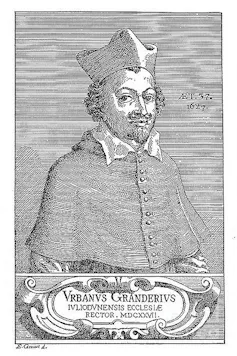
Grandier had only recently arrived in Loudon. He had quickly gained a reputation as an erudite preacher, a rabble-rouser, and salaciously, a bit of a ladies man.
Rumours swirled that he had written an anonymous tract denouncing the plans of the powerful Cardinal Richelieu to dismantle Loudon’s fortifications.
Before the possessions began, Grandier had the opportunity to become the Ursuline convent’s spiritual director, but didn’t. It it unclear if he turned the position down or if it was given to someone else.
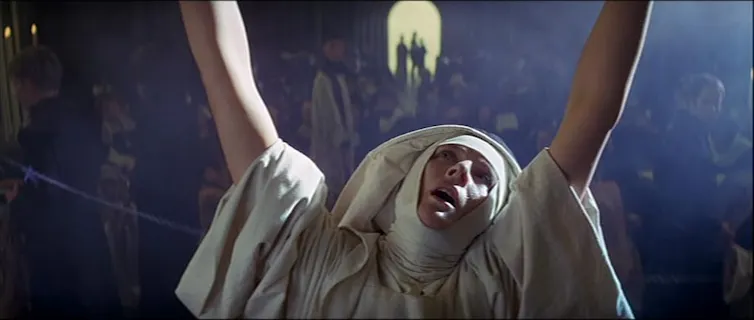
The purported demonic torments eventually spread to other nuns, becoming more sexual in nature. Grandier was implicated as the source. It was claimed that he unleashed the spirits into the convent through a bouquet of musk roses left on some stairs.
Leading the accusations was Mother Superior Jeanne des Anges, who later wrote she had been consumed with erotic desire during her possession. Her testimony would prove critical in bringing down the priest.
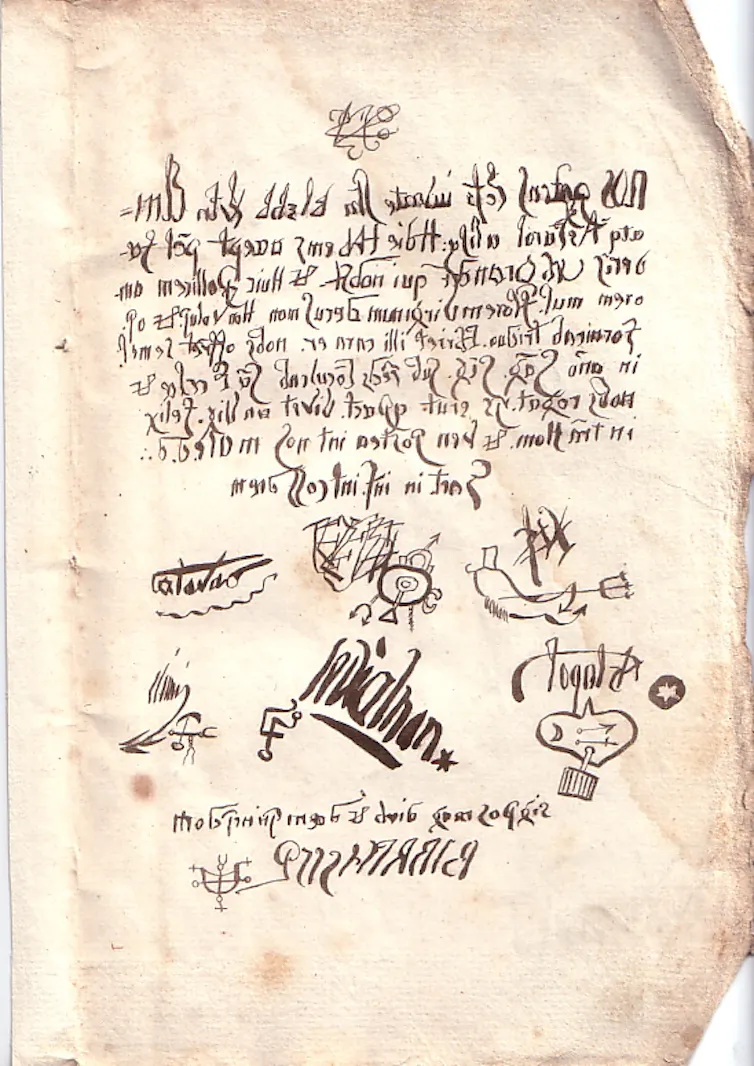
Grandier was charged with inciting the possessions and signing a pact with the Devil. A fabricated document demonstrating this was treated as key evidence against him.
A trial ensued and, on August 18 1634, Grandier was found guilty of sorcery. He was horribly tortured and burned at the stake.
Yet his death did not put a stop to the demonic incursion in Loudon, which persisted until 1638.

Russell borrows heavily from other adaptations of the events at Loudon. These include Aldous Huxley’s non-fiction book The Devils of Loudun (1952), which focuses on religious fanaticism and sexual repression – and John Whiting’s play The Devils (1960), which cast Grandier as a victim of political machinations and a hysterical woman.
His film concludes with the death of Grandier and the destruction of Loudon’s city walls. He paints the chaos in the town as a betrayal of religion, in which humanity’s darkest urges are permitted to play out under a veneer of godly state-sanctioned justice.
The restored director’s cut of The Devils will be out in theatres across the world from October 16.
KioskNews shows a cleaned-up reading view extracted from the publisher’s page — the original always lives on their site, not ours.