10 Characters Who Inspired Modern Superhero Media

Shaun Corley has been with ScreenRant for over 5 years, and is currently the Coordinator for PR and Outreach for the Comics Team.
Sign in to your ScreenRant account
The invention of the modern concept of the superhero is one of the highlights of 20th century pop culture. The first superheroes, such as Superman and Batman, arose at a time of global uncertainty. The world was still feeling the effects of the Great Depression, and watched in horror at the rise of Hitler and fascism in Europe. Superheroes were a counter to the unfolding terrors of the real world.
And while the superhero may be a product of 20th century fears and anxieties, the precedent for superpowered champions extends far back into human history. Composed in Sumeria, The Epic of Gilgamesh can be seen as a forerunner to superheroes, as were the gods of the various pantheons of the ancient world. Then there were the heroes of ancient lore, such as Theseus and Odysseus. Finally, the “folk heroes,” which included Paul Bunyan and John Henry, could be viewed as harbingers of modern superheroes.
In the years prior to the arrival of Superman, adventure characters were largely relegated to prose magazines, today called “pulps,” a label they earned thanks to the cheap paper they were printed on. These pulps featured larger-than-life characters who regularly confronted the forces of evil. The comic strips that preceded comic books were also testing grounds for the superhero. What follows are 10 characters that shaped the development of the modern superhero.
10 The Shadow
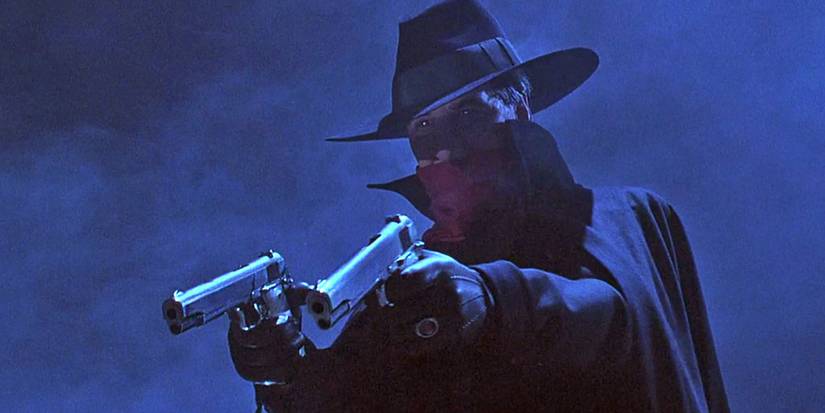
One of the most popular characters of the pulp fiction era, the Shadow has branched out into numerous other forms of media, most notably a DC Comics series, drawn by Michael Kaluta, as well as a 1994 live action adaptation starring Alec Baldwin as the titular crime fighter. The Shadow uses fear and darkness to scare his opponents, much in the same fashion as Batman. Thus, it should come as no surprise that The Shadow has been cited as an influence on the creation of the Caped Crusader.
The Shadow’s multimedia empire began humbly enough, at the beginnings of the Great Depression. Conceived as a narrator for a radio show, the character soon branched out into magazines, developed by writer Walter B. Gibson for Condé Nast Publications. The Shadow’s adventures in the pulps were wildly popular, and eventually the character received another radio show, this time focused solely on him. The character is currently dormant, but is ripe for a comeback.
9 Zorro

Like the Shadow, Zorro sprang from the adventure story tradition popular right before the advent of the superhero. Debuting in the 1919 novel The Curse of Capistrano, Zorro leaped to live action the following year in a film starring Douglas Fairbanks. Fairbanks was one of the most popular actors of his day, and the movie was a smash hit. The demand for more Zorro stories led McCulley to continue the character’s exploits for decades. In the years since, more Zorro adaptations have appeared on-screen, including a big-budget version starring Antonio Banderas.
One of the key tropes of modern superheroes is the “dual identity,” such as Batman/Bruce Wayne or Superman/Clark Kent. McCulley’s original Zorro adventures helped popularize this idea. By day, Zorro was playboy Don Diego de la Vega. Yet at night, he would become Zorro, keeping Los Angeles and the surrounding countryside safe in the 19th century. Vega’s deception was so good, hardly anyone suspected the truth, and it is not a stretch to see Zorro as an influence on modern superheroes.
8 The Phantom

At the same time as pulp magazines were having their heyday, comic strips appearing in newspapers were on the rise, giving the Depression-scarred public characters to rally around. Lee Falk, who created Mandrake the Magician, also first breathed life into the Phantom in 1936. The Phantom was actually a lineage of crime fighters, working out of a fictional African country, that could trace their roots back to the 1500s. In addition to comic strips, the Phantom has appeared in comic books as well as a 1996 film starring Billy Zane.
In the comic strips, the Phantom, AKA “The Ghost That Walks,” keeps the country of Bangalla safe from evildoers, and his influence on modern superheroes cannot be overstated. The Phantom was the first such character to wear a skin-tight outfit when he fought crime. When superheroes arrived on the scene just a few years later, most of them were sporting similar suits, showing just how influential the Phantom was.
7 Doc Savage

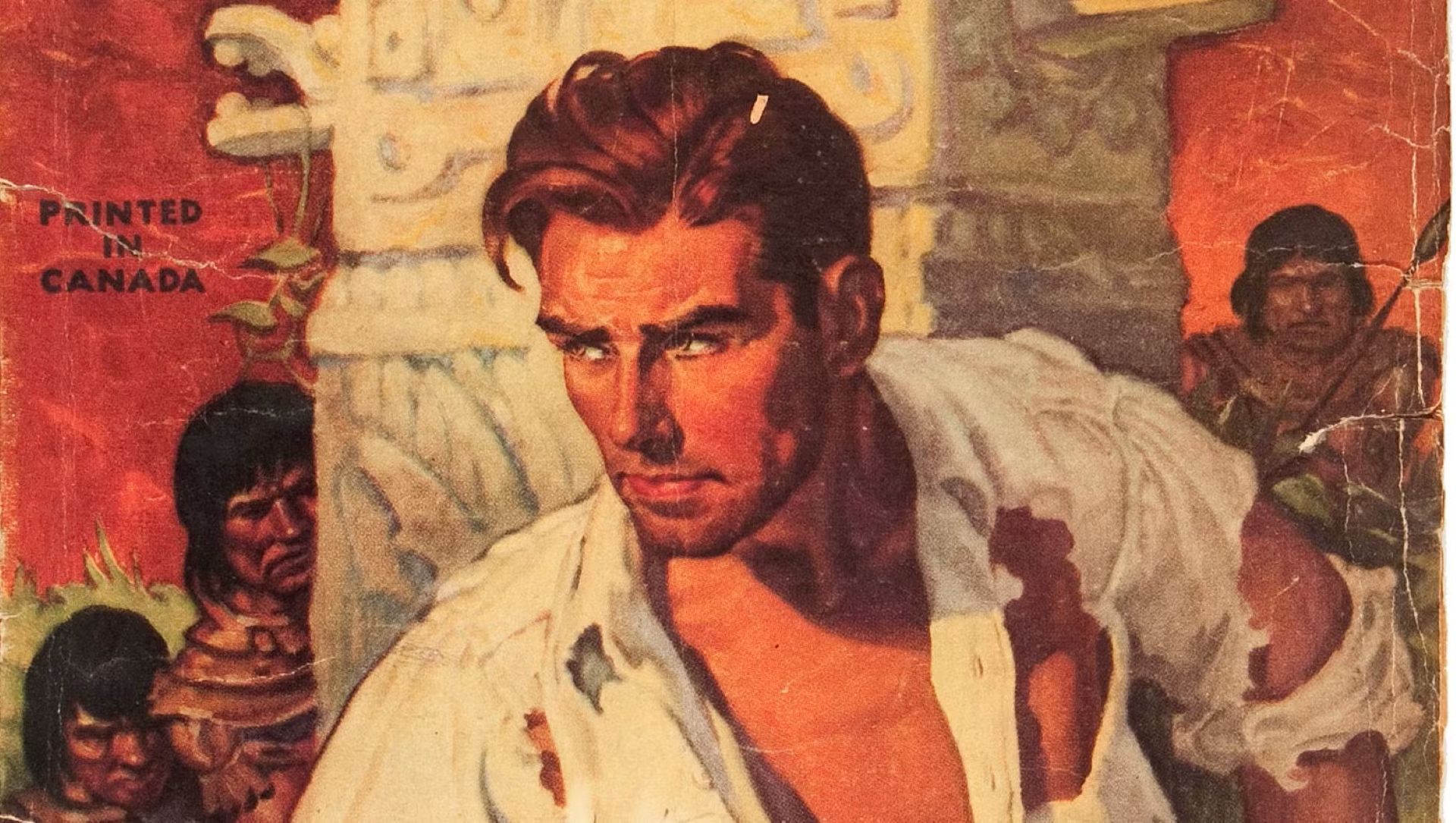
Doc Savage, also referred to as “Man of Bronze,” was created by Lester Dent, John L. Nanovic and Henry W. Ralston, and his colorful adventures would be a major influence on superhero comics. Doc Savage was a polymath, skilled in numerous and diverse fields of study, as well as an expert in many forms of martial arts and combat styles. Aided by a team of loyal associates, Doc Savage kept the world safe, and helped shape how superheroes developed.
Like many other characters on this list, Doc Savage has branched out into other media. Doc’s pulp-era adventures were reprinted by Bantam Books, beginning in the late 1960s and running through the early 1990s. These books helped keep the character alive, and were perhaps the driving force behind a 1975 live-action Doc Savage movie. However, the film carried a “tongue in cheek” tone that seemed to skewer Doc more than celebrate him.
6 The Green Hornet
Unlike other characters on this list, the Green Hornet did not start in the pulp magazines, or comic strips. Instead, the Green Hornet began as a radio show character, similar to The Shadow. Debuting on air in 1936, the Green Hornet would become immensely popular, all while influencing the development of superheroes. The Green Hornet has, like the Shadow, appeared in numerous comic books, including a recent series from Dynamite Entertainment. There have also been live-action versions of the character, including a 2011 film starring Seth Rogen.
Bruce Lee broke into the mainstream playing Kato in a television series based on The Green Hornet.
The Green Hornet, like Zorro, helped introduce the concept of the dual identity, a trope superhero comics picked up early on. The Green Hornet was wealthy newspaper publisher Brett Reid who fought crime by night, similar to Batman. While the Green Hornet’s secret identity no doubt influenced the creation of Batman, the character also introduced the concept of the sidekick, in this case Kato. When superhero comics kicked in a few years later, sidekicks soon followed.
5 The Scarlet Pimpernel

The earliest entry on this list, The Scarlet Pimpernel, was created by Baroness Orczy in 1903. Beginning as a stage play before transitioning into a best-selling adventure novel, The Scarlet Pimpernel, like many other characters on this list, held a dual identity. In fact, the Scarlet Pimpernel might be the first character in modern fiction to do so. By day, he is Sir Percy Blakeney but when duty calls, he puts on a cloak and cape, becoming the Scarlet Pimpernel. In his first outing, Pimpernel saved aristocrats during the French Revolution.
Numerous comic book creators from the Golden Age, including Bill Finger, Bob Kane and Stan Lee, all cited the Scarlet Pimpernel as an influence.
Modern superheroes owe a great debt to the Scarlet Pimpernel, thanks largely to the introduction of the secret identity. Numerous comic book creators from the Golden Age, including Bill Finger, Bob Kane and Stan Lee, all cited the Scarlet Pimpernel as an influence. The character, like others, has appeared in other media, most notably film.
4 Dick Tracy
Created by Chester Gould, the syndicated Dick Tracy comic strip was a major influence on the development of superheroes, even if the character had no superpowers himself. The strip appeared during the Great Depression, at a time when violent crime was on the rise, and the strip was noted for its stark depictions of violence and brutality. Dick Tracy also used modern technology in his fight against crime, most notably a watch that doubled as a walkie-talkie. Modern audiences know the character best from a 1990 adaptation, starring Warren Beatty.
Dick Tracy sported a colorful rogue’s gallery, featuring gimmick-driven villains, such as Pruneface, the Blank and Breathless Mahoney, many of whom would go on to appear in Beatty’s live-action movie. Later superheroes, such as Batman and Spider-Man, would go on to develop defined rogues’ galleries of their own, making Dick Tracy highly influential to modern superheroes.
3 Buck Rogers

Not only would Buck Rogers be a massive influence on modern superheroes, he helped shape the course of science fiction media as well. Introduced in the comic strips in 1929, Buck Rogers was an overnight sensation, and helped inspire numerous competitors, including Flash Gordon (more on him soon). The character has been adapted to comic books, radio shows, serials as well as television and film.
Buck Rogers had a very distinctive, futuristic look that resonated with readers in the early 20th century, shaping how the public perceived science fiction. Originally hailing from the 20th century, Buck Rogers fell into a coma and was awakened five hundred years later, into a world at war. Buck’s adventures would in turn influence modern superheroes.
2 Flash Gordon
Created by Alex Raymond to be a competitor for Buck Rogers, Flash Gordon would become popular in his own right. Debuting five years after Buck, Flash Gordon would also headline a multimedia franchise, including most notably, a live-action film from 1980 starring Sam Jones with a soundtrack by Queen. The character is currently appearing in a series from Mad Cave Studios, but has also appeared in television, radio and serials.
Like Buck Rogers’, Flash Gordon’s adventures helped influence science fiction in addition to comic books. Gordon was the prototypical hero: a square-jawed, athletic polymath who helped liberate the planet Mongo from the evil Ming the Merciless. With his allies Dale Arden and Dr. Zarkov, Flash Gordon kept the universe safe and inspired generations of comic book creators.
1 The Spider

The Spider was one of the most popular pulp heroes of his day, at times rivaling the Shadow, who he was created to compete with, in terms of popularity. Born from the fertile imagination of Harry Steeger, before being handed off to a revolving door of writers, all working under the pen name “Maxwell Grant.” Like the Shadow, the Spider had a secret identity as well: Richard Wentworth. In total, 119 Spider stories would appear in print.
However, unlike others on this list, the Spider seems to have fallen largely by the wayside. Other characters, such as Flash Gordon and Zorro, continue to appear in the media to this day, but the Spider is mostly remembered as a relic of the pulp fiction era. Numerous reasons exist as to why this is the case, but it may be due to the violent nature of the Spider’s adventures, which could prove problematic today. Nevertheless, the Spider helped influence the development of superheroes.
KioskNews shows a cleaned-up reading view extracted from the publisher’s page — the original always lives on their site, not ours.