Chinese University of Hong Kong to offer free AI dementia screening to 2,700 seniors
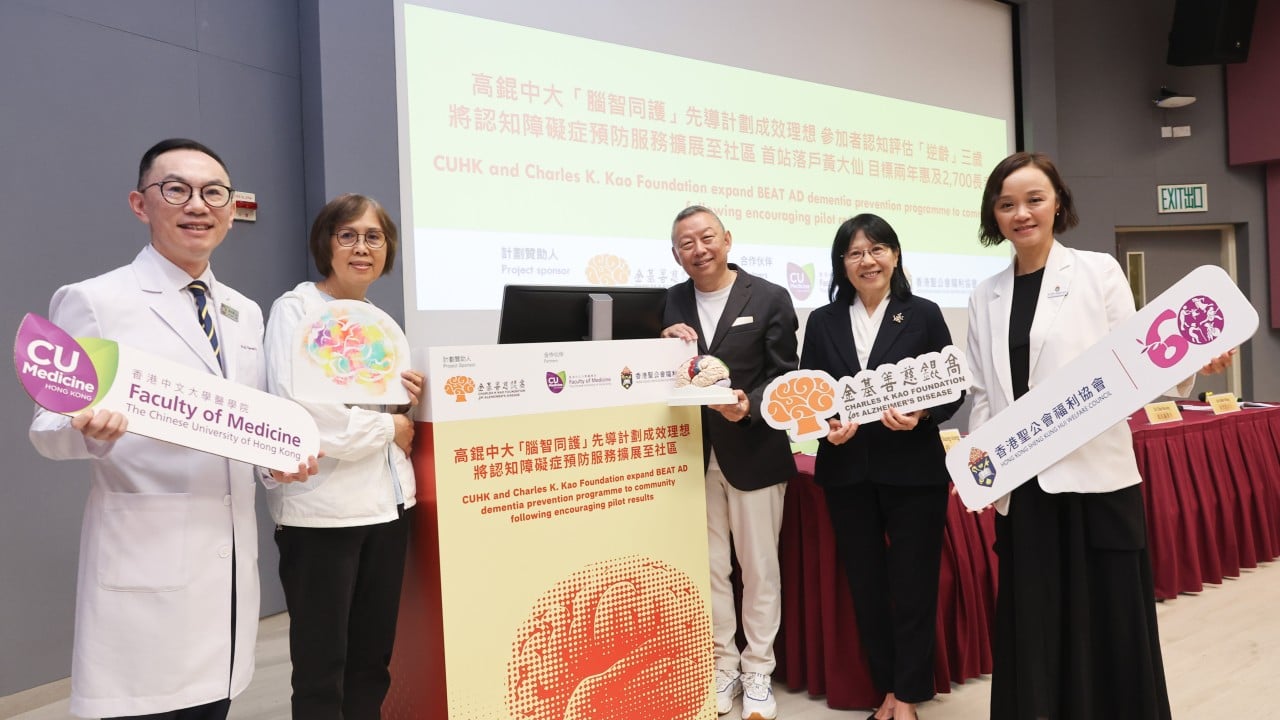
The Chinese University of Hong Kong (CUHK) will launch its first free, district-based dementia screening programme next year, using artificial intelligence (AI)-powered retinal imaging to detect early signs of cognitive decline in 2,700 older residents within two years.
The programme will be implemented in Wong Tai Sin, which has the highest proportion of elderly residents among Hong Kong’s 18 districts.
Participants identified as being at risk will be paired with volunteers to receive tailored advice to help delay the onset of dementia.
Announcing the initiative on Tuesday, Professor Vincent Mok Chung-tong, co-director of the CUHK screening programme, warned that Hong Kong’s rapidly ageing population would increase the burden associated with dementia.
“As our population ages, the number of dementia patients in Hong Kong is projected to increase from 180,000 in 2026 to 240,000 in 2036,” he said. “In 10 years’ time, one-third, or 2 million of our population will be 65 or above, and on average 10 per cent of them will develop dementia.”
But Mok said as many as 45 per cent of dementia cases could be prevented by addressing 14 risk factors, such as physical inactivity and social isolation.
He added that of the 240,000 cases projected in Hong Kong by 2036, about 100,000 could therefore be prevented.
“Research indicates that we must intervene 10 to 15 years before the onset of symptoms. If those risk factors were left unmanaged, they will gradually hinder the clearance of [dementia-linked] amyloid proteins in the brain and cause them to accumulate,” he said.
“However, it’s challenging for people to manage over 10 risk factors when they do not feel a sense of urgency in the first place.”
Hong Kong’s life expectancy was the highest in the world at 85.8 years in 2025 and is projected to reach 89.2 years by 2050, according to the United Nations.
The screening programme, named BEAT AD@WTS and sponsored by the Charles K Kao Foundation, will launch in January 2027.
To qualify, participants must be Wong Tai Sin residents aged 60 to 79 with no previous diagnosis of dementia and no neurological conditions such as brain tumours, stroke or Parkinson’s disease.
The screening will take place at two elderly centres run by Hong Kong Sheng Kung Hui Welfare Council in the district, where more than a quarter of residents are aged 65 or above – among the highest proportion across the city’s 18 districts.
Participants will undergo a brain health evaluation, beginning with a 15-minute assessment of vascular risk factors, physical activity, social activity and diet.
This will be followed by a three-minute AI-powered retinal imaging analysis and a five-minute cognitive assessment.
Those found to have mild cognitive impairment will be referred for further tests to identify the causes.
Participants who test positive in the retinal imaging analysis will be paired with a trained volunteer for a year to help them develop habits that support brain health and follow personalised care plans.
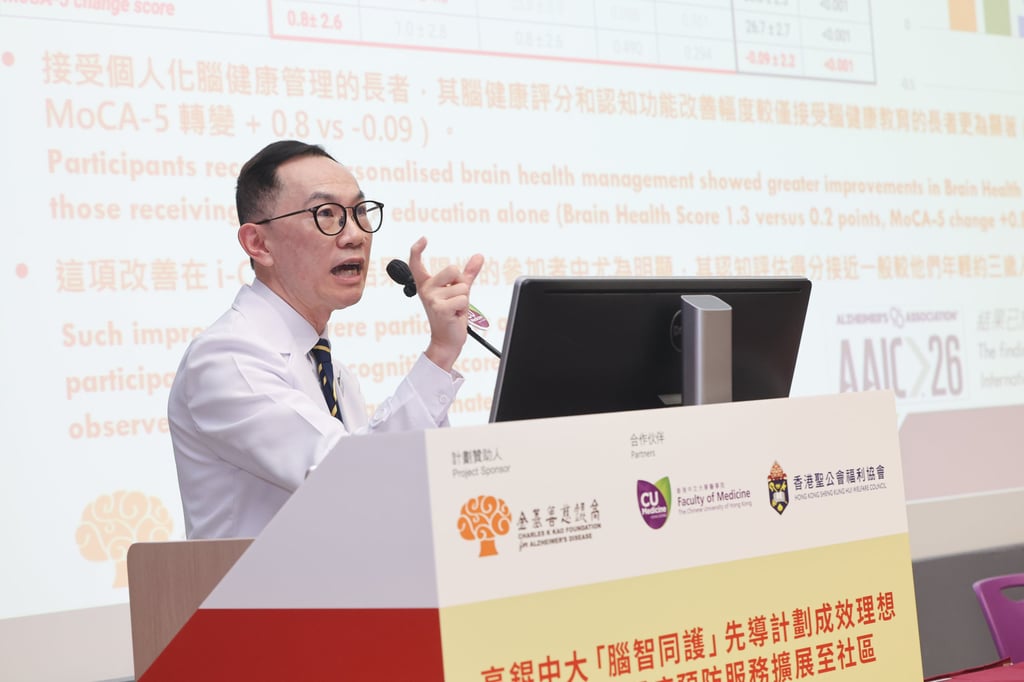
Mok said the screening model built on a 2023 pilot programme in which 21 per cent of 831 cognitively normal older participants tested positive through retinal imaging.
He added that personalised health management advice was found to help improve their cognitive scores to levels approaching those typically seen in people about three years younger.
The team hoped to expand the programme to other districts in the long term, Mok said, but he declined to give a specific timetable.
Eligible residents can register online or send a WhatsApp message to +852 9234 6854.
KioskNews shows a cleaned-up reading view extracted from the publisher’s page — the original always lives on their site, not ours.