When grandma says 'yes' and mum says 'no', here's how to navigate the parenting tug-of-war

Soon after my daughter was born, one of her grandparents saw a photo of her napping peacefully in a phone text chat.
Instead of responding with a heart-eyes emoji, he fired off a message to my husband who had sent the picture.
"She should be wearing socks," he wrote, adding that he had done this for his children – rain or shine.
In our opinion, it was a hot day and she looked perfectly comfortable. I rolled my eyes in response.
To avoid further clashes, we scaled back on photo updates in the text chat.
That was the first time and, I would soon realise, not the last time I would disagree with my parents and in-laws on how to care for my daughter.
With some issues, such as the sock incident, where I was certain I was right, I felt agitated by their advice.
With other issues, I deferred to them for advice, given that they had the collective wisdom of raising three children between them.
Even then, there had been friction when their advice did not work out so well for my daughter.
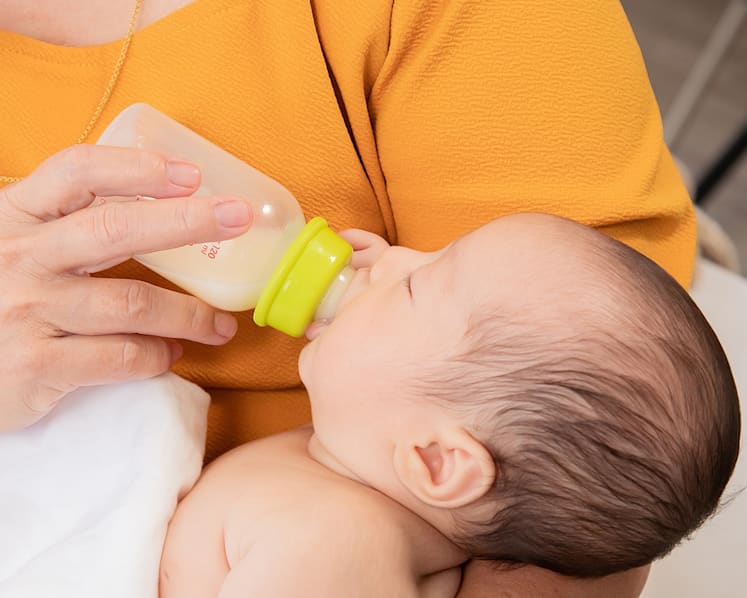
For instance, my mother, who supported me on weekdays in the first few months after birth, pushed for frequent 90ml to 120ml feeds.
My daughter "returned" some of the milk to us, often spewing across my chest soon after a feed.
It took a visit to the polyclinic to learn from the doctor that my baby's stomach is roughly the size of a chicken egg and there was no need to insist on her finishing all her feeds.
Many of my peers have had similar experiences.
One friend quit her job to become a stay-at-home mother after discovering that her in-laws repeatedly and secretly fed her infant fruit juice, despite guidance from healthcare providers that babies in their first six months old generally do not need drinks other than breast milk or formula.
Clashes over food, routines, discipline, as well as differing views on risk and independence, are a rite of passage for parents, family counsellors said.
This is especially relevant in Singapore, where many dual-income households are common and grandparents often play a role in childcare.
Last year, the proportion of dual-income married couples stood at 56.6 per cent, up from 52.5 per cent in 2020, based on the General Household Survey 2025 released by the Department of Statistics in June this year.
Things can get especially heated if parents think that their authority and preferences are not respected and grandparents feel that their experience is undermined.
So how can parents navigate these situations without upsetting their children's grandparents?
WHY PARENTS AND GRANDPARENTS CLASH
Relationship experts said that many disagreements stem from differences in generational knowledge. What was considered sound advice decades ago may not align with current guidance, they added.
To top it off, most parenting convictions and philosophies are shaped by personal childhood experiences.
Ms June Yong, a family life specialist at the charity Focus on the Family Singapore, which offers programmes for families, said that parents sometimes disagree with certain practices from their own upbringing, which can lead to frequent conflicts with their own parents.
It is important for parents to reflect on whether their intense reactions are truly about the recent breach, or if they have been amplified by unresolved wounds, worries and anxieties, she added.
Screen time is one area where this friction is likely to play out, the experts said.
Most millennials such as myself grew up with the television running in the background.
Looking back, I sometimes wonder whether being exposed at a young age to a steady stream of news about conflicts, catastrophes, death and disease, as well as accidentally watching horror films before I was ready for them, contributed to some of the anxieties I grapple with today.
I wish I had more guidance when I was young to process what I was seeing, and to better understand difficult concepts such as death and dying.
That experience has made me more mindful of not just how much screen time my daughter gets, but also what she watches.
Studies have also linked excessive screen time to poorer cognitive, linguistic and social-emotional development, as well as sleep problems, anxiety and depression.
Although many parents now favour zero screen time or guided screen use, some grandparents see devices as a practical childcare solution and may be less strict about boundaries, experts said.
Many grandparents also did not have to grapple with mobile devices, social media and the current content that is available on screens when they were new parents, which makes this a whole new world for them to navigate.
My neighbour, for example, said that his mother shows his two-year-old daughter YouTube videos while she is preparing dinner.
Although he would prefer his daughter to have less screen time, he recognises that, with no one else to support his mother, it would be unreasonable to expect her to juggle childcare, cooking and household chores differently.
IDENTIFY THE NON-NEGOTIABLES
The first step towards a healthy parent-grandparent relationship is for parents to identify their non-negotiables around health, safety and core values, Ms Yong from Focus on the Family said.
These might include food and content to avoid, the use of car seats, and matters related to discipline such as physical punishment.
Other matters, such as an occasional late bedtime or exceeding a screen-time limit on one day, may be areas where parents can afford to be more flexible.
Guidelines should be conveyed to the grandparents simply and directly.
Mr James Leong, a counsellor who runs Listen without Prejudice and hosts a podcast for caregivers, is an advocate for defining clear roles, values and boundaries in such shared caregiving situations.
"Often enough, fault lines appear because some of us don't draw boundaries and don't dare say 'no' to our seniors," Mr Leong said.
This conversation, however, should not begin with an indictment but rather, an explanation of the rationale behind the rule.
Ms Yong gave the example of screen use where parents can explain to grandparents that they want their children to have a maximum of one hour of screen time on weekdays because they want to protect their well-being, and to ensure that they have a variety of different leisure activities to unwind and relax.
If needed, parents and grandparents can also work together to develop a compromise that works for all parties.
For example, parents may install safeguards to ensure that the content their children are shown is age-appropriate and approved by them.
For boundaries involving health or safety, however, parents should be clear about what cannot be compromised.
If the same boundary is repeatedly crossed, they may need to revisit the caregiving arrangement rather than simply repeating the rule.
When the impact on the child is relatively minor or temporary, parents may want to be flexible and adopt a long-term view.
"When certain boundaries are crossed, we can choose to give our parents grace and reinforce to them what we hope to see," Ms Yong said.
Often enough, fault lines appear because some of us don't draw boundaries and don't dare say 'no' to our seniors.
Mrs Grace Lio, a senior learning and behavioural therapist at Mindful Bear, a counselling centre for children and teenagers, said that she adjusts her expectations when her child is under the care of their grandparents.
She does not expect her 12-year-old daughter to be able to complete rigorous revision of her schoolwork while under their care.
"I am not there, I can't interrogate the grandparents as to why certain expectations were not met," she said.
Mrs Lio, who has two other children aged 23 and 22, added that as children mature, parents may also set and convey ground rules to their children directly.
For instance, instead of expecting her parents to constantly police her youngest daughter while at their place, she personally briefs her on phone usage limits and trusts that she obeys.
If she does not comply, Mrs Lio does not blame her parents but discusses the incident with her daughter instead.
KNOWING WHEN TO LET GO
Experts said parents need to recognise that most grandparents believe they are giving their grandchildren the best possible care.
My father, a retired counsellor, acknowledged that grandparents may initially think they know better because of their experience raising children.
But he also recognised that parents today have access to more information and resources than previous generations did.
He said that parents should explain their parenting goals and their child's routines from the outset, while remaining open to grandparents' suggestions.
"Compromises can be made over certain aspects of caregiving, but ultimately, parents have to stand their ground and grandparents have to support them as they grow in their parenting journey," he added.
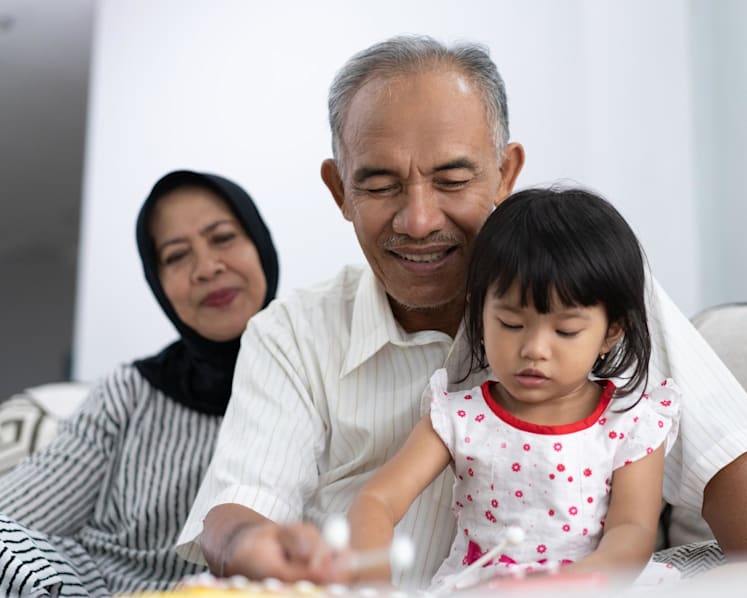
Grandparents are also doing unpaid work and there is no obligation for them to partake in caregiving duties.
Relating her own experience, Ms Yong from Focus on the Family said that she was surprised by the intensity of her own unhappiness following clashes over her children's diet and screen time.
"What helped me was my husband encouraging me to take a step back and see that a strong relationship between our children and their grandparents is largely a good thing," she added.
"Being able to see the big picture helped me to soothe myself on days when certain boundaries were crossed. Keeping an open mind can also remind us that there is often more than one way to raise a healthy and thriving child."
One tip she would offer parents is for husband and wife to handle conversations with their own parents rather than with their in-laws, since each partner tends to know how to better handle his or her own parents.
Recognising that my parents are doing their best to balance my expectations while giving my daughter the best possible care helped me see how I had been unfairly short on patience towards them over issues such as delayed bedtimes during my daughter's sleepovers at their place.
After all, my mother is far more fastidious than I am.
She takes time to prepare meals carefully, helps my daughter with her toileting routine and makes sure her teeth are thoroughly brushed before bed. I am more willing to simplify meal preparation or let my daughter manage some of these routines herself to save time.
My mother is also further along in age and cannot be expected to speed through all her caregiving duties.
And really, who am I to impose a strict sleep routine when I myself struggle to get my daughter to bed on time even with all the shortcuts I take?
Last year, about four years into my parenting journey, I began holding back on firing off impulsive text messages to my parents whenever routines were broken.
I've learnt to be more respectful and gentler with them.
I also cut them some slack when they stream a few videos for my daughter so that they can put their feet up – a small compromise given the time and energy they devote to caring for her.
Seeing them as individuals with their own ideas about what a child needs, while recognising their pure intentions and genuine concern for my daughter's well-being, has helped me make room for them to build their own unique relationships with her.
KioskNews shows a cleaned-up reading view extracted from the publisher’s page — the original always lives on their site, not ours.