US sanctions Chinese firms over alleged military supplies to Cuba
The United States has imposed sanctions on two Chinese companies it accuses of supplying equipment and components to Cuba’s military, as Washington intensifies pressure on Havana’s foreign suppliers and expands its authority to target businesses operating on the island.
The US State Department said on Thursday that China National Electronic Import and Export Company, or CEIEC, and Beijing H&C Technologies had worked with Cuban arms procurement company Sociedad Mercantil Duna to supply military-related goods in 2026.
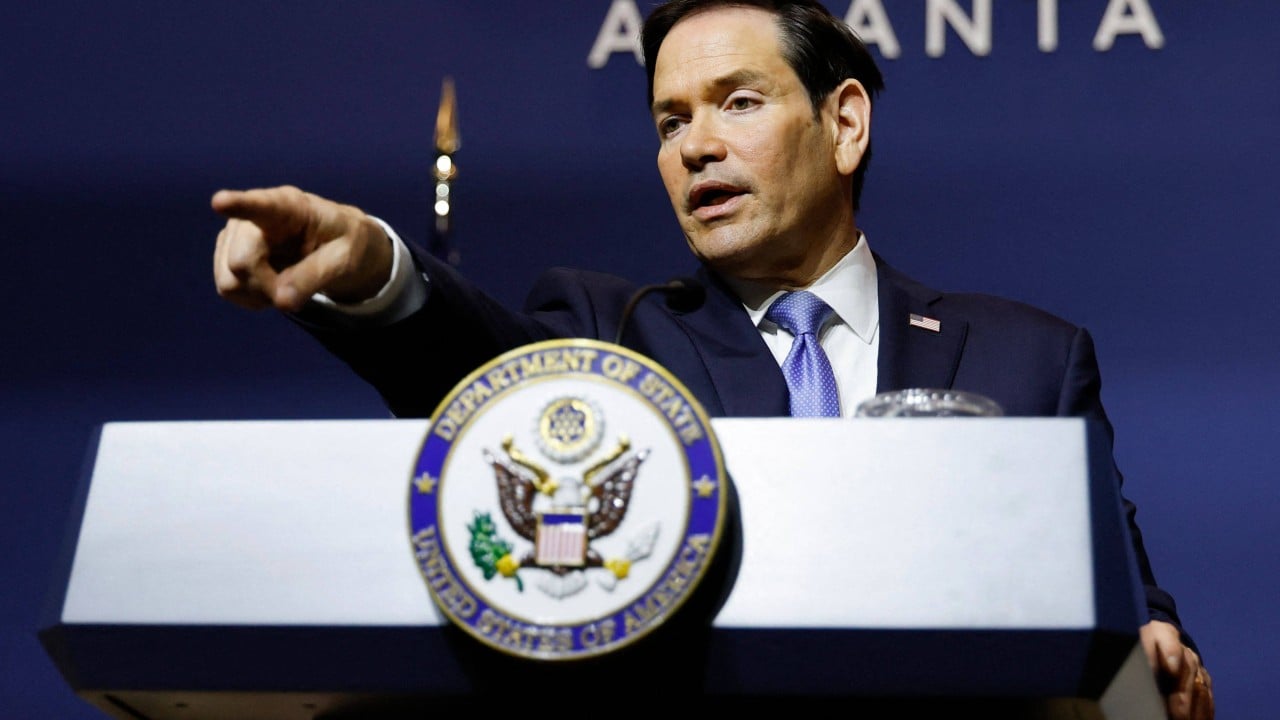
Secretary of State Marco Rubio said Cuba’s foreign backers supplied military equipment that sustained its armed forces and enabled repression. He also accused Havana of serving as a “staging ground for a global coalition of hostile anti-American actors to threaten, spy on, and plot against the United States and its interests”.
According to the department’s accompanying fact sheet, CEIEC contracted with Duna to export components intended for military equipment used by Cuba’s Ministry of Revolutionary Armed Forces.
CEIEC, founded in 1980 and headquartered in Beijing, is a subsidiary of state-owned China Electronics Corporation. According to its website, it works in defence and dual-use technology, public security, cybersecurity, and information technology systems.
00:58
Trump vows to ‘take’ Cuba as island reels from total power cut linked to oil embargo
Beijing H&C Technologies, which Washington identifies as a subsidiary of CETC International, part of China Electronics Technology Group Corporation, worked with Duna to export military equipment to Cuba, the department said.
Also based in Beijing, Beijing H&C sells electronic and security equipment, including intrusion detectors and anti-theft alarm controllers.
Neither the statement nor the fact sheet identified the specific equipment, disclosed the value of the transactions or provided supporting documentation for the allegations.
The Chinese embassy in Washington did not immediately respond to a request for comment.
Washington sanctioned Duna in August over its role in importing military-related equipment from China and Russia.
CEIEC, a Chinese state-owned enterprise that exports defence electronics and security systems, was already under US sanctions imposed in November 2020. Those measures concerned what the US Treasury Department described as the company’s support for the Venezuelan government’s restrictions on internet services, digital surveillance and cyber operations against political opponents.
Beijing opposed the earlier sanctions against CEIEC. In December 2020, then-foreign ministry spokeswoman Hua Chunying described them as a pretext to suppress Venezuela and Chinese companies, urging Washington to reverse the measures.
Thursday’s designations were made under a May executive order authorising sanctions related to repression in Cuba and threats to US national security and foreign policy. The Treasury Department targeted the two Chinese companies under a provision covering material support for the Cuban government.
The measures block designated companies’ property and interests in property within US jurisdiction and generally prohibit US persons from dealing with them, unless authorised or exempt.
In a parallel action, the Treasury Department expanded the sectors of Cuba’s economy in which foreign businesses can be targeted under the order to include electronics, manufacturing, marine and technology.
The determination, effective from Thursday, opens the way for further designations but does not itself sanction individual companies. It applies to foreign businesses regardless of nationality.
The broader sanctions package also targeted an oil shipping network, Cuban state-owned electronics and technical services enterprises and individuals linked to the island’s military-controlled economy. The US identified five vessels as blocked property.
Among those designated were Guillermo Faustino Rodriguez Lopez-Calleja, whom Washington described as part of an offshore network moving petroleum shipments to and from Cuba, and Any Rodriguez Lastres, daughter of the sanctioned president of GAESA, the Cuban military’s business conglomerate.
Rubio accused Cuba’s ruling elite of hoarding energy, shipping and technology resources for its own enrichment while ordinary Cubans faced blackouts and shortages. The State Department said the United States continued to authorise humanitarian trade, including food, medicine and medical devices.
Separately on Thursday, Cuban state security agents detained independent journalist Yoani Sanchez in Havana, according to 14ymedio, the news outlet she founded and directs.

Sanchez left her home in the Nuevo Vedado neighbourhood that morning and shortly afterwards sent colleagues a message saying, “The police kidnapped me”, the outlet reported. Her husband, journalist Reinaldo Escobar, who was in Madrid, also announced her detention.
Amnesty International’s Erika Guevara-Rosas condemned the detention as “a new and alarming attempt” by Cuban President Miguel Diaz-Canel’s government to silence journalists.
Cuban officials have repeatedly denied holding political prisoners. In an April interview with NBC’s Meet the Press, Diaz-Canel said there were none in Cuba and called allegations that critics were jailed for speaking out “a big lie”.
KioskNews shows a cleaned-up reading view extracted from the publisher’s page — the original always lives on their site, not ours.