Opinion: Opinion | Starlink, India, And Why Elon Musk Must Know His Billionaire Tantrums Won't Work
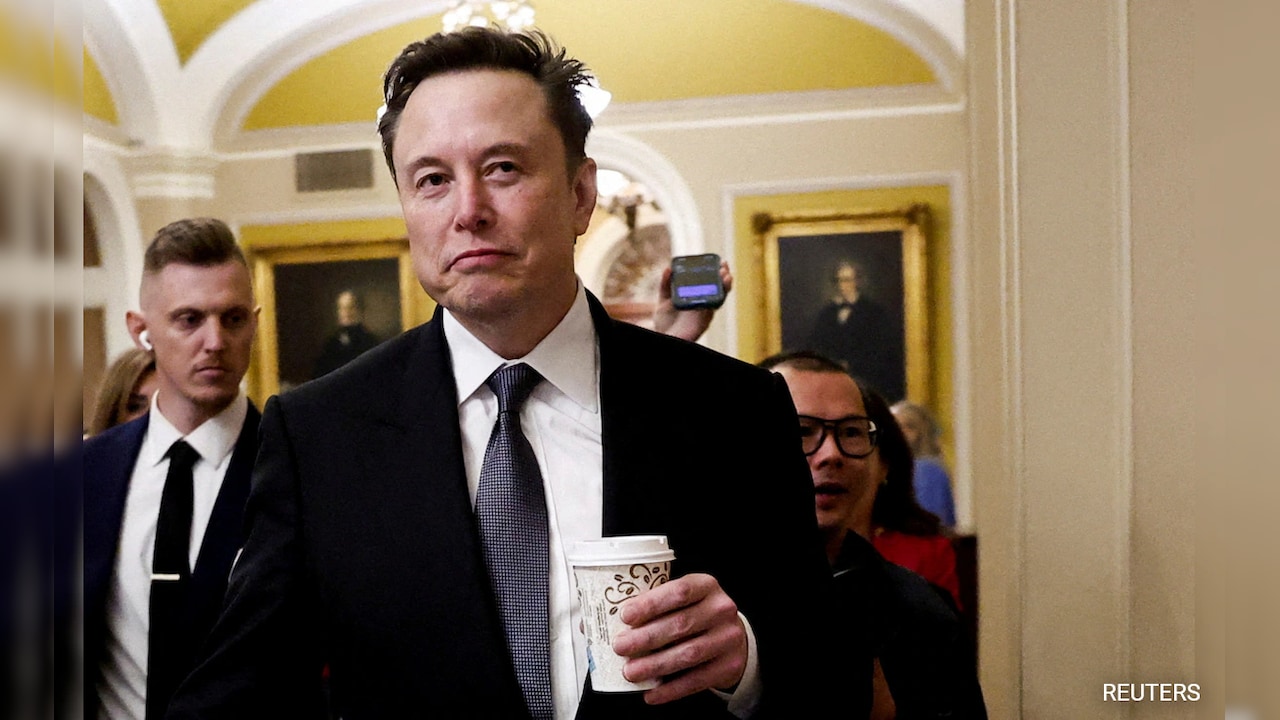
Elon Musk's public tirade against India's regulatory establishment is a revealing demonstration of the entitlement that increasingly characterises the world's most powerful technology billionaires. Frustrated by the delay in securing final approvals for Starlink's commercial launch in India, Musk has chosen to portray a sovereign government's regulatory process as an obstacle to technological progress and consumer welfare. His intervention reveals less about the merits of Starlink's application than about his own understanding of power, privilege, and market access.
The underlying message is difficult to miss. Musk appears to believe that because Starlink possesses advanced technology, operates across much of the world, and promises to connect underserved populations, India should expedite its entry on his terms. When New Delhi does not oblige, the implication is that the regulatory system must be dysfunctional or obstructive. This is a familiar playbook: elevate a commercial dispute into a moral crusade, cast the entrepreneur as the champion of ordinary citizens, and portray the host government as an impediment to progress. It may generate headlines and rally supporters on social media. It is no substitute for engaging with the sovereign requirements of the Indian state.
Advertisement - Scroll to continue
India must reject this framing unequivocally. Its regulatory institutions do not derive their legitimacy from Elon Musk's approval, nor do they require validation from a foreign billionaire who mistakes global commercial influence for political authority. India is an independent country, not a market in which powerful technology executives can demand preferential treatment and publicly pressure the government when they encounter regulatory resistance.
The Indian government's response has been appropriately firm. The Ministry of Communications has maintained that the satellite communications authorisation framework is fair and non-discriminatory. Starlink, Reliance Jio's satellite business, and Bharti-backed Eutelsat OneWeb are broadly at the same regulatory stage, with mandatory security assessments still to be completed before spectrum can be assigned. Communications Minister Jyotiraditya Scindia has reiterated that India does not permit monopolies and that commercial operations can begin only after the necessary security requirements are met and spectrum charges are finalised.
Advertisement - Scroll to continue
This is not an unreasonable position. It is the basic responsibility of any government that takes national security seriously. If Musk believes that Starlink has fulfilled every requirement, he should demonstrate as much through the appropriate institutional channels. What he cannot reasonably expect is that India will dilute its regulatory standards because his company has a powerful global brand or because he can mobilise public opinion against the government.
What Musk Has Got Wrong
The presumption that India must accommodate Musk is itself the problem. India's economic rise has been accompanied by a growing determination to exercise control over the terms of its engagement with global capital and technology. The days when access to the Indian market could be treated as a concession extracted through diplomatic pressure or corporate lobbying are over. India welcomes investment, innovation, and competition, but it does so on the basis of its own laws, security requirements, and strategic priorities. Market size is not an invitation to disregard these conditions. Nor does technological sophistication confer a right to operate without regulatory approval.
Musk's intervention is particularly misplaced because satellite communications is not an ordinary commercial sector. It is a strategic domain in which connectivity, data governance, defence preparedness, and territorial security intersect. Low-Earth-orbit satellite networks offer substantial benefits, especially in remote and underserved regions, but they also present complex questions concerning terminal activation, control of satellite beams, data routing, network oversight, and potential dual-use applications.
For India, these are not abstract concerns. The country confronts security challenges along sensitive borders and across strategically important maritime spaces. Reports of Starlink terminals being recovered during sensitive operations in Manipur and the Andaman and Nicobar Islands have reinforced the importance of establishing robust controls. They underscore why the government cannot treat the deployment of satellite communications infrastructure as a purely commercial matter.
Musk may insist that Starlink has developed India-specific safeguards, established local infrastructure, and made arrangements for data localisation. These claims deserve technical assessment, not automatic acceptance. The responsibility for determining whether security conditions have been met rests with the Indian authorities. It cannot be transferred to the company seeking market access, much less settled through the public pronouncements of its chief executive.
The Thing About Credibility
Indeed, Musk's rhetoric risks undermining his own credibility. By reducing outstanding security and spectrum questions to an alleged failure of the Indian system, he has effectively suggested that the government's concerns are obstacles to be overcome rather than legitimate requirements to be addressed. That is an extraordinary assumption for a foreign company to make about a country whose cooperation it needs. A company that wants to operate in India must understand that trust is earned through compliance, transparency, and sustained engagement, not through public denunciations of the institutions responsible for granting permission.
There is also a troubling double standard in Musk's argument. The billionaire presents himself as an advocate of consumer choice and technological disruption, yet appears unwilling to accept that the Indian state has its own legitimate obligations and priorities. His preferred narrative pits an innovative outsider against an allegedly obstructive establishment. But India's interests cannot be reduced to the commercial ambitions of a foreign technology entrepreneur.
Nor is it India's responsibility to resolve Musk's commercial frustrations by granting him political accommodation. Starlink is a private enterprise seeking access to a commercially attractive market. It is not performing a charitable service for which India must set aside its own requirements. Rural connectivity is an important national objective, but it is not an argument for exempting any provider from the rules. If Starlink can help bridge India's digital divide, it should be encouraged to do so within a framework that applies equally to all operators.
The satellite broadband debate must be situated within India's broader strategic priorities. Connectivity is essential to economic growth, financial inclusion, education and access to public services. Satellite technology can complement terrestrial networks, particularly in geographically difficult regions where conventional infrastructure is expensive to deploy. Starlink's capabilities may therefore have a useful role to play in India's digital transformation.
But the desirability of a technology does not settle the terms on which it should enter the market. India must retain the ability to determine how critical infrastructure is deployed, how sensitive data is handled, and what safeguards are required to prevent misuse. These are sovereign responsibilities, not regulatory inconveniences that can be dismissed whenever they conflict with a company's commercial timetable.
There is a larger geopolitical dimension to this question. The global technology landscape is increasingly shaped by private corporations whose economic resources, communications platforms, and infrastructure networks give them influence extending well beyond conventional commercial activity. Satellite constellations, cloud infrastructure, and digital networks can acquire strategic significance because the entities controlling them possess capabilities that states cannot simply ignore.
Strategic autonomy does not mean technological isolation. It means retaining the freedom to choose the terms of engagement rather than allowing external commercial pressures to determine national priorities. This is precisely why India must resist attempts to turn regulatory disagreements into public contests of influence. If criticism from a globally powerful executive becomes a means of accelerating approvals, it risks establishing a damaging precedent. Indeed, a confident state should be able to welcome competition while remaining entirely unmoved by corporate intimidation.
Musk's approach has instead allowed a question of licensing and security to become a contest over his expectations of India. That is a strategic miscalculation. The larger lesson extends well beyond Starlink. Global technology companies increasingly operate in an environment where infrastructure, data, and connectivity are inseparable from questions of national power. Their leaders may possess immense economic resources and global platforms, but these advantages do not erase the authority of sovereign states to determine the conditions under which critical technologies operate within their jurisdictions. Nor does every regulatory delay establish evidence of protectionism or hostility to innovation.
Musk's outburst exposes a familiar contradiction in the politics of technological expansion. He presents Starlink as an instrument of democratisation, capable of bringing connectivity to those whom existing systems have left behind. Yet his response to regulatory resistance has relied on public pressure and the delegitimisation of the institutions responsible for granting market access.
India should neither be intimidated by Musk's global influence nor distracted by his theatrics. The final word on Starlink's entry into India must belong to the Indian regulatory authorities, acting under Indian law and in the public interest. The decision must be determined by compliance, security, and the merits of the application, not by the stature of the applicant, the impatience of its founder, or the noise generated on social media.
(Harsh V Pant is Vice President for Studies at Observer Research Foundation, New Delhi)
KioskNews shows a cleaned-up reading view extracted from the publisher’s page — the original always lives on their site, not ours.