Patrice Dutil: Quebec’s next lieutenant governor should be a soldier, not a symbol
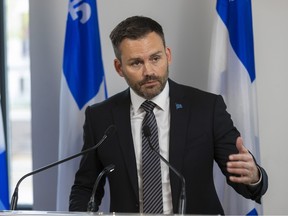
The Parti Québécois (PQ) has barely won an election and is already training its fire on the Crown. Premier Paul St-Pierre Plamondon has vowed to defund the office of the lieutenant governor, said he will seek legal advice on keeping the Crown’s representative out of the opening of the legislature and has promised to cut Quebec’s ties to the monarchy. Constitutional experts rightly note that abolishing the office unilaterally is nearly impossible, since the amending formula requires the consent of every province. But the legal wall is not the whole story. An institution can survive on paper and still wither in public esteem. That is the real danger in Quebec, and Ottawa needs to answer it with its most underused tool: the power to choose who wears the office.
Sign In or Create an Account
In December 2023, the day after the appointment of the current Lieutenant Governor Manon Jeannotte, the National Assembly voted unanimously, with all 100 members present, for a motion suggesting that the office lacked democratic legitimacy and was a reminder of a colonial past. The motion was non-binding and, by its own terms, not aimed at the incumbent. But it revealed something important: in Quebec, the Crown is not defended, only tolerated. Its representative is introduced to the public as a relic and has little in the way of a ready-made reputation to counter that story.

Columnist Jesse Kline keeps you up to date with what’s happening in Israel and the effects of antisemitism on life here in Canada. Friday mornings.
By signing up you consent to receive the above newsletter from Postmedia Network Inc.
A welcome email is on its way. If you don't see it, please check your junk folder.
The next issue of Channel Israel will soon be in your inbox.
We encountered an issue signing you up. Please try again
Jeannotte assumed office on Jan. 25, 2024 and her term is likely to end in January 2029. At that point, Prime Minister Mark Carney should be prepared to appoint a distinguished Canadian military officer as Quebec’s lieutenant governor.
It would be a mistake to interpret this choice as something other than a gesture to draw on the deep-seeded notions of respect and dignity that exist in Quebec. Prestige cannot be legislated or decreed. It is inherited from the people who hold an office and from what the public believes they stand for. Quebec’s vice-regal office has had stretches of dignity and stretches of embarrassment, and the embarrassments, including the 2000’s expenses scandal that ended in a criminal conviction, linger in the collective memory far longer than the quiet years of good service.
The Crown in Canada has always been, at its core, the embodiment of service and continuity above partisanship. No profession in the country embodies those ideas more plainly than the Canadian Armed Forces. A senior officer has spent a career swearing allegiance to something larger than a party, a premier or a region, and has demonstrably done it without seeking applause. That is precisely the posture a lieutenant governor needs: someone who can sign a bill, open a session or swear in a government without anyone wondering whose side they are on.
Quebec, moreover, has a military heritage that is distinctly its own. The Royal 22e Régiment, the Van Doos, is among the most celebrated regiments in the country, headquartered at the citadel in Quebec City, a fortress that doubles as a vice-regal residence. The Royal Military College Saint-Jean is a prestigious institution that was recognized in 2021 as a degree-granting university in 2021. Georges Vanier, a Quebecer, decorated Van Doos commander and former governor general, remains one of the most admired holders of the vice-regal office in Canadian history. A francophone general or admiral from the Quebec tradition would not arrive as an outsider imposed from Ottawa. They would arrive as one of Quebec’s own, in uniform, with decades of service to show for it.
There are practical reasons, too. Military leaders are accustomed to ceremony without vanity, to public duty without partisan scrutiny and to long, unglamorous hours of travel and presence. The lieutenant governor’s calendar, which should be filled with hundreds of engagements every year, from honours ceremonies to commemorations, is exactly the work of someone who understands the power of showing up. Remembrance, veterans’ affairs, cadet programs and the honouring of Quebecers who serve are the kind of civic ground on which even a sovereigntist government would find it awkward to pick a fight.
The PQ’s case against the Crown rests on cost and symbolism: an unelected monarchist relic funded to the tune of roughly $1.16 million annually by Quebec taxpayers. A military appointment reframes both. The office stops looking like a courtly vestige and starts looking like what it is at its best: a non-partisan public servant embodying duty to the province and country. It is much harder to run against a veteran who spends his week with legion branches and cadet corps than against an abstract monarchy.
Nor does this require anyone to pretend that Quebecers have suddenly fallen in love with the monarchy. The goal is humbler and more achievable: to make the office hard to caricature. Respect for the person can quietly rehabilitate respect for the post. The last lieutenant governor of Quebec with a military past was Gilles Lamontagne, who served from 1984 to 1990. He was an RCAF bomber pilot in the “Alouettes” Bomber Squadron when his plane was shot down over the Netherlands in 1943 on his way back from a night bombing over Germany. He was held as a prisoner of war (POW) in Germany until May 1945. Lamontagne brought incontestable prestige to the position of lieutenant governor of Québec.
The prime minister should consult broadly, including with Quebec’s own opposition parties and veterans’ organizations, and choose a francophone officer of unquestioned integrity. The appointment should be made on a clear timeline, announced with respect for the outgoing incumbent’s service and accompanied by a commitment to a visible, public role in every region of the province.
The Crown in Quebec will not be saved by constitutional argument alone. If it is to be saved, it will be done so by people whom Quebecers can look at and respect. Quebecers know that their political institutions have been anchored in the monarchy since the first settlements of 1608. It’s in their political DNA. It is something they share with almost all polar nations. Ottawa must make a major effort to defend a vital and defining institution. It starts with appointing exceptional people to the job, though it does not stop there. Carney has the power: he should use it.
Patrice Dutil is a senior fellow at the Macdonald-Laurier Institute. His latest book is Prime Ministers and Other “Big Men”: The Recollections of John Lambert Payne (with Arthur Milnes).
National Post
Join the Conversation
This website uses cookies to personalize your content (including ads), and allows us to analyze our traffic. Read more about cookies here. By continuing to use our site, you agree to our Terms of Use and Privacy Policy.
KioskNews shows a cleaned-up reading view extracted from the publisher’s page — the original always lives on their site, not ours.