Opinion: Opinion | Akash Missile Could Be India's Next Big Export. But There's A Problem
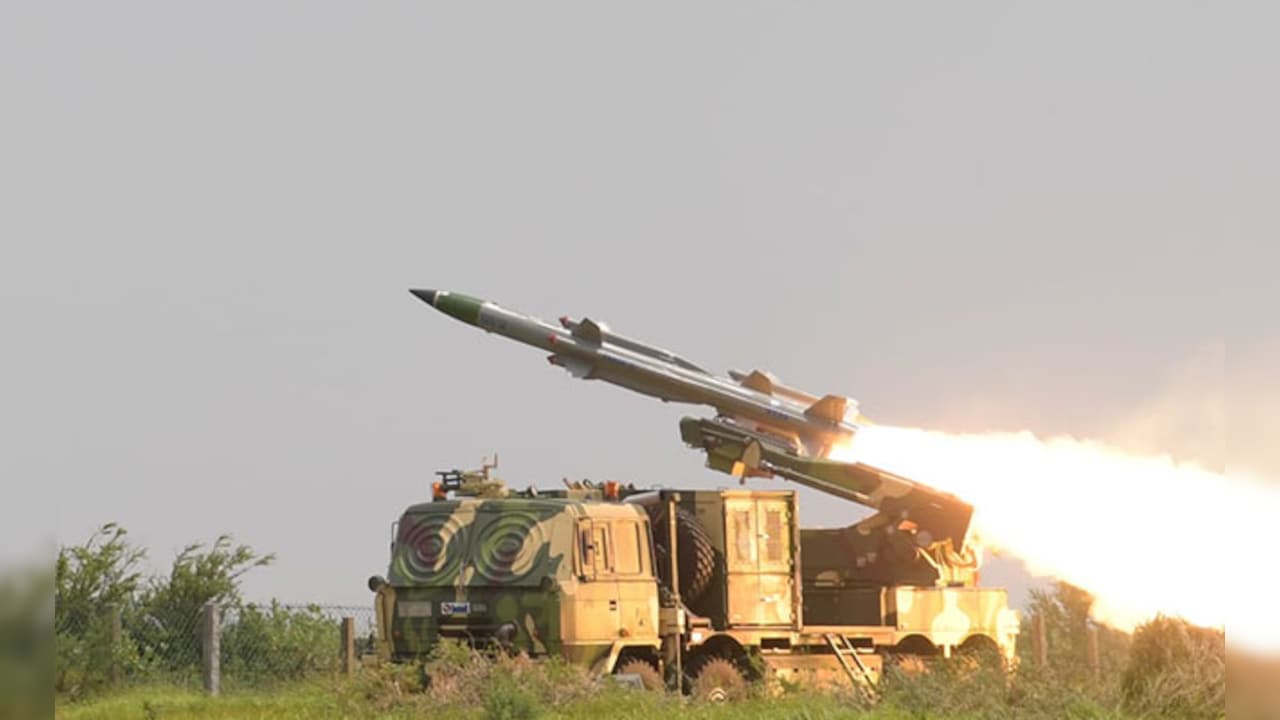
India's reported sale of its indigenous Akash surface-to-air missile system to Tajikistan and Turkmenistan could mark an important step in the country's ambition to become a major global arms exporter. Beyond the commercial value of the deals, the entry of Akash into Central Asia would open a new market for Indian defence technology in a region where countries are increasingly looking to diversify their military suppliers away from Russia and China.
Earlier, Armenia and the Philippines already received missiles and munitions from India, showing the high potential and trend.
The significance of Akash goes well beyond the sale of a missile system. It represents a larger transformation in India's defence industrial policy - from a country that depended heavily on imported weapons to one seeking international markets for its indigenous military capabilities.
For decades, India's defence manufacturing ecosystem was constrained by excessive controls, a policy mindset that did little to encourage exports. The result was a persistent contradiction: India remained among the world's largest arms importers.
That contradiction is now beginning to change, rather radically. But policy reform must not stop at encouraging exports. It must also make exporting commercially viable.
Telling Numbers
The numbers tell a good story. India's defence production rose from Rs 46,429 crore in 2014-15 to approximately Rs 1.78 lakh crore in 2025-26. Defence exports climbed from just Rs 686 crore in 2013-14 to a record Rs 38,424 crore in 2025-26, reaching more than 80 countries.
The government has set its sights on annual defence production of Rs 3 lakh crore and exports of Rs 50,000 crore by 2029. These are ambitious targets, but they are not beyond reach if the country can scale up manufacturing with a sustained international presence.
Importantly, India is gradually moving beyond the export of components, spares, and low-value equipment towards complete weapon systems and sophisticated platforms. Missiles, radars, electronic warfare subsystems, counter-drone solutions, artillery systems, and naval equipment are now part of the export conversation.
The BrahMos cruise missile and Akash air-defence system illustrate this shift. Other indigenous capabilities, including the Astra air-to-air missile, offer further opportunities. The Tejas light combat aircraft and Indian-built naval platforms could also contribute to the country's longer-term export ambitions. Wonder why India's robust capabilities in warships - from corvettes to frigates to destroyers - are still not part of the global military export systems, from Asia to Africa?
The Akash programme is particularly instructive, and its improved variants, including Akash Prime and Akash-NG, demonstrate why exports must be supported by continuous research, upgrades, and reliable production.
An Economic Opportunity
Defence manufacturing is often discussed primarily through the lens of national security. That is understandable, but incomplete. Defence is also an economic activity capable of generating massive investment, a skilled workforce, technological innovation, and industrial growth.
However, a few manufacturing sectors impose such demanding requirements on suppliers. Defence companies must satisfy stringent quality standards, undergo extensive trials and validation, meet security, and prove their ability to deliver over long periods.
They must also invest in research, testing, and specialised manufacturing, often well before a contract translates into revenue. The best part: technologies developed for the military add many capabilities in advanced materials, electronics, sensors, communications, propulsion, and precision manufacturing.
So, the export orders can help Indian companies increase production volumes, spread development costs, and reduce their dependence on a single domestic customer.
This is especially important for the private sector and the thousands of micro, small, and medium enterprises (MSMEs) that supply components, subsystems, and services. A credible export pipeline can give these businesses the confidence to invest in new equipment, tech experts, and develop IPs.
What Does The Industry Want?
One of the most important areas requiring attention is the financing of defence exports, particularly through Lines of Credit (LoC). Solely guided by the Export-Import Bank of India (Exim Bank), the financial support extended to domestic manufacturing needs to be implemented with greater policy thrust.
In international defence markets, the ability to offer financing can be almost as important as the quality of the product.
Indian manufacturers can develop a competitive product, spend years building relationships with a prospective customer, and eventually win an overseas contract, only to encounter difficulties in accessing the financing needed to execute it.
Industry has raised concerns about cumbersome procedures, including requirements for multiple tenders or additional price-discovery documentation, even when a company has already secured an overseas contract.
However, for government-to-government arrangements, it works better, but that is not the objective, as MoD routinely promotes and calls for greater private sector participation.
Especially, it hits defence MSMEs harder due to credit facilitation. Here, the usual tough norms in defence exports are not only about supplying but also about trials, after-trial validation, and acceptance of the trials.
So much for the fact that under schemes like LoC, with Exim Bank's USD 27-32 billion in credit across the sectors, defence ends up with very few takers. So, the demand is that defence should be recognised as a priority sector, noting the fact that Exim Bank works under the Ministry of Finance - a world of separate rules and processes.
Further, policymakers should take this cycle of defence export into consideration and design and modify policy accordingly. Where a genuine, independently verifiable contract has been awarded, the financing process should be designed around the realities of that transaction rather than rely on procedures that may be poorly suited to the nature of defence procurement.
The issue is particularly acute for MSMEs. The government must determine whether existing credit facilities are reaching the companies and transactions for which they were designed. If substantial financing capacity remains underutilised because of procedural barriers, the answer is not simply to announce a larger credit envelope. It is to make the existing mechanism work.
A Different Financing Approach
A defence export contract does not follow the same commercial cycle as an ordinary manufactured-goods order. The process may involve customer-specific modifications, technical evaluations, field trials, validation, acceptance procedures, security clearances, and lengthy delivery schedules. Even after a company wins the contract, significant expenditure may be required before the first payment is received.
These characteristics must be recognised in the design of export finance.
The government should consider a dedicated defence-export financing framework that provides timely working capital, contract-linked credit, and appropriate guarantees for eligible exporters.
Government-to-government arrangements cannot be the sole model for an industry in which New Delhi also expects private companies to identify markets, compete for contracts, and expand exports.
If private participation is a policy priority, private exporters must be able to access financial support without facing procedures that make their contracts difficult to execute.
The government should also examine whether defence manufacturing and exports merit priority-sector-like treatment or another tailored credit mechanism, in consultation with the Reserve Bank of India, the Finance Ministry, and Exim Bank. The objective should not be to dilute financial discipline but to recognise the distinctive risks, capital requirements, and long gestation periods of defence exports.
A single-window mechanism could coordinate export clearances, financing, insurance, and other approvals.
India's defence export ambitions also require a more coherent approach across ministries and agencies. The MoD may encourage exports and private investment, while financing institutions operate under separate mandates and procedures. Exporters are left to bridge the gap between industrial policy and financial implementation.
That gap must be closed.
The opportunity is substantial. As geopolitical uncertainty encourages countries to diversify their sources of military equipment, India can offer an alternative to established suppliers. Its growing technological base, expanding industrial capacity, and diplomatic relationships give it an opening in markets across Asia, Africa, the Middle East, and beyond.
Akash offers a useful example of what India can achieve when domestic technological capability is matched by an export ambition. The next stage is to build a policy ecosystem that allows many more Indian systems to follow that path.
(Dr Manish Kumar Jha is a national security expert, defence editor, and the founder of the military think tank, Strategic Insights)
KioskNews shows a cleaned-up reading view extracted from the publisher’s page — the original always lives on their site, not ours.