Perplexity CEO Aravind Srinivas Says "Don't Talk Finances" As Company Hits $1 Billion Revenue
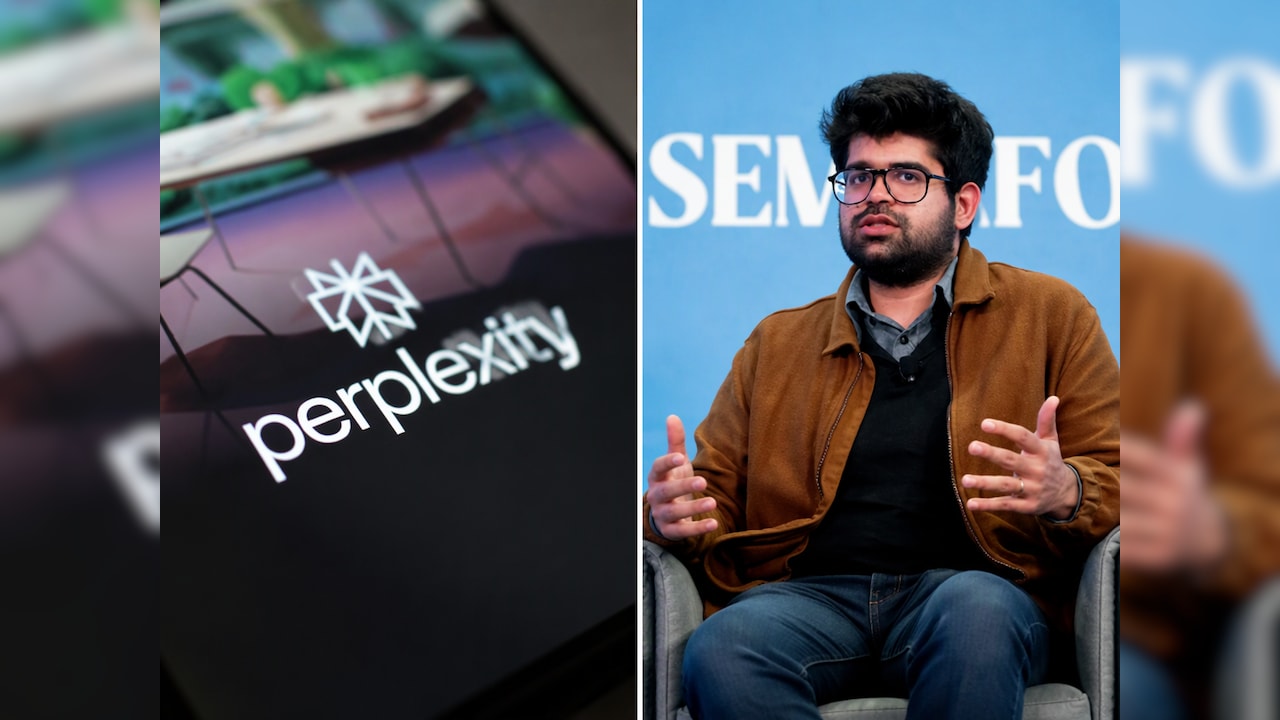
Artificial intelligence startup Perplexity has crossed a major milestone. Its annual recurring revenue (ARR) has surpassed $1 billion, according to co-founder and CEO Aravind Srinivas. But while the company is celebrating its growth, Srinivas has made it clear that discussing its finances is not something it does very often.
"We don't talk about our finances very often because we're focused on building," Srinivas wrote in a post on X. He added that Perplexity had crossed $1 billion in ARR, while highlighting its "strong margins and a healthy growth rate". The post comes after Srinivas revealed the milestone at Semafor's Silicon Valley & The World event.
The number is significant for a company that has positioned itself as an alternative to traditional search engines. But there is more to the announcement than the headline figure. Perplexity has also suggested that it reached the milestone while spending considerably less than a major AI rival.
Also Read | Layoffs Are Rising In Tech, But These Skills Are Helping People Unlock Better Pay

Perplexity's $1 Billion Revenue Milestone: What Does It Mean?
Crossing $1 billion in annual recurring revenue and generating $1 billion in actual annual revenue are not the same.
ARR is an annualised measure of recurring revenue. It estimates how much a business would generate over 12 months if its current recurring revenue continued at the same pace. It is not necessarily the amount of money the company has already earned during the financial year.
Srinivas had earlier set a target of $750 million in ARR by the end of 2026. However, the company has crossed the $1 billion mark ahead of that target.
In an interview with CNBC, he said, "Our end-of-year target was $750 million ARR (annual recurring revenue). We crossed a billion... We are growing faster than we expected."
The latest milestone follows a sharp increase in Perplexity's revenue run rate during 2026. In August, Reuters reported that the company's annualised revenue had risen to more than $750 million from less than $250 million at the beginning of the year. Perplexity Computer, its cloud-based AI agent that helps professionals automate computer-based tasks, as one of the contributors to this growth.
Perplexity Says It Spent Five Times Less To Reach $1 Billion
Another detail from Srinivas' announcement deserves attention. During his conversation at the Semafor event, the Perplexity CEO said the company had spent five times less than the company preparing to go public that week to reach the $1 billion annual run rate.
He did not name the company in that remark. However, the comparison came as AI rival Anthropic prepared for its planned stock market debut. The comment puts the spotlight on an important question in the AI industry: how much does it cost to turn artificial intelligence into a profitable business?
Building and operating AI products requires substantial computing infrastructure, access to advanced models and expensive cloud services. Revenue growth alone does not tell investors whether a company can sustain that growth without continuously raising capital.
Srinivas' claim about strong margins and lower spending is therefore important. However, Perplexity has not disclosed detailed financial statements or specific margin figures alongside the announcement. Its claims should not be mistaken for independently audited financial results.
How Does Perplexity Make Money?
Perplexity started as an AI-powered answer engine. Instead of simply displaying a list of links, it uses artificial intelligence to search the internet, organise information and provide answers with supporting sources.
Its business has since expanded beyond basic AI search. The company offers a free version as well as paid subscriptions, including Pro and Max plans. These subscriptions provide access to advanced AI models, deeper research capabilities, higher usage limits and tools for creating documents and other work products.
It also has enterprise offerings for businesses. These include AI-powered research, internal knowledge search, collaboration tools and the ability to connect information across workplace applications. Developers can also use its API platform to integrate Perplexity's technology into their own products.
This diversification matters. The AI search market is becoming increasingly competitive, with Google, OpenAI and Anthropic investing heavily in products that can answer questions, conduct research and complete tasks.
For Perplexity, the challenge is to convert users who rely on its free search product into paying subscribers and enterprise customers.

Photo Credit: Perplexity Research
Perplexity Links Revenue Announcement To Its New Research Push
Interestingly, Srinivas also shared a link to Perplexity's Frontier Research initiative in his post about the company's finances.
The initiative is focused on developing new algorithms, models and evaluation systems. Its broader ambition is to automate parts of scientific research.
According to the company's research page, the idea is to build systems that can identify unanswered questions, examine existing evidence, develop hypotheses, conduct experiments and improve their findings.
Perplexity says the research effort will be supported by more than 10,000 GPUs. It also plans to publish papers, models, data and benchmarks.
This suggests that the company wants to move beyond being known primarily as an AI search platform. It is also looking to strengthen its capabilities in model development, multi-agent systems and autonomous research.
Perplexity IPO: Could The Company Go Public In 2027?
The $1 billion ARR milestone could also change the timeline for Perplexity's public listing. Srinivas told CNBC that the company could consider moving its IPO plans forward. "The rate at which our business is growing I wouldn't rule out filing something in the first quarter of 2027," he said.
This would be an acceleration from the company's earlier plans to go public in 2028. Perplexity has attracted prominent investors, including Nvidia, Amazon founder Jeff Bezos and Japan's SoftBank Group. In August, Reuters reported that Nvidia was in discussions to invest in the startup at a valuation of more than $30 billion.
The company has also committed significant resources to infrastructure. Earlier this year, Perplexity signed a reported $750 million agreement with Microsoft to use its Azure cloud services.
KioskNews shows a cleaned-up reading view extracted from the publisher’s page — the original always lives on their site, not ours.