7 Mystery Books That Are Perfect From Start To Finish

Remus is a writer, editor, journalist, and author with an eye for detail and an extremely active imagination. He is an enthusiast of everything to do with the graphic medium, whether it's Western comics and their adaptations or manga and anime. Remus is also the author of the sci-fantasy novel Once Upon a Time in Hyperspace and several works of short fiction in the mystery, comedy, and horror genres.
Sign in to your Collider account
What makes a mystery perfect? The plot, the twists, or the final solution that peels the entire story apart? The truth is, there is no perfect mystery, just like there is no perfect crime. Every mystery plot is unique in its own right. However, it relies entirely on its author to create an engaging puzzle and then guide the reader to solve it as thrillingly and intriguingly as possible in order for them to feel completely satisfied.
An impeccably told mystery happens when the pace, setting, staging, character personas, and denouement are all done exactly right. While it is impossible to pinpoint the “perfects” of a genre that has continuously evolved for two centuries, there are a few all-time favorites that readers often swear by, some of which have been translated into some of the best mystery movies of all time. From absolute timeless classics to successful modern works of fiction, each of these novels combines a fair puzzle, a rich setting, and a surprising yet logical ending that justifies the reader's search for the truth. So, warm up the little grey cells and get the codes cracking! Here’s our selection of mystery books that are perfect from start to finish.
1 ‘The Hound of the Baskervilles’ (1902)

Sir Arthur Conan Doyle’s third novel featuring Sherlock Holmes, The Hound of the Baskervilles, marks the detective’s return to publication after his “death” in the story “The Final Problem." The story follows the mysterious death of a baronet, who is found dead on the foggy moors of Devonshire. The locals link the incident to the legend of a demonic hellhound that has haunted the family for generations. When Holmes and Watson visit the scene of the crime, they find evidence of a conspiracy far more diabolical than a supernatural entity.
The Hound of the Baskervilles is one of the finest examples of gothic mystery horror, where a twisted murder plot, folklore, and Holmes’ iconic deduction techniques all come together to make a chilling whodunit. Easily one of the most famous detective stories ever written in literary history, the novel evokes dread and mystery not just from its plot but also from its setting, where the grim, desolate moors become a terrifying entity in itself. The Hound of the Baskervilles was so successful that it brought Sherlock back from the dead, literally, leading to a revival of the celebrated detective’s serialized stories.
2 ‘The Maltese Falcon’ (1930)

In his third novel, Dashiell Hammett penned a classic work of detective fiction, where he introduces his star sleuth, Sam Spade, who later appears in other short stories. The Maltese Falcon follows Sam, whose partner, Miles, gets killed soon after they are hired by a mysterious client named Miss Wonderly. When Sam becomes the prime suspect in the murder, his search for the truth leads him through a dangerous ordeal and brings him into contact with a network of violent criminals, all of whom are desperately searching for the titular jewel-encrusted statue.
A story told entirely in a third-person narrative, with no elaborate descriptions but a focus on dialogue, The Maltese Falcon creates as much mystery with its settings as it does with the plot. The novel redefined the genre with gritty realism and an iconic anti-hero, who became the blueprint for such detectives in fiction, including Raymond Chandler’s Philip Marlowe. The Maltese Falcon became a defining work of 20th-century American literature and is still celebrated as one of the best hardboiled detective novels ever written.
3 ‘The Murder of Roger Ackroyd’ (1926)

In her third mystery novel, Agatha Christie created a story that would revolutionize mystery storytelling and is celebrated as an ultimate mystery masterpiece by the Queen of Crime. Featuring her star Belgian detective, Hercule Poirot, The Murder of Roger Ackroyd begins with the suicide of Mrs. Ferrars, a widow, who leaves a note to her titular fiancé admitting that she murdered her husband and that she is being blackmailed for the same. Soon, Roger is found dead in his study, and Mrs. Ferrars’s letter is found missing. Poirot joins the town doctor to solve the puzzle of Roger’s death inside a locked room and discover how the two deaths are connected.
The Murder of Roger Ackroyd is widely considered the cornerstone of the Golden Age of detective fiction and the best Hercule Poirot mystery. Not only is the story packed with buried secrets and sudden disappearances, but it has one of the most shocking and unexpected twists in the history of mystery fiction at the time. It’s also one of Christie’s most controversial works for the same reason, but like it or hate it, The Murder of Roger Ackroyd undeniably succeeds in keeping the reader baffled till the last minute.
Collider Exclusive · Action Hero Quiz
Which Action Hero Would Be
Your Perfect Partner?
Rambo · James Bond · Indiana Jones · John McClane · Ethan Hunt
Five legends. Five completely different ways of getting out alive — with style, with muscle, with charm, with luck, or with a plan so intricate it probably shouldn't work. Ten questions will reveal which action hero was built to have your back.
🎖️Rambo
🍸James Bond
🏺Indiana Jones
🔧John McClane
🎭Ethan Hunt
01
You're dropped into a dangerous situation with no warning. What do you need most from a partner? The first few seconds tell you everything about who belongs beside you.
02
You have to get somewhere dangerous, fast. How do you travel? How you get there is half the mission.
03
You're pinned down and outnumbered. What does your ideal partner do? This is when you find out what someone is really made of.
04
The mission is paused. You have one evening to decompress. What does your partner suggest? Who someone is when the pressure drops is who they actually are.
05
How do you prefer your partner to communicate mid-mission? Good communication is the difference between partners and a liability.
06
Your enemy is powerful, well-resourced, and has the upper hand. How should your partner approach them? The approach to the enemy defines the partnership.
07
Things go badly wrong and you're captured. What do you trust your partner to do? Who someone is when you need them most is the only thing that matters.
08
What does your ideal partner bring to the table that you couldn't replace? A great partner fills the gap you didn't know you had.
09
Every partnership has a cost. Which of these can you live with? No one comes without baggage. The question is whether you can carry it together.
10
It's the final moment. Everything is on the line. What do you need from your partner right now? The last question is the most honest one.
Your Partner Has Been Assigned Your Perfect Partner Is…
Your answers have pointed to one action hero above all others. This is the person built to have your back — for better or considerably, spectacularly worse.
Rambo
Your partner doesn't talk much, doesn't need to, and will have assessed every threat in your immediate environment before you've finished your first sentence. John Rambo is not a man of plans or politics — he is a force of nature shaped by survival, loyalty, and a capacity for endurance that goes beyond anything training can produce. He will not leave you behind. He has never left anyone behind who deserved to come home. What you get with Rambo is the most capable, most quietly ferocious partner imaginable — one who has been through things that would have broken anyone else, and who chose to keep going anyway. You'll never need to ask if he has your back. You'll just know.
James Bond
Your partner will arrive perfectly dressed, perfectly briefed, and with a cover story so convincing it'll take you a moment to remember what's actually true. James Bond is the most professionally dangerous person in any room he enters — and the most disarmingly charming, which is the point. He operates in a world of layers, where nothing is what it appears and every advantage is used without apology. You'll never be bored. You'll occasionally be furious. But when it matters — when the mission is genuinely on the line and the margin for error has collapsed to nothing — Bond is exactly the partner you want. He has survived things that have no business being survivable. He does it with style. That is not nothing.
Indiana Jones
Your partner will know the history, the language, the cultural context, and exactly why the thing everyone else is ignoring is actually the most important thing in the room. Indiana Jones is brilliant, reckless, and occasionally impossible — but he is also one of the most resourceful, most genuinely knowledgeable partners you could find yourself beside. He approaches every situation with a scholar's eye and a brawler's instinct, which is an unusual combination and a remarkably effective one. He hates snakes and gets personally attached to objects of historical significance, both of which will slow you down at least once. It doesn't matter. What Indy brings is irreplaceable — and the adventures you'll have together will be the kind people write books about. Assuming you survive them.
John McClane
Your partner was not supposed to be here. He does not have the right equipment, the right information, or anything approaching the right odds. He has a sarcastic remark and an absolute refusal to accept that the situation is as bad as it looks. John McClane is the greatest accidental hero in the history of action cinema — a man whose superpower is stubbornness, whose contingency plan is improvisation, and whose capacity to absorb punishment and keep moving would be alarming if it weren't so useful. He will complain the entire time. He will make it significantly more chaotic than it needed to be. And he will absolutely, unconditionally, without question come through when it counts. Yippee-ki-yay.
Ethan Hunt
Your partner has already run seventeen scenarios by the time you've finished reading the briefing, and the plan he's settled on involves at least two things that should be physically impossible. Ethan Hunt operates at the absolute edge of human capability — technically, physically, and intellectually — and he brings the same relentless precision to protecting his partners that he brings to dismantling organisations that shouldn't exist. He is not easy to know and he will never fully tell you everything. But he will carry the weight of the mission so completely, so absolutely, that your job is simply to trust him — and the remarkable thing is that trusting him always turns out to be the right call. The mission will be impossible. He will complete it anyway.
4 ‘Rebecca’ (1938)
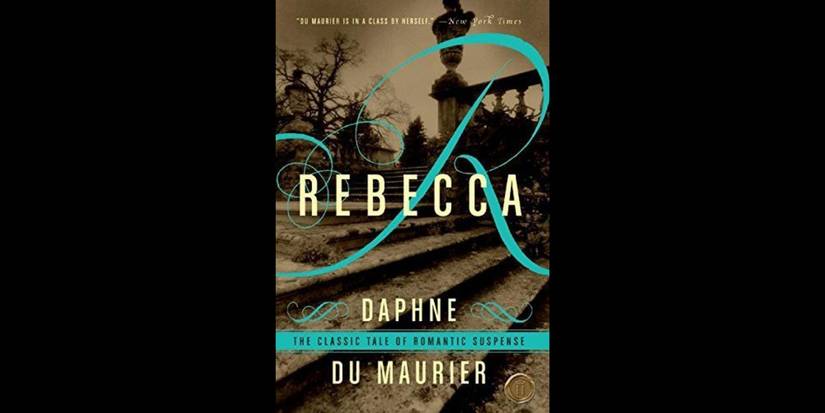
Daphne du Maurier’s most enduring and finest novel, Rebecca is a Gothic mystery centered on an unnamed young woman and the story’s narrator, who works in Monte Carlo for an elderly socialite. She then meets a charming and wealthy widower named Maximilian de Winter, and after a whirlwind romance, they marry within a few days. Once they arrive at Maxim’s Cornish family estate, Manderley, the newlywed wife encounters the strange housekeeper Mrs. Danvers and finds the house and her life haunted by Maxim’s titular widow.
Marvelously atmospheric and often terrifying, the true mystery of Rebecca lies not in how Rebecca died but in what Maxim is hiding. A haunting story of guilt, identity, and dark secrets, the classic novel is most remembered for the chilling characterization of Mrs. Danvers, which became a gold standard for psychological horror/thriller villains. Rebecca’s success is not limited to its era either, and it remains one of the most legendary Gothic mysteries of all time that has never gone out of print and has since been adapted multiple times for various media.
5 ‘The Daughter of Time’ (1951)

A classic detective fiction novel by Scottish novelist Josephine Tey, The Daughter of Time is the fifth novel in her Inspector Alan Grant series. The story follows the Scotland Yard inspector who is confined to a hospital bed and utterly bored when his actress friend, Marta, brings him a historical mystery to solve, involving the alleged crimes of King Richard III of England. Grant, who has the uncanny ability to read a person's character from his appearance, puts his skills to the test to determine if Richard III really killed his young nephews, known as the Princes in the Tower.
Unique and innovative, The Daughter of Time is a cerebral murder mystery that relies not on physical evidence or a current crime but on 500-year-old information and its interpretation. A one-of-a-kind "true crime" story, the novel examines how history is narrated and what becomes the truth. Hailed as a timeless, if underrated, classic of the detective genre, The Daughter of Time is a perfect cold-case investigation that completely subverts genre tropes, with the detective himself fulfilling the “locked-room” trope.
6 ‘The Spy Who Came in From the Cold’ (1963)
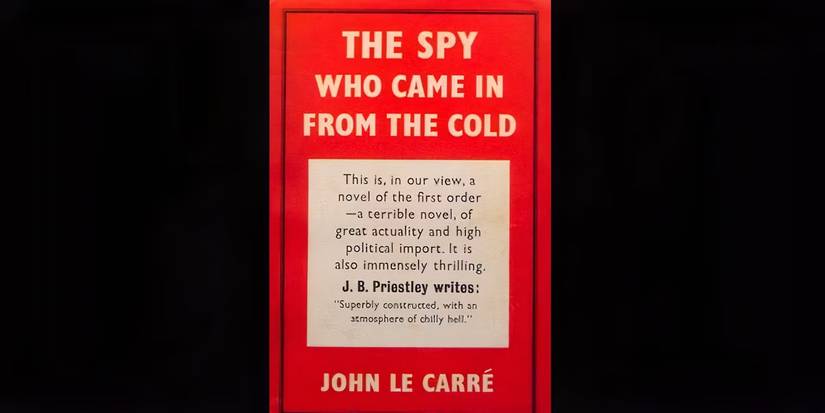
One of John le Carré's best-known spy stories and his third novel, The Spy Who Came in from the Cold is his first-ever story to be turned into a feature film. The plot follows British intelligence officer Alec Leamas, who is sent to East Germany in the guise of a defector to spread misinformation about a powerful East German intelligence agent. But when Leamas realizes that he has become the government’s pawn in a major political conspiracy, he begins to question his mission.
A gripping espionage thriller drawing on the particular political landscape of the time, A Spy Who Came in from the Cold earned critical acclaim and became an international bestseller. The novel became revolutionary in its genre for portraying espionage methods that do not conform to the Western ideology of democracy. By replacing the glamor and slickness of traditional spy fiction of its time with gritty, psychological realism, The Spy Who Came in from the Cold brings a new dimension to the spy mystery genre, shattering all expectations in a way that still resonates today.
7 ‘The Da Vinci Code’ (2003)
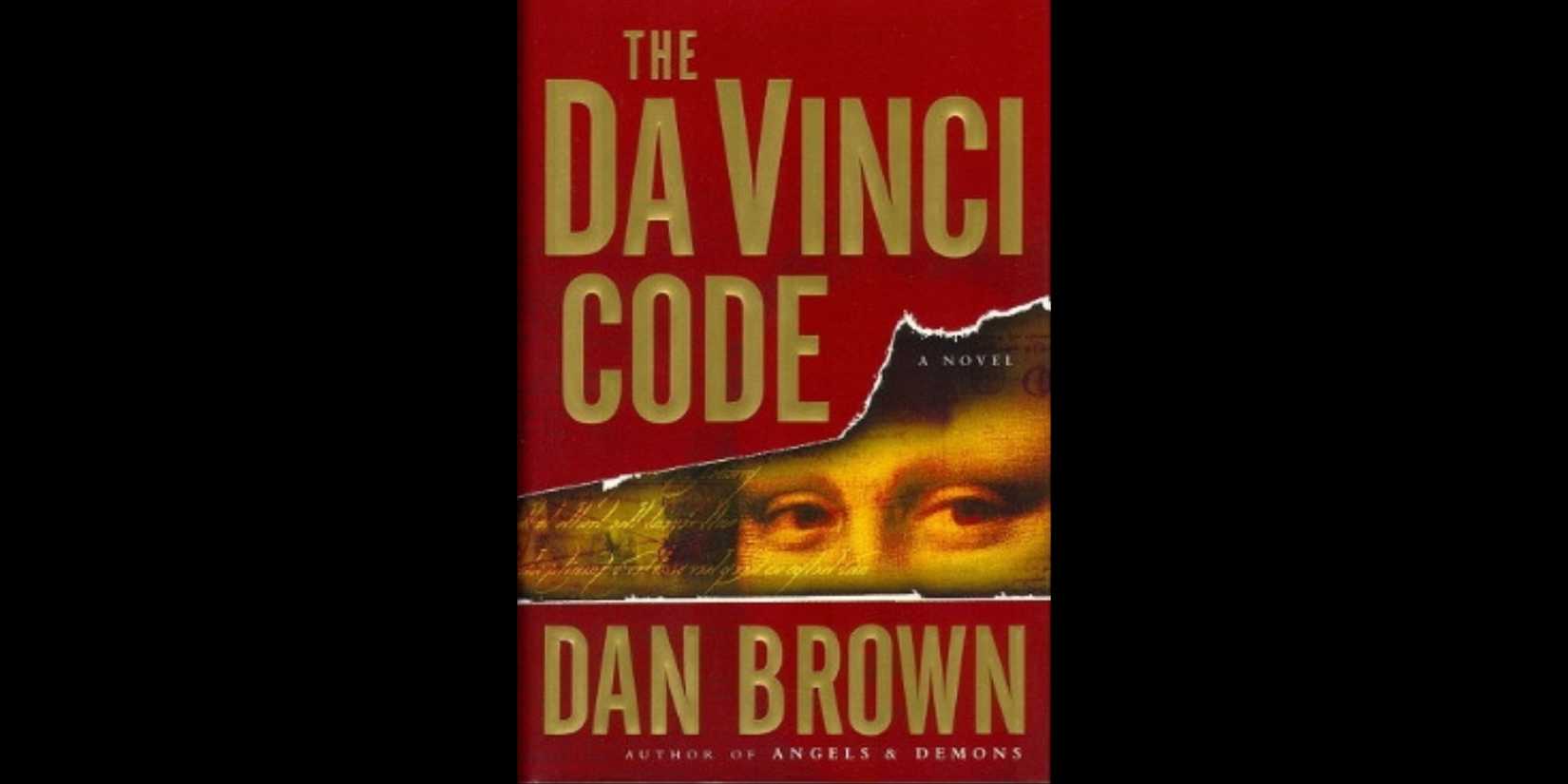
Dan Brown’s fourth novel and the second book in the Robert Langdon novel series, The Da Vinci Code is a mystery thriller that follows Brown’s iconic symbologist and Harvard University professor on another crime-solving adventure. While in Paris, a sudden murder at the Louvre gets Langdon and French cryptologist Sophie Neveu entangled in a dispute regarding an ancient religious secret. They race across Europe to solve the cryptic codes and hidden messages to find the murderer and seek the truth about history and religion as they know it.
Simultaneously one of the most successful and most controversial books of the 21st century, The Da Vinci Code has since been a subject of discussion in literature, history, and religion, sparking newfound speculation regarding the Holy Grail. While praised for blending art history, alternate history, and religious conspiracy into a page-turner, the novel has also been heavily criticized for its fantastical, revisionary take on history and religion, mostly by religious groups. Nevertheless, The Da Vinci Code is an intelligent alternate history novel that puts the emphasis on clever plotting rather than literary realism, with plenty of riddles, codes, and jaw-dropping twists.
8 ‘Gone Girl’ (2012)
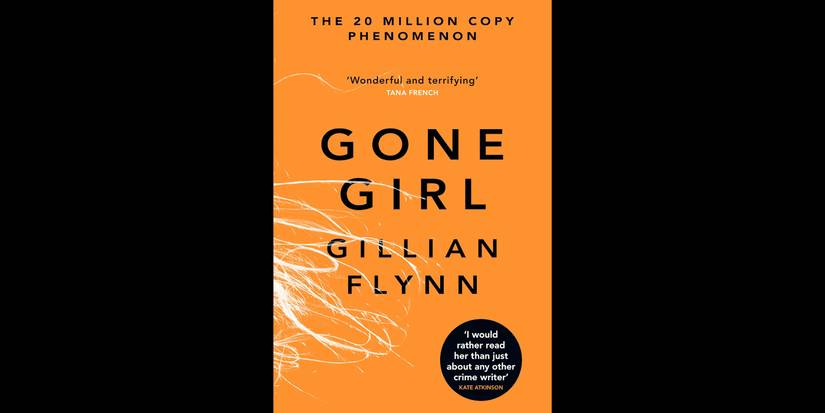
One of the most popular and influential mystery novels of the 21st century, Gone Girl, written by Gillian Flynn, revolves around the mysterious disappearance of Amy Dunne, a writer, on her fifth wedding anniversary. When the investigation begins, evidence from Amy’s personal diary points to her husband, Nick, as the prime suspect. The story is divided into three parts, told from both Nick and Amy’s perspectives, which leads to multiple takes on the same incident.
A story where nothing is as it seems, Gone Girl is a thrilling modern spin on twisted romance and toxic marital relationships. The differing POVs of the two protagonists are what make the mystery of Gone Girl more thrilling, prompting the reader to solve the puzzle but also breaking their expectations at the very end. The novel has remained a benchmark of 21st-century mystery literature that shifts from the traditional whodunits and howcatchems, impressing with its psychological game of manipulation.
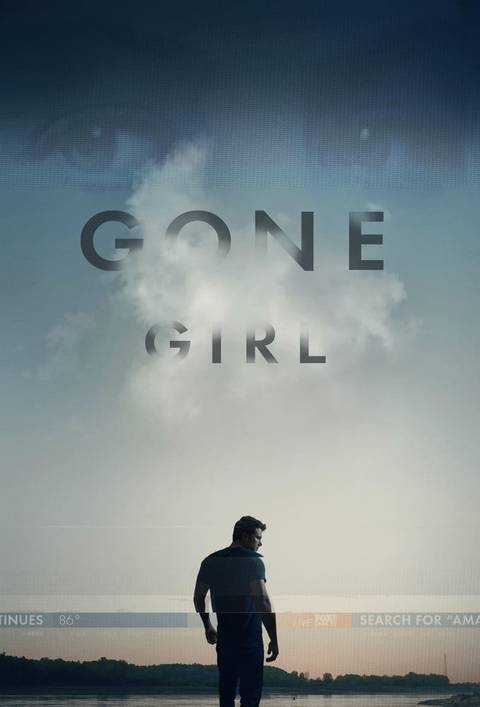
- Release Date
- October 3, 2014
- Runtime
- 149 minutes
- Director
- David Fincher
KioskNews shows a cleaned-up reading view extracted from the publisher’s page — the original always lives on their site, not ours.