The difficult, unfinished business of ‘being human’
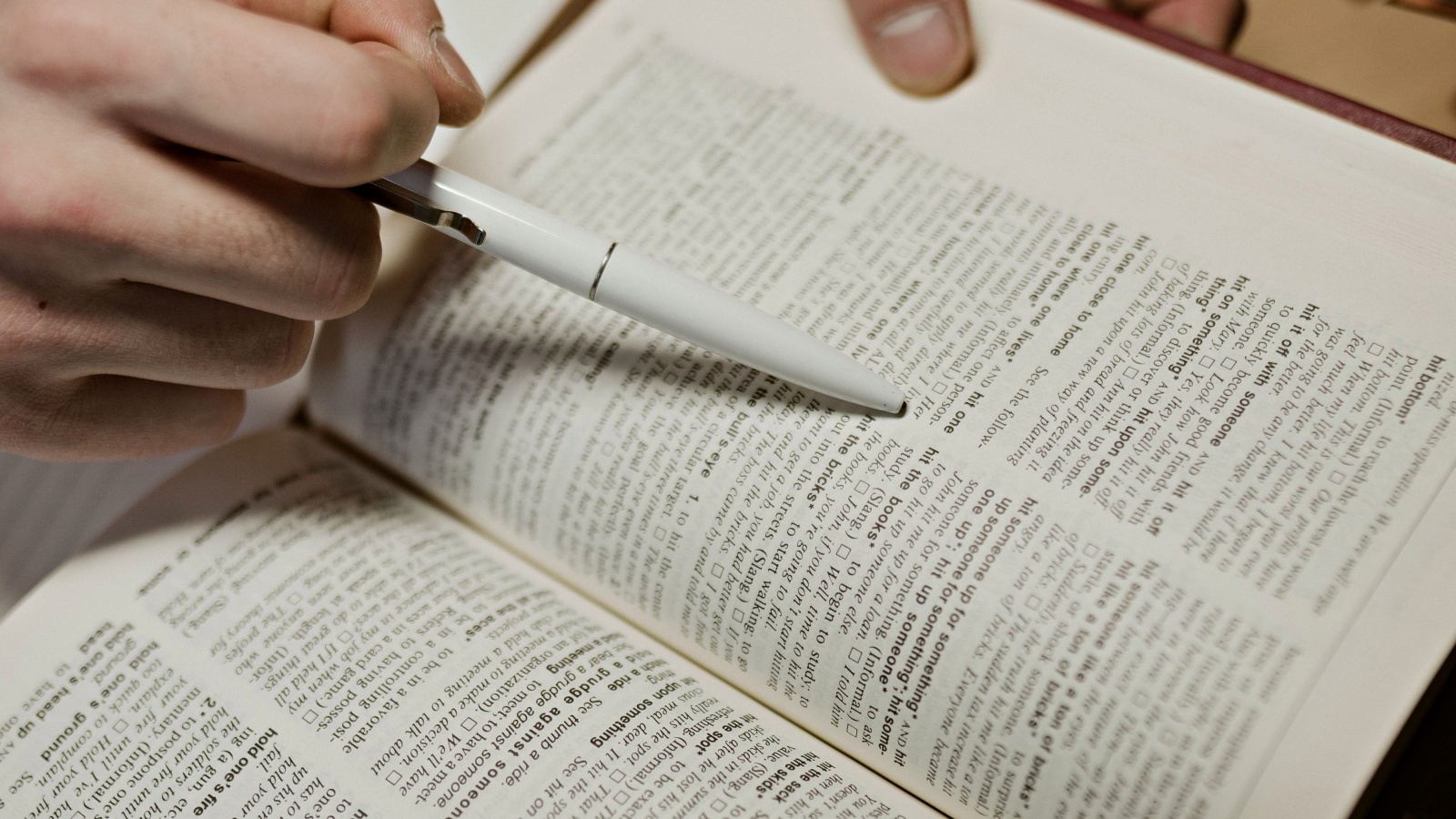
The choice of “human” as Cambridge Dictionary’s word of 2026 comes as a reminder that the word is less a surname and more a title, its adjectival variations having to be earned.
One of the earliest assertions of this argument is around 1600, in Hamlet: “What a piece of work is a man, How noble in reason, how infinite in faculty, In form and moving how express and admirable, In action how like an Angel, In apprehension how like a god, The beauty of the world, The paragon of animals.” William Shakespeare is not praising himself, he’s been forced to make an argument about man because the cosmology of medieval thought had kept the human on a leash and turned their life into a church. Hamlet’s eulogy to man is mental notetaking of the freedom of being human, the historical progression from enchainment to enchantment.
The word “human” itself was new, only about a hundred years older than Shakespeare. At different stations in its career, moving between noun and adjective, it would return as assertion and affirmation, of how freedom had been earned. John Milton would annotate this cultural forgetfulness in Paradise Lost: “For Man to tell how human life began is hard; for who himself beginning knew?” Man is not automatically “human” — it’s a philosophical position that has had to be fought for, just as the category of “life” as something not being a ready-made thing has had to be argued for. John Donne is making a similar argument about the uniqueness of the human by distinguishing it from the natural world: “No man is an island.” The “no” in that sermon, a habit of philosophy to strike out possible comparatives, is a mark of the human mind.
That intellectual habit would gather into a discipline 500 years ago — the “Humanities”. The consciousness of being “human” marks all kinds of human activity, including thinking of the human: “Know then thyself, presume not God to scan;/The proper study of Mankind is Man.” Alexander Pope’s lines are instructive in the way they direct attention to the study of the humanitas. There’s William Blake, who wonders about the location of the “human”. In “The Human Abstract”, he accepts, maybe even celebrates, the superiority of the human: “The Gods of the earth and sea/ Sought thro’ Nature to find this tree;/ But their search was all in vain:/ There grows one in the Human brain.”
We see the impress of Giambattista Vico and John Locke in Blake — the emerging theology of studying the human, replacing the “divine”. In a poem he calls “A Divine Image”, it is the “human” that is deciphered: “Cruelty has a Human Heart/ And Jealousy a Human Face/ Terror the Human Form Divine/And Secrecy, the Human Dress/ The Human Dress, is forged Iron/ The Human Form, a fiery Forge./ The Human Face, a Furnace seal’d/ The Human Heart, its hungry Gorge.” Note the number of times “human” is used, almost like a mantra; he is recording as an artist, creating a spiritual hologram of the human, replacing the “divine”. Charles Darwin would move between the two: “We must, however, acknowledge, as it seems to me, that man with all his noble qualities… still bears in his bodily frame the indelible stamp of his lowly origin.”
And now, after self-diagnosing this tendency as “anthropocentrism” — a mix of species self-hatred and virtue-signalling — the human being finds itself at the precipice of something where an argument needs to be made, again, for itself. Not God, its oldest creation, but “AI”, its most recent — “digital”, deriving from the human’s “digits”; “twitter”, bird cry; “cloud”, as if to recreate a second-hand elemental world. After 500 years of argument, followed by half a century of a lethargic relinquishing of that battle, creating a new theology where AI is god (the cross + now tilted to Elon Musk’s X), we have been forced to return humbly to the word “human”. Human, humus, humility — to the earth, to the soil.
Roy, a poet and writer, is professor, Ashoka University. Views are personal
KioskNews shows a cleaned-up reading view extracted from the publisher’s page — the original always lives on their site, not ours.