Chinese shopper sparks buzz after buying flat for US$1.7 during Double 11 shopping festival
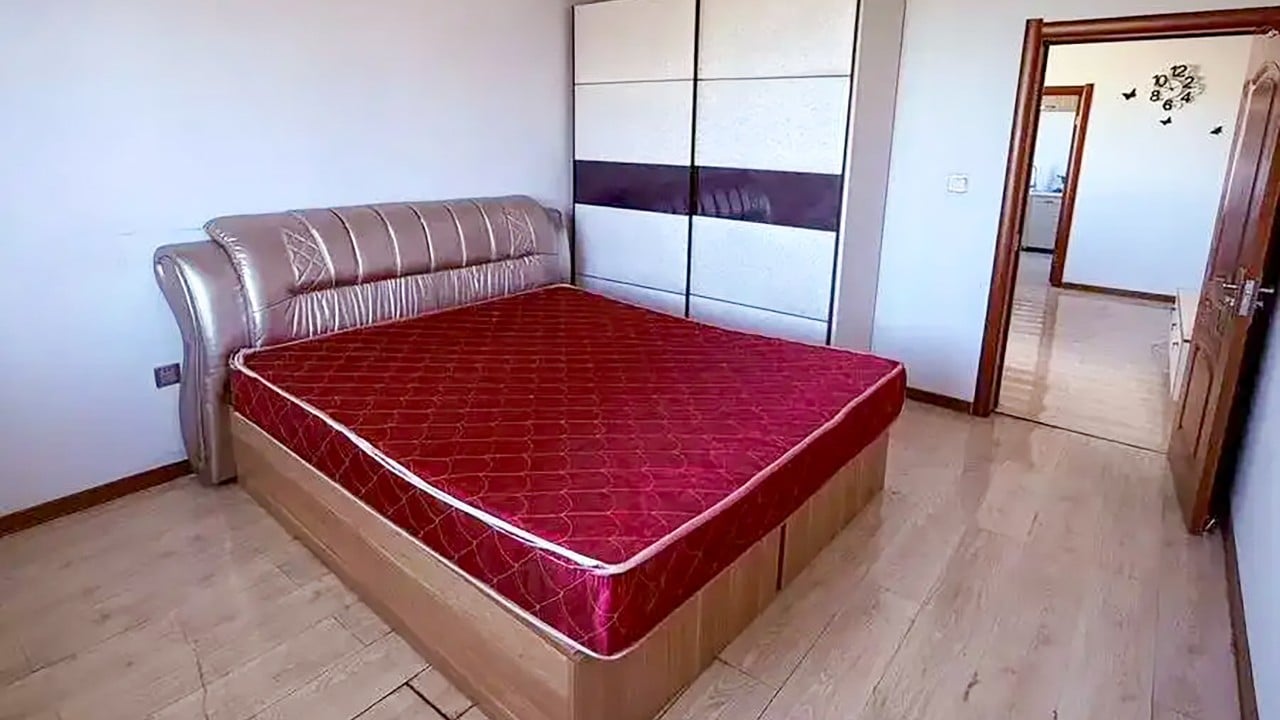
China’s Double 11 discount frenzy reached surreal heights when a shopper from the east of the country snapped up a flat in the northeast for just 11 yuan (US$1.7).
Pioneered by Chinese e-commerce platform Taobao in 2009 as China’s equivalent of Black Friday, the month-long shopping spree ran through mid-November after generating more than 1.6 trillion yuan (US$240 billion) in online gross merchandise value last year.
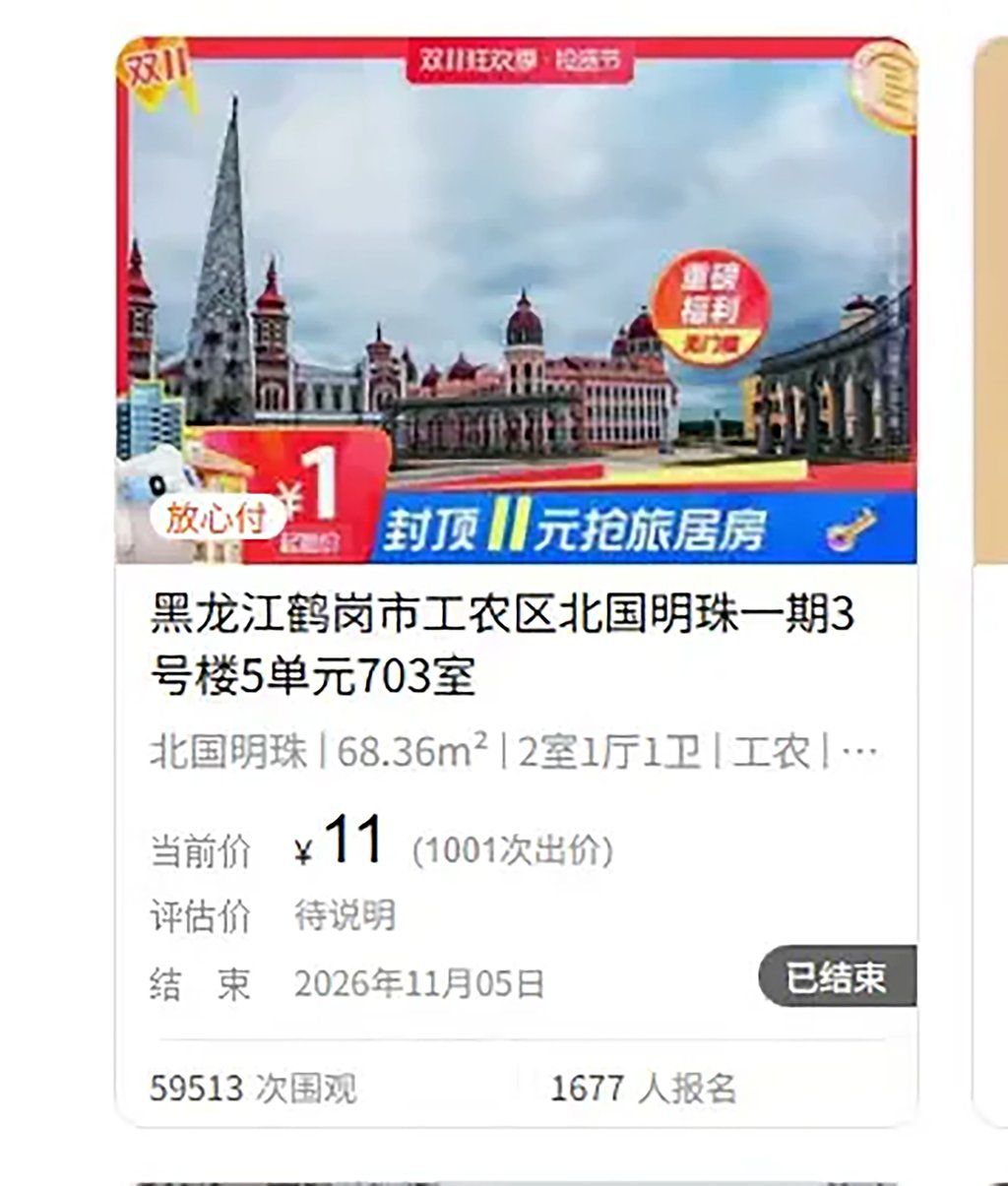
The flat is a two-bedroom, 68-square-metre unit on the seventh floor in Heilongjiang province. It was sold through Alibaba Auction. Taobao is operated by Alibaba, which owns the South China Morning Post.
The listing opened at a starting price of one yuan, with bids rising in increments of 0.01 yuan and a hard cap of 11 yuan.
Platform records show that 1,677 bidders took part in the auction, placing 1,001 bids before it closed on November 5.
The winning bidder, an anonymous buyer from the Jiangsu-Zhejiang region in eastern China, secured the unit by being the first to submit the capped 11-yuan bid. The purchase price and platform transaction fees have both been paid.
Surprised by the outcome, the buyer said during an auction live-stream that he has no plans to move to Heilongjiang.
Instead, he intends to keep the flat as an occasional holiday retreat for winter trips.
In addition to the 11-yuan bid, the buyer must pay about 2,000 yuan (US$300) in statutory deed taxes to finalise the title transfer.
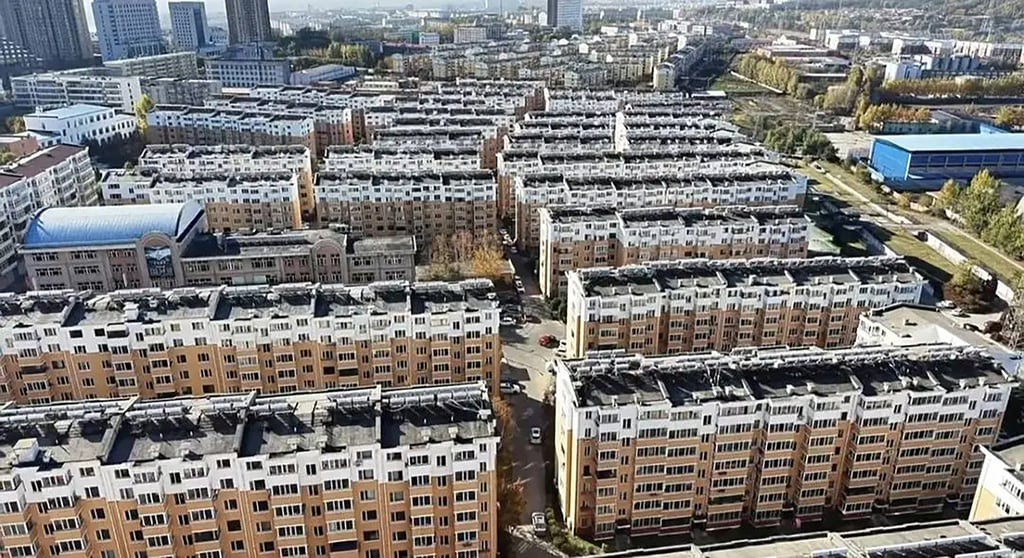
Local property apps estimate the second-hand flat’s market value at about 40,000 yuan, while average resale prices in the same complex are around 2,700 yuan per square metre.
A manager at the auction agency told Fengmian News that the deal was part of an Alibaba Auction Double 11 promotion, with the platform subsidising the price difference.
The purchase quickly sparked online discussion, drawing mixed reactions.
“I am so jealous,” one user commented. “Why am I only seeing this after it closed?”
“If you seldom live there, annual management fees become a total deadweight,” another said.
“It is like buying a castle for a dollar: cheap to own, impossible to maintain,” a third added.
Legal experts cautioned prospective buyers against rushing into bargain property deals.
Wang Yuchen, a lawyer at Beijing Jinsu Law Firm, noted that ultra-cheap homes may come with hidden problems, including unclear titles, unpaid taxes, outstanding fees and crippling legal costs if disputes arise.
Such promotional fire sales are not new in China.
In November 2024, a woman bought a 40-square-metre seaside flat in Weihai, Shandong province, for 11 yuan at auction, though the unit was worth less than 50,000 yuan.
Industry insiders said the cut-price auction was designed to attract attention and generate buzz ahead of future property sales.
KioskNews shows a cleaned-up reading view extracted from the publisher’s page — the original always lives on their site, not ours.